Home University of Edinburgh Library Essentials
April 2, 2026
Trial access to Academic Video Online

We have trial access to Academic Video Online (via Alexander Street Press) until 30th April. Please complete a trial feedback form if you would like the library to subscribe to any of the subject collections.
Academic Video Online is a multidisciplinary collection of videos that touches on the curriculum needs of virtually every department. It delivers more than 48,000 video titles spanning essential subject areas including anthropology, business, counselling, history, music, film, and more. More than half of the titles can be found only at Alexander Street. With 400 new titles added per month, this collection is unmatched in its breadth. Academic Video Online allows students and researchers alike to analyse unique and valuable content from over 500 producers and distributors around the world.
In addition to the breadth and depth of content, Academic Video Online offers a wide range of platform tools for learning, research, and teaching, including:
- Learning segments. More than 14,000 learning segments make it easy for instructors to find and integrate specific video content into the classroom and help users get to the right content faster. Each segment is fully searchable and includes an abstract, making user selection even easier.
- Transcripts. Users view searchable, scrolling transcripts alongside more than 95% of titles.
- Clipping functionality. Users can easily create, annotate, and share video clips and playlists, and can embed them in third-party sites.
- Permanent URLs. All videos, clips, and playlists can be cited at permanent URLs, making integration with any learning management system easy.
- HD-quality player. A video player with a 16:9 aspect ratio that streams up to 2.5 mbps allows for optimized high-definition viewing.
- Comprehensive permissions. Our platform enables in-class, on-campus, and remote viewing.

Academic Video Online – streamed video, all disciplines – http://search.alexanderstreet.com/avon
Playlists – all disciplines – http://search.alexanderstreet.com/playlists – register to make your own
DISCIPLINE URLs
Art & Design – Art & Architecture, Fashion Studies – http://search.alexanderstreet.com/art-design
Diversity – Asian Studies, Black Studies, LGBT, Women’s Studies – http://search.alexanderstreet.com/diversity
Health Sciences – Counselling and Therapy, Health Policy, Medical Imaging, Nursing, Rehabilitation, Sports Science, Veterinary Science – http://search.alexanderstreet.com/health-sciences
History – World History, Women’s History, American History – http://search.alexanderstreet.com/history
Literature & Language – Drama, Film, Language, Literature – http://search.alexanderstreet.com/literature-language
Music & Performing Arts – Classical Music, Dance, Film, Jazz, American Song, Popular Music, Theatre, World Music – http://search.alexanderstreet.com/music-performing-arts
Personal Interest – Cooking, How-to, Travel – http://search.alexanderstreet.com/personal-interest
Psychology and Counselling – http://search.alexanderstreet.com/psychology-counseling
Science & Engineering – http://search.alexanderstreet.com/science-engineering
Social Sciences – Anthropology, Business & Economics, Criminal Justice, Education, Environment, Food, Human Rights, Media Studies, Politics, Psychology, Religion, Social Theory – http://search.alexanderstreet.com/social-sciences
Academic Video Online can also be accessed via DiscoverEd and the E-Resources Trial Webpage
New – PPLS Librarian blog!
The PPLS Librarian Blog
This is the inaugural post to the new PPLS Librarian blog, one of a range of blogs – both general and service specific – from Edinburgh University Library. It is the first of what I intend will be a fairly regular but not, I hope, overwhelming stream of communications about Library services. Read More
The women behind New College Library
If you visit New College Library today, International Women’s Day, women might seem hard to find amongst the portraits and busts of Thomas Chalmers and John Knox, and the shelves filled with works by or about male authors. Nevertheless, women have left their mark on New College Library from its earliest foundation. Read More
Publishing Data Workflows
[Guest post from Angus Whyte, Digital Curation Centre]
In the first week of March the 7th Plenary session of the Research Data Alliance got underway in Tokyo. Plenary sessions are the fulcrum of RDA activity, when its many Working Groups and Interest Groups try to get as much leverage as they can out of the previous 6 months of voluntary activity, which is usually coordinated through crackly conference calls.
The Digital Curation Centre (DCC) and others in Edinburgh contribute to a few of these groups, one being the Working Group (WG) on Publishing Data Workflows. Like all such groups it has a fixed time span and agreed deliverables. This WG completes its run at the Tokyo plenary, so there’s no better time to reflect on why DCC has been involved in it, how we’ve worked with others in Edinburgh and what outcomes it’s had.
DCC takes an active part in groups where we see a direct mutual benefit, for example by finding content for our guidance publications. In this case we have a How-to guide planned on ‘workflows for data preservation and publication’. The Publishing Data Workflows WG has taken some initial steps towards a reference model for data publishing, so it has been a great opportunity to track the emerging consensus on best practice, not to mention examples we can use.
One of those examples was close to hand, and DataShare’s workflow and checklist for deposit is identified in the report alongside workflows from other participating repositories and data centres. That report is now available on Zenodo. [1]
In our mini-case studies, the WG found no hard and fast boundaries between ‘data publishing’ and what any repository does when making data publicly accessible. It’s rather a question of how much additional linking and contextualisation is in place to increase data visibility, assure the data quality, and facilitate its reuse. Here’s the working definition we settled on in that report:
Research data publishing is the release of research data, associated metadata, accompanying documentation, and software code (in cases where the raw data have been processed or manipulated) for re-use and analysis in such a manner that they can be discovered on the Web and referred to in a unique and persistent way.
The ‘key components’ of data publishing are illustrated in this diagram produced by Claire C. Austin.
![Data publishing components. Source: Claire C. Austin et al [1]](https://libraryblogs.is.ed.ac.uk/datablog/wp-content/uploads/2016/03/Data_publishing_components_Claire_C_Austin.png)
Data publishing components. Source: Claire C. Austin et al [1]
The WG recently began some follow-up work to our report that looks ‘upstream’ to consider how the intent to publish data is changing research workflows. Links to third-party systems can also be relevant in these upstream workflows. It has long been an ambition of RDM to capture as much as possible of the metadata and context, as early and as easily as possible. That has been referred to variously as ‘sheer curation’ [2], and ‘publication at source [3]). So we gathered further examples, aiming to illustrate some of the ways that repositories are connecting with these upstream workflows.
Electronic lab notebooks (ELN) can offer one route towards fly-on-the-wall recording of the research process, so the collaboration between Research Space and University of Edinburgh is very relevant to the WG. As noted previously on these pages [4] ,[5], the RSpace ELN has been integrated with DataShare so researchers can deposit directly into it. So we appreciated the contribution Rory Macneil (Research Space) and Pauline Ward (UoE Data Library) made to describe that workflow, one of around half a dozen gathered at the end of the year.
The examples the WG collected each show how one or more of the recommendations in our report can be implemented. There are 5 of these short and to the point recommendations:
- Start small, building modular, open source and shareable components
- Implement core components of the reference model according to the needs of the stakeholder
- Follow standards that facilitate interoperability and permit extensions
- Facilitate data citation, e.g. through use of digital object PIDs, data/article linkages, researcher PIDs
- Document roles, workflows and services
The RSpace-DataShare integration example illustrates how institutions can follow these recommendations by collaborating with partners. RSpace is not open source, but the collaboration does use open standards that facilitate interoperability, namely METS and SWORD, to package up lab books and deposit them for open data sharing. DataShare facilitates data citation, and the workflows for depositing from RSpace are documented, based on DataShare’s existing checklist for depositors. The workflow integrating RSpace with DataShare is shown below:

RSpace-DataShare Workflows
For me one of the most interesting things about this example was learning about the delegation of trust to research groups that can result. If the DataShare curation team can identify an expert user who is planning a large number of data deposits over a period of time, and train them to apply DataShare’s curation standards themselves they would be given administrative rights over the relevant Collection in the database, and the curation step would be entrusted to them for the relevant Collection.
As more researchers take up the challenges of data sharing and reuse, institutional data repositories will need to make depositing as straightforward as they can. Delegating responsibilities and the tools to fulfil them has to be the way to go.
[1] Austin, C et al.. (2015). Key components of data publishing: Using current best practices to develop a reference model for data publishing. Available at: http://dx.doi.org/10.5281/zenodo.34542
[2] ‘Sheer Curation’ Wikipedia entry. Available at: https://en.wikipedia.org/wiki/Digital_curation#.22Sheer_curation.22
[3] Frey, J. et al (2015) Collection, Curation, Citation at Source: Publication@Source 10 Years On. International Journal of Digital Curation. 2015, Vol. 10, No. 2, pp. 1-11
http://doi:10.2218/ijdc.v10i2.377
[4] Macneil, R. (2014) Using an Electronic Lab Notebook to Deposit Data https://libraryblogs.is.ed.ac.uk/2014/04/15/using-an-electronic-lab-notebook-to-deposit-data/
[5] Macdonald, S. and Macneil, R. Service Integration to Enhance Research Data Management: RSpace Electronic Laboratory Notebook Case Study International Journal of Digital Curation 2015, Vol. 10, No. 1, pp. 163-172. http://doi:10.2218/ijdc.v10i1.354
Angus Whyte is a Senior Institutional Support Officer at the Digital Curation Centre.
Digitisation: Eduardo Paolozzi Mosaics
I have spent the past 6 weeks digitising mosaic fragments here in the DIU. Recently removed from Tottenham Court Road Tube Station, London, these mosaics were once part of a mural by the Scottish artist Eduardo Paolozzi that was first installed in 1984. The mosaics, now part of the University of Edinburgh Art Collection, make up about 5% of all the Tottenham Court Road murals by the artist, with the mosaics I am working on coming from the station archways more specifically. In an article for the Guardian Newspaper, London Underground’s design and heritage manager, Mike Ashworth, called this “one of the UK’s largest art conservation projects of the last decade” so I am very pleased to be involved.
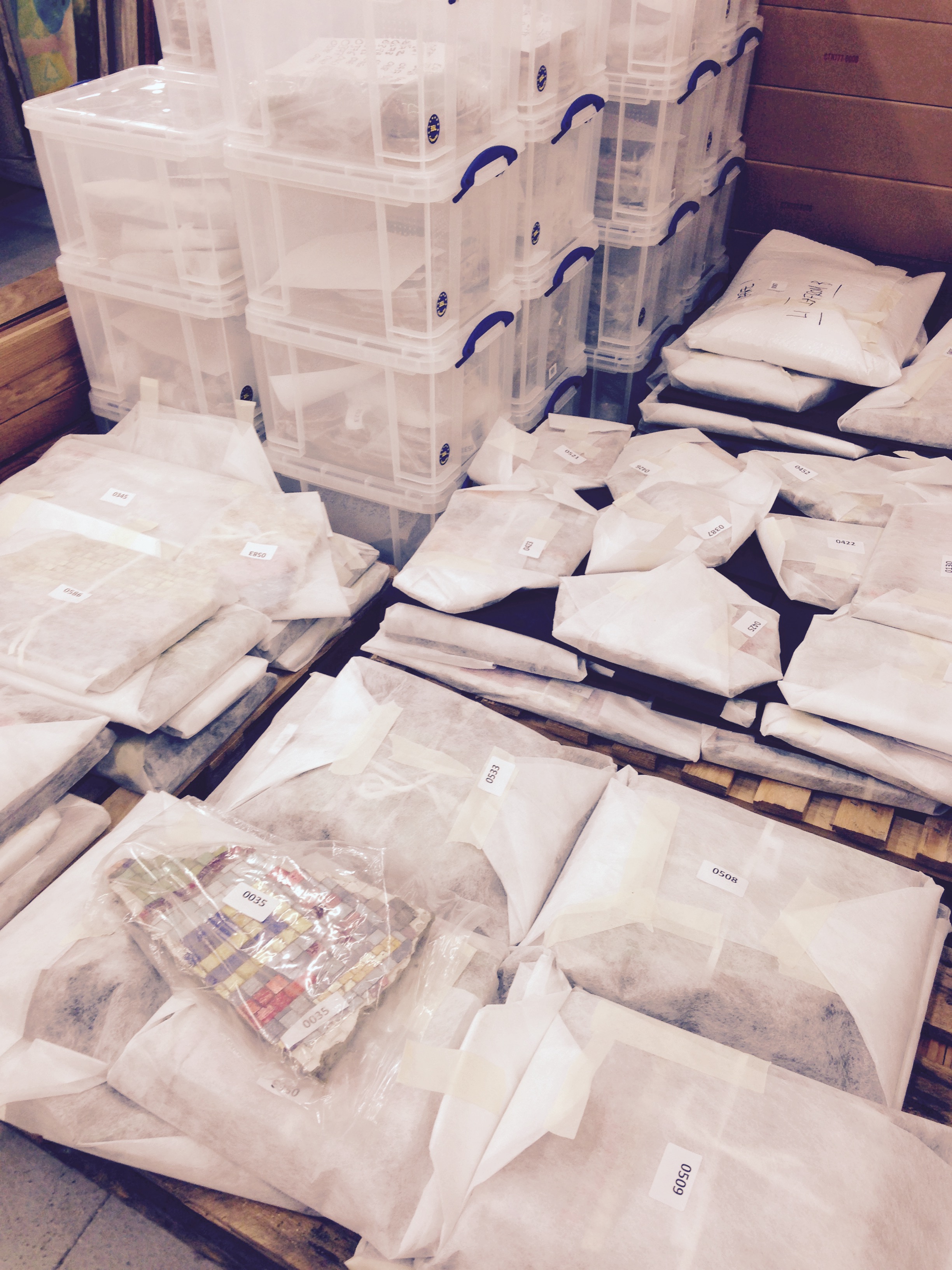
There are approximately 600 fragments of various shapes, sizes and colours spread over 42 boxes and 4 pallets. Unfortunately, the mural was not removed with conservation in mind so it is not exactly in great condition. It will be challenging to piece it all back together, first digitally and then physically. The long-term plan is to reconstruct the mural and install it within the university campus therefore giving it new life. So watch this space…!
I have been tasked with digitising each fragment. On completion, the aim is then to use the images in conjunction with image recognition software and an image of the original design, to digitally re-assemble the mural. This should provide a new digital image of the mural which will assist with the proposed physical reconstruction. The process will inform us whether areas of the mural are missing, and would need to be remade in some form.
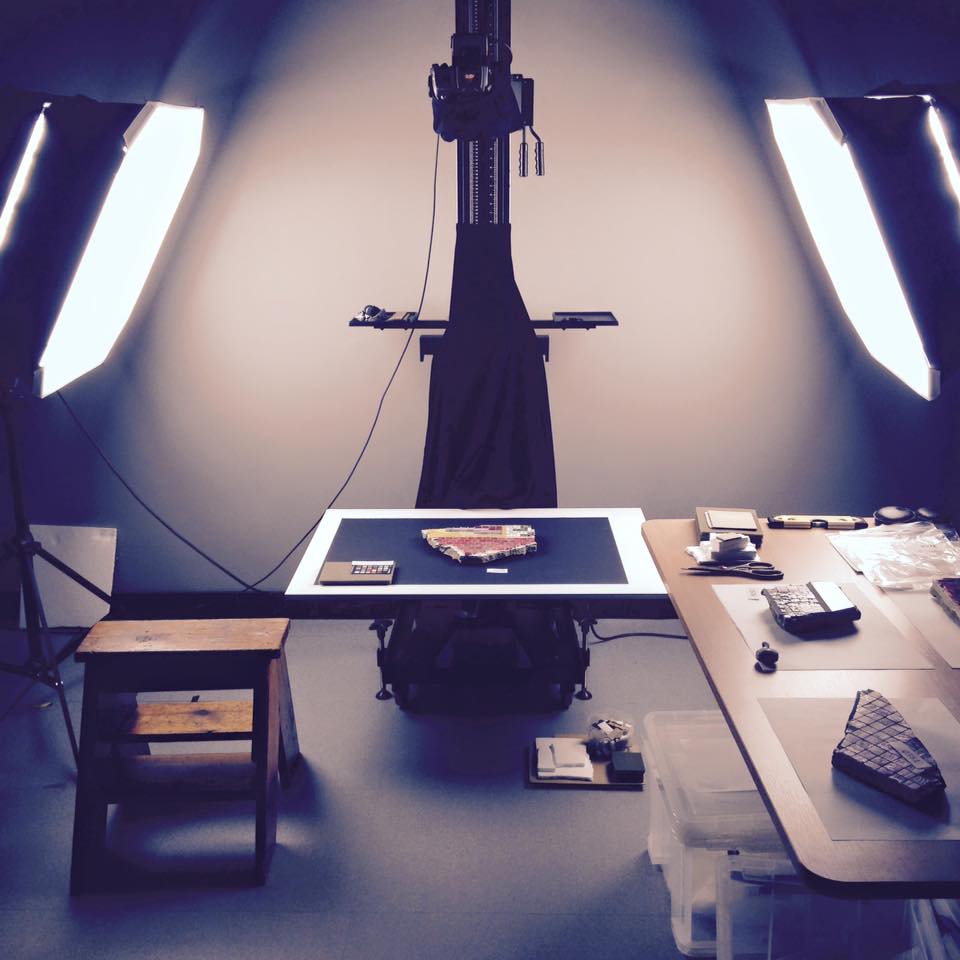
On a technical level, I have been using a high-spec digital Hasselblad-H4 camera and professional, Bowens studio lights in my digitisation process. To begin with, I capture several mosaic fragments in one shot and then go on to crop, and edit, each piece individually before saving as a separate, new file. The tricky part comes in ensuring that the scale of each fragment is represented correctly with every image produced. This is why placing a ruler within each raw image capture is crucial so to allow for the mosaics to be scaled to a 1:1 ratio by resizing them in Adobe Photoshop. If the size of the fragments were to be incorrect then this could cause problems later down the line when trying to complete this digital jigsaw (see image below!). Further, the faces/upside of the mosaics must be perpendicular to the focal plane of the camera and, collectively, the mosaics must be of equal distance to focal plane. The same principles apply for the positioning of the ruler itself. This confirms that perspectives are not distorted and that the relative size of the mosaics remains consistent throughout the project.
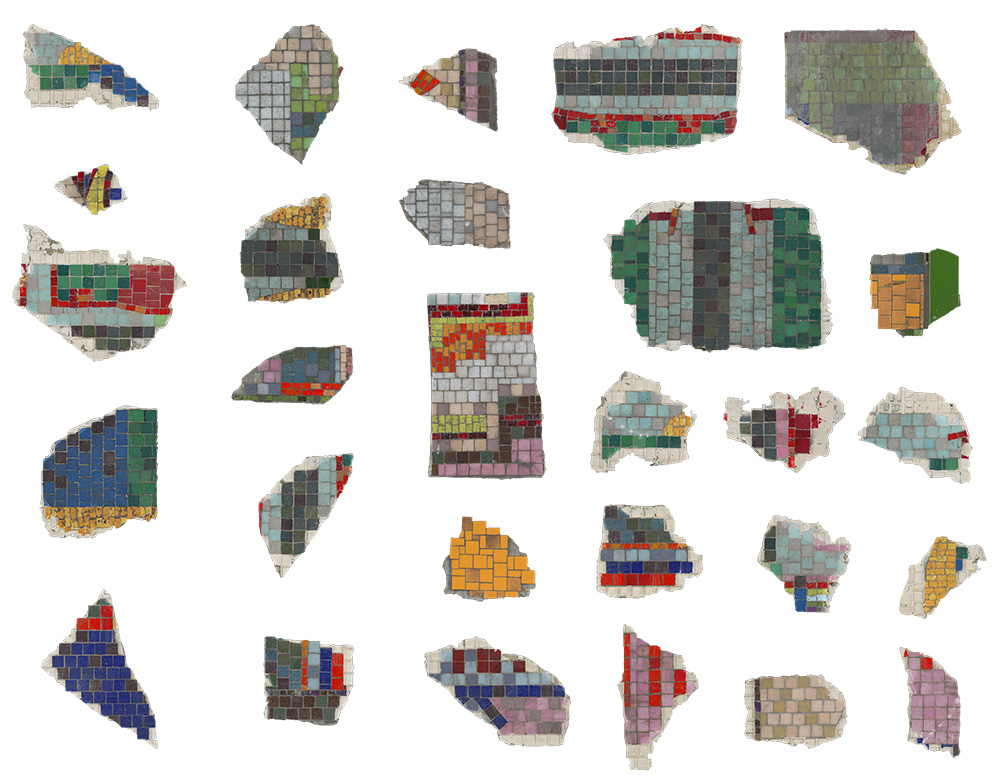
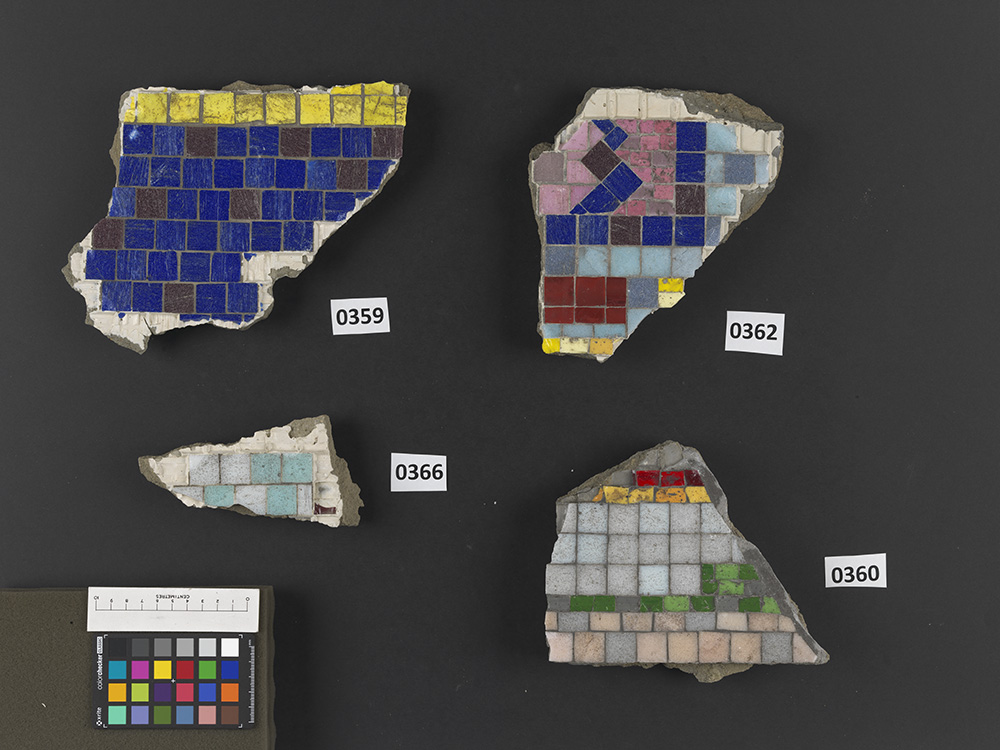
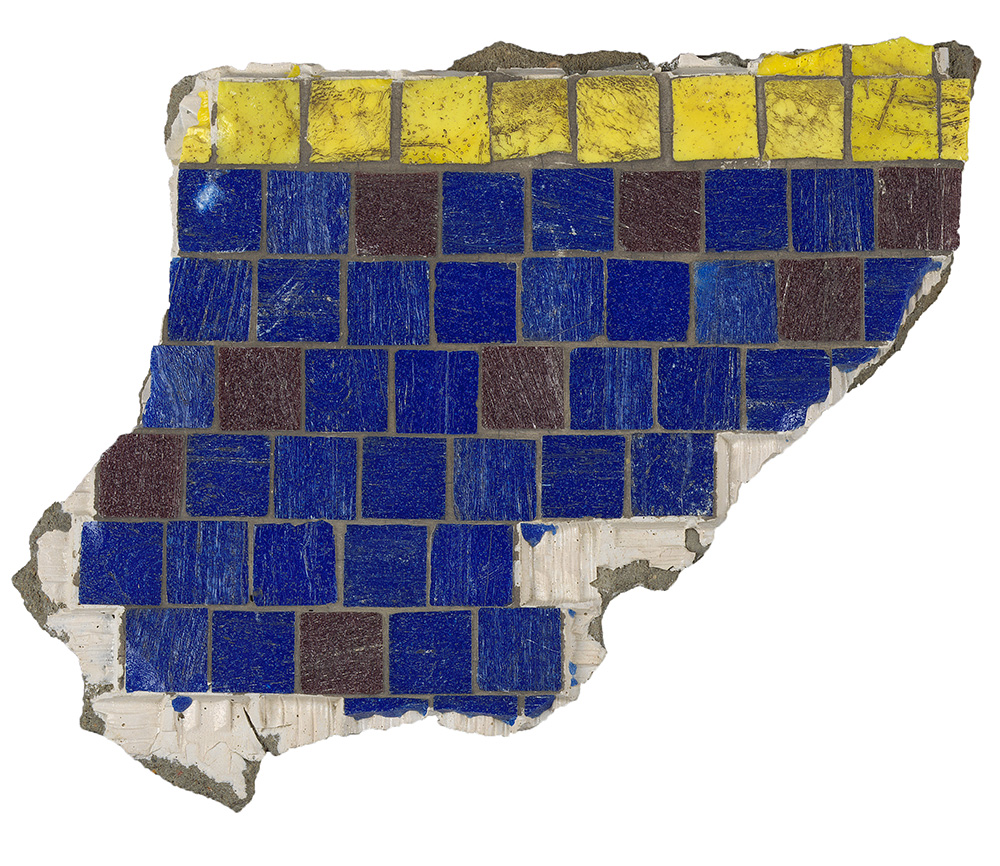
Currently, I am awaiting the arrival of the pallets as I have digitised all the fragments from the boxes. The majority of what is still to come are much larger mosaics fragments. I may be required to digitally stitch multiple images together in order to produce a single image. This is because some mosaics may be too large to photograph in their entirety on the copy stand. No doubt this will raise some new challenges to overcome!
John
Project Photographer (Paolozzi Project)
Trial access: Church Missionary Society Periodicals
The Library currently has trial access to the Church Missionary Society Periodicals from Adam Matthew Digital. This resource features publications from the Church Missionary Society, the Church of England Zenana Missionary Society and the latterly integrated South American Missionary Society between 1804 and 2009.
 You can access the resource during the trial period from the link below if you are working on-campus (or off-campus with VPN):
www.churchmissionarysociety.amdigital.co.uk
Trial ends 23rd March 2016*.
*Please note that our trial access has been extended. Read More
New e-journal subscriptions
The following new e-journal subscriptions have been added to DiscoverEd. Click the cover image to access the e-journal directly.
DeGruyter Platform – Journal of Ancient History

Ovid Platform – Cornea and Journal of Glaucoma


ProQuest Platform – Harper’s Bazaar

Database trial – Foreign Office Files for the Middle East, 1971-1981

We have been offered by Adam Matthew Publications a free trial of their new archive resource called Foreign Office Files for the Middle East, 1917-1981. The trial can be accessed from the link below from the University network:
www.archivesdirect.amdigital.co.uk/FO_MiddleEast
The trial ends on 23 March 2016.
Popping up again
For the last few weeks, we have been running small events, designed to help students relax, in the Main Library Foyer. This article suggests that as little as six minutes of quiet reading is enough to reduce stress by two thirds!
In an image from our collections, a young Walter Scott enjoys this type of relaxation:

Facsimile of a portrait of Sir Walter Scott as a child reading in a garden, by W. Matthews, in Walter Scott’s Introduction to Percy’s Reliques, 1915 (Corson P.3448). http://bit.ly/1Qms4aC.
While lots of quiet reading goes on in this library, it is usually not very relaxing. That is why we have been trying to branch out to students with short six-minute distractions (other than reading) so that they can be more effective, and feel happier, while they are in the Library.
Today we popped up in the Library Foyer handing out bubble wrap for students to pop. This simple activity provides a chance to de-stress, without taking a long time. We had some fun popping as well:

If you missed out, never fear; you can pop bubble wrap online here! So satisfying!
As twentieth-century journalist Sydney J. Harris said, “the time to relax is when you don’t have time for it.” So, take some time to relax today and keep an eye out for our next fun pop up activity.
IFLA Rare Books Section Conference
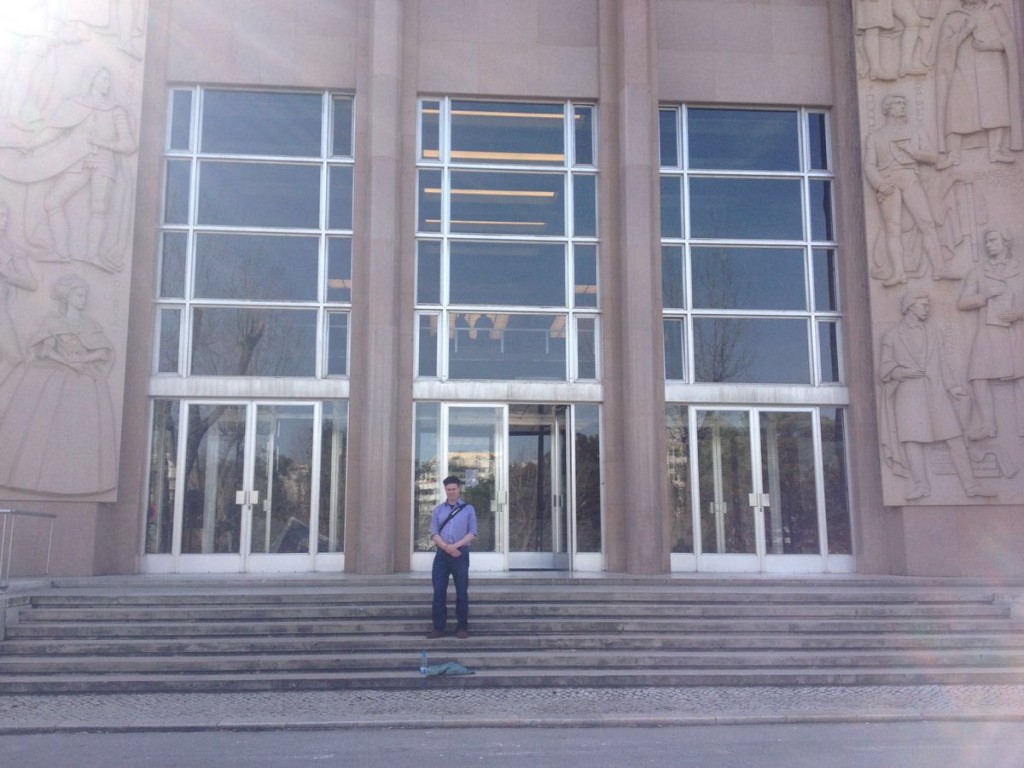
Last week, we attended the IFLA Rare Books and Special Collections Section Mid Term Meeting at the Biblioteca Nacional de Portugal in Lisbon. The event on Monday 22nd February was a one day conference: “A common international standard for rare materials cataloguing? Why? And how?”
A joint delegation of an archivist and metadata co-ordinator from the University of Edinburgh allowed us to discuss real issues we were facing with bringing together metadata standards and practice across the University Collections. It was clear that we have made major progress in this area and were able to contribute to discussions from real case study and practice. The question marks in the question posed were important, as any proposals for unifying metadata standards or practices must take into account the needs of researchers or students wishing to use rare materials as well as the nature of the material (it’s not all books) and professional standards and practices of curators of the collections. This certainly came across in both the papers and the lively discussions at the end of each session to which we contributed a wider view of practice and our experience of mapping metadata standards across libraries, archives and museums.
It was interesting to see how positively many European research libraries have embraced the new Resource Description and Access (RDA) metadata standard, adopted by Edinburgh University Library as the cataloguing standard for modern print and e-book collections in 2014, and looked at how it can be adapted or mapped to work with rare materials. The RDA Steering Committee, which held its most recent meeting in Edinburgh last November, have made considerable efforts to make the new standard more international in outlook and less centred on the Anglo-American world, so it was encouraging to see that their work is being rewarded. We discussed and reflected on how we bring together our archival, rare book, museum, art and general collections through one search facility for users. There were discussions on how we describe these materials and the need to do this authoritatively, authentically and using the appropriate standards in order to engender trust in the information provided. It was also recognised that there is not always a one size fits all approach.
There were particularly interesting papers from the State and University Library Hamburg on using RDA for cataloguing engravings and prints; from Uppsala University Library on the problems of transcribing the title pages of rare books; and from the University of Lisbon on managing private collections acquired through donation or purchase. Also encouraging were favourable comments from other delegates regarding the quality of EUL’s rare books catalogue records and our ability to search and analyse our metadata.
Rachel stayed on to liaise with colleagues from major institutions across the world and attended a visit to the Mafra Palace with the IFLA committee, where they were given privileged access to behind the scenes of the beautiful library. We were invited to contribute to IFLA work on metadata mapping and standards, with the University of Edinburgh being recognised as a place where cross sectoral working practices and mapping of standards is being done in practice.
Alasdair MacDonald Rachel Hosker
Metadata Co-ordinator Archives Manager
Collections
 Hill and Adamson Collection: an insight into Edinburgh’s past
My name is Phoebe Kirkland, I am an MSc East Asian Studies student, and for...
Cataloguing the private papers of Archibald Hunter Campbell: A Journey Through Correspondence
My name is Pauline Vincent, I am a student in my last year of a...
Hill and Adamson Collection: an insight into Edinburgh’s past
My name is Phoebe Kirkland, I am an MSc East Asian Studies student, and for...
Cataloguing the private papers of Archibald Hunter Campbell: A Journey Through Correspondence
My name is Pauline Vincent, I am a student in my last year of a...

Projects
Cataloguing the private papers of Archibald Hunter Campbell: A Journey Through Correspondence
My name is Pauline Vincent, I am a student in my last year of a...
Archival Provenance Research Project: Lishan’s Experience
Presentation My name is Lishan Zou, I am a fourth year History and Politics student....