Home University of Edinburgh Library Essentials
May 4, 2026
DATA-X Pioneering Research Data Exhibition & Symposium
DATA-X has been a University of Edinburgh IS Innovation Fund project, also supported by the Data Lab and ASCUS. The project provided a dynamic platform for University of Edinburgh student researchers across all schools to come together and develop collaborate installations that explore data re-use and interdisciplinary boundaries. Research data are often invisible and complex to comprehend by the public and academic peers, with evolving technology and researcher-driving environments, DATA-X facilitate student researchers with the opportunity to visualize and communicate their research in a user-friendly format to audiences from within and outside the university.
After a series of successful and engaging DATA-X workshops, aimed to inform, shape and create ‘installations’ linked to digital data, the multidisciplinary teams (including students from the School of Architecture and Landscape Architecture, Edinburgh College of Art, Reid School of Music, the School of Engineering, The Centre for Synthetic and Systems Biology, the School of Chemistry, the Centre for Integrative Physiology and the Queen’s Medical Research Institute) continued to work on their installations throughout the summer in preparation for the DATA-X exhibition and Symposium.
DATA-X Exhibition:
The DATA-X Exhibition ran from 26 November to 6 December 2016, in the Sculpture Court of the Edinburgh College of Art. A total of six physical installations were installed:
eTunes by Dr Siraj Sabihuddin
 A collaborate project for novices to experience the process and creative input required in constructing a musical instrument from start to finish.
Feel the Heat by Nathalie Vladis and Julia Zaenker
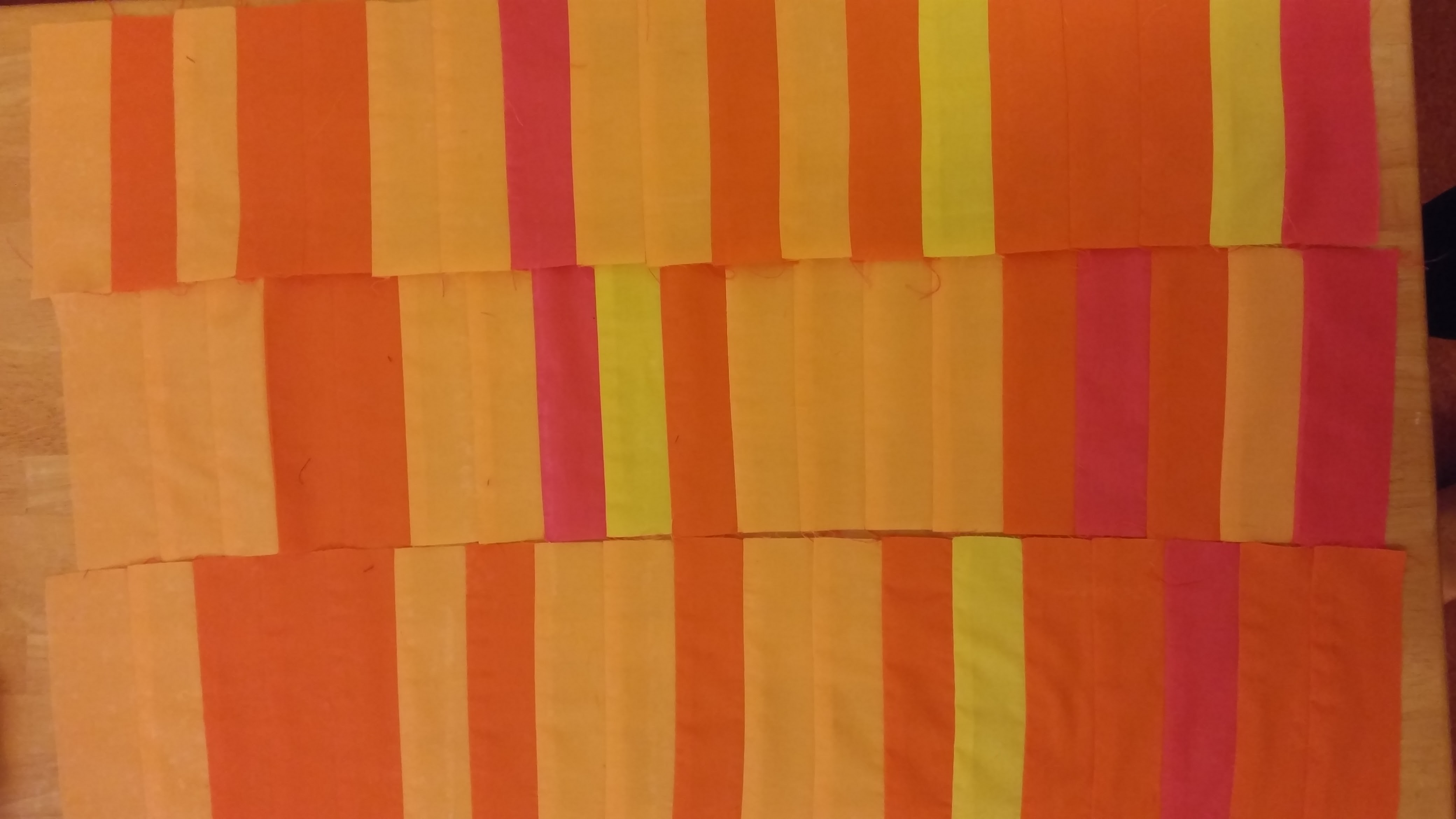 A data quilt, visualising world temperatures between 1961 to 1990. The installation included temperature data sets and interactive colouring maps for audience participation.
Inside the black box by Luis Fernando Montaño and Bohdan Mykhaylyk
 An installation simulating bacterial infections. The audience controls the bacterial infection by interactively administering treatment.
PUROS Sound Box by Dr. Sophia Banou, Dr. Christos Kakalis and Matt Giannotti
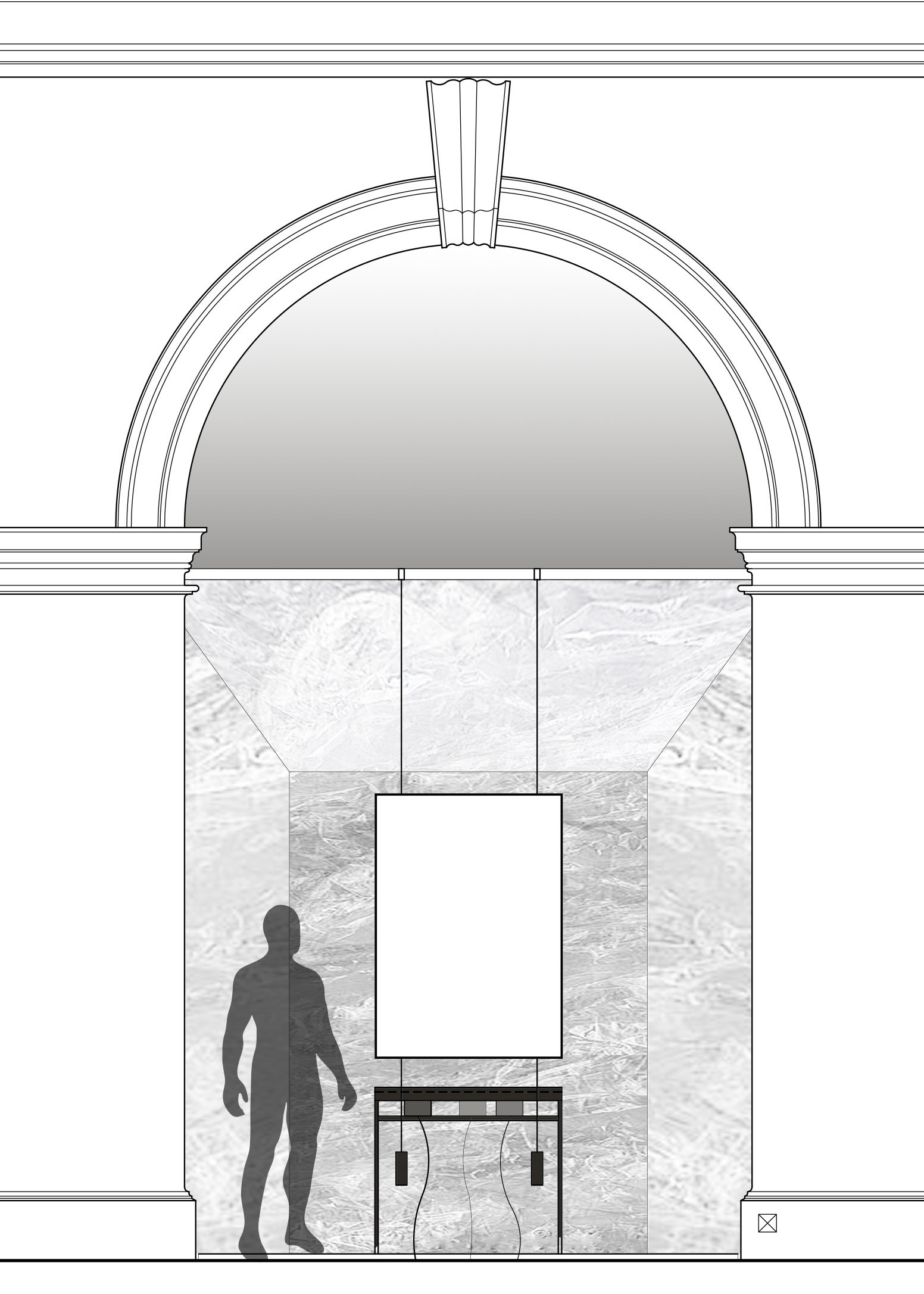 An installation that ‘defines’ an ambient musical environment, that is conditioned by the movement of users on an interactive floor.
Sinterbot by Adela Rabell Montiell and Dr. Siraj Sabihuddin
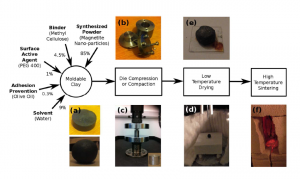 A hands on demonstration on the alternative use of an ordinary household microwave for sintering, in order to alter material by heat.
Surface of Significance by Lucas Godfrey and Matt Giannotti
 An audio-visual installation that reconceptualise geographic space. The installation explores the relationship between space, materiality and process.
The exhibition launch, on 26 November, also included three performance installations that serenaded the audience throughout the evening:
- o ire by Prof. Nick Fells
A live audio performance during which the performance controller sculpt and shape sounds as the piece unfolds.
- Wind Gust 42048 by Matt Giannottii
A composition based on wind data captured during Hurricane Matthew. Musicians captured the chaotic nature of the storm by moving around and inflecting sporadic sound intensity.
- Elegy for Eagle Philippines by Oli Jan
An excerpt of Oli Jan’s composition project ‘The Carnival of the Endangered Animals‘. The piece features sounds of endangered species on the IUCN Red List.
DATA-X Symposium
To accompany the exhibition, a DATA-X symposium was held on 1 December 2016 in the Main Lecture Theatre of the Edinburgh College of Art. PhD researchers presented their ‘installations’ and demonstrated the tools, processes and techniques behind the installation. This was an informal event and an open forum to facilitate discussion with an academic and non-academic audience. Guest speakers included Dr Jane Haley, Scientific Coordinator for Edinburgh Neuroscience and FUSION, and Dr James Howie, co-founder of ASCUS. Their talks entitled ‘FUSION –where art meets neuroscience’ and ‘ASCUS and the ASCUS Lab: catalysts for Artisience’, illustrated the efficacy of bridging the gap between the arts and sciences and how innovative, multidisciplinary projects can engage wider audiences and create novel public engagement initiatives.
The next and final phase of the project includes the creation of a DataShare Collection: the electronic equivalent of an Exhibition Catalogue in which the students will publish the data associated with their installations. Updates to follow soon.
Data-X Project Manager: Stuart Macdonald (Associate Data Librarian at Edinburgh University Data Library)
Exhibition Coordinator: Dr. Rocio von Jungenfeld (Supported Research Data services at EDINA & Data Library)
Data-X PhD Interns:
Scully Beaver Lynch – PhD candidate in Architecture by Design, Edinburgh College of Art
Adela Rabell Montiel – PhD candidate in Cardiovascular Sciences, Edinburgh Medical School: Clinical Sciences
Cindy Nelson-Viljoen – PhD candidate in Archaeology, School of History, Classics and Archaeology
Dr. Siraj Sabihuddin – PhD in Electronic engineering, School of Engineering
Image credit: DATA-X blog. http://data-x.blogs.edina.ac.uk/
by Cindy Nelson-Viljoen
PhD Student Intern
EDINA and Data Library
Trial access: Women’s Magazine Archive
*The Library has now purchased access to the ‘Women’s Magazine Archive, collection I and II’. See New to the Library: Women’s Magazine Archive.*
ProQuest have kindly allowed us to trial for a second time Women’s Magazine Archive I and II comprising archival runs of leading women’s consumer magazines of the 20th century which up till now have been difficult to locate and navigate.
You can access the database via the E-resources trials page.
Access is available both on and off-campus.
Trial access ends 15th March 2017.

Writing from the Holy Land, writing from the heart – Robert Murray McCheyne
A post from guest curator Amy Plender, PhD student, School of Divinity
The theme of this month’s student led display at New College Library is diary writing, particularly diarists writing about their experience of missions overseas. The display features items from the New College Library collections relating to Rev. Robert Murray McCheyne (1813-1843) who was appointed by the Church of Scotland to be part of a deputation to visit Jewish communities in Europe and the Middle East, with a view to future mission activity. Further details of his papers are available on the University’s Archives Online catalogue.
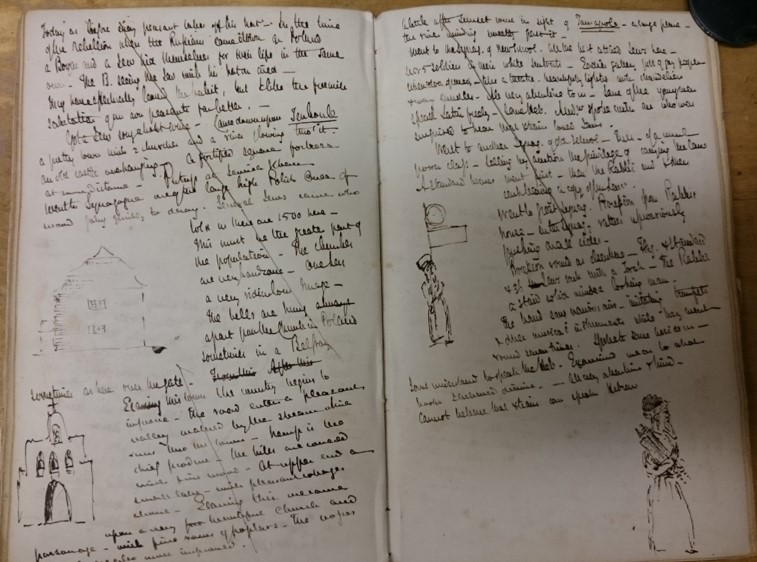
Robert Murray McCheyne’s diary from his trip to Palestine, 1838 (ref. MS MACCH1.8)
This diary was used for daily entries on McCheyne’s travels, with small sketches as well as notes on personal devotional techniques headed ‘Personal Reformation’. It also has a biographical section on the ‘Story of Robert Laing’ (perhaps a friend or fellow missionary), and an appendix on another missionary’s account of the trip. Read More
Trial access: News, Policy and Politics Magazine Archive
*The Library has now purchased access to the News, Policy & Politics Magazine Archive. See New! News, Policy & Politics Magazine Archive*
Following a request from staff in Politics & International Relations the Library has been able to secure trial access for a second time to News, Policy & Politics Magazine Archive from ProQuest. An archival collection comprising the backfiles of 15 major magazines (including the Newsweek archive), spanning areas including current events, international relations, and public policy.
You can access the database via the E-resources trials page. Access is available both on and off-campus.
Trial access ends 15th March 2017.

A Book of Two Halves
Our Projects Conservator, Nicole, describes a technique for repairing books that have broken in half in this week’s blog…
I have now moved full time to the conservation studio at the main library and I have started working on the Latin thesis from 1726 – 1826 which contain a number of PhD thesis in one leather binding.
The majority of this collection is in good condition with just under half needing conservation treatment before digitisation, mostly quick treatments such as being board reattachment. A small number of volumes have been rebound with a hollow and using book cloth which makes them more accessible and easier to be digitised. However, 46 volumes have broken sewing resulting in the text block breaking in half or in some cases three or four separate pieces. This has been caused by repeated use, and forcing the volumes open.
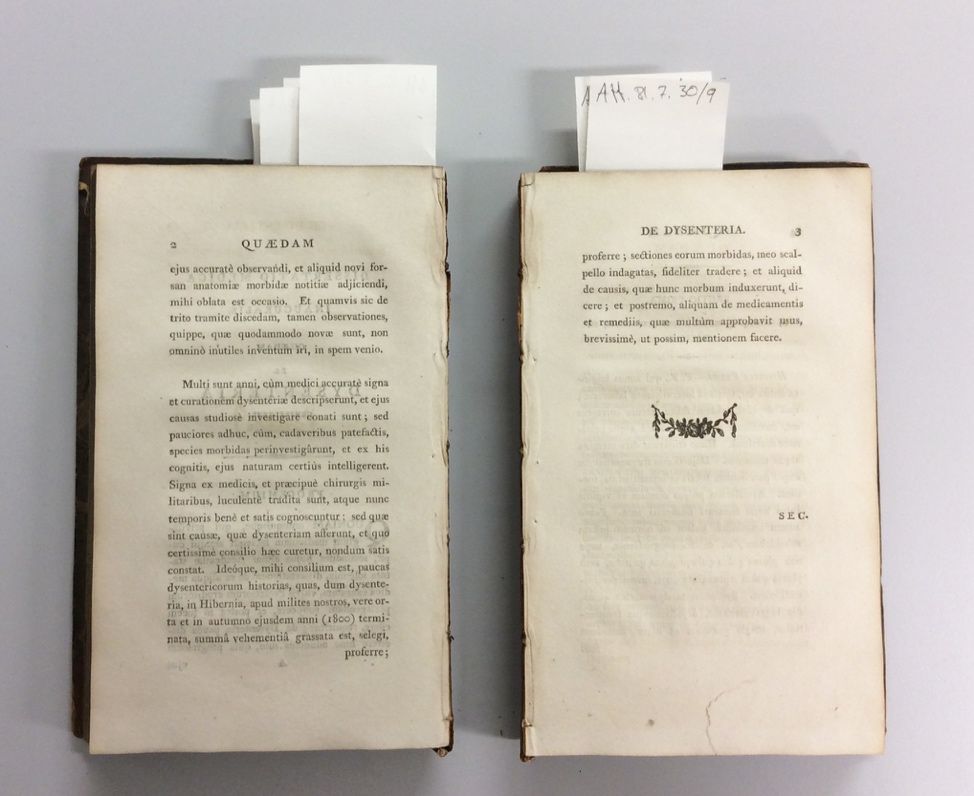
An example of a Latin thesis broken in half, before conservation
Reading the Reformation : Philipp Melanchthon
Philipp Melanchthon (1497-1560) was born on 16 February 1497, to become a Greek scholar and Protestant theologian, and a powerful force in Reformation debate.
A colleague of Luther’s at the University of Wittenberg, Melanchthon took part in the ‘pamphlet wars’ that spread the debates across Europe. New College Library holds early examples including this 1521 pamphlet:
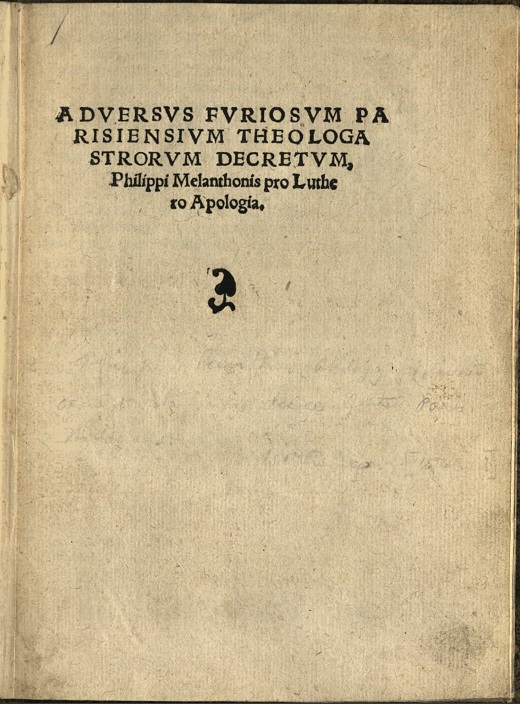
Melanchthon, Philipp. Aduersus furiosum Parisiensium theologastrorum decretum Philippi Melanchthonis pro Luthero Apologia. Basel, 1521. New College Library B.a.1.15
ProQuest’s ‘Black Newspapers’ on trial
*The Library has now purchased the New York Amsterdam News (1922-1993), one of the titles in the Black Newspaper Collection. See New to the Library: New York Amsterdam News* The Library also currently has access to all other Black Newspaper titles through the ProQuest Access 350 subscription until 31st July 2024. Access via the Databases A-Z list.*
For a limited time only the Library has access to Black Newspapers from ProQuest Historical Newspapers. This fantastic resource contains the archives of 9 individual newspaper titles that provide cultural perspective and insight to the events that shaped the United States in the 20th Century.
You can access the database via the E-resources trials page. Access is available both on and off-campus.
Trial access ends 15th March 2017.

Reading the Reformation : John Fisher
New College Library’s collections provide a rich resource for and about Reformation theology and its readers. One of these readers was John Fisher [St John Fisher] (c.1469–1535), bishop of Rochester, cardinal, and martyr in the time of Henry VII and VIII. Tutored in Greek by Erasmus, Fisher was able to use Erasmus’s edition of the Greek New Testament (1). Like his contemporary, Thomas More, Fisher was an active opponent of Martin Luther in the theological debates of the 1520s.
New College Library holds two editions of Fisher’s response to Luther’s theology, Assertionis Lutheranae confutatio (1523).
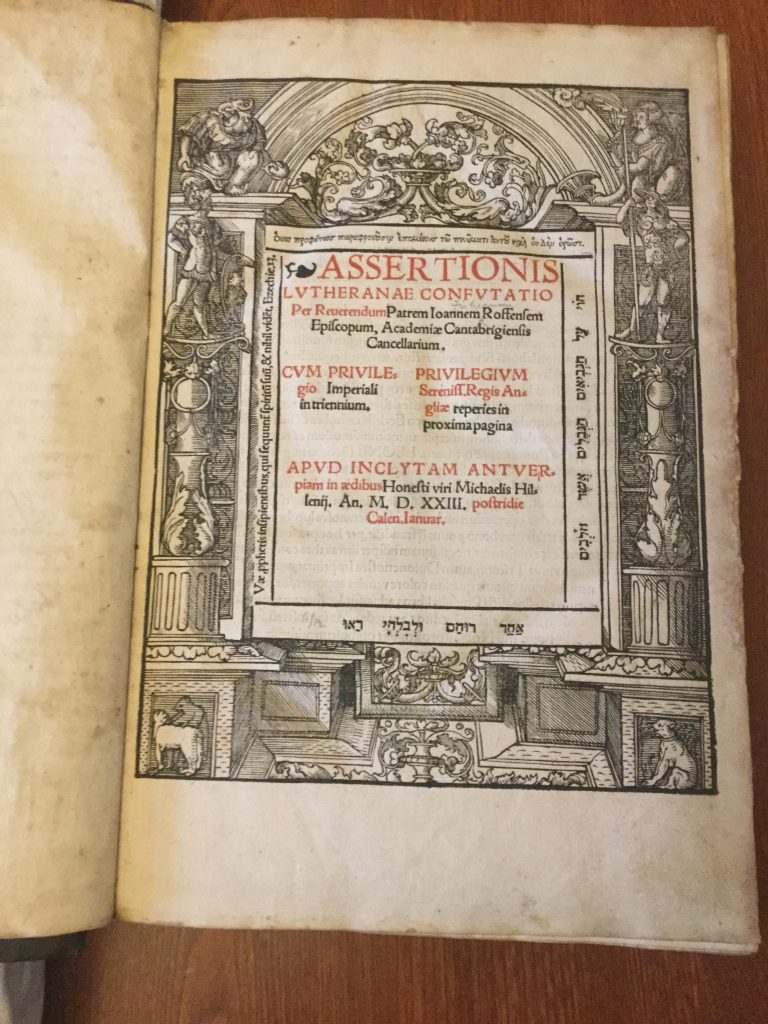
—Assertionis Lutheranae confutatio / per Reuerendum Patrem Joannem Roffensem Episcopum, Academiae Cantabrigiensis Cancellarium. Antwerp, 1523. X7/A2

Trial access: Church Missionary Society Periodicals Module 2
*The Library has since purchased this resource and it can be accessed, along with Church Missionary Society Periodicals, module 1, via the Primary Sources database list or Databases A-Z list.*
The Library currently has access for a trial period to Church Missionary Society Periodicals Module 2: medical journals, Asian missions and the Historical Record, 1816-1986 from Adam Matthew Digital.
You can access the database via the E-resources trials page. Access is available both on and off-campus.
Trial access ends 14th March 2017.
** Trial access has been extended until 5th April 2017**

Reading the Reformation : Luther
On 14, 15 and 16 February 2017, the Cunningham Lectures at New College will mark the 500th Luther anniversary, with lectures by Professor Kaufmann covering Europe, Reformation and Luther.
New College Library holds outstanding Reformation collections that support the theme of the first lecture, Book, Print and Reformation. This includes examples of Luther’s pamphlets like the one below, from the early part of his career at the University of Wittenberg.
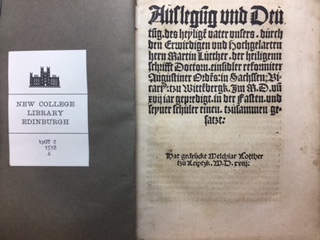
Luther, Martin. Auslegung und Deutung des heylige vater unsers … Leipzig, 1518. New College Library tpGT 2 1518
Each pamphlet, printed using the newly developed printing press technology, was cheaply produced and easily distributed, allowing the ideas they contained to spread quickly. Read More
Collections
 Hill and Adamson Collection: an insight into Edinburgh’s past
My name is Phoebe Kirkland, I am an MSc East Asian Studies student, and for...
Cataloguing the private papers of Archibald Hunter Campbell: A Journey Through Correspondence
My name is Pauline Vincent, I am a student in my last year of a...
Hill and Adamson Collection: an insight into Edinburgh’s past
My name is Phoebe Kirkland, I am an MSc East Asian Studies student, and for...
Cataloguing the private papers of Archibald Hunter Campbell: A Journey Through Correspondence
My name is Pauline Vincent, I am a student in my last year of a...
Projects
Cataloguing the private papers of Archibald Hunter Campbell: A Journey Through Correspondence
My name is Pauline Vincent, I am a student in my last year of a...
Archival Provenance Research Project: Lishan’s Experience
Presentation My name is Lishan Zou, I am a fourth year History and Politics student....