by Elin Crotty, Archive & Library Assistant, New College
Over the past few months, the two New College Archive and Library Assistants (ALAs) have been liaising with the Cultural Heritage Digitisation Service (CHDS) about digitising our cuneiform tablets. The New College Library cuneiforms are 4 fragments of carved text, which range in date from the Neo-Babylonian Empire, (circa 626 – 539 BCE) to the Neo-Sumerian Empire (circa 2046 – 2038 BCE). The Neo-Sumerian tablet (NCL/Object/2025/3), which has split into two pieces, is thought to be one of the oldest examples of writing in the University’s collections at circa 4070 years old.
CHDS have recently been using Reflectance Transformation Imaging (RTI) to experiment with creating 3D representations of surface texture. You can read a much more thorough description of how the process works on their blog post here, but essentially the objects are placed upon a flat surface under a dome, with a camera positioned directly above them. Lights are fixed inside the dome at all angles and they flash in sequence as 72 photos are taken. This changes the light angle and resultant shadows for the camera, throwing details upon the surface of the object into high relief. The photos with the varying shadows are stitched together using specialist software, creating a 3D model of the surface of the object. A few months ago, the ALAs worked with CHDS to bring the New College cuneiforms to the uCreate MakerSpace, to use the RTI dome there.
The actual photography was very quick, but it was a careful process ensuring that the cuneiforms were supported and kept as flat as possible. After assessment by our conservation team, we built the fragments some temporary supports and handled them using nitrile gloves – no Hollywood white cotton gloves in our library! To get the cuneiforms in and out of the dome, CHDS had come up with a simple but very effective solution; a tea tray, lined with plastazote foam.
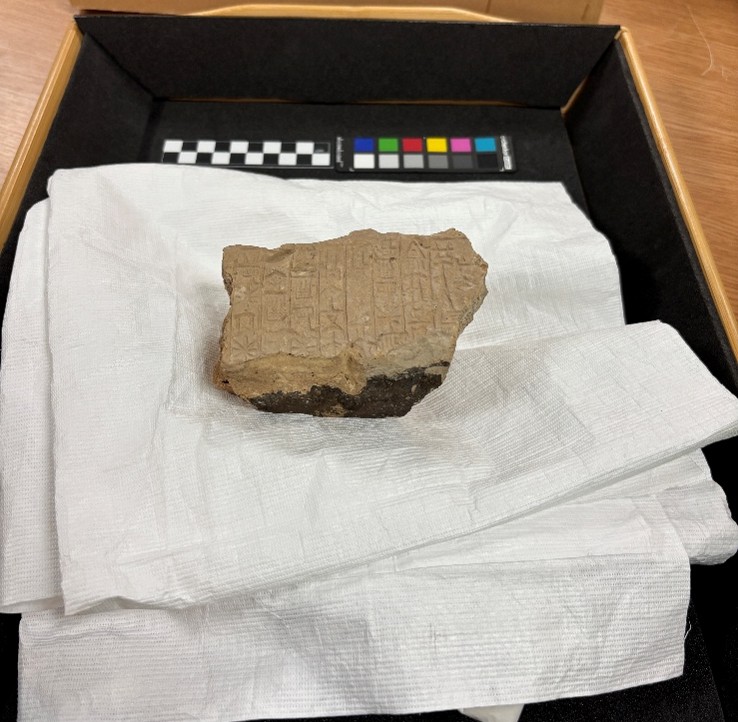
Figure 1 NCL/Object/2025/3, cuneiform tablet from Neo-Sumerian Empire (c.2046-2038 BCE).
 Flavius Josephus Online is the first comprehensive literary-historical online commentary on the works of Flavius Josephus in English including the Greek text by Niese from the late 19th century. About 65% of the project is complete, consisting of Life, and Against Apion, book 2 of the Judean War, and books 1-11 and 15 of the Judean Antiquities.
 The Littman E-Library of Jewish Civilisation has over 30,000 pages of leading research in Jewish studies from Arthur Szyk: Artist, Jew, Pole to The Zohar: Reception and Impact. The LEJC includes international perspectives on Jewish civilization from scholars across the world, including the USA, Israel, Germany, Poland, and the UK.
 The Textual History of the Bible Online (THBO) is unique in providing, for the first time, a cross-searchable platform with all available information regarding the textual history, textual character, translation techniques, manuscripts, and the importance of each textual witness for each book of the Hebrew Bible, including its deutero-canonical scriptures. In addition, it includes articles on the history of research, the editorial histories of the Hebrew Bible, as well as other aspects of text-critical research and its auxiliary fields, such as papyrology, codicology, and linguistics.
 At New College Library, we welcome people working in the church to use our outstanding theological collections for research and continuing professional development.
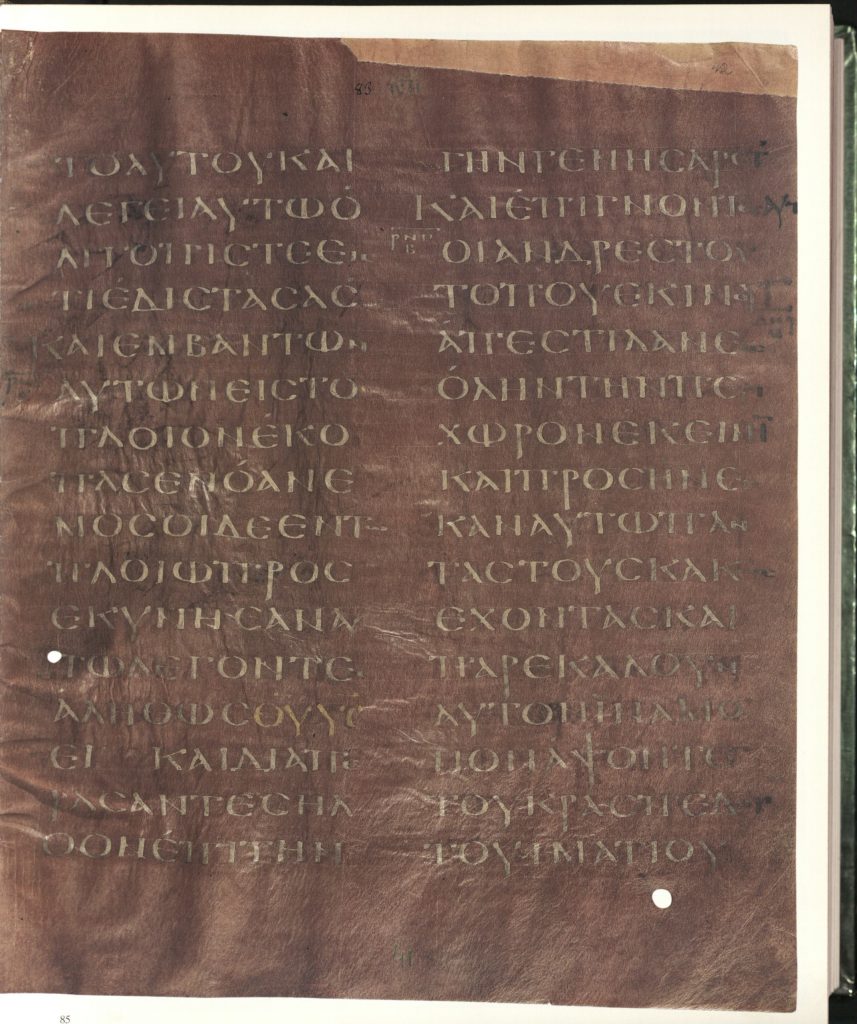
 These four letters are abbreviations for the words “God” and “Son” in the text: αληθως θ(εο)υ υ(ιο)ς ει (“Truly, you are the Son of God”).