This unassuming little book is of the greatest national importance: it is the only copy in Scotland of the first book printed in Gaelic (Gaelic Liturgy; year 1567; shelfmark Dd.10.44.). After the Reformation there was a strong impetus, sponsored primarily by the Campbell Earls of Argyll, to evangelise the Highlands and Islands, where Gaelic rather than Scots was spoken. John Carswell, Bishop of the Isles, adapted John Knox’s Book of Common Order into Scottish Gaelic. It was a hugely ambitious undertaking, particularly considering it would be another two centuries before the New Testament was finally published in vernacular Gaelic. This copy has clearly been well-used.

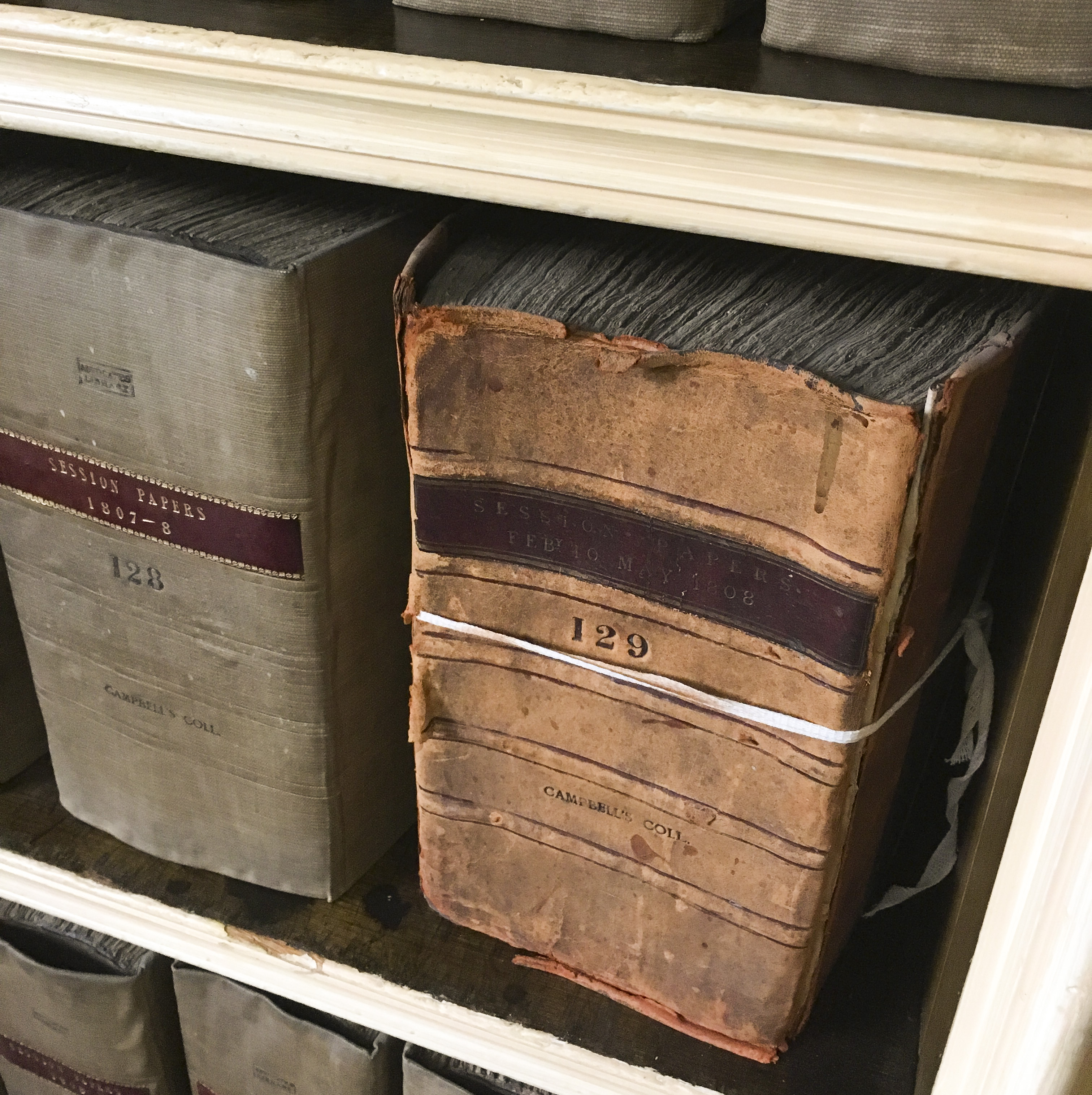 At present I am working on a pilot project, digitising the Scottish Court of Session Papers. The collection is held across three institutions; The Advocate’s Library, The Signet Library and the University of Edinburgh’s Library and University Collections. The collection itself consists of circa 6500 volumes, comprising court cases which span the 18th and 19th century.
 With the 400th anniversary this year of the death of one of our greatest and most influential playwrights, William Shakespeare, I found myself cropping images of some of his first printed quartos for the creation of an e-reader as part of the Shakespeare image collection. Now existing as high quality e-readers are the plays Love’s Labours Lost (1st Quarto Edition) and Romeo and Juliet (2nd Quarto Edition), both of which are used as part of the collaborative project concerning Shakespeare’s printed quartos, The Shakespeare Quarto Archive (