
In February, Robin Rice and I ventured to Zagreb, Croatia, for the 20th International Digital Curation Conference. This year’s theme was ‘AI, austerity, and authoritarianism: contemporary challenges in digital curation’, which made for a very timely programme of presentations.
In her opening keynote, Dr. Antica Čulina discussed her fascinating research into the reproducibility crisis in Ecology and how Open Research practices can address it.
I attended most of the sessions focused on AI and machine learning, and heard about the different ways digital curators are trying out new applications of these technologies to automate research data management tasks. A popular theme of these sessions was using Large Language Models to fill in missing metadata and to provide automated feedback to researchers writing Data Management Plans. These use cases are both very appealing, but as the outputs of the tools still needed to be checked by human curators every time, the presenters weren’t sure whether these tools were saving or costing time. It was useful to hear different perspectives on creating tools for repository users versus for repository curators, and I’ll follow these projects with great interest. I also enjoyed Michael Groenendyk’s talk on using Large Language Models to detect data citations, which allows institutions to assess the impact of their researchers’ open datasets.
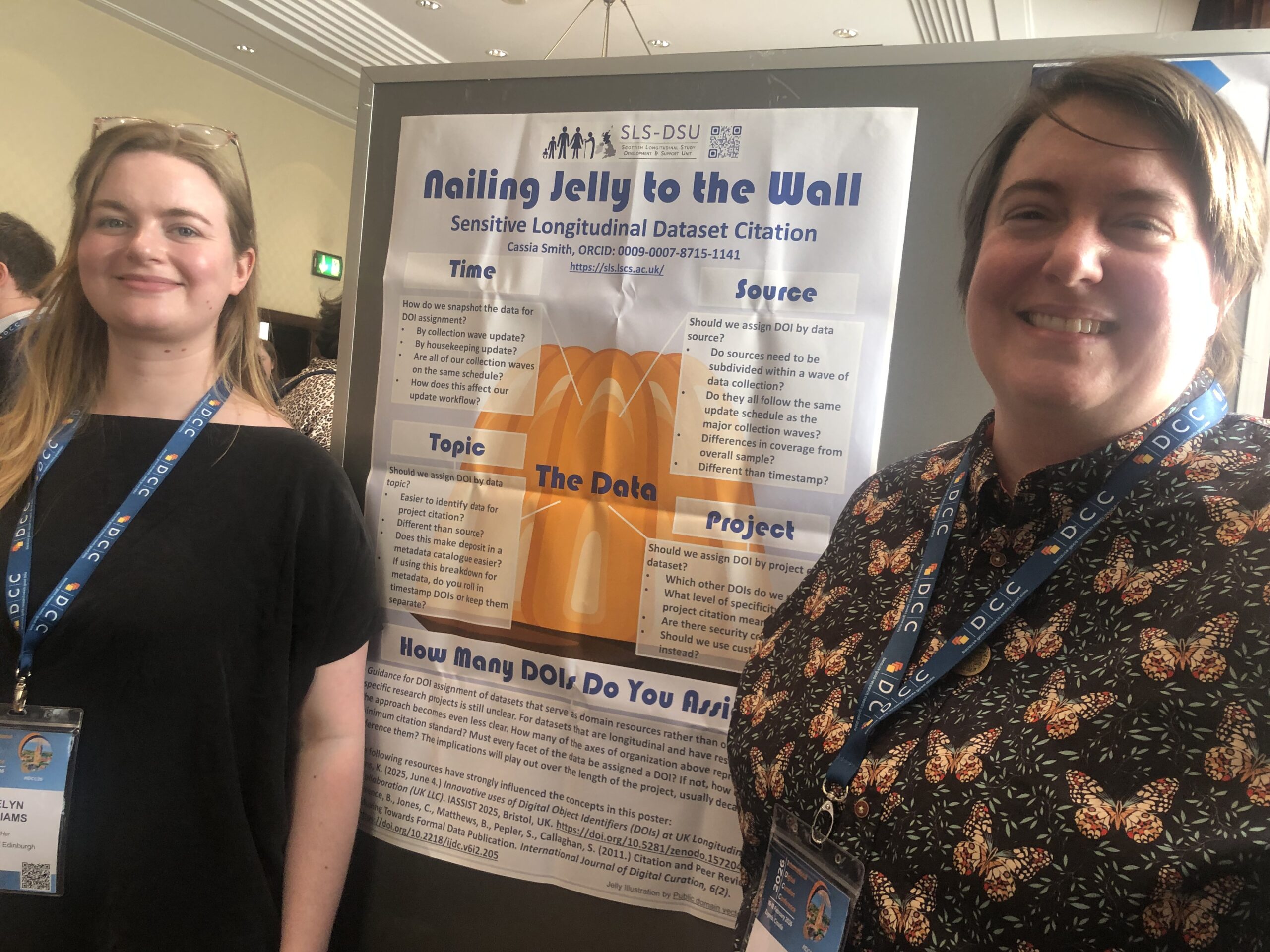
Cassia Smith and myself, beside her award winning poster! Photo by Robin Rice.
The closing keynote featured Dr. Lynda Kellam and Mikala Narlock from the Data Rescue Project, who reflected on the past year they spent preserving access to United States federal data and building a community that cares deeply about the integrity of the US government and its institutions.
DCC put on some excellent social events throughout the conference, including a drinks reception in the Emerald Ballroom at the historic Esplanade Hotel, and dinner and a beer tasting at The Garden Brewery & Taproom. I had so much fun meeting other digital curators from all around the world and sharing experiences and knowledge.
Overall, I highly recommend attending IDCC to anyone who’s interested in current issues in digital curation, and I hope I can go again in the future!
To read more about what went on at IDCC26, you can check out DCC’s summary here:
https://dcc.ac.uk/events/idcc26/summary
To see all the presentation slides and posters, visit the Zenodo page:
https://zenodo.org/communities/idcc26/
Evelyn Williams
Research Data Support Assistant
Research Data Service