Home University of Edinburgh Library Essentials
May 24, 2026
Preserving People, Not Just Paper: My Internship Conserving the New College Collection
Today’s blog comes from Katherine Richey, an Edinburgh student who undertook a five-month internship with Heritage Collections from March to the end of July 2025. The internship focused on the care, documentation, and rehousing of two key paper-based collections held within the New College Collections at the University of Edinburgh: The Alumni Photograph Collection, and the Chaplains’ Files of the Church of Scotland.
People are at the heart of every collection, but never have I felt that more strongly than during my time working with the New College Collections.
When I began my role as the New College Collection Conservation Intern back in March 2025, I expected to learn a lot about paper. I didn’t, however, quite expect to encounter so many people – their stories, their portraits, their grief, and their humour – and to feel so connected to them through the material they left behind.
Split between the new conservation studio on the fifth floor of the Main Library, and New College itself, my role has involved caring for two very different, but equally fascinating collections: a series of graduation photographs dating from 1857 to the present day, and a group of Chaplains’ files belonging to the Church of Scotland. While the work focused on conservation and collections care, it also offered a rare glimpse into the lives that passed through these institutions.
A Collection of Faces
The heart of my internship was spent with the New College Alumni Photograph Collection, a series of over 180 class portraits dating from 1857 to the present day. Each one captured a graduating class from New College, tracing students, professors and expressions over a century and a half of history.
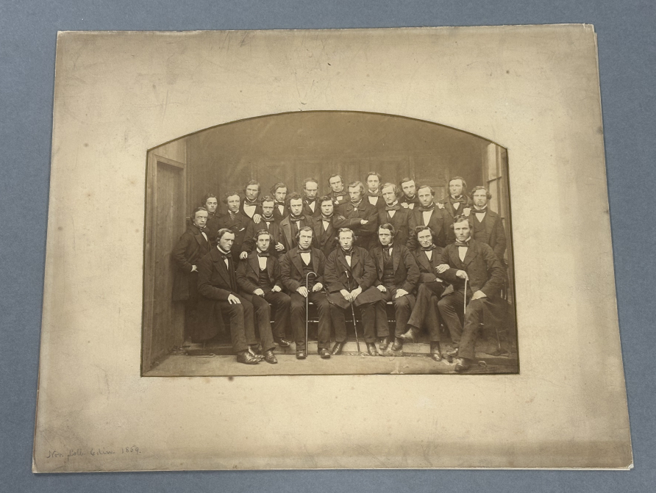
Class portrait from the New College Collection
When I first encountered the collection, it was tucked in the corner of stores and had seen better days. Although loosely organised by decade, the folders were all one size, meaning items were often sliding around or sticking out of the sides. Some were torn or delaminating, others just very, very dirty.
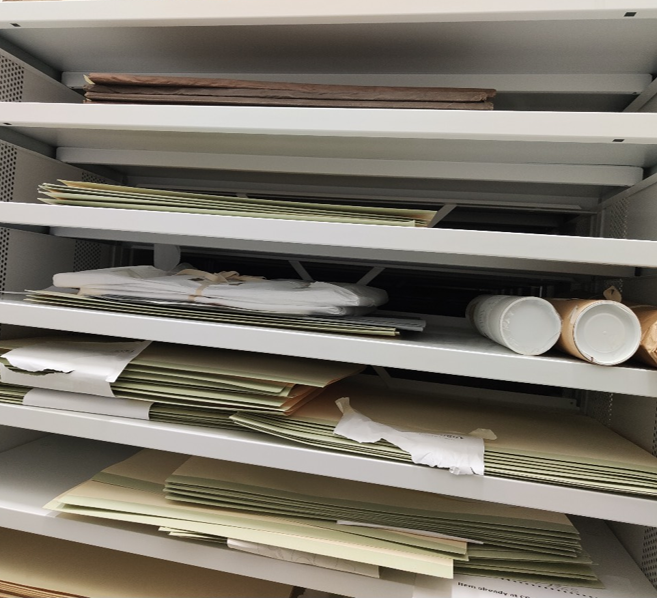
Collection on the shelf, before treatment
With a project of this scale, the first step was planning (and in turn, testing my love-hate relationship with excel). I logged each item into a spreadsheet, recording dimensions, condition issues, treatment plans and rehousing needs. This helped me break the project down into stages and order the right materials for rehousing down the line.
Then came the cleaning, with some photographs gathering more than a century of dirt. Cleaning was done in two steps: first brushing away loose debris, then gently lifting ingrained dirt with a smoke sponge. In some case, for example an 1857 image with a hand-drawn name map, I used only dry brushing to avoid damaging sensitive areas. The images responded incredibly well to this non-invasive method, with many vastly improving aesthetically as a result.
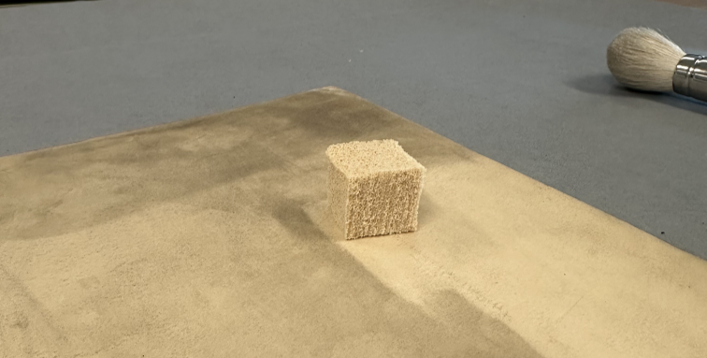
Surface cleaning the photographs with smoke sponge
After cleaning, I moved on to repairs. Using Japanese tissue and wheat starch paste, I reinforced tears and crumpled corners, repaired delaminated board, and stabilised weak areas. The limited timescale of the project meant that treatments were focused on function over aesthetics, ensuring they could be handled safely ready for future digitalisation.
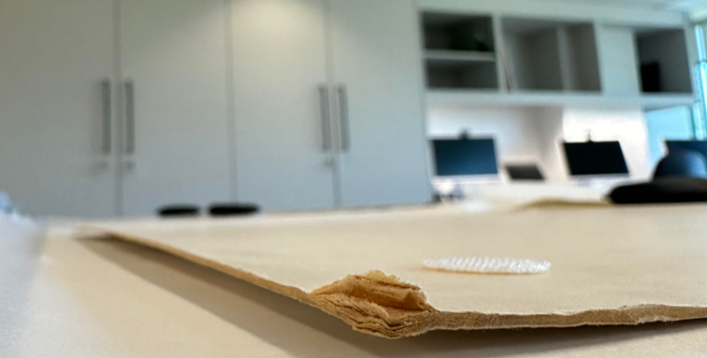
Photograph with delaminating corners, before treatment
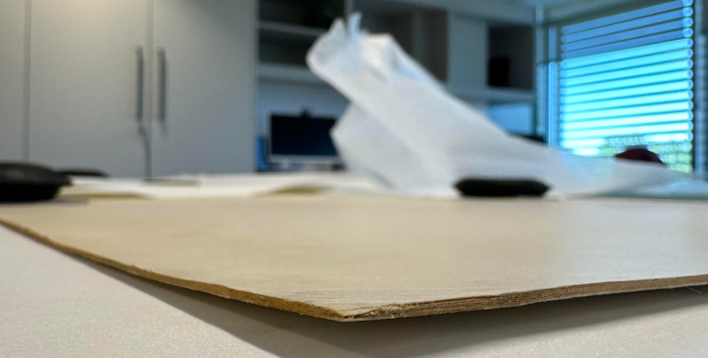
Photograph with delaminating corners, after treatment
Finally, I rehoused the collection in individual photon paper folders, placing them into groups inside drop-spine boxes. These were mostly organised by decade, where this correlated with the object’s size, but any outliers were also placed in size-appropriate boxes, with each item carefully labelled. The result is a clean, stable, and much more accessible collection, ready to be accessed more easily in New College.
Working on this project deepened my understanding of conservation as both a practical and intellectual task, and a careful balance of ethics, planning, and material knowledge.
Meeting the Ministers
Midway through my internship, my focus expanded beyond the photo collection when I was asked to support a second project: the Chaplains’ files held at New College.
These files, mostly dating from the early to mid-20th century, trace ministers of the Church of Scotland, offering a moving portrait of Scottish clerical life across the period. Many of these men had served during periods of enormous social upheaval, particularly the Second World War, with many files reflecting the emotional weight of that time, including items such as death notices, letters from ministers taken as prisoners of war, and quiet reflections on personal trauma. Here, my job was to catalogue the contents of each file, adding additional administrative data from the Fasti Ecclesia Scoticanae to ensure our records were up to date. Then, I cleaned and stabilised the materials, removing damaging fastenings, before rehousing them into archival folders for future longevity and reference.
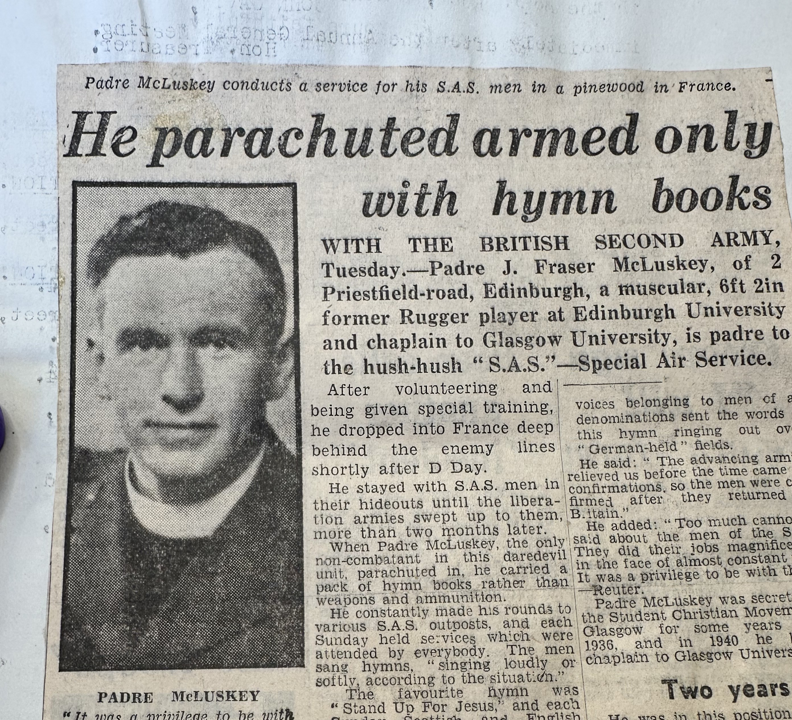
Newspaper clipping from the Chaplains’ files
Taken together, these records show how spiritual leaders themselves were shaped by the very crises they helped others to navigate. Many letters were steeped in a deep sense of duty and service, framing ministry as both a calling of faith and an act of national resilience. What stood out to me in each file was the emotional control embedded in their language; their need to appear strong, composed, and unwavering. At the same time, these documents subtly reveal how psychological strain was minimised or spiritualised, couched in terms like “exhaustion” or “unsuitability”.
I hope, from this project, further study can be done into the impact of attitudes of the period, and it goes to show how even in the most seemingly administrative of collections, the human voice finds a way through. While this collection gave me immense technical experience in rehousing, surface cleaning, and cataloguing, it also taught me to slow down, read between the lines, and respect the weight that paper can carry.
Reflections
As I come to the final days of this experience, I cannot help but to look back and realise how much I have learnt over the last five months. Where my practical conservation and collections management skills have flourished thanks to working so closely with experts, I have also developed a deeper appreciation of the true value of collections teams, and the quiet but vital work they do to ensure that our history is accessible for those to come.
My time has been greatly enriched by some brilliant experiences: hearing all about developments of the discipline at the Scottish Paper Conservators News and Ideas Exchange in the National Library of Scotland, spending time learning to treat 19th-century books, and seeing the daily ins and outs of the conservation studio, from pest traps to acquisition choices. Each of these moments have given me a wider perspective of what conservation looks like across an institution.
More than anything, however, I did not expect this work to feel so personal. A lot of conservation is described in technical terms and processes, and of course that is a significant part of the job. But what I quickly realised was that I was not just handling paper, but encountering people. Someone was in this space before me, and this is what they left behind.
Just a week before this internship ended, I graduated myself. After spending so long with the classes who had come before me, this work made my own moment even more special. I was more aware than ever, when crossing the stage, of the community I had stepped into, and the importance of the work we do to ensure their stories do not disappear.
I am incredibly grateful to have had the opportunity to support that work, and more importantly, to the incredible team who have aided me in making these collections remain accessible in the future.
Reflections on IDCC 2026
In February, Robin Rice and I ventured to Zagreb, Croatia, for the 20th International Digital Curation Conference. This year’s theme was ‘AI, austerity, and authoritarianism: contemporary challenges in digital curation’, which made for a very timely programme of presentations.
In her opening keynote, Dr. Antica Čulina discussed her fascinating research into the reproducibility crisis in Ecology and how Open Research practices can address it.
I attended most of the sessions focused on AI and machine learning, and heard about the different ways digital curators are trying out new applications of these technologies to automate research data management tasks. A popular theme of these sessions was using Large Language Models to fill in missing metadata and to provide automated feedback to researchers writing Data Management Plans. These use cases are both very appealing, but as the outputs of the tools still needed to be checked by human curators every time, the presenters weren’t sure whether these tools were saving or costing time. It was useful to hear different perspectives on creating tools for repository users versus for repository curators, and I’ll follow these projects with great interest. I also enjoyed Michael Groenendyk’s talk on using Large Language Models to detect data citations, which allows institutions to assess the impact of their researchers’ open datasets.
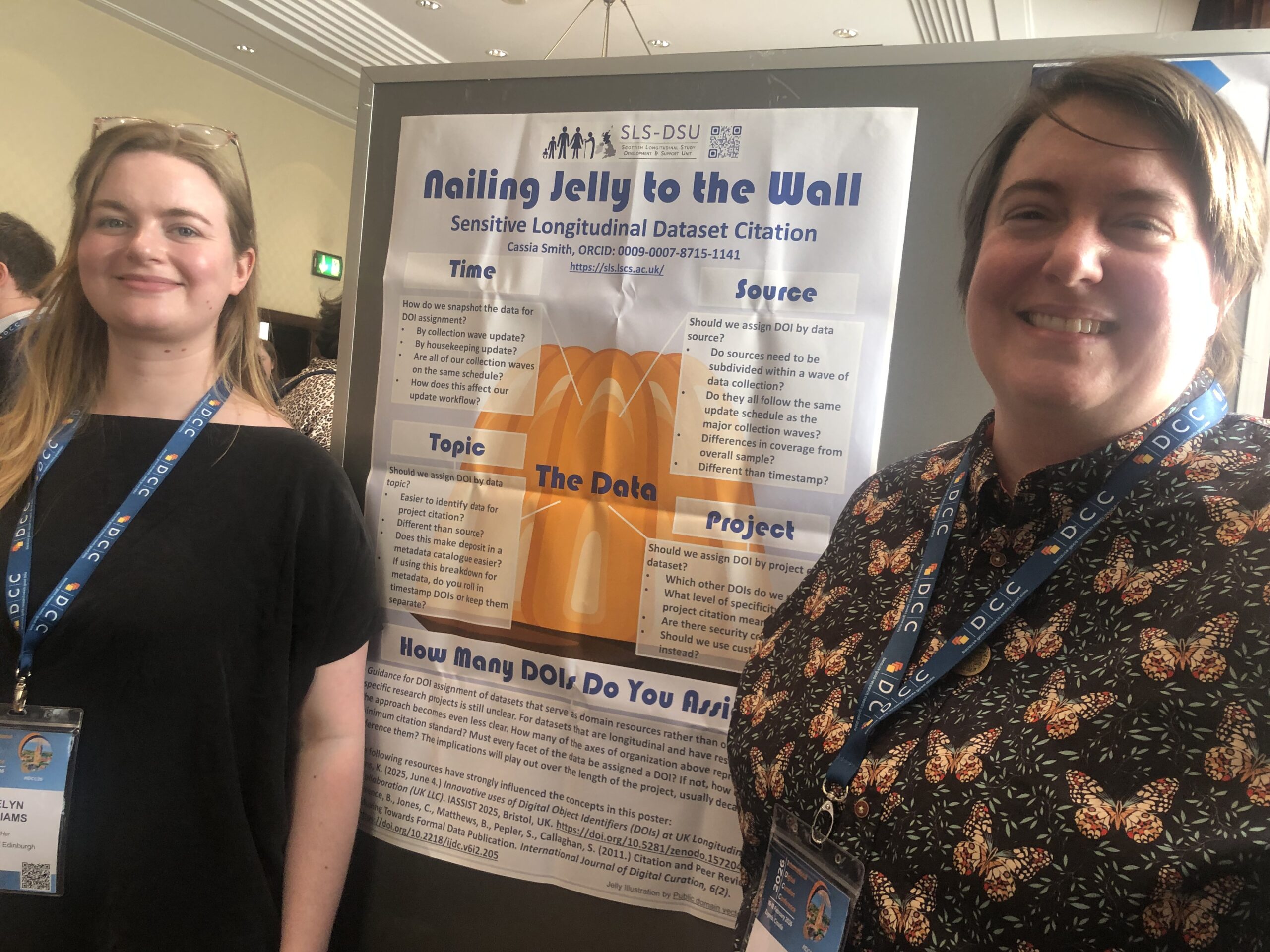
Cassia Smith and myself, beside her award winning poster! Photo by Robin Rice.
The closing keynote featured Dr. Lynda Kellam and Mikala Narlock from the Data Rescue Project, who reflected on the past year they spent preserving access to United States federal data and building a community that cares deeply about the integrity of the US government and its institutions.
DCC put on some excellent social events throughout the conference, including a drinks reception in the Emerald Ballroom at the historic Esplanade Hotel, and dinner and a beer tasting at The Garden Brewery & Taproom. I had so much fun meeting other digital curators from all around the world and sharing experiences and knowledge.
Overall, I highly recommend attending IDCC to anyone who’s interested in current issues in digital curation, and I hope I can go again in the future!
To read more about what went on at IDCC26, you can check out DCC’s summary here:
https://dcc.ac.uk/events/idcc26/summary
To see all the presentation slides and posters, visit the Zenodo page:
https://zenodo.org/communities/idcc26/
Evelyn Williams
Research Data Support Assistant
Research Data Service
DataShare Spotlight: A photographic record of a divided Berlin in the 1980’s
Some of the most widely used datasets in DataShare are the collections of photographs of tower blocks and mass housing, both in the UK and internationally, created by Miles Glendinning, Professor of Architectural Conservation in the Edinburgh School of Architecture and Landscape Architecture (ESALA). Recently, Miles deposited a number of new datasets to the DOCOMOMO International Mass Housing Archive collection, including recent research data-gathering exercises in Belgium, China, Chile, Italy and Morocco. Further to this, are two archives of photos documenting Berlin in the 1980’s. Covering both East and West Berlin, these images provide striking visual representations of the buildings, transport infrastructure and general urban environment of the time, revealing a fascinating glimpse into the DDR (Deutsche Demokratische Republik), the BRD (Bundesrepublik Deutschland) and the enforced division between them.
To help shine a light on this special set of images, I asked Miles to answer three questions regarding the creation of this dataset.
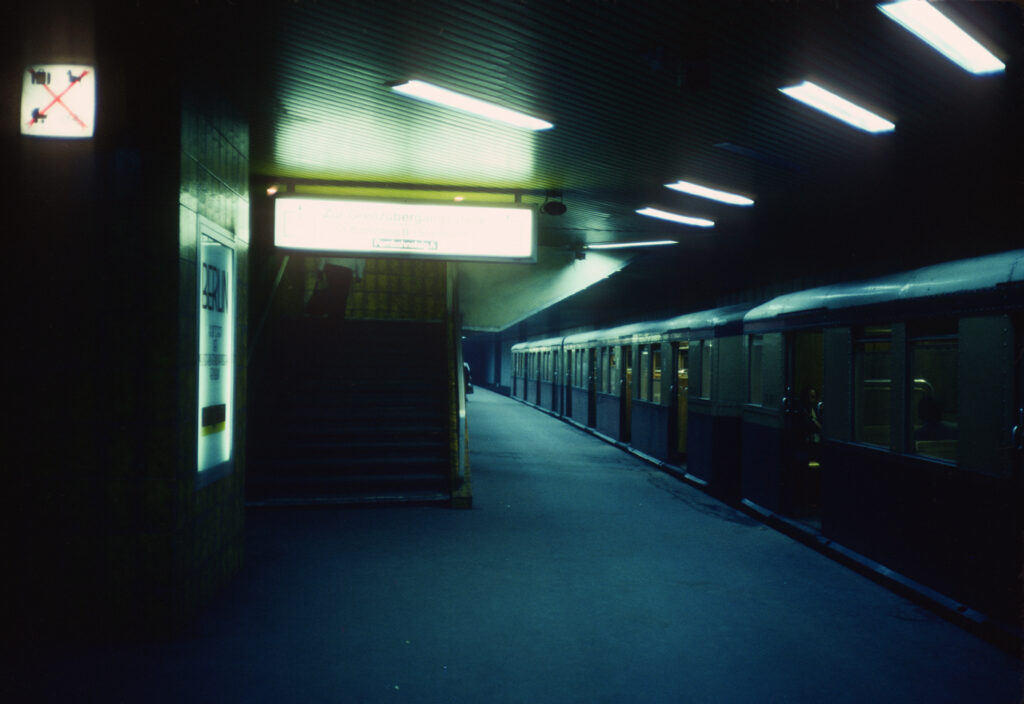
Mitte – Friedrichstrasse. (Nord-Sud S-Bahn), Sept 1982 Photo credit: Miles Glendinning https://doi.org/10.7488/ds/8062
1 – What drew you to Berlin during this period?
I was drawn to visit East and West Berlin in 1982 by a curiosity to see first-hand what the Wall was like in its ‘mature’ state, and to experience, however briefly, the contrasting ways of life in the two parts of the city – East Berlin a would-be capital city with an alien entity adjoining its city core, and West Berlin a somewhat peaceful, even backwater-like island city-state divorced from the mainstream hubbub of West German life: at that stage, in the pre-Gorbachev era, there was no suspicion that the Iron Curtain only had a few more years of life, and the situation all seemed irreversibly settled in a strange sort of stagnant air immobility.
What particularly interested me were the quirky anomalies thrown up by the makeshift character of the division-line, including strange ‘exclaves’ such as Steinstücken – a few houses accessible by its own bus route through a narrow extrusion in the Wall), and the strange status of the S-Bahn (the local suburban rail network), whose lines in West Berlin were run indirectly by the DDR authorities, and had fallen into seemingly terminal decay and dereliction following many years of boycotts by West Berliners.
Several S-Bahn stations also featured bizarre border anomalies, such as the ‘door in the Wall’ that gave access to Wollankstraße station, and the underground/overground West-Berlin interchange and border crossing in the centre of East Berlin at Friedrichstraße.
Other infrastructural monuments of division and decay included the enormous DDR customs checkpoints complex newly built just north of ‘Checkpoint Charlie’, and later demolished immediately in 1990, or the disused Olympic Stadium bequeathed by the Nazi regime.
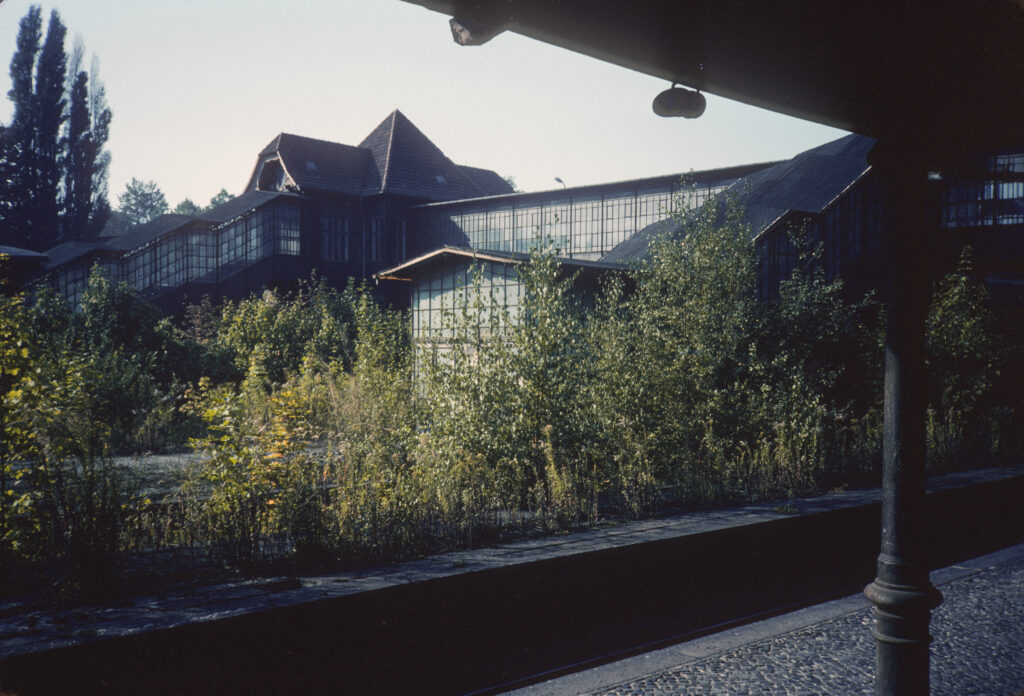
Wedding – Bf Gesundbrunnen – Sept 1982 view A – Photo credit: Miles Glendinning https://doi.org/10.7488/ds/8063
2 – Your images are documented with metadata of where they were taken, but beyond that, does looking at any of the photos bring back any particular memories?
The strongest memory brought back by looking at the photos is the sense of ‘suspended animation’ that was pervasive throughout the city, with some bustle in the ‘Ku’damm’ and ‘Alex’, but significant areas of dereliction and disuse everywhere, especially near the border, plus stereotypical ‘communist greyness’ throughout East Berlin, and a general feeling of relative lack of population and urban energy in both halves of the city.
The images of quiet decay and dereliction seem to evoke feelings akin to the ‘deploratio urbis’, or lamentation for lost greatness, felt by Renaissance and Romantic visitors among the ruins of classical Rome: looking at a 1982 photo such as that of the spectacularly overgrown wasteland of Gesundbrunnen station, what one saw was a vista of apparently irreversible decay, with no hint of the spectacular reversal that lay only a decade ahead.
From a modernist heritage perspective, however, many of the structures built during the division today seem of growing historical interest, including West-Berlin’s outer modern social housing complexes such as the Märkisches Viertel, or the extensive ‘Plattenbau’ complexes ubiquitous throughout East Berlin (on which see also the more recent images in the Docomomo International Mass Housing Archive, https://datashare.ed.ac.uk/handle/10283/2927 ).
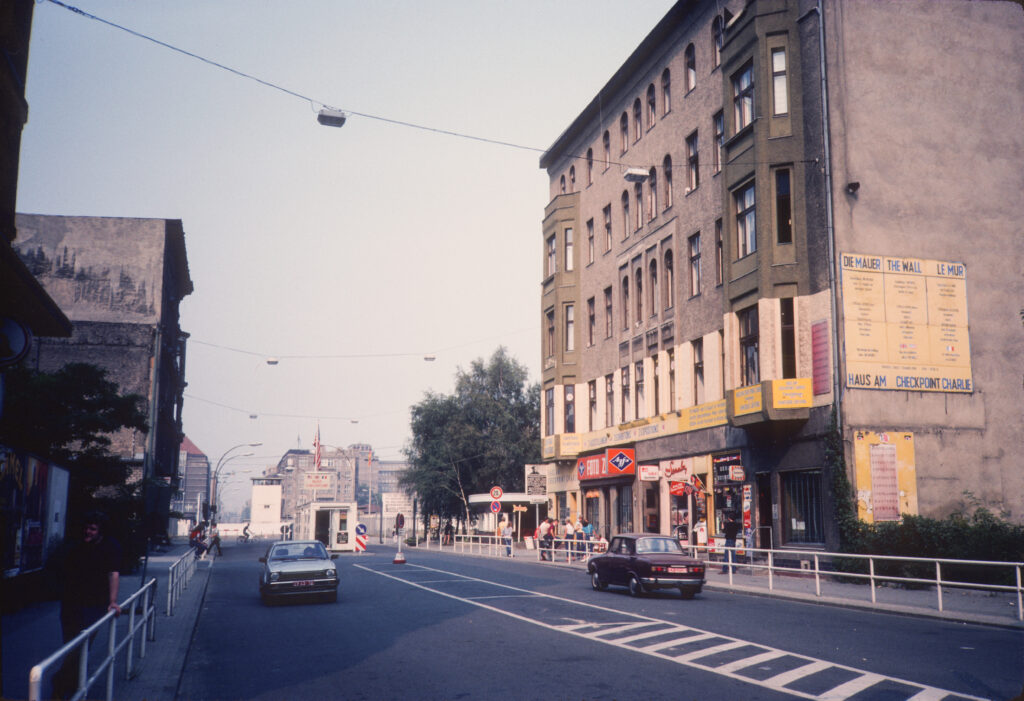
Kreuzberg – Friedrichstrasse, Checkpoint Charlie, Sept 1982 Photo credit: Miles Glendinning https://doi.org/10.7488/ds/8063
3 – How do you envisage the images in the dataset being used?
As always, it’s rather difficult to predict the very varied ways in which images such as these could be used, but I imagine that they could be useful for scholarly exploitation by historians of 20th-century Germany or of its post-war built environments, or as a more popular level, by enthusiasts for ‘Cold War heritage’ or ‘Ostalgie’?
Many thanks to Miles for taking the time to respond so insightfully to the questions.
The items containing the Berlin photos can be found at the following links:
The wider collections of tower blocks in the UK and mass housing internationally can be found at:
DOCOMOMO International Mass Housing Archive
Keith Munro,
Research Data Support Assistant
Two upcoming Edinburgh data-related conferences
As we all settle into the new year, it is good to start filling the calendar with events that provide new insight, provide opportunities to interact with peers, offer the chance to share knowledge and to have an experience set apart from everyday work. To help with this, it is worth taking note of a couple of conferences coming up this year, hosted here at the University of Edinburgh.
Digital Research Conference 2026
On February 26th, the 2026 Digital Research Conference will take place at the Edinburgh Futures Institute. It brings together University of Edinburgh researchers and professional staff engaged in digital, data-intensive, and computational research to promote best practices, inspire collaboration, and stimulate discussions across various research fields.

Attendees experience a diverse programme featuring keynote talks, interactive panels, hands-on workshops, and breakout sessions covering emerging trends, digital research skills, and innovative methodologies.
Registration is free but tickets are available only to University of Edinburgh Staff and PGR students: Registration link.
Edinburgh Open Research Conference 2026
On June 18th, the Edinburgh Open Research Conference 2026 will take place at 50 George Square and the call for submissions is now open.
This year’s call is based on the ambitious “Recommendation on Open Science”, produced by UNESCO, it recognises the broad scope and impact of Open Research – not just on knowledge production, but also on the world at large. Value driven and built around the values of Quality and Integrity, Collective Benefit, Equity and Fairness, and Diversity and Inclusion, the model provides a foundation for a strategic and principled path forward. Over the past year Edinburgh Open Research (EOR) have revamped their action plan and internal model at the University of Edinburgh to reflect this ambitious and expansive scope.
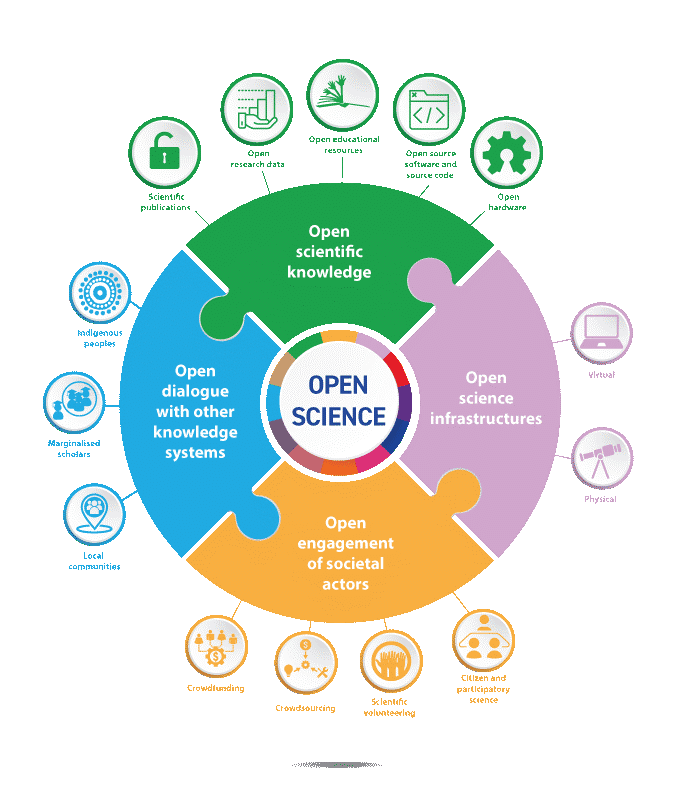
Image: UNESCO Model of Open Science, © UNESCO, 2024,
CC BY-SA 3.0 IGO [14029] https://doi.org/10.54677/MNMH8546
The organisers are keen to hear from speakers from a diverse range of backgrounds (academic, professional services, and students) and research disciplines. They especially welcome contributions from early career researchers, junior professional services staff, and technicians.
The deadline for submissions is end of day – Friday 13th February 2026.
Registration and submission are open to all, further details and link to submissions: Edinburgh Open Research Conference 2026.
Members of the Research Data Service will be at both of these events, we hope to see you there!
Keith Munro,
Research Data Support Assistant
Data Management for Bioimaging – No-Cost, Easy-Access Tools for Edinburgh
This is a guest blog from Dr Ann Wheeler, Head of the Institute of Genetics and Cancer Advanced Imaging Resource, showcasing their exemplar for metadata capture and data management workflows
When the Edinburgh Bioimaging team, a group of technical specialists and core facility staff, first convened, the question of “What to do with all the data?” was a hot topic. The University of Edinburgh has invested over £50 million in bioimaging equipment, which can generate terabytes of data annually. Managing such large datasets presents significant challenges.
During the COVID period, leaders in the bioimaging field addressed these challenges by publishing metadata recommendations for experiments: REMBI- Recommended Metadata for Biological Images. Additionally, the European Bioinformatics Institute launched the Bioimage Archive, a repository for extensive imaging data, which some journals now require for data submission prior to publication. This is important for those of us who generate, or own bioimaging data to note!
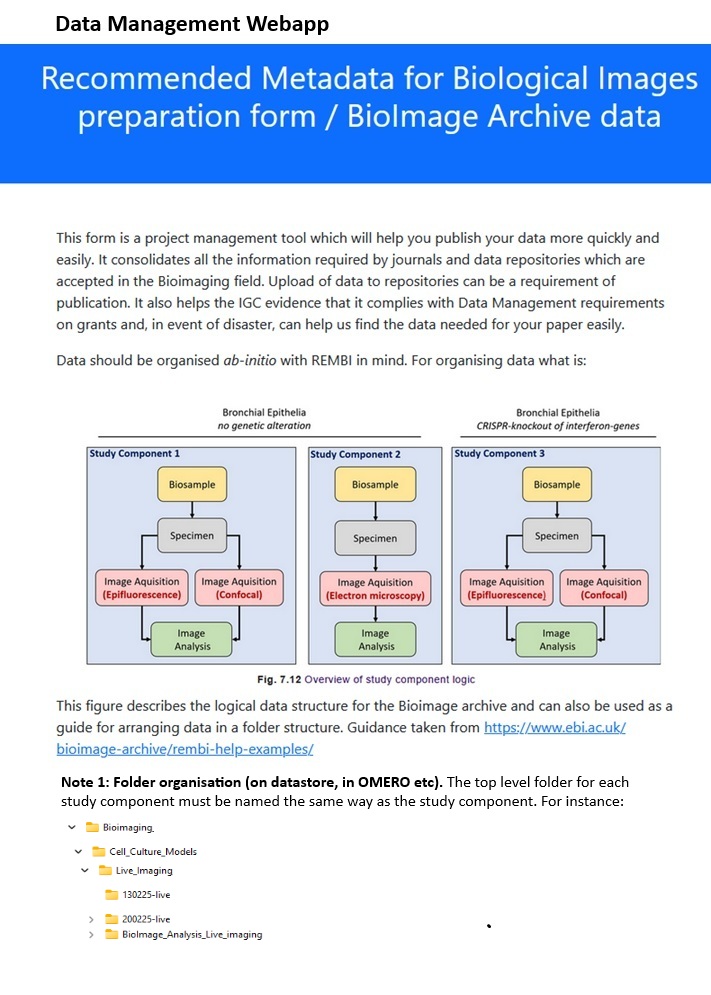
A guide to capturing Recommended Metadata for Biological Images (REMBI)
While this is all great for the wider community, for those of us supporting data generation in Edinburgh, challenges remain:
- Bioimaging core facility staff aren’t the data owners.
- Data storage methods vary widely across departments.
- Using community data repositories like OMERO would require substantial restructuring.
- Re-provisioning costs are high in terms of both staff time and finances.
So, how can we promote data management consistent with FAIR (Fair, Accessible, Interoperable and Reusable) and REMBI (Recommended Metadata for Biological Images) principles at no cost?
Fortunately, collaboration between Bioimaging staff, College of Medicine and Veterinary Medicine (CMVM) data managers, and IT colleagues focused on data management, provided a solution.
We decided on a system involving a form and two tables to record metadata not captured by bioimaging equipment:
- The form: Describes the experiment (e.g., cell types, preparation for imaging).
- Table 1: Details imaging data acquisition methods (e.g., microscope type, live or fixed experiments).
- Table 2: Outlines image data analysis methodology. This is separate as analysis can occur later and may involve different personnel.
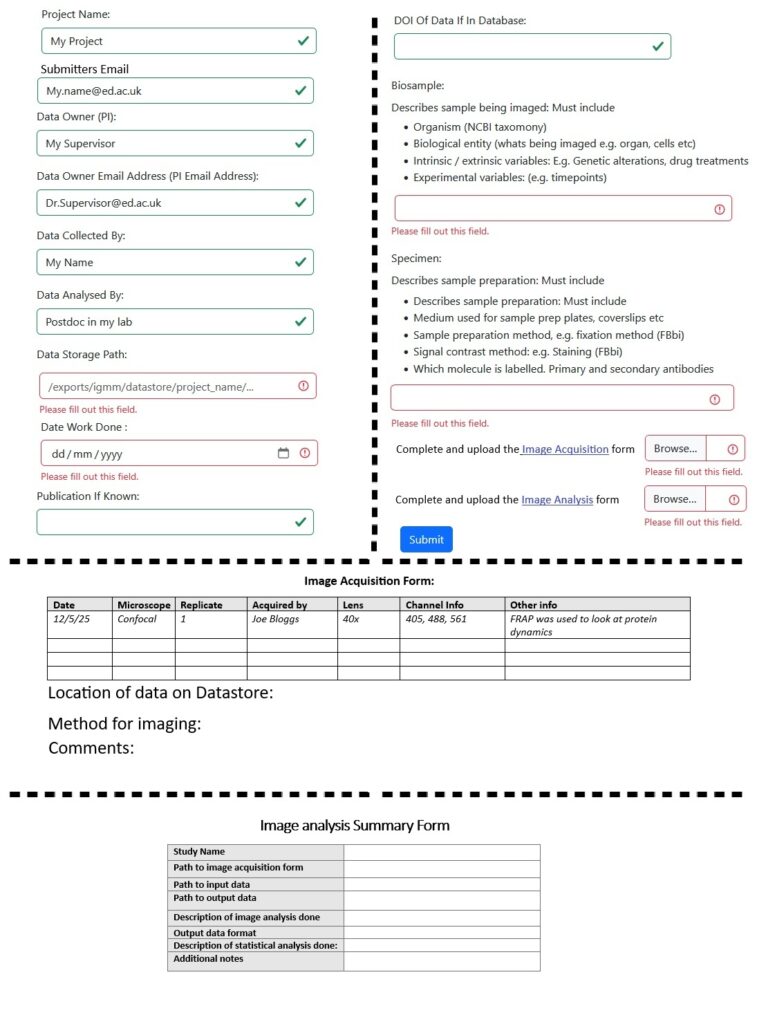
Example of data management form.
At its simplest, CMVM data managers can distribute these forms to data owners, who can fill them out and store them with their data. The next step was developing a WebApp for core facility SharePoint sites. This app facilitates easy data entry and sends submissions to the data owner and the relevant CMVM data manager. Submissions can be downloaded and stored alongside the data or within any chosen data management structure. The forms are flexible, allowing for updates or multiple entries if data are analysed in different ways.
The workflow, created in consultation with Bioimage Archive staff, complies with REMBI standards. Completing the forms thoroughly generates metadata, simplifying data uploads to the Bioimage Archive, and compliance with FAIR principle regardless of storage method.
This flexible, no-cost solution meets the needs of all CMVM departments and is potentially beneficial for colleagues in the College of Science and Engineering and the broader community. It’s easy to implement, use, and was well-received by the CMVM community.
Take a break with BoB: your holiday playlists
Congratulations! You’ve almost made it to the end of semester one. The essays are submitted, the exams are done (or nearly done), and it is officially time to relax. While we usually encourage you to use the Library for research, this Christmas we are encouraging you to use one of our best resources, and a bit of a hidden gem, for something else entirely: pure entertainment.

Meet your new best friend: BoB
If you haven’t used Box of Broadcasts (BoB) yet, you are in for a treat. BoB is an on-demand TV and radio service for education. It allows you to record programmes from over 75 free-to-air channels, but the real magic lies in the archive. Read More
AI, Openness & Future Publishing – Event summary
This is a guest blog post written by Veronica Cano, Open Data and REF Manager
The CAHSS Research Cultures team organised the half-day event “AI, Openness & Publishing Futures”, which took place at Edinburgh Futures Institute on the 13th November. Following our last half-day event earlier in 2025, “Open research issues and prospects in the Arts, Humanities and Social Science”, the focus shifted towards exploring the dynamic interplay between AI, open research, and the publishing industries. The event featured Dr. Ben Williamson, Dr. Lisa Otty and Dr. Andrea Kocsis, who each deliberated on how AI is reshaping research practices and publishing.
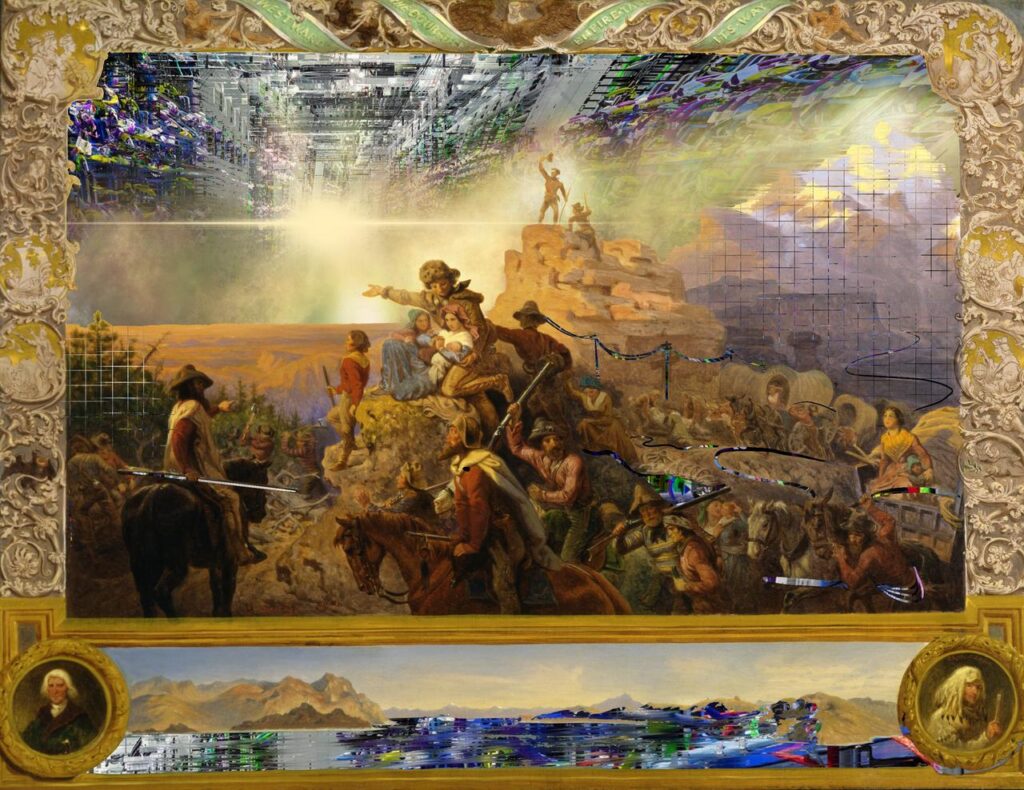
Highlighting risks of new forms of colonisation in the digital realm, this image was shared by Dr Otty as part of her presentationHanna Barakat & Archival Images of AI + AIxDESIGN / https://betterimagesofai.org / https://creativecommons.org/licenses/by/4.0/
Critical Evaluation of Academic Content Commercialization
Dr. Ben Williamson shed light on the commercial motives of publishers and technology giants in harnessing AI for processing academic content. He drew on his recent work with Janja Komljenovic to argue that emerging publishing practices transform scholarly work into data assets, leveraging AI to maximise profits, often at the expense of academic integrity and control over research outputs. Referencing the work of Mirowski, he linked these developments to wider moves around commercialised platform science. Sharing his experiences as a journal editor, Ben highlighted instances where significant journal archives, like those from Taylor and Francis, were sold to AI companies, often without much transparency, underscoring a concerning trend toward the privatisation of academic knowledge and raising questions about the impact of this on open research and publishing.
Balancing Sustainability with Open Research Practices
Dr. Lisa Otty provided an analysis of sustainable AI use, noting the environmental impact associated with the growing computational demands of AI systems. She highlighted that while AI offers substantial benefits like efficiency in research and accessibility, it also comes with significant energy and carbon footprints. She suggested practical strategies such as using smaller, more efficient AI models and engaging in sustainable software engineering practices to mitigate the eco-impact of digital research tools. Making the most of the benefits of AI requires careful judgement about what is worth using ‘maximal computing’ for, and where more sustainable, possibly smaller-scale practices are appropriate and sufficient. More information about this is available on the Digital Humanities Climate Coalition web site: https://sas-dhrh.github.io/dhcc-toolkit/index.html.
Emphasising Open GLAM Data and AI Integration
Dr. Andrea Kocsis highlighted the longstanding engagement of AI within GLAM (Galleries, Libraries, Archives, Museums) sectors. Her presentation provided a historical timeline showing the evolution of AI technologies in these institutions, noting significant shifts towards more advanced machine learning and generative AI systems in recent years. Reflecting on the work being done at National Library of Scotland (NLS), including their advocacy for open data to foster research and innovation while ensuring ethical compliance and data stewardship, Andrea emphasized the necessity of responsible, open-data practices to mitigate risks such as bias and loss of metadata context which can accompany AI integration. Ongoing projects at NLS highlight both the promise of responsible AI in the GLAM sector and the creative possibilities unlocked by open data, exemplified by Andrea’s Digital Ghosts exhibition and its innovative use of web-archive material.
Community Response and Forward Thinking
The event moved on to a group discussion framed by extracts from blogs, reports and press articles on different issues regarding AI and publishing. The texts sparked thoughtful responses from the audience, generating insights on how the monetisation and privatisation of research is facilitated by AI and raising questions on what the open research community should do in the face of the risks posed by AI. Researchers’ pressure to publish frequently has become a playing ground for AI outcomes, resulting in unethical practices like papermills. The impacts are many, the erosion of public trust in research being a main one.
One of the attendees reflected afterwards: “… as it related to publishing, I got the impression that there was a sense of resignation, that it is too late, because the articles have already been sold and in many ways, we cannot opt out from AI (the google/bing summaries when you look something up, suggestions in Word, etc.) in our workplace, but also in our personal lives… Perhaps giving researchers advice on what individual action they can take, while showing what the sector is advocating for would be helpful.”
The role of higher education not only in grappling with current realities but in shaping future practices through individual and collective action was seen as extremely important, and conversations included how students can be engaged with these issues. Participants highlighted a need for ongoing dialogue and adaptive strategies as the landscapes of AI, open research, and publishing continue to evolve rapidly.
5 things: supporting you in your exams
Semester one is almost over and exams are looming! As the exam period approaches, it’s natural to start feeling the pressure build. But remember, you’re not alone!
At the University of Edinburgh, there are plenty of resources and services designed to support you every step of the way. In this post, we’ll highlight five key ways the library can help – from available study spaces and digital resources to helpful guides and wellbeing support – so you can make the most of your revision and head into exams feeling confident and prepared.
1) Study space, study space everywhere but not a place to sit?
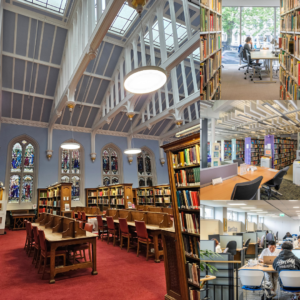
Clockwise from left: New College Library, ECA Library, Noreen and Kenneth Murray Library, and Moray House Library.
It can feel like this sometimes during the revision and exam period, particularly if you are a regular at the Main Library or Law Library. But there are lots of study spaces across our campuses that you have access to, including some temporary additional study space during the exam period.
While the Main Library is a favourite for many, there are 8 other site libraries that you have access to (with your student card). These range from old-fashioned, picturesque libraries, to modern libraries with light and space and also include a library in what used to be a swimming pool.
Shorthand in the New College Special Collections
by Danielle Fox, Archive & Library Assistant, New College Library
Shorthand writing, also known as tachygraphy, stenography, or brachygraphy, is a system of writing that uses symbols and abbreviations to represent words. This method allows the writer to transcribe speech at the same rate it is spoken, making it ideal for recording sermons, lectures, and court sessions. While modern technology has reduced its widespread use, shorthand played a crucial role in communication for centuries and existed in various forms. We are lucky enough to have many wonderful examples of shorthand in our New College collections.
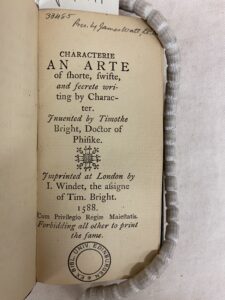
Bright, Timothy. Characterie (1588). University of Edinburgh, Heritage Collections. Df.9.141.
While shorthand can trace its origins back to ancient times, modern English shorthand systems largely emerged in the 16th and 17th centuries[1]. In 1588, Timothy Bright published Characterie; An Arte of Shorte, Swifte and Secrete Writing by Character, which introduced a refined system of shorthand that set the stage for future developments.
Other systems followed, such as Thomas Shelton’s Short Writing in 1626, and Isaac Pitman’s shorthand in 1837. Early English systems used arbitrary symbols for words or letters but eventually adopted phonetic systems. This meant that shorthand symbols focused on how words sounded, rather than how they were spelled, allowing writers to transcribe faster and capture the pace of speech.
Shorthand was especially popular in the 19th and early 20th centuries for tasks like journalism and secretarial work. However, with the advent of modern technology (like computers and voice recognition software), the use of shorthand has declined. Even though shorthand is less common today, it remains a part of history as a crucial tool for efficient writing. Read More
From tablets to computer screens; digitising some of the oldest texts at the University
by Elin Crotty, Archive & Library Assistant, New College
Over the past few months, the two New College Archive and Library Assistants (ALAs) have been liaising with the Cultural Heritage Digitisation Service (CHDS) about digitising our cuneiform tablets. The New College Library cuneiforms are 4 fragments of carved text, which range in date from the Neo-Babylonian Empire, (circa 626 – 539 BCE) to the Neo-Sumerian Empire (circa 2046 – 2038 BCE). The Neo-Sumerian tablet (NCL/Object/2025/3), which has split into two pieces, is thought to be one of the oldest examples of writing in the University’s collections at circa 4070 years old.
CHDS have recently been using Reflectance Transformation Imaging (RTI) to experiment with creating 3D representations of surface texture. You can read a much more thorough description of how the process works on their blog post here, but essentially the objects are placed upon a flat surface under a dome, with a camera positioned directly above them. Lights are fixed inside the dome at all angles and they flash in sequence as 72 photos are taken. This changes the light angle and resultant shadows for the camera, throwing details upon the surface of the object into high relief. The photos with the varying shadows are stitched together using specialist software, creating a 3D model of the surface of the object. A few months ago, the ALAs worked with CHDS to bring the New College cuneiforms to the uCreate MakerSpace, to use the RTI dome there.
The actual photography was very quick, but it was a careful process ensuring that the cuneiforms were supported and kept as flat as possible. After assessment by our conservation team, we built the fragments some temporary supports and handled them using nitrile gloves – no Hollywood white cotton gloves in our library! To get the cuneiforms in and out of the dome, CHDS had come up with a simple but very effective solution; a tea tray, lined with plastazote foam.
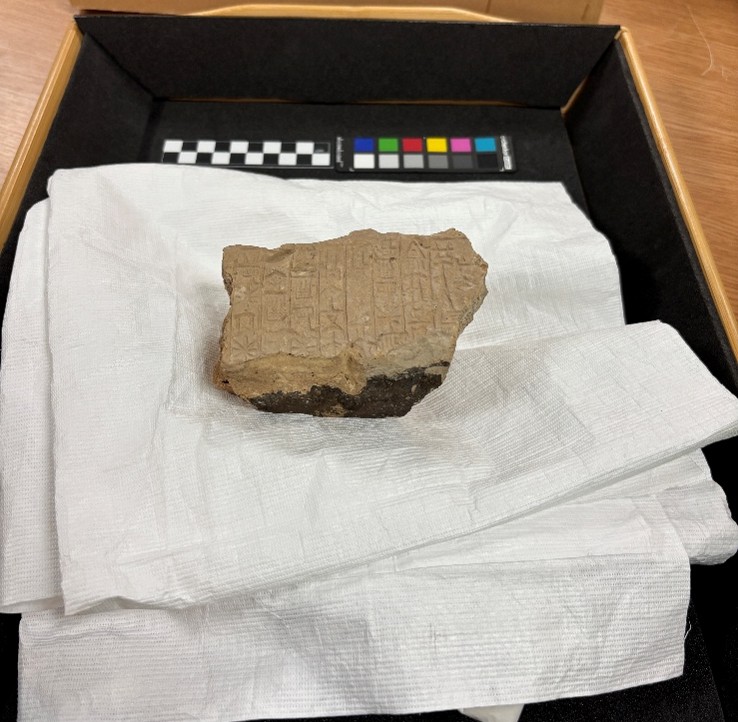
Figure 1 NCL/Object/2025/3, cuneiform tablet from Neo-Sumerian Empire (c.2046-2038 BCE).
Collections
 Hill and Adamson Collection: an insight into Edinburgh’s past
My name is Phoebe Kirkland, I am an MSc East Asian Studies student, and for...
Cataloguing the private papers of Archibald Hunter Campbell: A Journey Through Correspondence
My name is Pauline Vincent, I am a student in my last year of a...
Hill and Adamson Collection: an insight into Edinburgh’s past
My name is Phoebe Kirkland, I am an MSc East Asian Studies student, and for...
Cataloguing the private papers of Archibald Hunter Campbell: A Journey Through Correspondence
My name is Pauline Vincent, I am a student in my last year of a...
Projects
Cataloguing the private papers of Archibald Hunter Campbell: A Journey Through Correspondence
My name is Pauline Vincent, I am a student in my last year of a...
Archival Provenance Research Project: Lishan’s Experience
Presentation My name is Lishan Zou, I am a fourth year History and Politics student....