Home University of Edinburgh Library Essentials
April 7, 2026
Doodles and Discoveries: Scottish Court of Session Papers
 We are now well in the midst of the Scottish Court of Session Papers Phase 2 Pilot. In this stage of the project, we are concentrating on digitising three hundred volumes from the collections of the three institutions involved; The Faculty of Advocates, The Signet Library and the Edinburgh University Library. Week seventeen has passed, workflows have been tinkered with, scanner issues are being ironed out and we are gradually seeing the fruits of our labour as fascinating and soon to be accessible digital content builds up. In this blog post, project staff Joanne and Daisy report back on some of the more interesting discoveries they’ve made within these volumes.
Dealing With Data 2018: Summary reflections
The annual Dealing With Data conference has become a staple of the University’s data-interest calendar. In this post, Martin Donnelly of the Research Data Service gives his reflections on this year’s event, which was held in the Playfair Library last week.
One of the main goals of open data and Open Science is that of reproducibility, and our excellent keynote speaker, Dr Emily Sena, highlighted the problem of translating research findings into real-world clinical interventions which can be relied upon to actually help humans. Other challenges were echoed by other participants over the course of the day, including the relative scarcity of negative results being reported. This is an effect of policy, and of well-established and probably outdated reward/recognition structures. Emily also gave us a useful slide on obstacles, which I will certainly want to revisit: examples cited included a lack of rigour in grant awards, and a lack of incentives for doing anything different to the status quo. Indeed Emily described some of what she called the “perverse incentives” associated with scholarship, such as publication, funding and promotion, which can draw researchers’ attention away from the quality of their work and its benefits to society.
However, Emily reminded us that the power to effect change does not just lie in the hands of the funders, governments, and at the highest levels. The journal of which she is Editor-in-Chief (BMJ Open Science) has a policy commitment to publish sound science regardless of positive or negative results, and we all have a part to play in seeking to counter this bias.
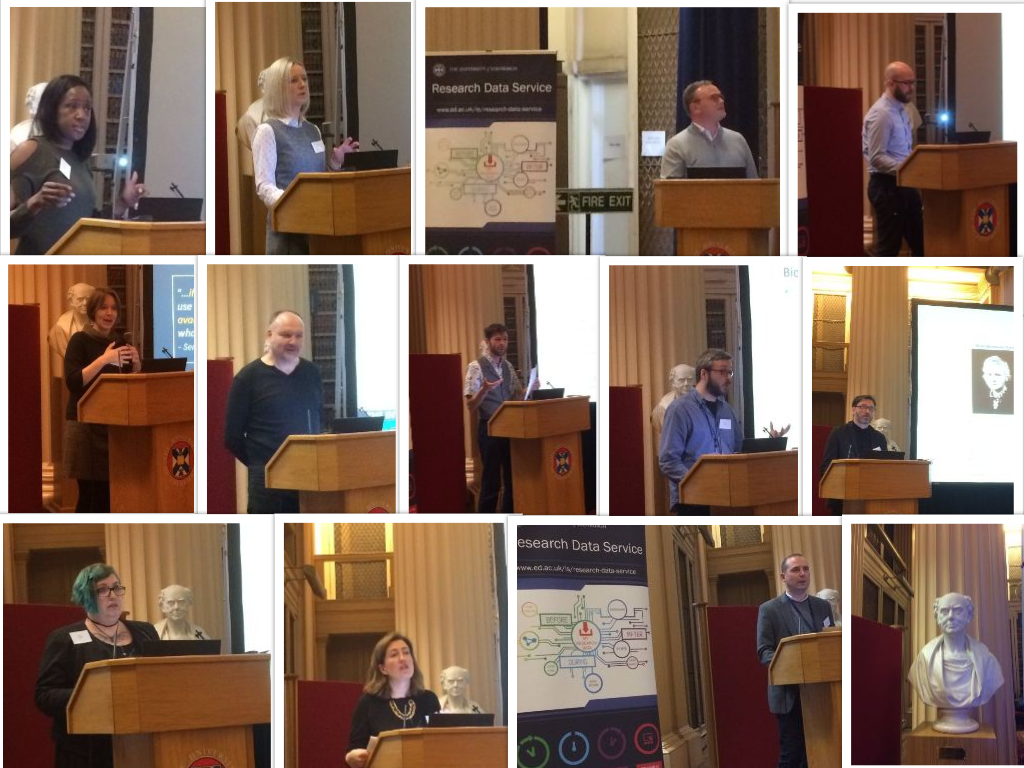
A collage of the event speakers, courtesy Robin Rice (CC-BY)
In terms of other challenges, Catriona Keerie talked about the problem of transferring/processing inconsistent file formats between heath boards, causing me to wonder if it was a question of open vs closed formats, and how could such a situation might have been averted, e.g. via planning, training (and awareness raising, as Roxanne Guildford noted), adherence to the 5-star Open Data scheme (where the third star is awarded for using open formats), or something else? Emily earlier noted a confusion about which tools are useful – and this is a role for those of us who provide tools, and for people like myself and my colleague Digital Research Services Lead Facilitator Lisa Otty who seek to match researchers with the best tools for their needs. Catriona also reminded us that data workflow and governance were iterative processes: we should always be fine-tuning these, and responding to new and changing needs.
Another theme of the first morning session was the question of achieving balances and trade-offs in protecting data and keeping it useful. And a question from the floor noted the importance of recording and justifying how these balance decisions are made etc. David Perry and Chris Tuck both highlighted the need to strike a balance, for example, between usability/convenience and data security. Chris spoke about dual testing of data: is it anonymous? / is it useful? In many cases, ideally it will be both, but being both may not always be possible.
This theme of data privacy balanced against openness was taken up in Simon Chapple’s presentation on the Internet of Things. I particularly liked the section on office temperature profiles, which was very relevant to those of us who spend a lot of time in Argyle House where – as in the Playfair Library – ambient conditions can leave something to be desired. I think Simon’s slides used the phrase “Unusual extremes of temperatures in micro-locations.” Many of us know from bitter experience what he meant!
There is of course a spectrum of openness, just as there are grades of abstraction from the thing we are observing or measuring and the data that represents it. Bert Remijsen’s demonstration showed that access to sound recordings, which compared with transcription and phonetic renderings are much closer to the data source (what Kant would call the thing-in-itself (das Ding an sich) as opposed to the phenomenon, the thing as it appears to an observer) is hugely beneficial to linguistic scholarship. Reducing such layers of separation or removal is both a subsidiary benefit of, and a rationale for, openness.
What it boils down to is the old storytelling adage: “Don’t tell, show.” And as Ros Attenborough pointed out, openness in science isn’t new – it’s just a new term, and a formalisation of something intrinsic to Science: transparency, reproducibility, and scepticism. By providing access to our workings and the evidence behind publications, and by joining these things up – as Ewan McAndrew described, linked data is key (this the fifth star in the aforementioned 5-star Open Data scheme.) Open Science, and all its various constituent parts, support this goal, which is after all one of the goals of research and of scholarship. The presentations showed that openness is good for Science; our shared challenge now is to make it good for scientists and other kinds of researchers. Because, as Peter Bankhead says, Open Source can be transformative – Open Data and Open Science can be transformative. I fear that we don’t emphasise these opportunities enough, and we should seek to provide compelling evidence for them via real-world examples. Opportunities like the annual Dealing With Data event make a very welcome contribution in this regard.
PDFs of the presentations are now available in the Edinburgh Research Archive (ERA). Videos from the day are published on MediaHopper.
Other resources
—
Martin Donnelly
Research Data Support Manager
Library and University Collections
University of Edinburgh
On trial: Tanzania and Malawi in records from colonial missionaries, 1857-1965
*The Library has now purchased access to the ‘Tanzania and Malawi in records from colonial missionaries’. See New! Tanzania and Malawi in records from colonial missionaries, 1857-1965.*
Thanks to a request from a student in HCA the Library currently has trial access to the digital primary source collection Tanzania and Malawi in records from colonial missionaries, 1857-1965 from British Online Archives. This gives you access to 54,550 digital pages from the Universities’ Mission to Central Africa (UMCA) archives including correspondence, journals, magazines, books, reports, etc.

You can access the database via the E-resources trials page.
Trial access ends 25th December 2018. Read More
On trial: Argentina, 1975-1980: The Making of U.S. Human Rights Policy
 *The Library has access to Argentina, 1975-1980: The Making of U.S. Human Rights Policy until 31st July 2024 as part of ProQuest Access 350.*
Thanks to a request from student in HCA the Library currently has trial access to Argentina, 1975-1980: The Making of U.S. Human Rights Policy, just one of the primary source collections from Digital National Security Archive (DNSA) published by ProQuest. This collection chronicles the development of U.S. policy as it attempts to deal with the tragedy experienced in Argentina during the critical, formative period of the late 1970’s.
You can access the database via the E-resources trials page. Access is available both on and off-campus.
Trial access ends 19th December 2018.
It was a turbulent and traumatic time in Argentina in the late 1970s, featuring a political collapse verging on civil war; a military coup; and massive illegal detentions, torture and kidnappings. Argentina, 1975-1980 comprises 2,429 documents and these documents show U.S. officials grappling with human rights violations on a scale never heard of in the Western Hemisphere, underscored by the dramatic disappearance of tens of thousands of people at the hands of the security forces. Read More
On trial: Colonial State Papers
*The Library now has access to Colonial State Papers until 31st July 2024 as part of ProQuest Access 350.*
Further to a request from an academic in HCA I’m pleased to let you know that the Library currently has trial access to Colonial State Papers from ProQuest. From British trade and history, to overseas expansion between the 16th and 18th centuries, Colonial State Papers provide a fascinating insight into the past.

You can access the database via the E-resources trials page. Access is available both on and off-campus.
Trial access ends 19th December 2018.
Through collaboration with The National Archives, Colonial State Papers offers you access to over 7,000 hand-written documents and more than 40,000 bibliographic records and is an incredibly useful resource for anyone looking at Colonial History. In addition to Britain’s colonial relations with the Americas and other European rivals for power, the Colonial State Papers also include coverage of the Caribbean and Atlantic world. Read More
Crime and punishment in late 18th-early 19th century Scotland: Levels and types of crime
This is the first post in an exciting new blog series focusing on crime and punishment in late 18th-early 19th century Scotland. During the next few weeks we will be looking at levels of crime and changes between the Old Statistical Accounts and New Statistical Accounts; types of crime committed, with specific examples; types of punishment; crime prevention (as well as lack of!); causes of crime; prisons; police and sheriffs; and the judicial system and courts. It has been really fascinating to research this topic, with lots of interesting and eye-opening information found in the Statistical Accounts of Scotland. We hope you really enjoy reading these posts.
Levels of crime
Some parish reports state that no, or very little, serious crime had been committed for many years in that parish. In Kilninian and Kilmore, County of Argyle, “it is very seldom that any gross, crimes are committed; and as an evidence of this, it may be mentioned, that although there is a lock-up-house or jail in Tobermory, yet none of the inhabitants of the parish have been confined there for the last four years, and, the upper flat of that jail is occupied by the school of industry before noticed.” (NSA, Vol. VII, 1845, p. 356) In Kennoway, County of Fife, “only one instance of suicide has occurred within the last 20 years, and not a person belonging to the parish has been punished for any crime or even been imprisoned, on any account whatever, during that period.” (OSA, Vol. XIII, 1794, p. 128) It is very interesting to note that suicide is mentioned in the same context as crime in several parish reports, which gives us an idea on how suicide was viewed by some at the time.
Several parish reports do give an example or two of ‘serious’ crimes carried out there. These include:
- Criech, County of Sutherland – “Only one person has suffered for a capital crime within there 20 years; viz. for theft and house-breaking.” (OSA, Vol. VIII, 1793, p. 373).
- Kilfinichen and Kilviceuen, County of Argyle – “Such has been the general good behaviour of the inhabitants, that none have suffered capital punishment in the memory of any person living; nor has any been confined in jail for any crime that is remembered, except one man in summer 1793, who is supposed to be a fraudulent bankrupt.” (OSA, Vol. XIV, 1795, p. 211)
- Banff, County of Banff – “During the last rebellion in Scotland, a poor fellow from the country, whose imprudent curiosity led him to mark, by notches on his staff, the number of British ships passing in the bay, was apprehended as a spy, and arranged by the King’s troops, without the formality of trial.” (OSA, Vol. XX, 1798, p. 378)
The low level, or lack of, crime was attributed to the good, honest disposition of the parish inhabitants. Examples include the parishes of Saddell and Skipness, County of Argyle (OSA, Vol. XII, 1794, p. 488), Rutherglen, County of Lanark (OSA, Vol. IX, 1793, p. 6) and Peebles, County of Peebles (OSA, Vol. XII, 1794, p. 6). Indeed, several reports state that the manners of inhabitants had improved over the last few years, so lowering crime levels. “The inhabitants of Bothkennar [County of Stirling] are distinguished for their sober and industrious habits, and live in the most friendly terms with each other. They are most attentive to the public ordinances of the Gospel; and their moral conduct has been such, that there is not an instance upon record of any individual having been arraigned or punished for any offence against the laws of his country.” (NSA, Vol. VIII, 1845, p. 205) Here are some more examples:
Roxburgh, County of Roxburgh – “the general character of the people is intellectual, moral, and religious. In proof of this, it may be stated, that hardly anything of the nature of crime occurs, and the people are almost all in communion with the Established church or the Secession.” (NSA, Vol. III, 1845, p. 132)
Edzell, County of Forfar – “it is beyond a doubt, that the people are much improved since last century, both in morals and in manners. In the old records, there are instances of persons subjected to discipline for dragging nets on the Sabbath; and farmers, with their wives and servants, convened in parties for drinking, fighting, and scolding, on the Lord’s clay during divine worship. Such irregularities would now cause horror.” (OSA, Vol. X, 1794, p. 110)
Kemnay, County of Aberdeen – “the commission at least of heinous crimes is less frequent, and the propensity to low vices less general, than they were during the seventeenth and greater part of the eighteenth century, and also that a higher tone of morals now prevails.” (NSA, Vol. XII, 1845, p. 817)
Have a read of what crimes used to be committed in the parish of Kirkoswald, County of Ayrshire! (OSA, Vol. X, 1794, p. 499) Even Scotland as a country was seen in some quarters to be a place with less crime and, therefore, less punishments handed out than previously! (OSA, Vol. I, 1791, p. 16)

Wilkes Riots. (Image from page 271 of “The chronicles of crime, or The new Newgate calendar. Being a series of memoirs and anecdotes of notorious characters who have outraged the laws of Great Britain from the earliest period to the present time…”, circa 1841.)
However, not every parish had exemplary parishioners. In the report for Portpatrick, County of Wigton, there is a very honest account given of its inhabitants! “The people are generally characterized by intellect naturally vigorous, but uncultivated. They are capable of being excited to very great violence of feeling: and vindictive feelings usually find with them a free and instant expression. But withal, they display more external courtesy towards one another, and more respectful manners in addressing their superiors, than may be observed in the more populous districts. In common with the other inhabitants of Galloway they are distinguished by a ready and ungrudging hospitality. Among the crimes ordinarily falling under the cognizance of the civil magistrates, assaults, rioting and fighting on the public streets, are much to be complained of, but are not so frequent as at one time, when it used to be said at Donaghadee, “I’ll not meddle with you just now; but stop till I get you at Portpatrick, where there is no law.” Petty thefts are prevalent. They are often attributed to the bands of tinkers who encamp on the common on their way to and from Ireland; but these undoubtedly deserve but a small share of the blame. The facilities afforded by the wild coast for plundering the goods cast ashore in shipwrecks, have always presented a strong temptation.” (NSA, Vol. IV, 1845, p. 147)
Of course, not all changes in crime levels have been positive. In the Appendix for Edinburgh, “in 1763 house-breaking and robbery were extremely rare. Many people thought it unnecessary to lock their doors at night. In 1783, 1784, 1785, 1786, and 1787 house-breaking, theft, and robbery, were astonishingly frequent; and many of these crimes were committed by boys, whose age prevented them from being objects of capital punishment. The culprits were uniformly apprehended in houses of bad fame, in which they were protected and encouraged in their depredations on the public. During the winter, 1787, many daring robberies and shop-breakings were committed, by means before unthought of; but the gang were discovered, by one of them becoming evidence against the rest, and the others suffered capital punishment.” (OSA, Vol. VI, 1793, p. 613) Street robbery and pick-pocketing was also on the increase.
In Glasgow, “great crimes were formerly very uncommon; but now robberies, housebreaking, swindling, pick-pockets, pilferers, and consequently executions are become more common.” (OSA, Vol. V, 1793, p. 535) Interestingly, in the New Statistical Account for Glasgow we find the following excerpt on crime:
“Within the last twenty years, population of Glasgow has almost doubled; but crime, instead of merely doubling, has, as is proved from the records of the Court of Justiciary, increased nearly eight times.” (NSA, Vol. VI, 1845, p. 909)
One suggestion for the higher levels of crime in cities is given by the writer of the parish report for Inveresk, County of Edinburgh. “Large cities are the nurseries of crimes, as they furnish the means of privacy and concealment, as well as of temptation.” (OSA, Vol. XVI, 1795, p. 33)
In the parish report of Duirinish, County of Inverness, there is a comparison made between the crime levels of the Highlands and that of the parishes in the south of Scotland. “The balance will still be found in favour of the Highlands. But it is too apparent, at the same time, that crime in this part of the country has been much on the increase for several years back. This is partly owing to the poverty of the people: but in a great degree to the kind of intercourse which they carry on with the Lowlands.” (NSA, Vol. XIV, 1845, p. 347)
Types of crime
Here are some types of crime and specific examples of crimes found in the Statistical Accounts of Scotland:
- Hutton and Corrie, County of Dumfries – Vagrant begging (NSA, Vol. IV, 1845, p. 547);
- Fodderty, County of Ross and Cromarty – Sheep stealing (NSA, Vol. XIV, 1845, p. 257);
- Ayr, County of Ayrshire – Crimes committed by sailors (NSA, Vol. V, 1845, p. 59);
- Perth, County of Perth – Having illegitimate children (OSA, Vol. XVIII, 1796, p. 524);
- Paisley, County of Renfrew – Illustrations of Ancient Manners, including banishing a person from the county for stealing a pair of breeches (NSA, Vol. VII, 1845, p. 181)
In Markinch, County of Fife, the kirk-session identified “the usual immoralities… which were then punished by fine and by rebuke in the face of the congregation.” Specific examples of crimes include “pursuing their ordinary avocations on the Sabbath, for absenting themselves from church and from the administration of ordinances, for slandering neighbours, for profane swearing, for drunkenness, and frequenting houses of public entertainment during the hours of Divine service.” (NSA, Vol. IX, 1845, p. 678)
The parish report of Leochel, County of Aberdeen, gives a fascinating list of offences and punishments, including “breaking and destroying young trees in the churchyard of Lochell” (one merk for each tree), “putting fire to a neighbour’s door and calling his wife and mother witches” (L. 100 fine) and “abusing the minister and calling him a liar, and saying in the church-yard that he would prove him a liar” (put in the stocks during the baillie’s pleasure). (NSA, Vol. XII, 1845, p. 1125).
Incidentally, the above image is taken from a book, published in 1841, entitled “The chronicles of crime, or The new Newgate calendar. Being a series of memoirs and anecdotes of notorious characters who have outraged the laws of Great Britain from the earliest period to the present time including a number of curious cases never before published. Embellished with fifty-two engravings, from original drawings by “Phiz” [pseud.]”, which can be found on the Internet Archive. It is a very fascinating read!
__________________________________________
Mentions of the crimes of smuggling, poaching and witchcraft are particularly noticeable in the Statistical Accounts, as we don’t hear, or rarely hear, of these in this country nowadays.
Smuggling
By the time of the New Statistical Accounts of Scotland, smuggling was very much on the wane in some parishes due to measures being taken against it. In Dunkeld, County of Perth, “smuggling prevailed extensively at one time in the district, but after the late Duke of Atholl got the Highland distilleries legalized, smuggling ceased. ” (NSA, Vol. X, 1845, p. 989)
However, in the parish of Glenshiel, County of Ross and Cromarty, smuggling “which was introduced about twenty years since, prevails, especially upon the estate of Letterfearn, to an extent that threatens to prove destructive to all habits of regular industry, injurious to the health, and ruinous to the morals of its victims; and is likely to continue to produce these distressing results, until the owners of the land choose to discountenance it.” (NSA, Vol. XIV, 1845, p. 202) Neighbouring land owners had threatened to remove smugglers and this was enough to act as a deterrent. This illustrates how important active crime detection and prevention is. (These are topics we will focus on future blog posts.)
In Mordington, County of Berwick, “as this parish lies on the border between Scotland and England, the illicit traffic of smuggling Scotch whisky into England is carried on to a considerable extent at two public-houses on the turnpike-roads to Berwick-on-Tweed. Those who engage, however, in this unlawful employment, are persons of low character from Berwick, who buy the spirits at these two public-houses, and convey them secretly into England. A guard of excise officers, which is maintained by Government at considerable expense, traverses the roads, by which means the traffic has lately somewhat decreased, but it is still carried on to a considerable extent; and its demoralizing influence on those engaged in it, is lamentably apparent. No remedy, however, seems likely to avail, but an equalizing of the duties on spirits in the two countries.” (NSA, Vol. II, 1845, p. 342) This is the same case in Hutton, County of Berwick (NSA, Vol. II, 1845, p. 156)
Poaching
Several parishes report some instances of poaching, which, in the main, is waning. In Hutton, County of Berwick, “convictions for poaching game and salmon indeed sometimes occur, but these are by no means frequent” (NSA, Vol. II, 1845, p. 156). In Dunkeld, County of Perth, “poaching is rare; when committed it is generally by strangers.” (NSA, Vol. X, 1845, p. 989) In Roxburgh, County of Roxburgh, “the temptation of poaching is very considerable, because of the abundance of game; and, in consequence, this offence has occasionally occurred.” (NSA, Vol. III, 1845, p. 132)

Davies, James Hey; Young Poachers; 1878–1888. Picture credit: Manchester Art Gallery.
Poaching was actually on the increase in Penicuik, County of Edinburgh. “The landed proprietors endeavour to protect their game, by employing keepers, while their tenantry are strictly prohibited from shooting; an unhappy arrangement, and one that signally defeats its own end. The tenantry have no interest in detecting the poacher, and the game-keepers are intimidated, and are consequently of little service. Some time since, one of these keepers was fired at and severely wounded by four poachers at eleven o’clock in the forenoon.” (NSA, Vol. I, 1845, p. 41)
Witchcraft
During the late 16th and early 17th centuries “the belief of witchcraft prevailed, and trials and executions on account of it were frequent in all the kingdoms of Europe”, as stated in the parish report of Kirkcaldy, County of Fife. (OSA, Vol. XVIII, 1796, p. 57) In the Statistical Accounts of Scotland there are many mentions of witchcraft trials, including:
- Dalry, County of Ayrshire, which “was the scene of one of those revolting acts which disgrace the annals of Scotland, of condemning persons to the flames for the imputed crimes of sorcery and witchcraft.” (NSA, Vol. V, 1845, p. 217)
- Aberdeen, where “many poor old women were sacrificed to appease the terrors which the belief in it was calculated to excite. Few of the individuals who were suspected were allowed to escape from the hands of their, persecutors; several died in prison in consequence of the tortures inflicted on them, and, during the years 1596-97, no fewer than 22 were burnt at the Castlehill.” (NSA, Vol. XII, 1845, p. 21)
- Kirkcaldy, County of Fife, where a man and his wife “were burnt here in 1633, for the supposed crime of witchcraft.” (OSA, Vol. XVIII, 1796, p. 57)
- Erskine, County of Renfrew, where “one of the last trials for witchcraft which happened in Scotland, had its origin… in 1696-7”. (OSA, Vol. IX, 1793, p. 74)
If you would like to read more about witchcraft in Scotland, read our post Wicked Witches.
____________________________
We end this post with a table showing the number of commitments, etc. for crime in the County of Berwick during the year 1834. This gives a fascinating snapshot of crimes committed and the resulting punishments given out at that time.
| Crimes | Persons remaining untried from preceding year | Persons committed for trial | Persons convicted | Persons acquitted | No. of persons tried and before what court | Sentences of those committed | |
| Robbery and assault | 3 | 1 | 3 | 3 – Justiciary | 1 sent. death, 2 transportation for life. | ||
| Theft | — | 5 | 3 | 3 – By jury, without jury, and by justices or other court | Imprisonment for 3 months or less | ||
| Theft by housebreaking | — | 2 | 1 | 1 | 2 – Justiciary | Transportation 14 years | |
| Assault | — | 15 | 14 | 14 – 6 by jury, 3 without jury, 5 by justices or other court | Imprisonment for 3 months or less | ||
| Breaking windows | — | 1 | 1 | Without jury | Do. | ||
| Rioting | 1 | 1 | Do. | Do. | |||
| Vagrancy and breaking windows | — | 2 | 2 | Do. | Do. | ||
| Vagrancy | — | 2 | 2 | 2 – Justices | Do. | ||
| Contravening Act 9 Geo. IV. Sect. 69 | — | 2 | 2 | 1 – Without jury | Do. | ||
| Trespassing in search of game | — | 1 | 1 | 1 – Do. | Do. | ||
| Contempt of court | — | 1 | 1 | 1 – Do. | Do. |
N.B. All persons in the table refer to males.
In the parish report of Paisley, County of Renfrew, you can find a table that shows “a view of the state and Progress of crimes, &c. as judged by the magistrates, from the period when the police establishment began down to 1818, and for the last five years. The melancholy progress of crime, particularly of late years, may be judged of from this table; a progress for which the rapid increase of population will not wholly account.” (NSA, Vol. VII, 1845, p. 189) There are a number of other tables giving crime figures in the Statistical Accounts of Scotland, and we will look at some more of these in our future post on prisons.
In our next post in this series on crime and punishment we will look at reasons for crimes and crime prevention.
New video: the benefits of RDM training
A big part of the role of the Research Data Service is to provide a mixture of online and (general/tailored) in-person training courses on Research Data Management (RDM) to all University research staff and students.
In this video, PhD student Lis talks about her experiences of accessing both our online training and attending some of our face-to-face courses. Lis emphasises how valuable both of these can be to new PhD candidates, who may well be applying RDM good practice for the first time in their career.
It is interesting to see Lis reflect on how these training opportunities made her think about how she handles data on a daily basis, bringing a realisation that much of her data was sensitive and therefore needed to be safeguarded in an appropriate manner.
Our range of regularly scheduled face-to-face training courses are run through both Digital Skills and the Institute of Academic Development – these are open to all research staff and students. In addition, we also create and provide bespoke training courses for schools and research groups based on their specific needs. Online training is delivered via MANTRA and the Research Data Management MOOC which we developed in collaboration with the University of North Carolina.
In the video Lis also discusses her experiences using some RDS tools and services, such as DataStore for storing and backing-up her research data to prevent data loss, and contacting our team for timely support in writing a Data Management Plan for her project.
If you would like to learn more about any of the things Lis mentions in her interview you should visit the RDS website, or to discuss bespoke training for your school or research centre / group please contact us via data-support@ed.ac.uk.
Kerry Miller
Research Data Support Officer
Library and University Collections
The University of Edinburgh
On trial: The Stuart and Cumberland Papers
*The Library has now purchased access to the The Stuart and Cumberland Papers. See New to the Library: The Stuart and Cumberland Papers*
I’m pleased to let you know that Gale Cengage are giving us trial access to one of the digitised archive from State Papers Online, the Stuart and Cumberland Papers. This archive contains two remarkable collections from the Royal Archives at Windsor Castle, which have been digitised for the first time and are available online in their entirety.

You can access this online resource via the E-resources trials page.
Access is available both on and off-campus.
Trial access ends 14th December 2018.
The Stuart Papers represent the correspondence and personal documents of the exiled members of the Stuart dynasty after 1688. These papers were acquired by George IV when Prince Regent, following the death of Henry Bennedict Stuart, Cardinal York, and were originally kept in the Prince’s Library at Carlton House. The collection tells the story of the lives of James II and his heirs with the majority of papers concerning the period 1713 to 1770, and provide an insight into Jacobite attempts to regain the throne. The later papers in the collection concern Cardinal York’s relations with the Vatican until his death in 1807. Read More
Library Resources for Islam and Muslim-Christian Studies: an introduction
From time to time, we compile resource lists on different aspects of Theology and Religious Studies.
Islam and Muslim-Christian Studies are developing areas of our collections, responding to the new teaching and research activities of the School of Divinity. Below is a brief guide to some relevant resources you can find at New College Library.

Books
* Books on Islam at shelfmark BP (downstairs in Stack I)
* Copies of the Qur’an at BP 109
* Books on Islamic law/Shari’a law at shelfmark K (downstairs in Stack I)
Online Journals about Islam/Muslim communities
* Al-Jamiʼah: Journal of Islamic Studies
* American Journal of Islamic Studies
* Comparative Islamic Studies
* Contemporary Islam
* Critical Muslim
* Islam & Science
* Islam and Christian Muslim Relations
* Islam and civilisational renewal: a journal devoted to contemporary issues and policy research.
* Islamic Studies
* Journal of Indonesian Islam
* Journal of Muslim Mental Health
* Journal of Muslim minority affairs
* Journal of Shi’a Islamic Studies
* Journal of the International Qur’anic Studies Association
* Sociology of Islam
* Studia Islamica
* The Muslim World
This is a selective list which features only journals published in English. The library also provides access to other online journals in the field of Islam which are published in other languages e.g. Arabic, Turkish and Indonesian: search in DiscoverEd to find these.
Online Databases
* Christian-Muslim Relations Online
* Early Western Korans Online
* Encyclopaedia of Islam
* Encyclopaedia of the Qur’an
* Encyclopedia of Women & Islamic Cultures Online
* Index Islamicus
* Kotobarabica Arabic E-Library
* Oxford Bibliographies Online: Islam
* Oxford Islamic Studies Online
* Qurʾānic Studies Online
* Twentieth Century Religious Thought: Islam
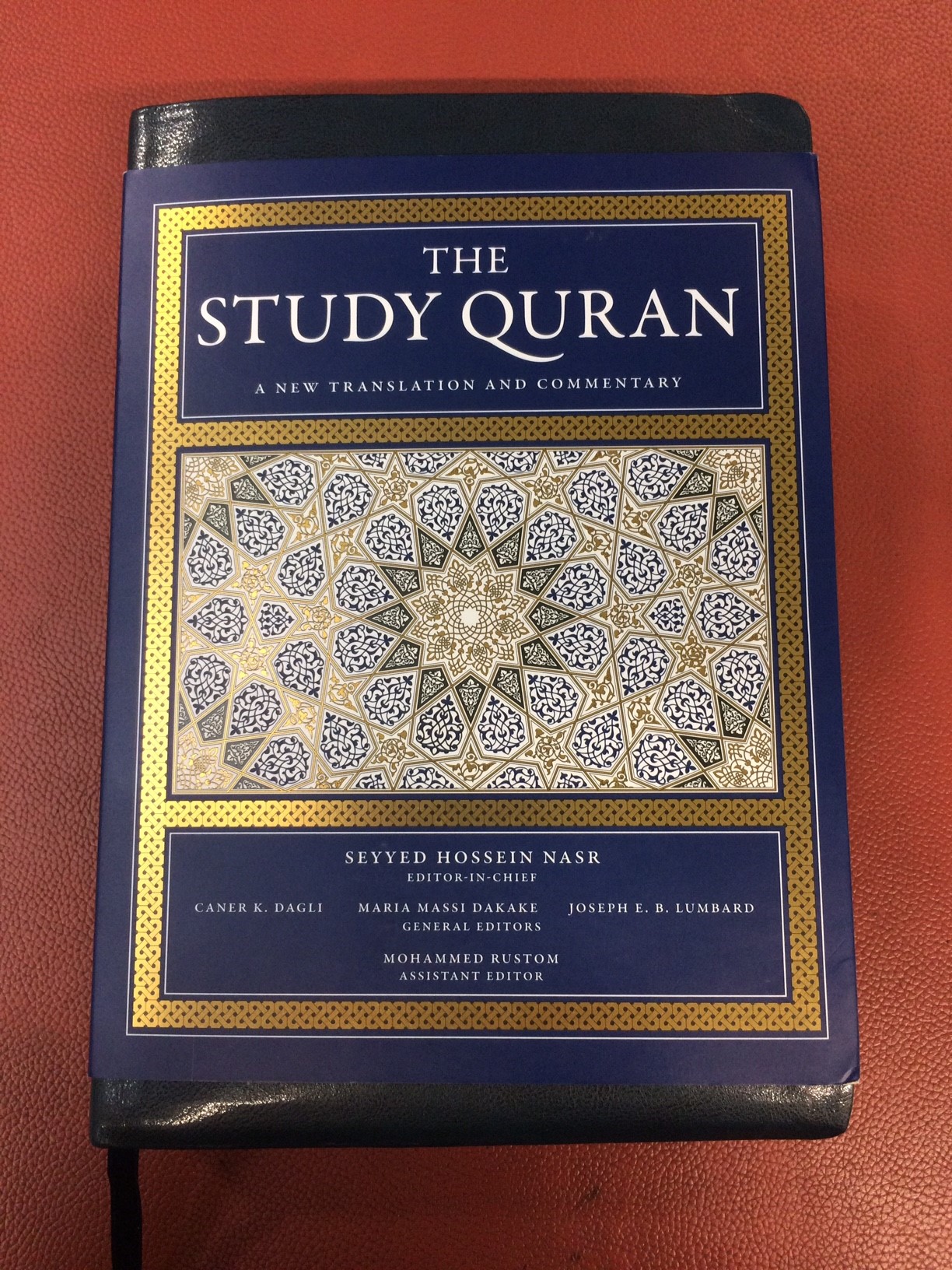
You can find further resources at: https://www.ed.ac.uk/information-services/library-museum-gallery/finding-resources/library-databases/databases-subject-a-z/database-islamic-stud
If you’d like to find out more about sources relating to the study of Islam, or any other research topic relating to Divinity, please contact Christine by e-mail at: Christine.Love-Rodgers@ed.ac.uk
Christine Love-Rodgers, Academic Support Librarian, School of Divinity, New College and Gina Headden, IS Helpdesk Assistant, New College Library.
First World War: through our Library resources
This weekend, Sunday 11th November, marks the 100th anniversary of the end of the First World War. In this week’s blog post I have pulled together just a small selection of Library resources, digital and physical, that will help you explore the First World War, the events leading up to it and the aftermath.
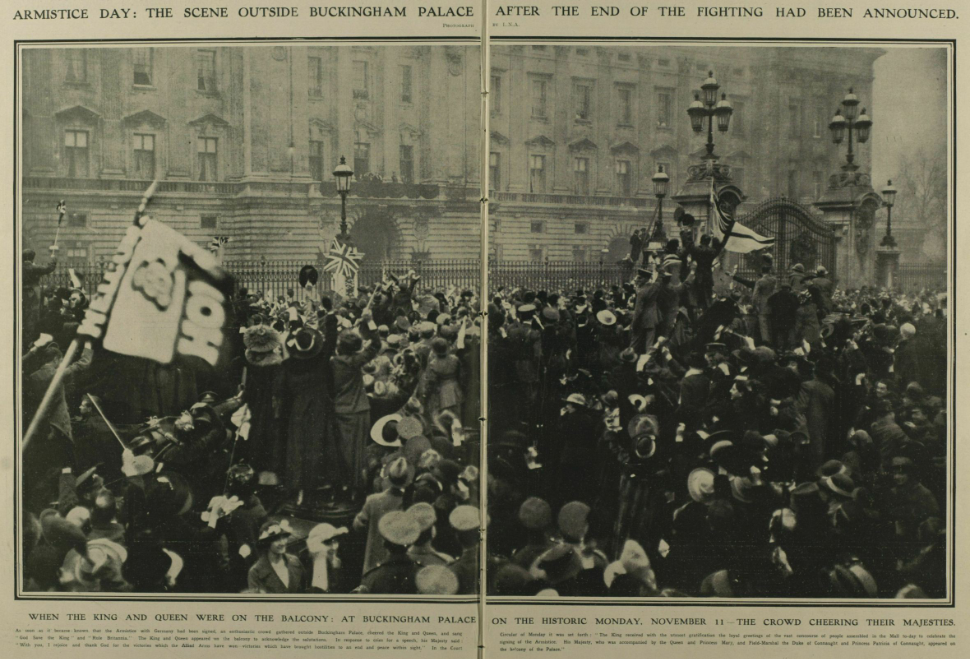
“Armistice Day: The Scene outside Buckingham Palace after the End of the Fighting Had Been Announced.” Illustrated London News [London, England] 16 Nov. 1918: n.p. Available from Illustrated London News Historical Archive.
What did the papers say?
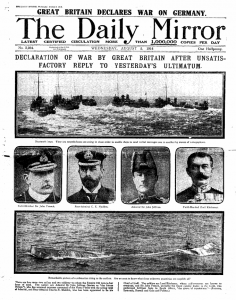
Screenshot of front page from The Daily Mirror, Wednesday, August 5, 1914. Available from UK Press Online.
During the war the British Government tried to strictly control reporting on events, particularly from the front line. Legislation was passed in 1914 which allowed the War Office to censor the press and at first journalists had to go undercover to try and report on what was happening. Even when the Government relented and agreed to send accredited British war correspondents to the front line their reports were still heavily censored and were often overt propaganda, with actual facts about events never being reported (see reporting or non-reporting on the Battle of the Somme as an example).
The Library subscribes to a large number of digitised newspaper archives that will allow you to see what events were being reported on at the time and how they were being reported. Read full text articles, compare how different newspapers were covering the same issues and stories and track coverage of the First World War from the escalating hostilities prior to the outbreak to its conclusion and aftermath. Read More
Collections
 Hill and Adamson Collection: an insight into Edinburgh’s past
My name is Phoebe Kirkland, I am an MSc East Asian Studies student, and for...
Cataloguing the private papers of Archibald Hunter Campbell: A Journey Through Correspondence
My name is Pauline Vincent, I am a student in my last year of a...
Hill and Adamson Collection: an insight into Edinburgh’s past
My name is Phoebe Kirkland, I am an MSc East Asian Studies student, and for...
Cataloguing the private papers of Archibald Hunter Campbell: A Journey Through Correspondence
My name is Pauline Vincent, I am a student in my last year of a...
Projects
Cataloguing the private papers of Archibald Hunter Campbell: A Journey Through Correspondence
My name is Pauline Vincent, I am a student in my last year of a...
Archival Provenance Research Project: Lishan’s Experience
Presentation My name is Lishan Zou, I am a fourth year History and Politics student....