Home University of Edinburgh Library Essentials
May 21, 2026
Rare Books – Expect the Unexpected 5
Wet Monday, Henry VIII Falls in the River, and the Ogre of Smeeth, all funded through the Bank of Sweets.
For our fifth visit to the ECA Illustration students’ Notgeld project we enter the world of myth and legend. Many of the German towns used local legends to illustrate their Notgeld, and several of the students went the same way.
Monika Staachowiak:
For my notgeld project I was inspired by Polish traditions and folklore.
The first notgeld with domination 10pln represents – Lajkonik.
The Lajkonik is one of the unofficial symbols of the city of Kraków, Poland. It is represented as a bearded man resembling a Tatar in a characteristic pointed hat, dressed in Mongol attire, with a wooden horse around his waist (hobby horse). It is the subject of the Lajkonik Festival that takes place each year on the first Thursday after the religious holiday of Corpus Christi. Integral part of the celebration is a great street parade. It demonstrates the victory of Krakow’s residents over the Tatars.
The second notgeld with domination 20pln represents Śmigus-dyngus also known as lany poniedzialek, meaning “Wet Monday” in Polish.
It is celebrated on the first Monday after Easter, and the way to celebrate is actually really fun: you need to pour water on other people.
Traditionally, the boys need to pour water over girls, and they also need to spank them with pussy willow branches, and girls do the same to boys. It is believed that the girl that is most wet or the one that received most amounts of water, has more chances to get married.
The third notgeld with domination 50pln is representing – Masqueraders (carolers).
In the Polish tradition, during the Christmas period, carollers dressed up and walked in the villages from house to house with wishes of prosperity in the New Year. The carolling group wore mascarons, which was often accompanied by comic and frightening scenes and performing various kinds of pranks to spectators. The whole spectacle was accompanied by the atmosphere of general cheerfulness.
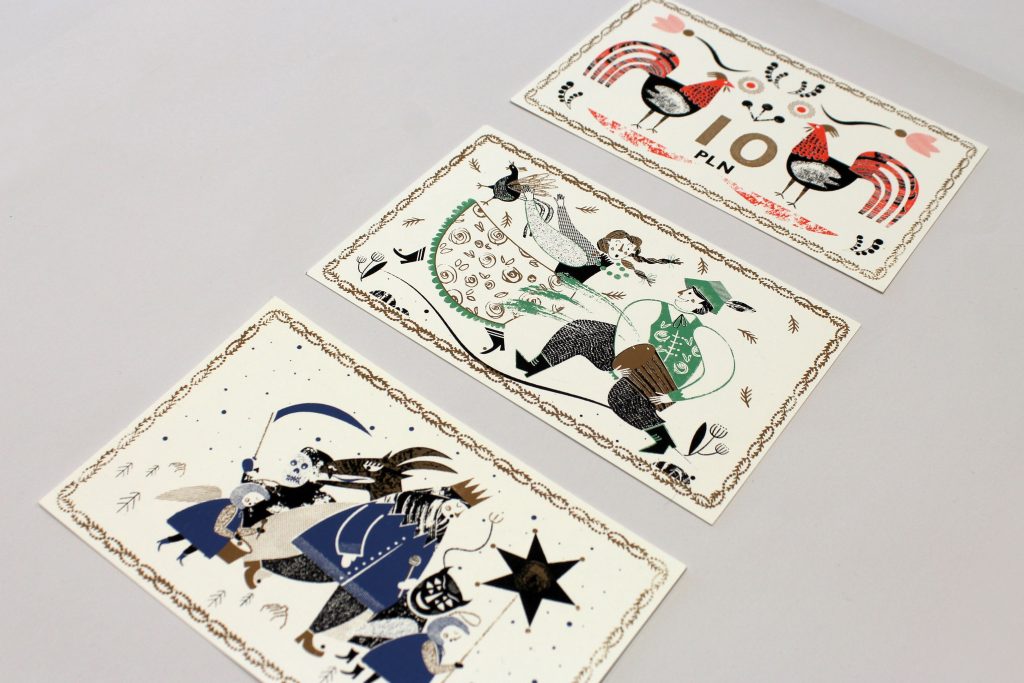
Polish folklore. Monika Stachowiak
Petra Wonham:
My Notgeld notes are based on tales of King Henry Vlll in Tudor Hitchin, I have used a variety of techniques to print them such as lino, riso and letterpress, and I have kept to a simple colour palette. The denominations are based on money used in Tudor times.
[Henry VIII used to hunt in the countryside around Hitchin. The Notgeld illustrates the local tale that he fell in the river – either because he tried to vault over it and his pole broke, or he fell off his horse during the chase]
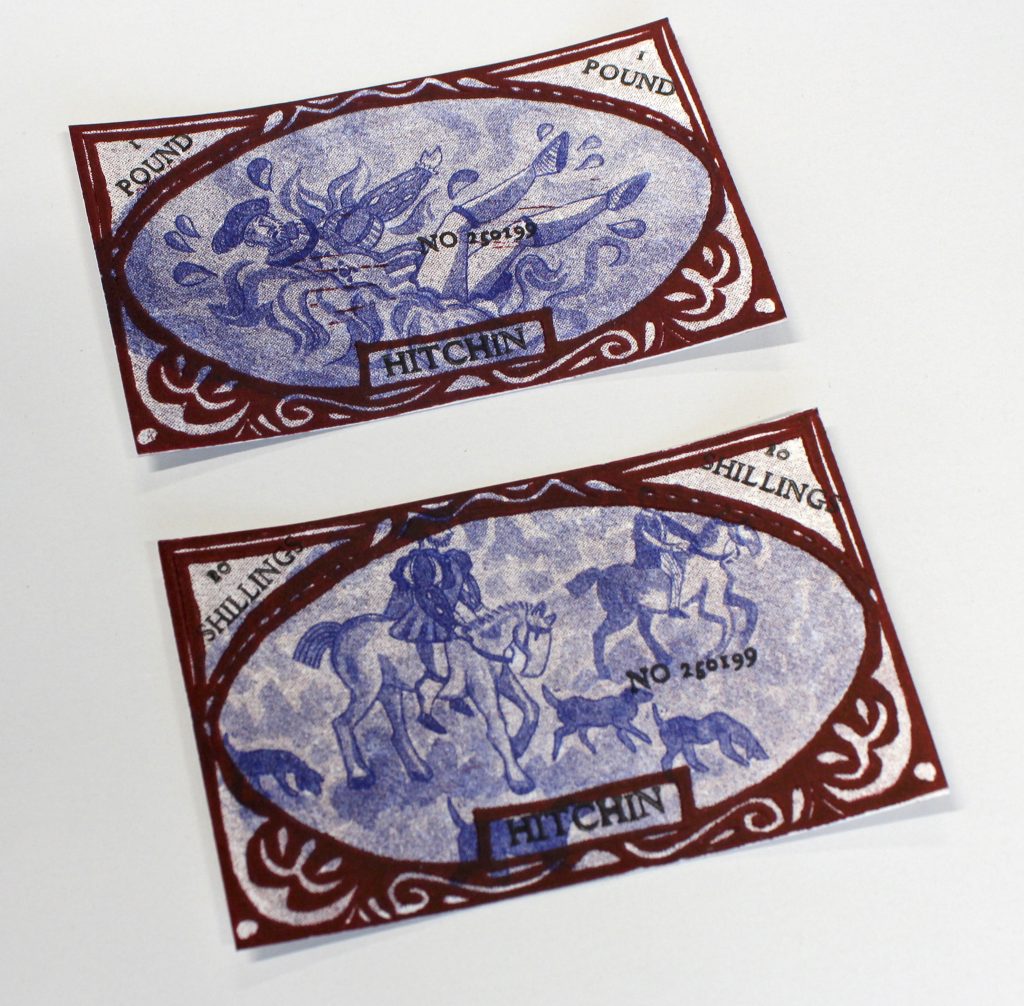
King Henry VIII visits Hitchen, Hertfordshire. Petra Wonham.
Tiggy Wilkes:
Designs inspired by folk tales and superstitions from my home county, Norfolk. The Black Shuck, a werewolf who roamed the coast, The Pedlar of Swaffham who dreamt he found treasure in his garden, and The Ogre of Smeeth who occupied a forest for many years until he was slayed. I created them in an old 18th century style, as if they were warnings and tales to inform the locals at the time.
Created using letterpress and lino relief printing.
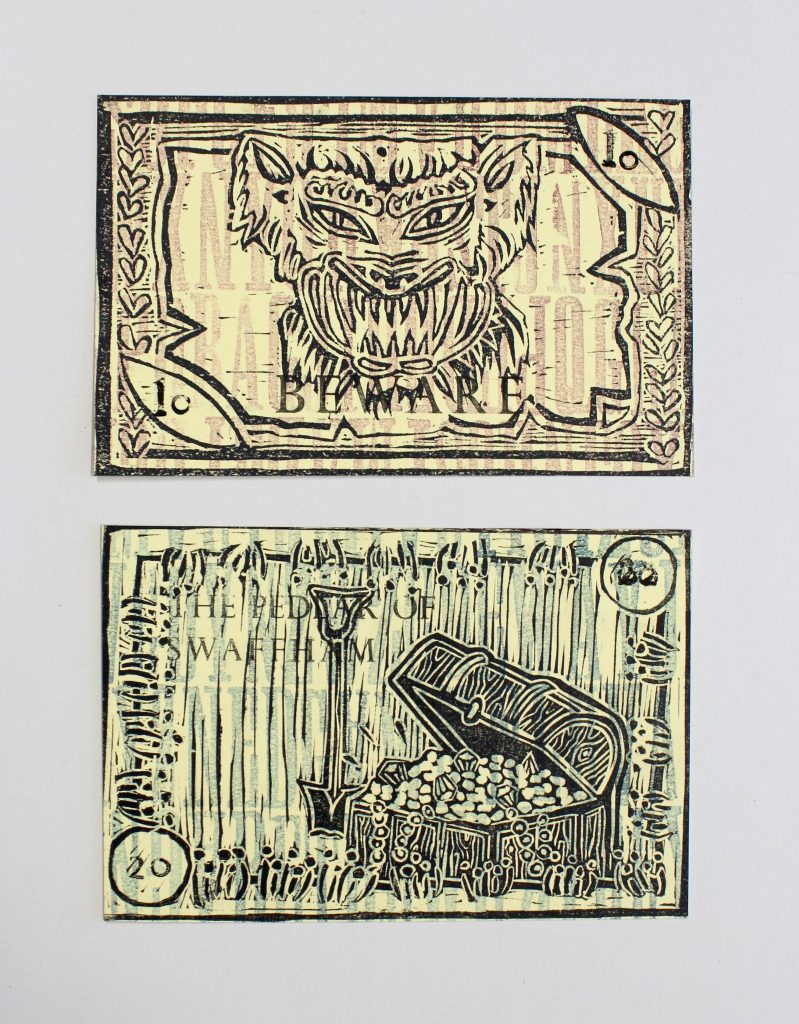
Norfolk folklore. Tiggy Wilkes
Our apologies for including this final entry in this post, where it seems not to belong. We had hoped to pay more attention to examples of Notgeld using interesting units of currency. In post World-War I Germany some Notgeld was produced in unusual materials, including compressed coal dust, and many of the students thought about their currencies very carefully. You may have noticed Zhaoyang Chen’s Bank of Rabiland, in a previous post, counted in ‘Caro[t]s’, Naiomi Sun’s Utopian money is issued in units of time, and Rosie Cockrell’s Sheffield runs on units of forks. We thought that Zoe Zhou’s Bank of Sweets took the biscuit!
Zoe Zhou
For me this project is characteristic of time which reminds me of my childhood. In the set every note is quite different because I tried to show different side of that period. One of them is about the lovely children having sweets, rather than money, I believe sweets are valued by them. The other two are about my hometown and my favourite place to go with my parents, the aquarium.
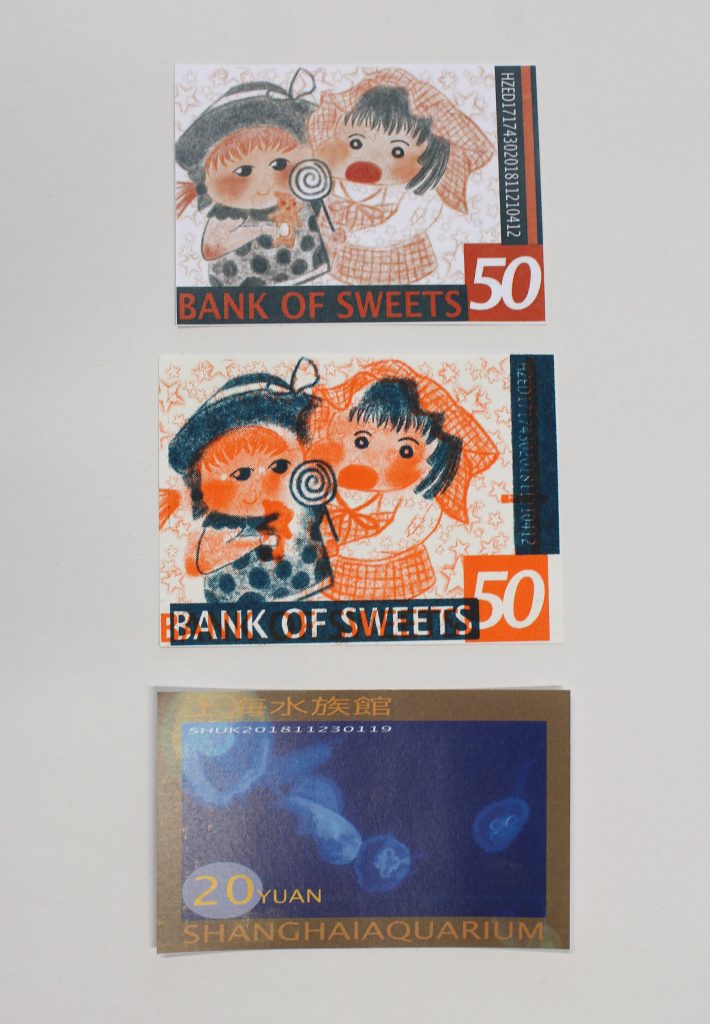
Bank of Sweets. Zoe Zhou
Highland Childhoods in the Old Statistical Accounts – Part 2
Guest blog post
Here is the second part of the guest post by Helen Barton and Neil Bruce, MLitt students at the University of the Highlands and Islands, who have carried out research on gender and family in the Highlands using the Statistical Accounts.
_________________________________________
In part one, we considered what the Old Statistical Accounts told us about Highland Childhoods, focusing on Health and Disease, and Family Structures. In part two, we look at the Domestic Economy and Education.
Domestic Economy
Rural and town children were commonly brought up in homes where domestic work, employment and child-rearing were being juggled by female adults across generations. Accounts allude to the precariousness of bringing-in income. In many cases, both parents needed to earn to achieve sufficient income to sustain the family. When an Avoch fishing crew drowned, widows received charitable aid, but social expectation was that even those with young infants would soon return to industrious work (OSA, Vol. XV, 1795, pp. 634-5):
The distress of the widows having been thus mitigated, particularly until such of them had been left pregnant were delivered, and had nursed their infants, they have almost all now returned to the proper habits of industry, sufficient to support themselves and their families.
We can discern from the accounts typical levels of family income, and the cost of sustaining life, not just lifestyle. Families were experiencing increases in costs, noted to have doubled over four decades in Tarbat (OSA, Vol. VI, 1793, pp. 431-2). In the far North Highlands, it was estimated to be in the region of £14 per year (OSA, Vol. XIX, 1797, p.29). Children frequently worked for wages or boarded as farm labourers to make ends meet. Married men received a higher wage than single people, and men generally received higher wages. Income was gender, age and board-dependant. In Dingwall, there were limited wages for male labourers and families were highly dependent on supplementary income. This was usually from women spinning as “(T)here is no room for children to exert industry as there are no manufacturers. The whole income of the family can therefore not exceed L9:16”’ (OSA, Vol. III, 1792, p.13). This example of working mothers is repeated throughout the region. It points to waged work being introduced, and again, the need for two adult incomes to sustain families.
Elsewhere in Scotland, children were widely employed in manufacturing. They were cheap to employ before reaching at 14 years when higher wages were paid (C.A. Whatley, ‘The Experience of Work’, in T. M. Devine & R. Mitchison (eds) People and Society in Scotland, Vol 1, 1760-1830 (Edinburgh, 1999), pp. 239-46). There are frequent references to Highland children’s priorities being to the family; in Rogart, children worked as “servants”, for their parents, (OSA, Vol. III, 1792, p. 566) and on Barra they worked seed-planting and harvesting instead of attending school (OSA, Vol. XIII, 1794, p. 339). The contribution of children’s wages to the household was especially significant in areas where men were absent as women earned much less (OSA, Vol. I, 1791, p. 288).
However, most parish accounts make little direct reference to employment for children. It may be that in some parishes, children did not ordinarily work. More likely it was simply widely accepted they contributed to the family economy as another pair of hands, whether ‘wage-earning’, as domestic workers, or in farm work. It certainly seems common from the reports they were assumed to contribute to the overall household economy, though at what age is not always obvious.
Education
Initially there were no questions about schooling requested of parish ministers. A supplementary request to find out about “the state, organisation and size of the parish’s schools, number of scholars, subjects taught and how many went on to university” was made a year later (though sent out as Appendix C with a letter to clergy in 1791, the source quoted here is J. Sinclair, Specimens of Statistical Reports: Exhibiting the progress of political society, from the pastoral state, to that of luxury and refinement (London & Cornhill, 1793), p. XV).
As mentioned above, the economic value children contributed to the family unit meant education came second to work. their availability to attend school was determined by seasonal demands. Sir John himself subsequently assessed that “(T)he common people, in general, have little time for education.” (J. Sinclair, Analysis of the Statistical Account of Scotland: With a General View of the History of that Country, and Discussions on Some Important Branches of Political Economy (Edinburgh, 1831), p. 72). His statement was informed by the reports indicating poor school attendances, but did not note parental income levels, or the ease of access to schools.
While the local heritors (landowners) were legally required to ensure the provision of a school in each parish, in practice, that could depend on their residency or absence, willingness and ability to fund. It also depended on their preparedness for others, such as the Scottish Society for the Propagation of Christian Knowledge, to establish schools. The Scottish Society’s (SSPCK) Secretary, for example, identified “2 populous districts … where schools might be erected to great advantage”, were the proprietor to part-fund it (OSA, Vol. XIII, 1794, p. 315). Parish and other schools could and did charge for children to be taught; the quarterly fees in Stornoway, for example, included English and writing 2/6d; arithmetic and English 3/-; Latin, writing and arithmetic 4/- (OSA, Vol. XIX, 1797, p. 243).
The requirement was ‘a’ parish school – in Skye, the Outer Hebrides and Small Isles, a vast area of 2,000 square miles, and many inhabited islands, there were only 15 parishes, and unsurprisingly, the reports revealed the paucity of educational provision. Rev. John Macleod summed up the challenges of school provision and uptake on Harris: “the people of this country are so detached from each other” and the terrain, distances and paucity of good roads, meant, “there is really no fixing on a station in which any public institution can be of universal benefit” (OSA, Vol. X, 1794, p. 380).
What Sir John also did not acknowledge were reports of parents in more remote places making their own arrangements to have their children schooled. Equally, the accounts do not detail the age of those who attended school, or for how long; there is no reference to informal educational opportunities. As the reporters were usually the Kirk minister, there is often little information on the schooling of Roman Catholic children. Prunier has noted that Roman Catholics were debarred from teaching (C. Prunier, ‘‘They must have their children educated some way’: the education of Catholics in eighteenth-century Scotland’, Innes Review, Vol. 60, no. 1 (2009), p. 37).
Attendance at school in the west and north Highlands and Islands meant learning in English, not Gaelic, though for most, Gaelic was still their native tongue. This introduced children to another language, and in Barray, “numbers … who attended the school … (spoke) … English tolerably well” (OSA, Vol. XIII, 1794, p. 341). In contrast on the east coast, in Rosemarkie, Avoch, and Wick, for example, few, if anyone spoke Gaelic (OSA, Vol. XI, 1794, p. 348; Vol. XV, 1795, p. 632; Vol. X, 1794, p. 32).
The reporting of schooling was non-gendered, with either the subjects, or the number taking them listed. At North Uist’s parish school, “ten in general read Latin; the rest study geography, book-keeping, arithmetic, writing, and reading English” (OSA, Vol. XIII, 1794, p. 315), and at Strath, reading, writing, arithmetic and Latin were taught (OSA, Vol. XVI, 1795, p. 226). However, the reports do point to gendered-based opportunities for, and expectations on children – Sir John, himself argued, “society cannot be placed on an equal footing, unless the blessings of education are extended to both sexes”, though by that he obviously did not mean they both receive the same opportunities (J. Sinclair, Analysis of the Statistical Account, p. 126).
Sinclair himself penned the Thurso report and promoted the idea of an academy for boys once the Napoleonic Wars were over, lamenting there was no boarding school where girls could learn “needle-work, music and other subjects suited to the sex” (OSA, Vol. XX, 1798 p. 512). Elsewhere, girls were learning how to spin, for example, at SSPCK schools at Rowdill, and two spinning-schools in Barvas, jointly run with Mrs Mackenzie of Seaforth. At the latter, they were “taught gratis, have 10 pence for every spindle they spin, and to encourage them, they have their wheels at low rate; ” (OSA, Vol. X, 1794, p.269; Vol. XIX, 1797, pp.278–279). At Lochs, on Lewis, the minister opined that girls “secluded from the more cultivated part of society” could gain skills, industry and “real happiness” by learning to spin (OSA, Vol. XIX, 1797, pp. 278-279). In nearby Stornoway, two of the three SSPCK spinning schools were “laid aside for want of the requisite number of scholars”, the minister lamenting that previously “many poor girls have been rescued from habits of idleness and vice, and trained to industry and virtue” (OSA, Vol. XIX, 1797, pp. 243-244).
Stornoway’s parish had a broader, more obviously male-orientated curriculum, geared to future employment opportunities included navigation and book-keeping, and mensuration, the study of measurements (OSA, Vol. XIX, 1797, p. 243). The reports suggest only a few boys continued their education at university. Duirinish parish had four “students” at university in Aberdeen; North Uist’s parish school sent “one yearly to College”, and two, “who got the rudiments of their education” attended “University last winter” (OSA, Vol. IV, 1792, p. 133; OSA, Vol. XIII, 1794, p. 315).
Conclusion
there is much to be gleaned about what childhood meant for the many growing up in the later eighteenth century from the Far North and Outer Isles parishes accounts. Our examples do point to the limitations of the Accounts as the level of detail is inconsistent, anonymised and general, rather than specific.
We’ve only scratched the surface and there are other fruitful areas, for example:
- the family economy;
- inter-generational relationships;
- what it was like to be one of the elite;
- the extent of choice children had in their future.
And, perhaps, given that Sir John, set out to ascertain the “state of the country” in 1790, to “reveal the quantum of happiness in a population”, believing “every individual … shall have the means of enjoying as much real happiness as the imperfect condition of human nature will admit”, assessing how happy childhood was for the many (R. Mitchison, Sir John Sinclair, first baronet (1754 – 1835), Dictionary of National Biography, accessed 19th September 2017; J. Sinclair, Specimens of Statistical Reports, p. IX).
—oOo—
We would like to thank Helen and Neil for their fascinating guest blog post. We hope it inspires others to carry out their own research using the Statistical Accounts of Scotland. Indeed, if you would like to write a guest post on how you have used the Statistical Accounts in your study or work please let us know by emailing edina@ed.ac.uk!
Rare Books – Expect the Unexpected 4
Lace, Forks, The Arctic Monkeys and Golf
This is the fourth in our series of posts based on the current exhibition in the Library Gallery, and the project by Edinburgh College of Art Illustration students, based on the album of Notgeld, emergency money, from the early 1920s.
The original German Notgeld was produced for local use, which was frequently reflected in the design. In an earlier post we looked at student Notgeld which was inspired by landscape and heritage. In this post we feature the work of the students who celebrated local industry and popular culture, often humourously.
Rosemary Cockrell
The city my Notgeld are fo
The Goffr is Sheffield. The notes show different cultural aspects of the city. For example, one of my notes uses the colours red and blue to symbolise Sheffield’s two football teams. The note is a pentagon to reflect the shape of the team badge. One of my other notes is shaped like a Henderson’s Relish bottle, which is a sauce made in Sheffield. My final note is shaped like the Peak District logo.
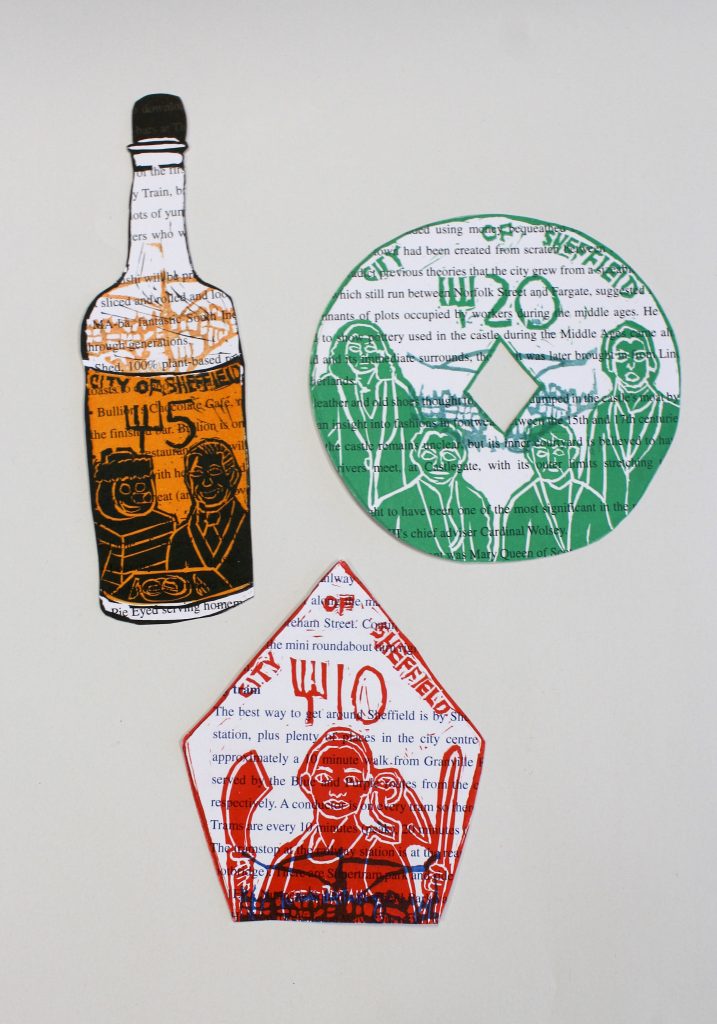
Notgeld for Sheffield. Rosie Cockrell
The currency I made for the city also expresses an important part of the city’s history. It is inspired by the shape of a fork which symbolises Sheffield’s stainless steel industry.
Bank notes usually have prominent figures featured on them so I included some well-known celebrities who are from Sheffield. I chose Sean Bean, Jessica Ennis-Hill and the Arctic Monkeys.
Jade Hollick
I chose to explore the history of the lace industry in Nottingham looking at the importance of its role within the economy.
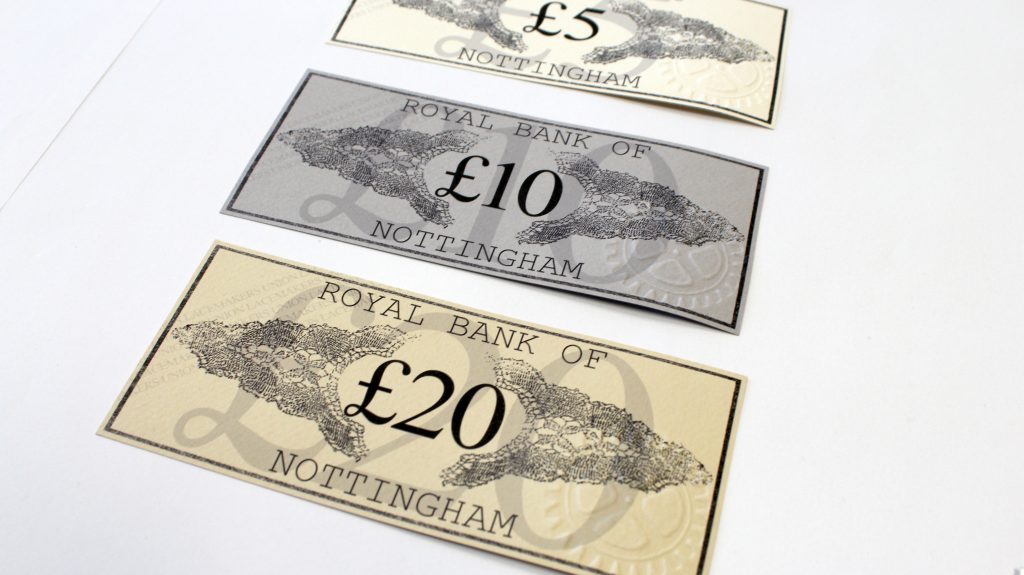
Nottingham Lace. Jade Hollick.
Gee Watson
I based my Notgeld on Leith, an industrial area with a lot of history and culture. Inspired by the variety of styles, colours and collectable nature of the University’s collection, I decided to create more abstract, palm sized notes. Using print and mixed media I explored the texture, sound and energy of the area that I call home.
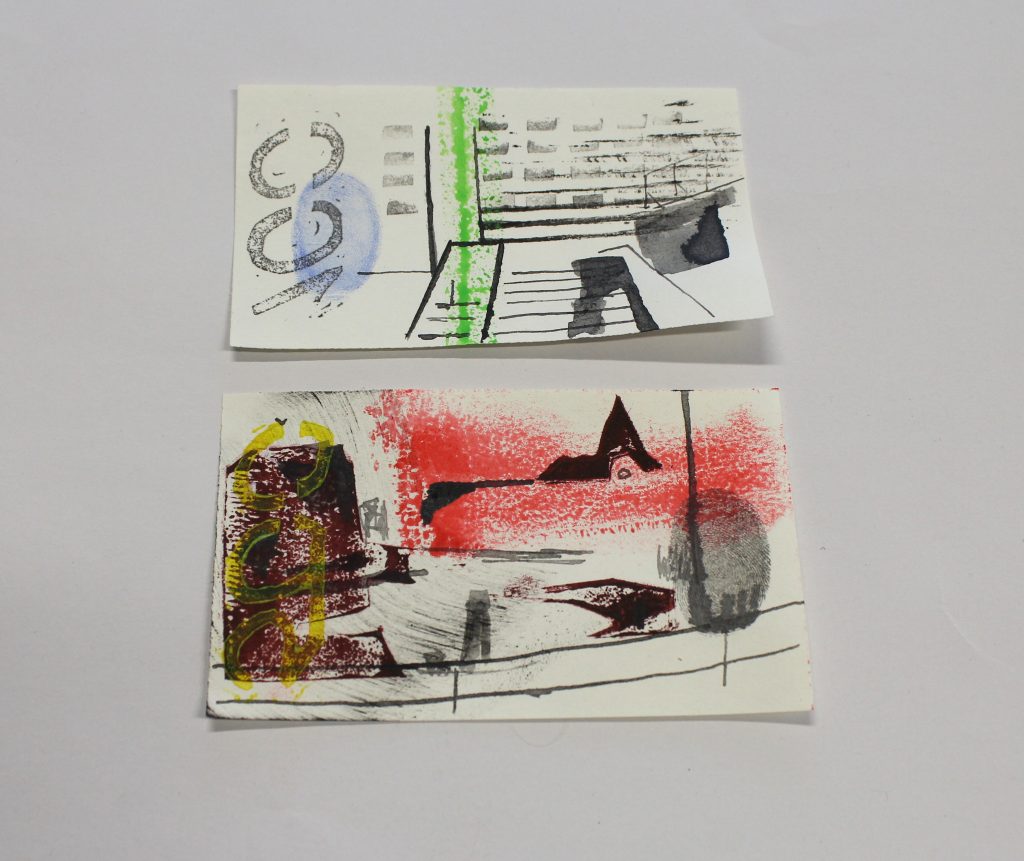
Leith, in texture, sound and energy. Gee Watson
Young Lee
My work is about my favourite activities to do in Busan, South Korea, which is my hometown.
I have invented this special currency that can be used to pay for sports.
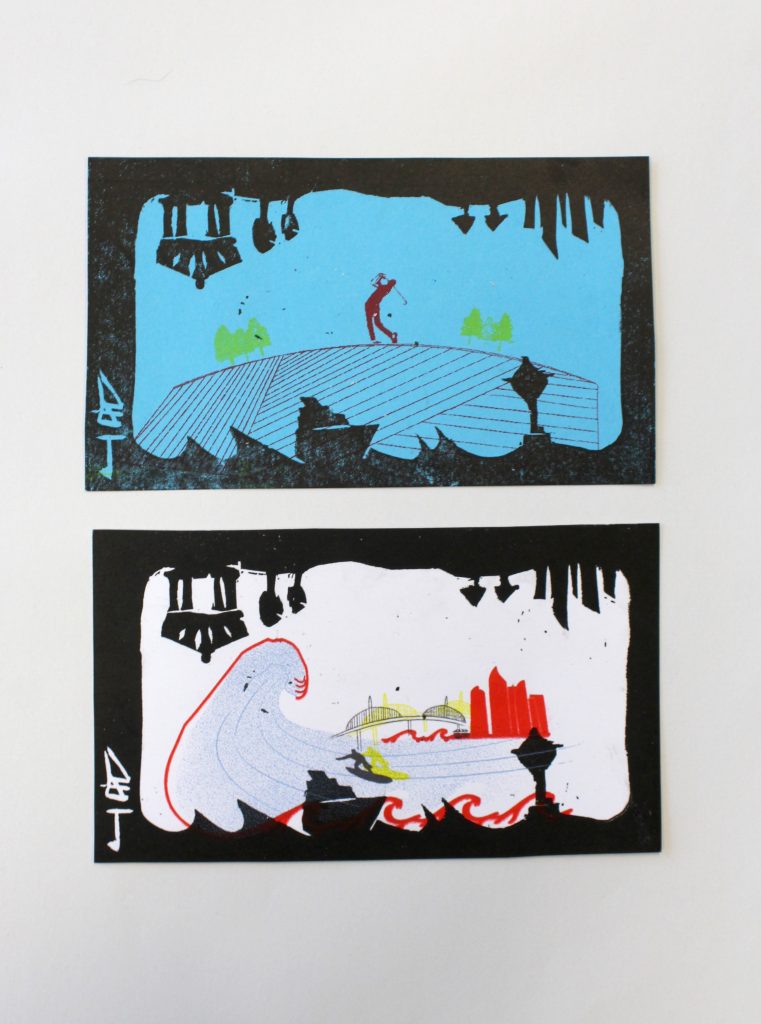
Notgeld for Busan, South Korea. Young Lee.
Alison Laing
My Notgeld notes are an example of what the currency may be like if Scotland gained independence. I took a more humorous approach when exploring themes of architecture, royalty and famous Scottish figures whilst using a strict colour palette of blue, white and black.
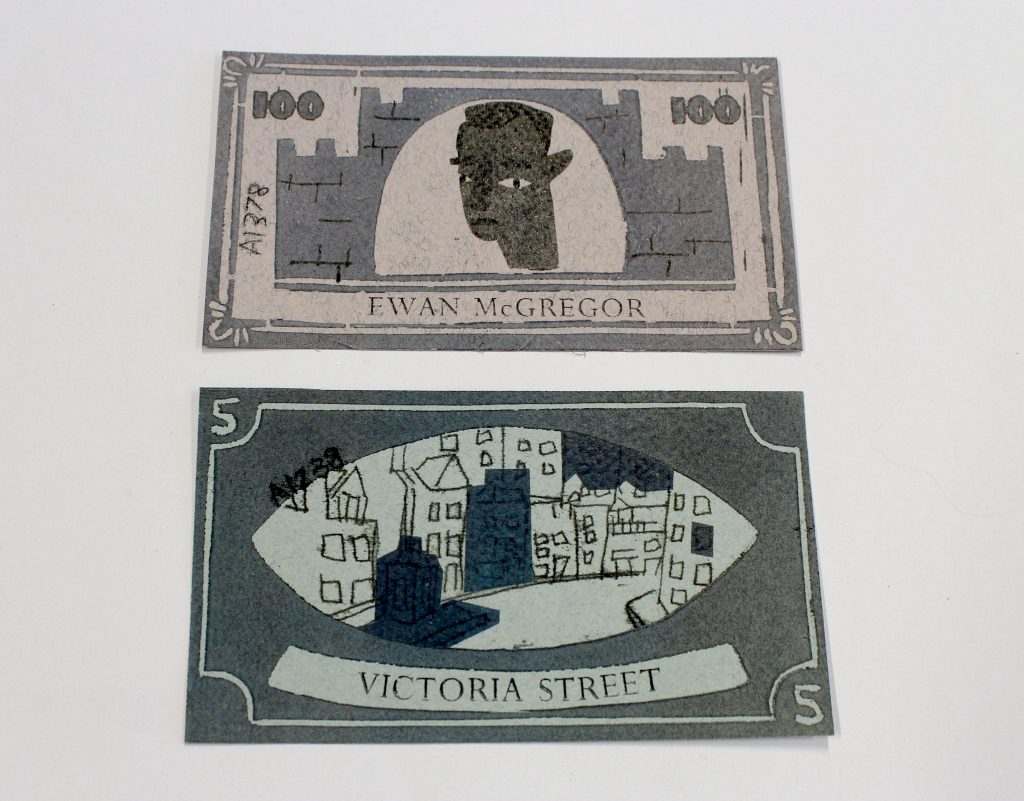
Currency for an independent Scotland.
The exhibition includes a few items which are unexpectedly humourous, for a University Library. The one which perhaps best complements this group of student Notgeld is the humourous poem about golf The Goff. This, incidentally, like Gee Watson’s Notgeld, is set in Leith. It records, in mock-heroic verse, a match between a young Edinburgh lawyer and a bookseller, on Leith Links. In the passage reproduced below they see a group of senior players – the great and the good of Edinburgh – described as if they were the heroes of legend.
We are not sure whether ‘Golfina’, the goddess of golf, is present in modern Leith.
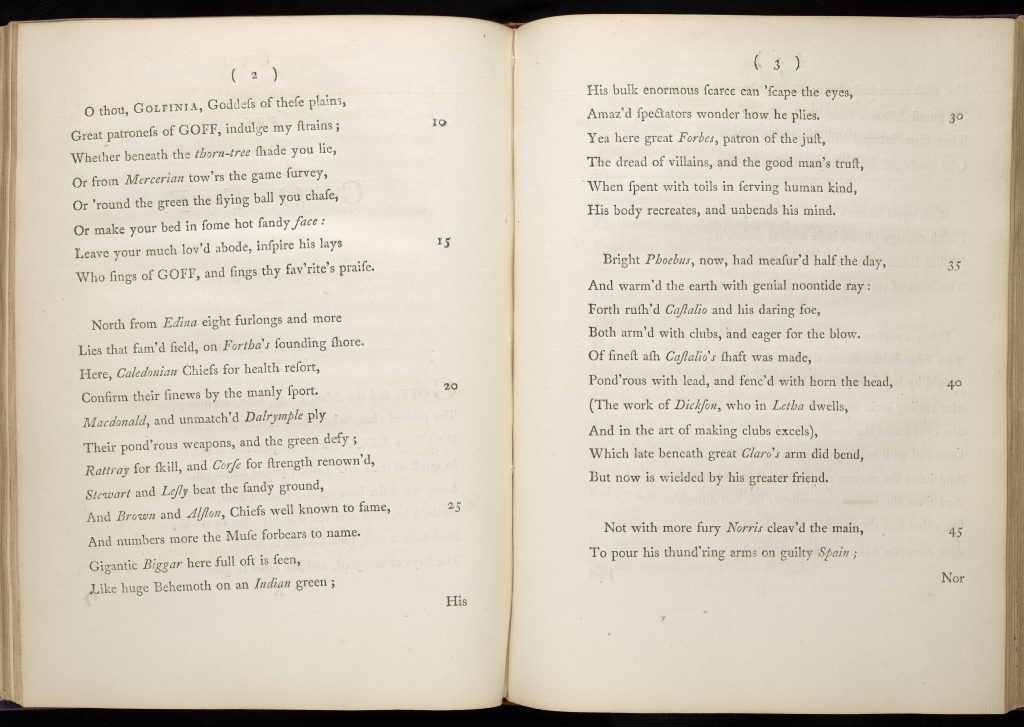
The Goff
On trial: Trench Journals and Unit Magazines of the First World War
*The Library has access to Trench Journals and Unit Magazines of the First World War until 31st July 2024 as part of ProQuest Access 350.*
Thanks to a request from a student in HCA the Library currently has trial access to the primary source database Trench Journals and Unit Magazines of the First World War from ProQuest. The database is an archival research resource containing a vast collection of rare magazines by and for servicemen and women of all nations during the First World War.

You can access this digital resource via the E-resources trials page.
Access on-campus is direct, for off-campus access you must use VPN.
Trial access ends 28th February 2019.
Trench Journals and Unit Magazines of the First World War is a unique source of information on the common serviceman and woman’s experience of the war. These magazines were written by and for every type of unit from every combatant nation. The database gives you the unique opportunity to access unheard voices of hundreds of thousands of men and women writing from every facet of the conflict. Read More
LGBT Magazine Archive: Trial access
*The Library now has access to LGBT Magazine Archive until 31st July 2024. See New! LGBT Magazine Archive*
I’m happy to let you know that just in time for LGBT History Month the Library currently has trial access to the LGBT Magazine Archive from ProQuest. This new primary source database is a searchable archive of major periodicals devoted to LGBT+ interests, dating from the 1950s through to recent years.

You can access this digital resource via the E-resources trials page.
Access on-campus is direct, for off-campus access you must use VPN.
Trial access ends 28th February 2019. Read More
DataVault is now live
After extended development, the Research Data Service’s DataVault system is now operational, adding value to research data for principal investigators and their funders alike by offering a long-term retention solution for important datasets.
DataVault is a companion service to DataShare, the institutional digital repository for researchers to openly license and share datasets and related outputs via the Web. DataVault comprises an online interface connected to the university’s data centre infrastructure and cloud storage.
Each research project can store data in a single vault made up of any number of deposits. DataVault is currently able to accept individual deposits (groups of files) of up to 2 TB each; this will increase over time as project development continues.
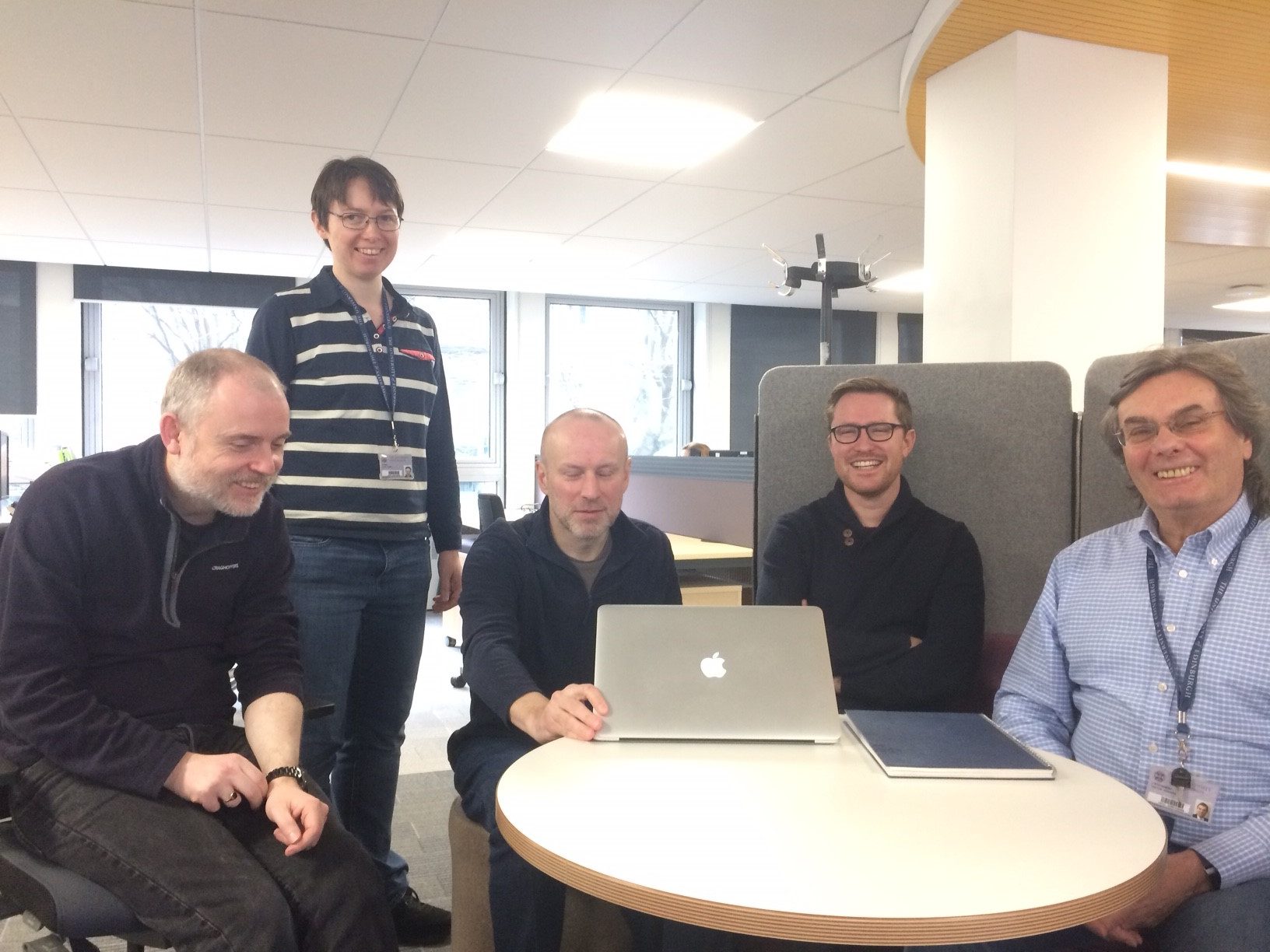
DataVault sprint meeting before launch
Immutable
DataVault is designed for long-term retention of research data, to meet funder requirements and ensure future access to high value datasets. It meets digital preservation requirements by storing three copies in different locations (two on tape, one in the cloud) with integrity checking built-in, so that the data owner can retrieve their data with confidence until the end of the retention period (typically ten years).
Secure
The DataVault interface helps to guide users in how to deposit personal and sensitive data, using anonymisation or pseudonymisation techniques whenever possible, as prescribed by the University’s Data Protection Officer (DPO). Because all data are encrypted before deposit, they are protected from unauthorised disclosure. Only the data owner or their nominated delegate is allowed to retrieve data during the retention period. Any decisions about allowing access to others are made by the data owner and are conducted outside the DataVault system, once they have been retrieved onto a private area on DataStore and decrypted.
Discoverable
Although DataVault offers a form of closed archive, the design encourages good research data management practice by requiring a metadata record for each vault in Pure. These records are discoverable on the Web, and linked to the respective data creators, projects and publications.
In exchange for creating this high level public metadata record, the Principal Investigator benefits from the assignment of a unique digital object identifier (DOI) which can be used to cite the data in publications.
The open nature of the metadata means that any reader may make a request to access the dataset. The data owner decides who may have access and under what conditions. Advice can be provided by the Research Data Support team and the DPO.
University data assets
DataVault’s workflow takes into account the possibility/likelihood that the original data owner will have left the university when the period of retention comes to an end. Each vault will be reviewed by representatives of the university in schools, colleges or the Library, acting as the data owner, to make decisions on disposal or further retention and curation. If kept, the vault contents become university data assets.
Plan ahead for data archiving
The Research Data Support team encourages researchers to plan ahead for data archiving, right from the earliest conception stages of the project, so that appropriate costs are included in bids, and enabling the appropriate steps to be carried out to prepare data for either open or closed long-term archiving.
The team can be contacted through the IS Helpline and offers assistance with writing data management plans and making archival decisions. See our service website and contact information at https://www.ed.ac.uk/is/research-data-service or go straight to the DataVault page to learn more about it, get instructions for use, or look up charges. An introductory demo video is available at https://media.ed.ac.uk/media/Getting+started+with+the+DataVault/1_h4r4glf7 .
Robin Rice
Data Librarian and Head, Research Data Support
Library & University Collections
Rare Books – Expect the Unexpected. 3
Hippogriffs, Rabbits, Skyship Ports and Mars: Fantasy Worlds

In our third visit to the student Notgeld and its connections with the exhibition, we move into the realms of fantasy. Some of the students realised that while their Notgeld needed a sense of place, they could improve on the world we have, and design for a better one.
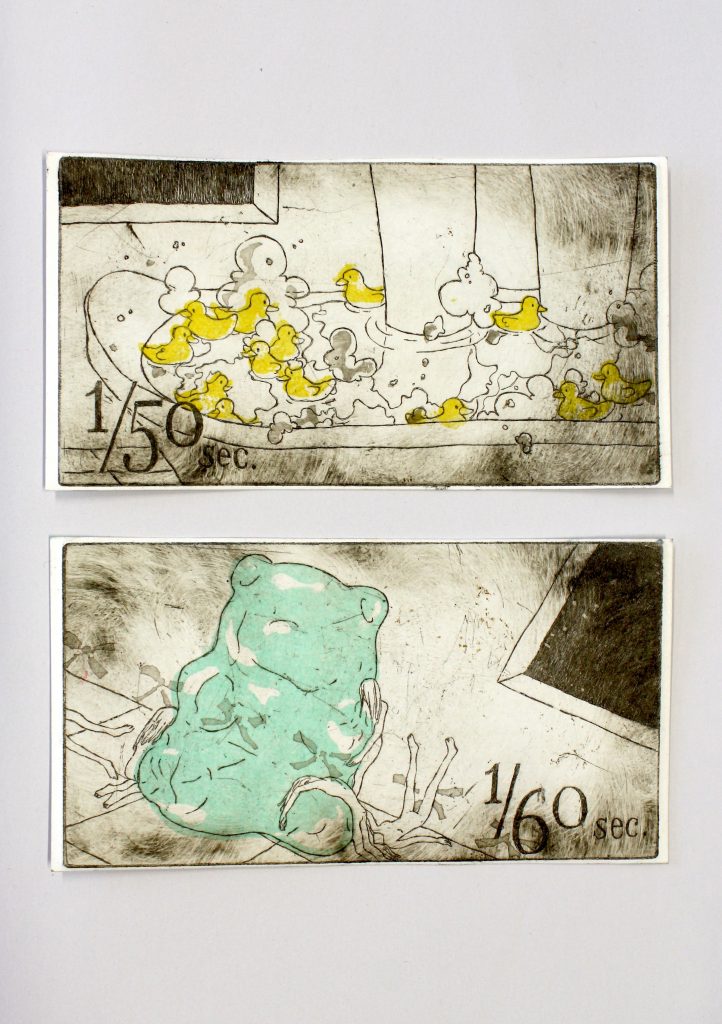
Let us start by letting Naomi Sun lead us to the best of better places: Utopia:
“Here is UTOPIA.
A place for you to escape from the REAL.
You can finally be YOU,
though that will not be long.”
“Tickets are limited.
Please collect your notes and use them wisely.”
We were particulary impressed with Naomi’s work, as she was the only student to use etching to produce her notes.
Sammi Duong looked to Space, and made a better world on Mars:
“These banknotes are made for a future when we inhabit Mars and are named after the Mars Rover. Together they narrate the process in which humans made Mars habitable.
They were made digitally on Photoshop then risograph printed with red and gold ink.”

Zhaoyang Chen invented a world of rabbits.
“I designed these notes for an imaginary country populated by rabbits. The name of this country is Rabiland, I got the inspiration from Zootopia. The design and layout of the notes are based on modern Chinese notes.”
These also explore space: the third note of the set, which is in the exhibition but not illustrated here, shows the rabbits in very natty space suits.

Shannon Law and Valeria Mogilevskaya have both invented imaginary lands.
Shannon:
“My notes (Oceys) are for a fantasy fishing village that I based around some creative writing that my friend and I worked on. It originally was a market town with watchtowers surrounding it, I changed this due to the colour palette I was using and the style of buildings that were evident in medieval fishing villages.”

Valeria
“Ythers’Narth is a fictional country in a steampunk world, it is a mountainous and beautiful country which presents a scenic idyllic lifestyle to the rest of the world but in reality the strict laws and controlling government make life there far from free. These notes, issued by the capital city and carefully monitored by the nobility show parts of the country people are meant to look up to – the rich history and older civilization Ythers’Narth gets its name from and its people are descended from; the picturesque mountain ranges and fields of golden wheat; the immensely popular sky ship ports that people from all over the world fly to.”

The other exhibits some imagined lands – there are the examples from our collection of American comics, Batman, Spiderman and the irresistably-named “Ms. Tree”, which we cannot reproduce here for copyright reasons.
However, we can reproduce a fantasy creature, which would be worthy to inhabit any of the students’ fantasy lands. A hippogriff, from Ludovico Ariosto’s Orlando Furioso. In the story the knight Astolfo travels by hippogriff to Ethiopia (which is clearly off the edge of the page), to seek a cure for Orlando’s madness, brought on by being jilted in love.
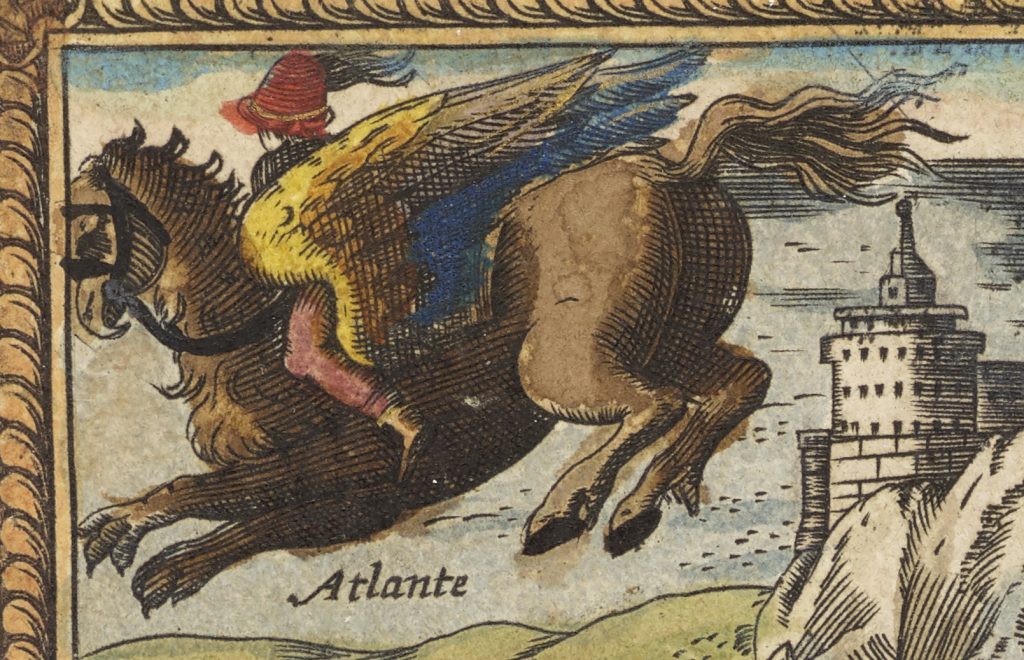
Hippogriff, from Orlando Furioso
Highland Childhoods in the Old Statistical Accounts – Part 1
Guest blog post
It is always wonderful to discover first-hand how people use the Statistical Accounts of Scotland. Two MLitt students of the University of the Highlands and Islands, Helen Barton and Neil Bruce, have carried out research on gender and family in the Highlands using the the Statistical Accounts of Scotland. They have written a blog post, divided into two parts, providing us with the results of their research. Below is part one, covering the themes of health and disease and family structures of children living in the Highlands.
________________________________________
Last year as part of our Masters course, we considered ‘Gender and the Family’ in the Highlands. We were challenged to use the Statistical Accounts to research the experience of childhood. We know very little about children in the region in the pre-Clearance era, and what little we do know is about the offspring of the elite, “the formal education and socialisation of children where it yielded a written record is more easily understood” (S. Nenadic, Lairds and luxury: the Highland gentry in Eighteenth-century Scotland (Edinburgh, 2007), p. 43).
An historian focusing on lost English society, Peter Laslett found the “crowds and crowds of little children … who were a feature of any pre-industrial society” are often missing from the record. Margaret King broadened this point across Europe: “We know less about the course of childhood itself, the socialization of the young, and the lives of the poor, always a black hole” (P. Laslett, The World We Have Lost (London, 1971), pp. 109-110, quoted in H. Cunningham, ‘The Employment and Unemployment of Childhood in England c. 1680-1851’, Past & Present, No. 126 (1990), p. 115; M. L. King, ‘Concepts of Childhood: What We Know and Where We Might Go’, Renaissance Quarterly, Vol. 60, no. 2 (2007), p. 388).
Sir John Sinclair included three questions relating to children:
- The parish’s school population
- Family sizes
- The number of under-ten-year olds.
With this limited and “unwitting testimony” provided by the authors of the parish reports, the historian can glean an understanding of what children’s lives involved (A. Marwick, The Fundamentals of History, accessed 26th June 2018).
In our research we focused on the Outer Isles, Skye and the Far North, and the themes of
- Health and Disease
- Family Structures
- Work
- Education
We’ll cover the first two sections in this blog and the other two in part two.
Health and Disease
The reports frequently refer to children (and families) having a high risk of contracting and succumbing to disease. Surviving the first five to eight days was crucial in Lewis, where a “complaint called the five night sickness” “prevails over all the island” (OSA, Vol. XIX, 1797, p. 265, p. 281). The minister in Barvas thought “the nature of this uncommon disease … (was not) … yet fully comprehended by the most skilful upon this island” (OSA, Vol. XIX, 1797, p. 265). In Uig, it was described as epilepsy, where, other than two cases, all contracting it died; one survivor experienced severe fits, remaining “in a debilitated state”. Incomers had initial immunity, but even their new-born could contract it (OSA, Vol. XIX, 1797, p. 281). Croup “proved very mortal, and swept away many children” (OSA, Vol. XVII, 1796, p. 279).
Smallpox had a “calamitous” effect, during an apparent epidemic, 38 children died within months; parents in Tarbat, Easter Ross, were “deaf” to the “legality and expediency” of inoculation (OSA, Vol. VI, 1793, pp. 428-429). An epidemic in Harris in 1792 “carried off a number of the children”, most “inoculated by their parents, without medical assistance” (OSA, Vol. XX, 1794, p. 385). In Strath on Skye, and on North Uist, inoculation had “now become so general” that “the poor people, to avoid expenses, inoculate their own children with surprising success” (OSA, Vol. XVI, 1793, p. 224; Vol. XIII, 1794 p. 312). In Tongue, in Sutherland, within five years of inoculations being introduced, smallpox had been virtually eradicated (OSA, Vol. III, 1792, p. 524). Even were a doctor affordable, there were only three surgeons and no physicians listed between Skye, the Small Isles, and the Outer Hebrides, all three in the latter, two of whom were on Lewis (OSA, Vol. XIX, 1797, p. 250; OSA, Vol XIX, 1797, p. 281; OSA, Vol. XIX, 1797, p. 613).
Common “distempers” included colds, coughs, erysipelas (a skin infection) and rheumatism (OSA, Vol. XIX, 1797, p. 275; OSA, Vol. XIII, 1794, p. 308; OSA, Vol. XIX, 1797, p. 264). The most comprehensive list of diseases was on Small Isles, including ‘hooping’ cough, measles, catarrh, dropsy of the belly, and pleurisy (OSA, 1796, Vol. XVII, p. 279).
It is more difficult to understand from the reports who cared for children when they were ill, or the role children had caring for others, in a community and society where “constant manual labour produced early arthritis … old age came prematurely, without the possibility of retirement for most” (H. M. Dingwall, ‘Illness, Disease and Pain’, in E. Foyster (ed), History of Everyday Life in Scotland, 1600 to 1800 (Edinburgh, 2010), p. 114). In rural Sweden, Linda Oja found that both parents had roles in caring for sick offspring (L. Oja, ‘Childcare and Gender in Sweden’, Gender History, Vol. 27, no. 1 (2015), p. 86). Correlating the inter-relationship between diet, health, life expectancy and diseases requires deeper investigation.
Family Structures
The family and work for children of the Highlands and Islands was intertwined. As ordinary daily family life was not the focus of the Accounts’, any details have to be discerned from what they recorded about ‘industry’, wage costs and general passing comments about local living conditions and culture.
Where detailed population statistics were recorded, they demonstrate the average household size. A typical family was nuclear: two adults and four or five children, rising to between seven and 14 in the islands. In many areas, longevity was reported. Women bore children from their early twenties until as late as their fifties, grandmothers were suckling their own grandchildren in the Assynt area (OSA, Vol. XVI, 1795, pp. 207).
Marriage may have had romantic foundations, but for many was an economic partnership where both partners worked to achieve a living, either waged or unwaged. In Lewis, there was a pragmatic approach to widowhood; “grief … is an affliction little known among the lower class of people here; they remarry after ‘a few weeks, and some only a few days” (OSA, Vol. XIX, 1797, pp. 261-2). Consequentially, children gained step-parents. This claim does seem extraordinary and further investigation through other sources would be beneficial. Nonetheless, the economic hardship of widowhood is well illustrated by his blunt statement.
Families were also on the move in large numbers. The Highlands and Islands were not immune to changes in agricultural systems taking place in the Lowlands and elsewhere. Sir John Sinclair himself was an enthusiastic encourager of new scientific methods. He enclosed his own Caithness estate, changing its management, and introducing new breeds of livestock, including large non-native sheep flocks (M. Bangor-Jones, ‘Sheep farming in Sutherland in the eighteenth century’, Agricultural Historical Review, Vol. 50, no. 2 (2002), pp. 181-202). Many people were displaced to new crofts and settlements on the coast.
The population was declining rapidly in Highland straths, but overall was generally-rising. Couples reportedly married younger than had previously been the trend locally. This was often by the age of twenty, apparently lower than the national average of 26/27 years old. In Halkirk, the report comments on ‘prudential considerations [being] sacrificed to the impulse of nature’ as young people no longer had to wait for an agricultural tenancy (OSA, Vol. XIX, 1797, p. 23):
Before the period above mentioned, people did not enter early into the conjugal state. The impetus of nature was superseded by motives of interest and convenience. But now, vice versa, these prudential considerations are sacrificed to the impulse of nature which is allowed its full scope; and very young people stretch and extend their necks for the matrimonial noose, before they look about them or make any provisions for that state.
More research on the reasons for earlier marriages would be beneficial.
To be continued …
Rare Books – Expect the Unexpected: 2
Satire
This is the second in our series of posts based on the current exhibition in the Library Gallery, and the project by Edinburgh College of Art Illustration students, based on the album of Notgeld, emergency money, from the early 1920s.
Some of the original German Notgeld was satirical, containing harsh commentary on the world which created it. One of the students picked up on this idea, and produced a set of notes commenting on current U.S. politics. Rachel’s puns on the names of politicians, her comment the state of the economy and political institutions are all completely in the spirit of the satire used on the original Notgeld. What she did not know was that one of the other items in the exhibition contains satire just as biting, but four hundred years older.
Rachel Berman: Politics and Hyperinflation

“The starting point for my project bloomed from two persistent themes within the presentation of the authentic Notgeld: Politics and Hyperinflation.
Indeed, as an avid political cartoonist, I was intrigued by these notions and was compelled to apply these elements to the contemporary context.
For this, I imagined a near dystopian futuristic USA (2019 to be precise), in which our current Supreme Leader has rewritten the course of history by converting the US Dollar to the US Donald. This rookie mistake has resulted in extreme hyperinflation, to the point where 1 Dollar now equates to 100 Donalds.
Furthermore, our Leader-in-Chief has decided to rename the US Penny, the US Pence (after his Vice President Mike Pence) and the US Nickel, the US Kavanickel (after his newly appointed Supreme Court Justice).
Additionally I have played around with several details on each note/bill.
For the Donald, I have altered the numbers to read 007, a reference to James Bond, with whom the President believes he shares a likeness.
For the Pence, I have swapped the ‘United States Federal Reserve System’ with the ‘National Rifle Association’, as the latter bared a strong resemblance with the former and better depicted Mr. Pence’s values.
Finally, for the Kavanickel, I wanted to have this used as a legal acquittal for all ‘past’ offences. For this I modelled the colours after the Monopoly ‘Get out of Jail Free’ card. It is no secret that Judge K’s past has been tainted by many credible allegations of sexual assaults. Despite this, however, he, like many other white men, has managed to evade the consequences of his crimes. I wanted to pay particular attention to this white male privilege and illustrate this section of society’s entitlement mentality.
In conclusion, I added a cheeky ‘Made in China’ label to hone in on the blatant fact that our industries are being overrun by the Chinese government, and that despite Trump’s rhetoric, we are NOT number one.”

There is another piece of trenchant satire in the exhibition; Robert Parsons’ (sometimes known as Persons) response to the edict of Queen Elizabeth I against the Catholics of England (Cum responsione ad singula capita… Elizabethae, Angliae Reginae, haeresim Calvinam propugnantis, saevissimum in Catholicos sui regni edictum, 1592).
This has much in common with Rachel’s Notgeld, and much of contemporary political satire. Firstly it was calculated to gain the maximum circulation, in this case by being written in Latin and published in several European centres simultaneously. Latin was then the language for international communication, much as English is today, while the modern means of gaining wide coverage is, of course, to publish online. Parsons’ satire gains its effect by using all the techniques of argument which were appreciated in the sixteenth-century; complex formal rhetoric, references to classical literature and the Bible, and contemporary ideas of the ridiculous. The modern equivalents are the punning jokes, references to contemporary popular culture and vivid images, which Rachel exploits to the full.
The background to Parsons’ book is the attempted invasion of England by the Spanish Armada in 1588. In the aftermath a proclamation was issued by the English crown, though actually written by the Lord Treasurer, Lord Burghley, accusing English Catholics of being in league with the Spanish against the English state, and English Catholics living abroad as being dissolute criminals. The response was a co-ordinated and sophisticated series of publications from the English Jesuits in Europe, culminating in this.
Parsons avoids attacking the Queen herself, concentrating instead on the ministers who were responsible for the legislation. His style is to make them ridiculous, by interpreting their actions and beliefs as monstrous and re-telling events to make them preposterous (according to some modern commentators his was a more truthful account than the official English version of the story). He points out the ministers’ extra-marital affairs and controversial religious views, as making them unfit to legislate on religious matters. He compares them to evil politicians from English and Biblical history. This is a very similar approach to Rachel’s satire of contemporary politics, with the exception that it depends on words, rather than images, for its impact. We live in a much more visual world than the Elizabethans did: easily-transmitted film and photographs give the modern satirist possibilities for visual jokes which depend on the audience recognising the victim. Rachel exploits this to the full in her Notgeld, but it was something which was not open to Robert Parsons.
On trial: Age of Exploration
I’m pleased to let you know the Library currently has trial access to Age of Exploration, a digital primary source collection from Adam Matthew Digital. This database allows you to discover through archive material the changing shape of exploration through five centuries, from c.1420-1920.

You can access this digital resource via the E-resources trials page.
Access is available both on and off-campus.
Trial access ends 11th February 2019.
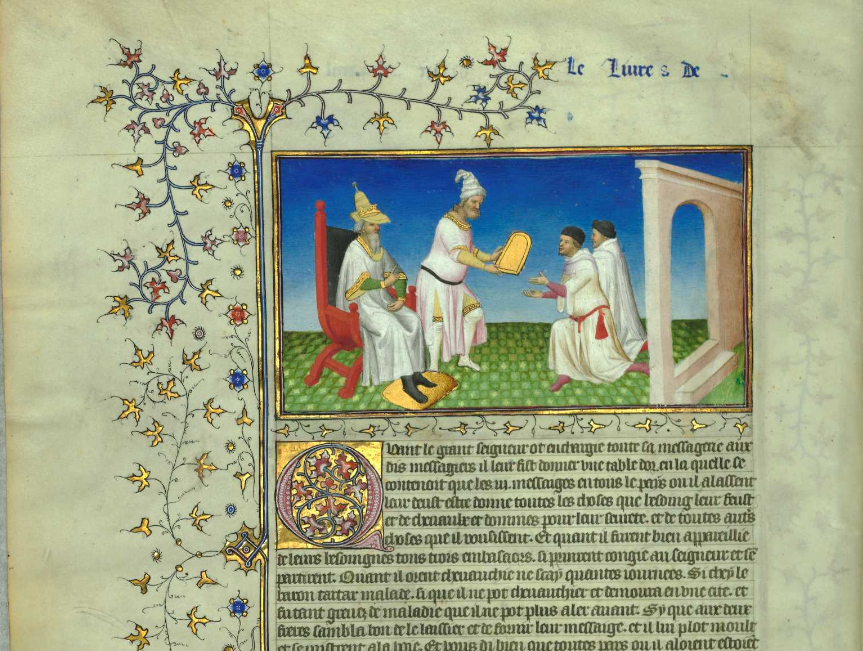
Screenshot from ‘Enluminure de Maître d’Egerton: Le Livre des merveilles’. c.1410-1412.
Collections
 Hill and Adamson Collection: an insight into Edinburgh’s past
My name is Phoebe Kirkland, I am an MSc East Asian Studies student, and for...
Cataloguing the private papers of Archibald Hunter Campbell: A Journey Through Correspondence
My name is Pauline Vincent, I am a student in my last year of a...
Hill and Adamson Collection: an insight into Edinburgh’s past
My name is Phoebe Kirkland, I am an MSc East Asian Studies student, and for...
Cataloguing the private papers of Archibald Hunter Campbell: A Journey Through Correspondence
My name is Pauline Vincent, I am a student in my last year of a...
Projects
Cataloguing the private papers of Archibald Hunter Campbell: A Journey Through Correspondence
My name is Pauline Vincent, I am a student in my last year of a...
Archival Provenance Research Project: Lishan’s Experience
Presentation My name is Lishan Zou, I am a fourth year History and Politics student....