Home University of Edinburgh Library Essentials
April 8, 2026
Repository Fringe 2013
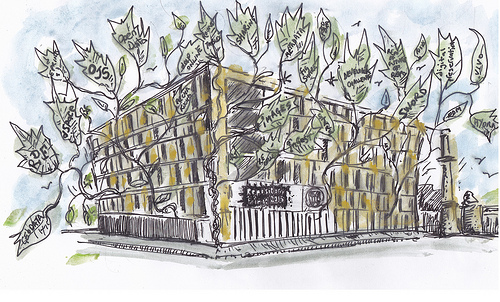
Repository Fringe 2013 ran from July 31- August 2 in the Dugald Stewart Informatics Building. It was, yet again, a successful event, with around 85 attendees over the three days.
Highlights included:
- Inspiring keynote lectures from Jacqui Taylor (Flying Binary) and Mark Hahnel (Figshare)
- Informative workshops from Chris Gutteridge (Southampton) and Chris Awre (Hull) discussing Linked Data and a Repository for the Future respectively
- Pecha Kuchas and presentations on a wide variety of subjects pertaining to development tools, open source issues, and upcoming challenges in the repository arena
- A lively developers challenge, which served up interesting solutions for metadata extraction, preservation techniques and copyright embedding. It was won by Russell Boyatt (Warwick), with an interesting approach to MOOCs.
- The OJS day was effectively part of the event too.
Slides and videos from Repository Fringe are available at: http://rfringe13.blogs.edina.ac.uk/programme/
Thanks to Claire Knowles, Robin Taylor, Theo Andrew and Norman Rodger, from the Research and Learning area, who were heavily involved in the organisation of the event, which was unflappably chaired by Nicola Osborne (Edina).
Darwin’s voyage of discovery
Rare Books & Manuscripts has begun a mini-project to catalogue our new collection of first editions of the works of Charles Darwin. This collection, generously presented by the Heiskell Bibliographical Foundation, complements our existing holdings of lifetime editions of the scientist, giving us more than 100 volumes – mostly in outstanding condition. Darwin, whose medical studies at the University of Edinburgh were a formative influence on his later work, is now highly collectable and this is a unique opportunity to develop such a collection. It includes two copies of the first edition of his masterpiece, “On the origin of species” (1859). The books will be catalogued to the highest standard over the next few weeks and made available in the Centre for Research Collections.
New Buddhism e-book collection now available
 Last spring, we were successful in bidding for a range of new online resources for Divinity. I’m pleased to announce that one of these, 47 titles from the Routledge Critical Studies in Buddhism series, is now available. University of Edinburgh users can find and access the titles via the online library catalogue, such as Buddhist and Christian? : an exploration of dual belonging by Rose Drew.
Networks Nuremberg & Tracing Early Dürer
This week, our post comes from Volunteer Jessica Macaulay and is about some of the exciting finds she has discovered while working on enriching the metadata in our Image Collection online http://images.is.ed.ac.uk/ . As this is Jessica’s last week, we would like to thank her for all her wonderful work & wish her all the best for her return to Canada.
When I first set out to write a blog post for the DIU I had originally wanted to focus on those works closely connected to Albrecht Dürer (1471-1528), the famous Renaissance artist out of Nuremberg. What I came across instead was collection of incunabula that represented the veritable network of key figures that were highly influential in Dürer’s early development. The most notable of these connections is that of Anton Koberger (1445-1513), who was not only Dürer’s godfather, but helped to arrange Dürer’s apprenticeship in the workshop of Michael Wolgemut (1434-1519).

The University of Edinburgh has a surprisingly large and varied collection of Koberger’s books shared between the CRC and New College Library. These collections include three different printings of Koberger’s Latin bible, and a copy of the stunning 1483 German bible (Inc.45.2) http://images.is.ed.ac.uk/luna/servlet/s/z1s8m5 which reused 82 of the 109 woodcuts used by Henrich Quentell in his 1478 Low German bible printed in Cologne. Although these woodcuts predate Dürer’s apprenticeship, elements of their composition can be seen in his later works.
Another major work produced by Koberger, and perhaps the one that he is the most famous for, is that of the Nuremberg Chronicle. It was to my great delight to discover that the University ownsnot one of these books, but four, in a range of quality and finish (Inc.48.1/2 and Inc.48*). It is a rare opportunity to have so many of the same rare book at hand for ready comparison including one that has been stripped down that shows the book anatomically.
Michael Wolgemut and his stepson Wilhelm Pleydenwurff are known to have been responsible for woodcuts illustrating the Nuremberg Chronicle, and there has been considerable debate over whether or not Dürer is also responsible for some of the compositions. While many scholars suggest that the contract between Koberger and the patrons signed in 1491 was well after Dürer completed his apprenticeship at Wolgemut’s workshop, Loura Brooks reminds us that drawings for the woodblocks began in 1484. Dürer would have been apprenticing in Wolgemut’s workshop during this time and did contribute to the compositions, an account of which can be found in The Making of the Nuremberg Chronicle by Adrian Wilson.
Another item that I came across with interesting ties to Dürer is Sebastian Brant’s Stultifera Navis or the Latin translation of Ship of Fools (Inc.13) http://images.is.ed.ac.uk/luna/servlet/s/a8126x . While the copy owned by the University of Edinburgh is a pirated copy printed by Johann Reinhard of Grüningen in 1497, it demonstrates the vast popularity of printed texts and particularly those with illustrations. Grüninger’s edition was published very shortly after one of Brant’s official editions, and within a few months Brant has printed another version with an additional section condemning pirated texts. Dürer worked closely with Brant to design the woodcuts accompanying the text, and nearly two thirds of the woodcuts in the first edition are attributed to Dürer. 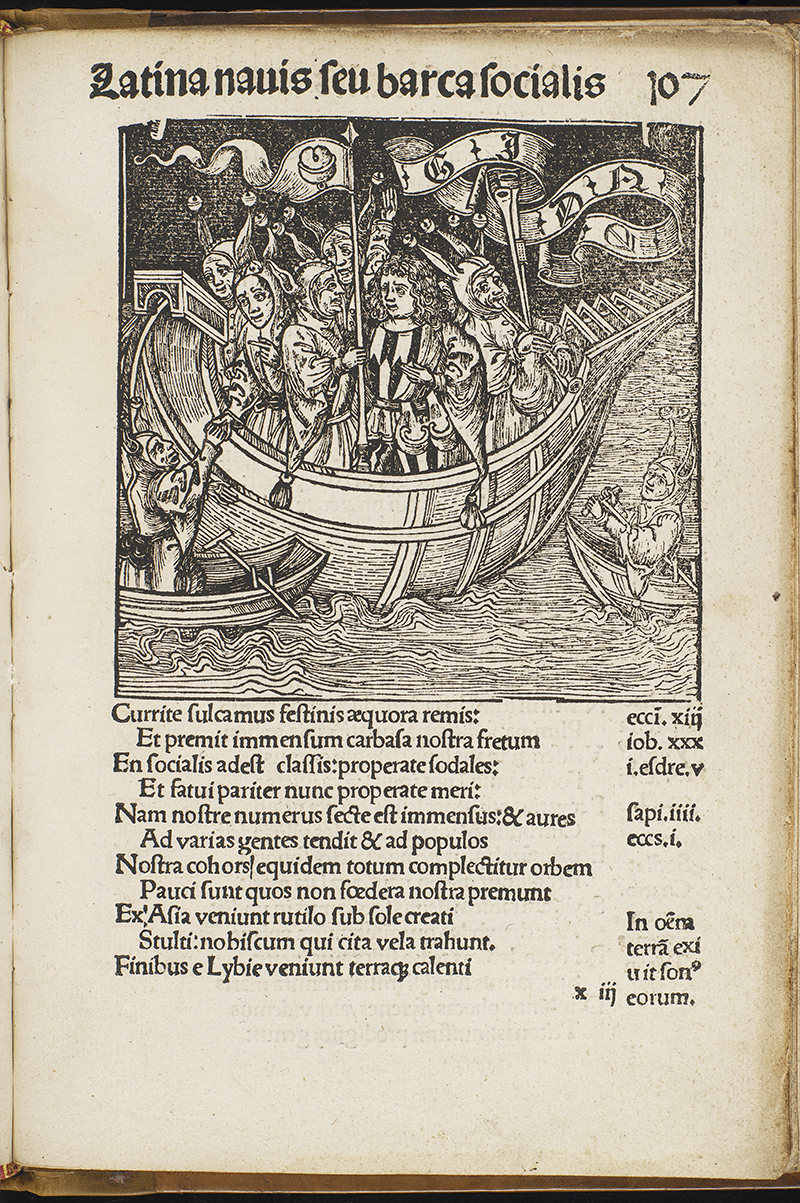
Though there is very little of Dürer’s actual work housed in the collections there is much that informs on the network that helped to shape Dürer’s career, evidence of his early influences, and many exemplars from those that he worked with later in his career. Whether looking at Koberger’s bibles, the Nuremberg Chronicle, or Ship of Fools there are plenty of opportunities for new and exciting research.
Many thanks to Loura Brooks for fielding my many questions.
Jessica Macaulay
Piping treasure on display in ‘The Piper’s Whim’ Exhibition
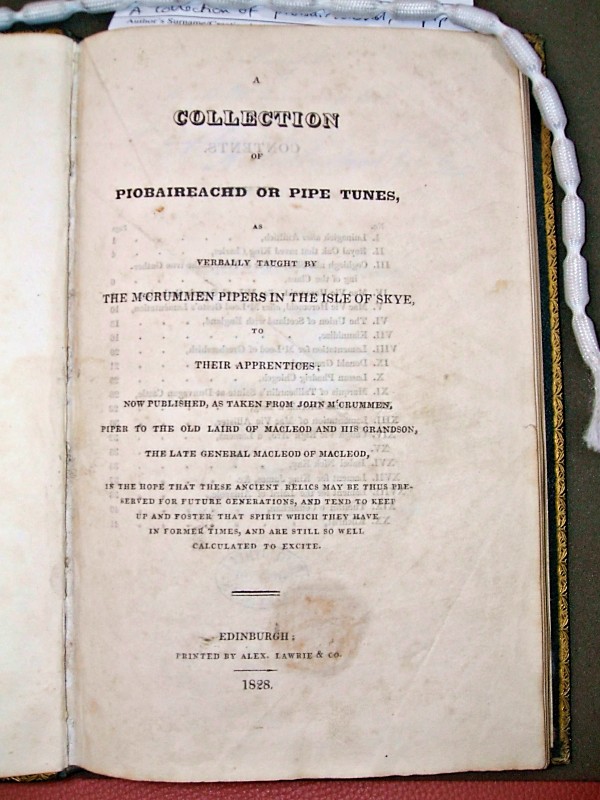
A collection of piobaireachd, or pipe tunes : as verbally taught by the M’Crummen pipers in the Isle of Skye to their apprentices / now published, as taken from John M’Crummen … [by Neil MacLeod, Gesto]. Edinburgh : Printed by Alex. Lawrie & Co., 1828. New College Library Gaelic Collections 137
The volume is on display as part of THE PIPER’S WHIM: Exhibition of Historic Bagpipes from Scotland, England and Ireland, a special exhibition showing the full variety of bagpipes played in Britain from the past 250 years. These include Lowland and Border pipes, the more familiar Highland bagpipe, Northumberland smallpipes and Irish union or uillean pipes. The exhibition explores the traditions of piping, pipemaking and bagpipe ownership.
Rare books all sorted out in new strongroom
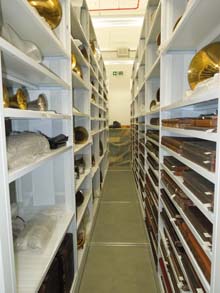
Our new strongroom holds some 760 shelves of rare and early printed books – over 10,000 individual volumes. These were moved back from the Library Annexe earlier this year and are now all properly arranged and findable. This was a big task and has uncovered some amazing finds, ranging from modern prints by Ian Hamilton Finlay to a hand-coloured folio on Brazilian monkeys. See our CRC Facebook page for some more images: https://www.facebook.com/crc.edinburgh. The rare books now live happily alongside other collections including archives, sculptures, paintings and historic musical instruments, some of which can be seen in this picture. The collections are available for use in the Centre for Research Collections.
New RDM post
Research Data Management Service Coordinator
https://www.vacancies.ed.ac.uk/pls/corehrrecruit/erq_jobspec_version_4.jobspec?p_id=018035
The University of Edinburgh seeks to appoint a Research Data Management Service Coordinator to spearhead the development of a compelling user-shaped Research Data Management service for the University of Edinburgh academic community. The University is at the forefront of the evolving research data management domain, and this post will help build a sustainable service to ensure that researchers are able to store and manage their data in a seamless and secure fashion, enabling them to easily manage, manipulate, share and preserve their data either at Edinburgh or in a trusted repository elsewhere.
The key aspects of the role are Programme and Project Management skills, Requirements Gathering and Analysis, Communications, and Advocacy. This post is suitable for applicants who wish to work at the forefront of Research Data Management practice, and who are willing to take responsibility for the coordination of the Research Data Management Service of a prestigious research institution. Candidates will likely possess a Research, Library, or IT background, but will excel in a mixed environment.
This post is fixed term for 3 years.
For further information, please contact Stuart Lewis, Head of Research and Learning Services, Deputy Director of Library and University Collections, 0131 651 5205 (stuart.lewis@ed.ac.uk).
Salary: £30,242 – £36,298 per annum
Closing date: 6th September at 5pm.
We anticipate that interviews will be held in the week commencing date 16th September 2013.
Further details: https://www.vacancies.ed.ac.uk/pls/corehrrecruit/erq_jobspec_version_4.jobspec?p_id=018035
[The University reserves the right to vary the candidate information or make no appointment at all. Neither in part, nor in whole does this information form part of any contract between the University and any individual.]
Green light for research data storage and management plans
 As published in IS BITS Magazine, Issue 7, Summer 2013 –
We have received the go-ahead to proceed with our plans to establish a service for the secure storage, management, sharing and preservation ofresearch data in the University. This will build on the enabling work that has been done over the past few years, which has included: introducing an institutional policy, agreeing an 18 month roadmap, running training and awareness raising sessions, and establishing a governance structure. This has involved the formation of a RDSM Steering Group, with university-wide representation, which is chaired by Professor Peter Clarke (Physics), as well as an RDSM Implementation Group, which is chaired by Dr John Scally (Library and University Collections).
Due to the delay in receiving the go-ahead, the initial tasks over the coming weeks will be to revise the original timescales for service conception and delivery, commence procurement for the high-capacity storage and run comparisons with progress made in other institutions worldwide.
A fuller report will be provided for the next edition of BITS.
– John Scally, Director, Library & University Collections, and Chair, IS Research Data Management Implementation Group
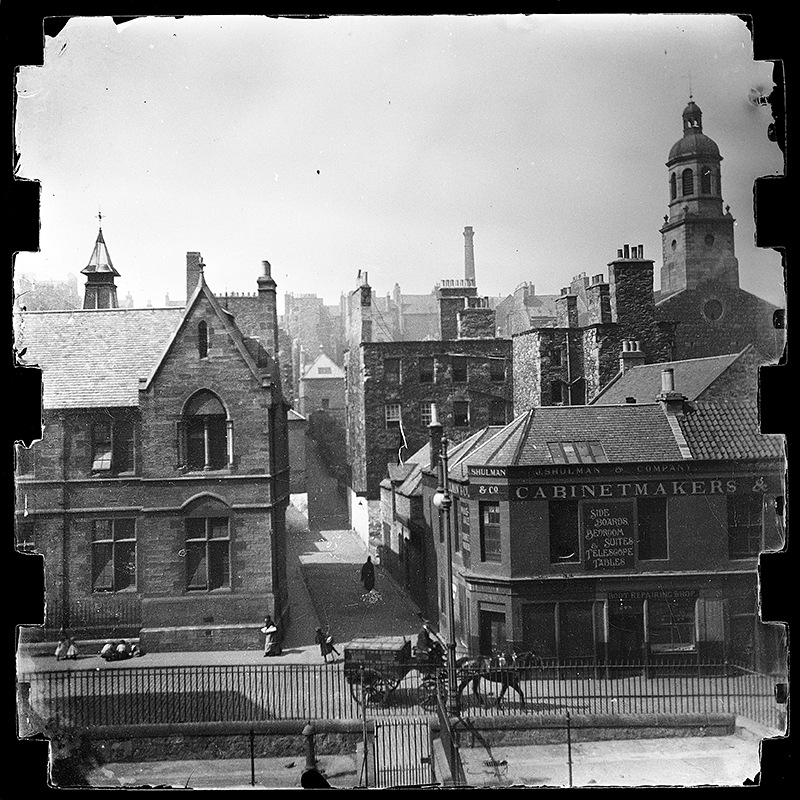
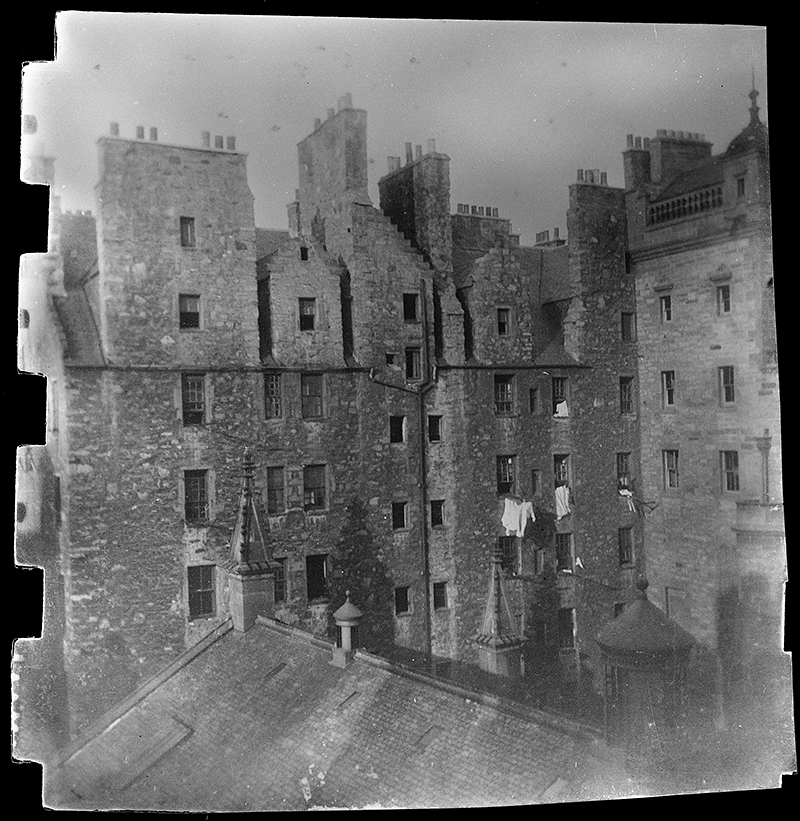
New Baldwin Brown Images of Old Edinburgh.
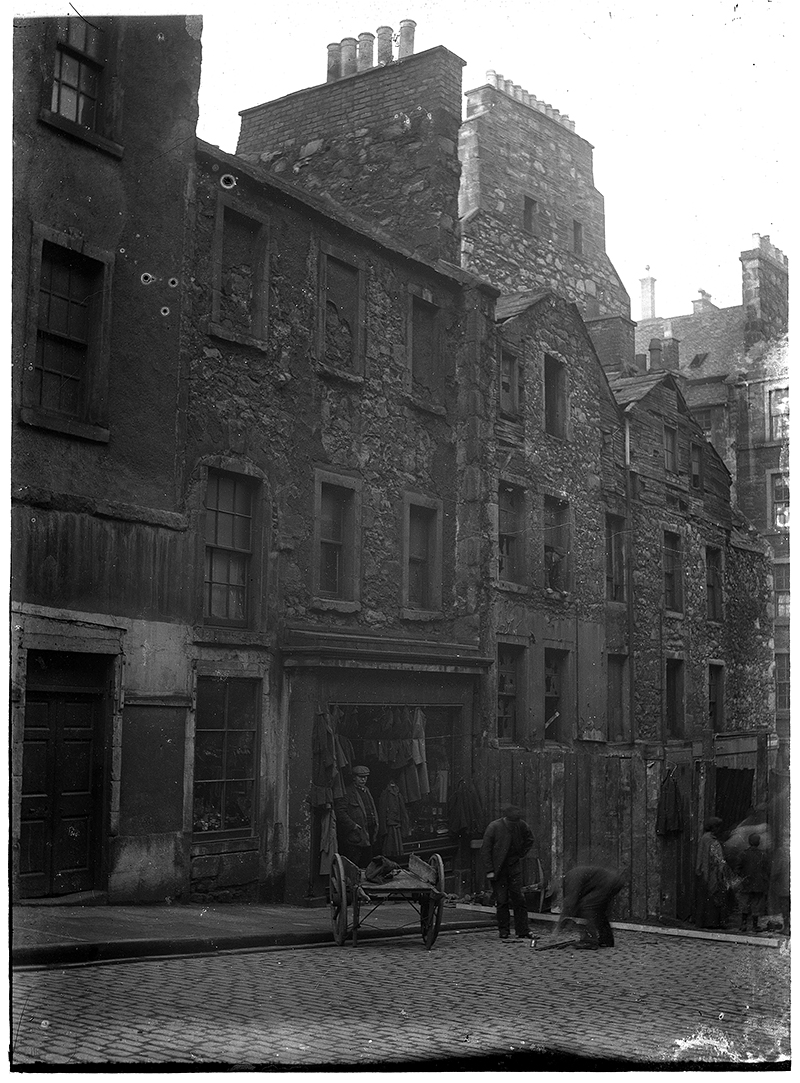
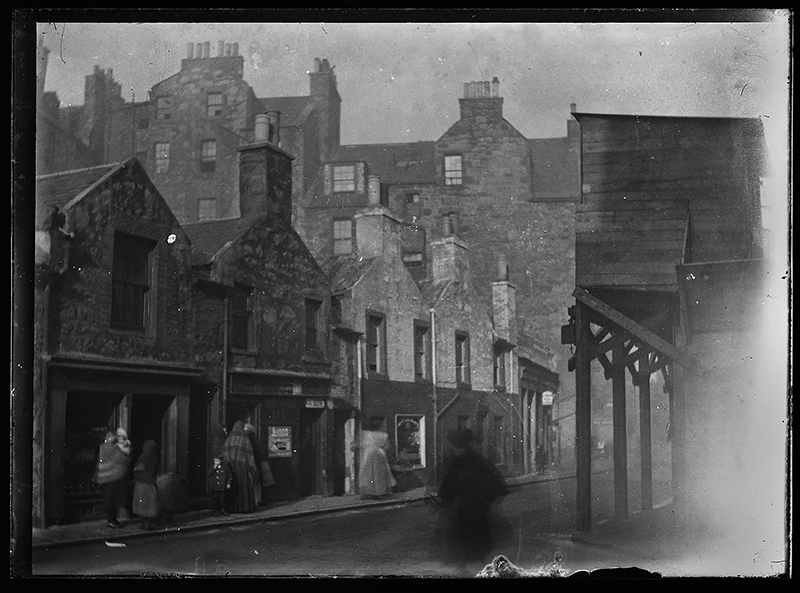
As promised here are five more images of Old Edinburgh to test your memory! We first posted some images of Old Edinburgh a few weeks ago and got some great results in identifying locations. We have posted the album on CRC Facebook page also https://www.facebook.com/crc.edinburgh in the hope to harvest useful metadata. We still have a few more of these wonderful images to roll out over the coming weeks.

Open Access Information Sessions
The other week I took my first trip down to the Wellcome Trust Clinical Research Facility, based at Edinburgh’s Western General Hospital. I had been invited to give a presentation to a range of research-active staff, research students and research administrators about open access.
Naturally, much of the research carried out at this facility is funded by the Wellcome Trust, which has long been a leader in open access, having required that copies of the research papers it funds are made openly available since 2006. Indeed, this policy has recently been extended to cover monographs as well as journal articles and conference papers.
Many of those present were in receipt of funding from MRC, and therefore subject to the new MRC/RCUK requirements on open access, so it was useful to be able to start a dialogue about these requirements and to let research and administrative staff know how the Scholarly Communications Team can help them meet these requirements quickly and easily.
The session was well attended, and I was pleased to see so many research students and early-career researchers take an interest in the publishing process, open access and issues to do with copyright and copyright transfer.
I would be very keen to conduct similar information sessions in other departments. The Scholarly Communications Team can offer bespoke training and advice sessions on open access, academic publishing and copyright to a variety of audiences. If you would like to arrange a similar session for your department then please do get in touch!
-Dominic Tate, Scholarly Communications Manager
Collections
 Hill and Adamson Collection: an insight into Edinburgh’s past
My name is Phoebe Kirkland, I am an MSc East Asian Studies student, and for...
Cataloguing the private papers of Archibald Hunter Campbell: A Journey Through Correspondence
My name is Pauline Vincent, I am a student in my last year of a...
Hill and Adamson Collection: an insight into Edinburgh’s past
My name is Phoebe Kirkland, I am an MSc East Asian Studies student, and for...
Cataloguing the private papers of Archibald Hunter Campbell: A Journey Through Correspondence
My name is Pauline Vincent, I am a student in my last year of a...

Projects
Cataloguing the private papers of Archibald Hunter Campbell: A Journey Through Correspondence
My name is Pauline Vincent, I am a student in my last year of a...
Archival Provenance Research Project: Lishan’s Experience
Presentation My name is Lishan Zou, I am a fourth year History and Politics student....