Home University of Edinburgh Library Essentials
April 8, 2026
New College Library Rare Books feature in Divinity Inaugural Lecture

The Practice of Piety / Lewis Bayly, 1672. New College Library DPL 912

The Redemption of Time / John Wade, 1692. New College Library F7 b1
Today Professor Susan Hardman Moore, Professor of Early Modern Religion, will deliver her inaugural lecture entitled ‘Time’ at 2pm. Professor Hardman-Moore’s lecture features a number of seventeenth century rare books from the New College Library collections, which will be on display in the Funk Reading Room after the lecture between 3-4.30pm.
The titles include John Wade’s The Redemption of Time (1692) and the The Practice of Piety (1672) by Lewis Bayly. The Practice of Piety is part of the recently catalogued Dumfries Presbytery Library, and is inscribed Ex Libris Johannes Hutton, identifying it as part of the original bequest of 1500 volumes from Dr John Hutton.
Pretty Things!
Yesterday was one of those days that remind me why I love my job. We have been searching out images for use in calendars, cards and prints, and Assistant Rare Books Librarian Elizabeth Quarmby Lawrence bought me some of our recent acquisitions to look through for ideas.
I have been photographer here for nearly 10 years and every week something comes through our door that is beautiful, exciting & precious- yesterday an abundance of such items arrived in the DIU. I always feel immensely privileged to be able to work with such an incredible collection- and the team that looks after them too.
My biggest problem was choosing which ones to photograph- there were far too many pretty things to choose from! I tried (and sometimes failed) to set myself a limit of no more than 5 images per original, and the following are some of my favourites.
Susan Pettigrew

Kimono material designs: RB.P.992 Shin-Bijutsukai, issues 21-25, Kyoto, 1903-6.

RB.F.604 A Specimen Book of Pattern Papers Designed for and in Use at the Curwen Press, 1928.

Edinburghers- have you ever wondered where the city’s lovely quarry tiles come from? In the Edinburgh College of Art Rare Book collection we found this- RECA.F.97Maw And Co.’s Patterns, Geometrical and Roman Mosaics, Encaustic Tile Pavements and Enamelled Wall Decorations, pl.19.

Bahaus book cover designs: RB.FF.210 Vierzig neuzeitliche Entwürfe fur künstlerische Bucheinbände : Vorlagenwerk für Handvergolder Kunstbuchbinder und Fachschulen, 1928. Paul Kersten and Paul Klein, No.39.
New College Library welcomes Postgraduate Freshers today
 New College Library holds over 250,000 volumes, including rich and valuable Special Collections, making it one of the leading theological libraries in Britain. In addition to the books there are online collections – electronic journals, electronic books and databases which the University subscribes to support your studies and research. As the New College Librarian, my role is to help students get the most out of using the Library. Freshers Week is a good opportunity to take a little time to get to know the Library – do this now and you’ll be paid back later on in your studies.
Here’s my top tips for Postgraduate Freshers to get to know New College Library:
1. Come to the Library
- Bring your University card to get into New College Library
- From next week the Library is open 9am-6pm-10 Mon-Thurs, 9am-5pm Fridays, 12noon – 5pm on Saturdays. Remember that you can also use the Main Library which is open longer at weekends
2. Take a tour
- I’m running Postgraduate Library Tours today 10.45-12 noon
- You should have received a New College Library Guide leaflet in your welcome pack – it’s also available online.
- Or have a look at the Virtual Tour
3. Check out what’s online
- The online catalogue is your key to finding what’s in the Library
- Explore specialist resources for Divinity in the Divinity Subject Guide
- If you can’t find what you’re looking for you can Request @ Book
And don’t be afraid to ask us for help !
We have a new MANTRA!
Normal
0
false
false
false
EN-GB
X-NONE
X-NONE
/* Style Definitions */
table.MsoNormalTable
{mso-style-name:”Table Normal”;
mso-tstyle-rowband-size:0;
mso-tstyle-colband-size:0;
mso-style-noshow:yes;
mso-style-priority:99;
mso-style-parent:””;
mso-padding-alt:0cm 5.4pt 0cm 5.4pt;
mso-para-margin-top:0cm;
mso-para-margin-right:0cm;
mso-para-margin-bottom:10.0pt;
mso-para-margin-left:0cm;
line-height:115%;
mso-pagination:widow-orphan;
font-size:11.0pt;
font-family:”Calibri”,”sans-serif”;
mso-ascii-font-family:Calibri;
mso-ascii-theme-font:minor-latin;
mso-hansi-font-family:Calibri;
mso-hansi-theme-font:minor-latin;
mso-fareast-language:EN-US;}
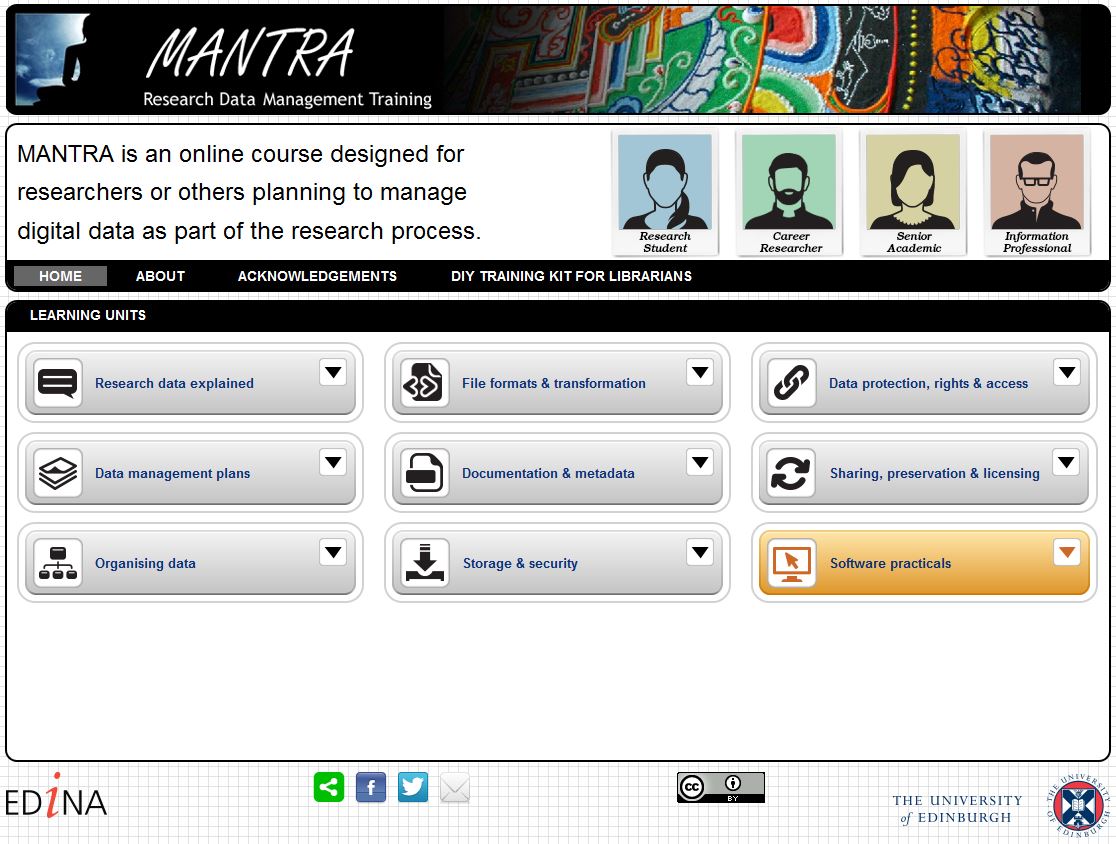
Research Data MANTRA (http://datalib.edina.ac.uk/mantra/) , the free online course hosted at Edinburgh University Data Library and designed for researchers or others planning to manage digital data as part of the research process has been refreshed!
Normal
0
false
false
false
EN-GB
X-NONE
X-NONE
/* Style Definitions */
table.MsoNormalTable
{mso-style-name:”Table Normal”;
mso-tstyle-rowband-size:0;
mso-tstyle-colband-size:0;
mso-style-noshow:yes;
mso-style-priority:99;
mso-style-parent:””;
mso-padding-alt:0cm 5.4pt 0cm 5.4pt;
mso-para-margin-top:0cm;
mso-para-margin-right:0cm;
mso-para-margin-bottom:10.0pt;
mso-para-margin-left:0cm;
line-height:115%;
mso-pagination:widow-orphan;
font-size:11.0pt;
font-family:”Calibri”,”sans-serif”;
mso-ascii-font-family:Calibri;
mso-ascii-theme-font:minor-latin;
mso-hansi-font-family:Calibri;
mso-hansi-theme-font:minor-latin;
mso-fareast-language:EN-US;}
Shortlisted recently as one of 15 good practice examples designed to enhance information literacy skills MANTRA has been upgraded to Version 2 of Xerte Online Toolkits, the e-learning development environment used to create the MANTRA learning materials. This allows delivery of the MANTRA units to a much wider range of devices using HTML5 rather than Flash.
The new MANTRA also highlights the utility of the learning materials for 4 discreet personas:
- Research student
- Career researcher
- Senior academic
- Information professional
We hope you enjoy the new MANTRA experience. Please get in contact with us at the Data Library with your comments or suggestions.
Stuart Macdonald
EDINA & Data Library
New College Library welcomes Undergraduate Freshers today

As the New College Librarian, my role is to help students get the most out of using the Library. Freshers Week is a good opportunity to take a little time to get to know the Library – do this now and you’ll be paid back later on in your studies.
Here’s my top three tips for Undergraduate Freshers:
1. Come to the Library
- Bring your University card to get into New College Library
- From next week the Library is open 9am-6pm-10 Mon-Thurs, 9am-5pm Fridays, 12noon – 5pm on Saturdays. Remember that you can also use the Main Library which is open longer at weekends
2. Take a tour
- Library tours are running in Week 1 on 16, 18 and 19 September – just turn up
- You should have received a New College Library Guide leaflet in your welcome pack – it’s also available online.
3. Check out what’s online
- The online catalogue is your key to finding what’s in the Library
- Explore specialist resources for Divinity in the Divinity Subject Guide
And don’t be afraid to ask us for help !
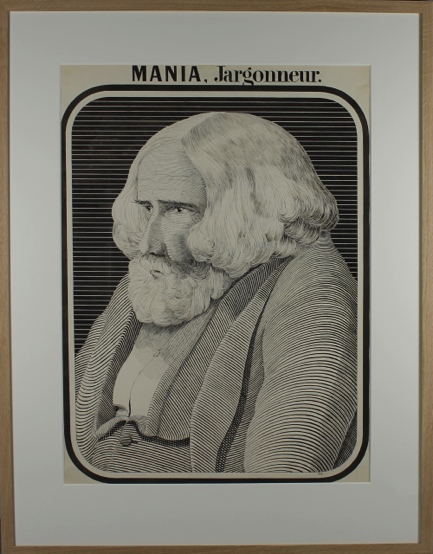
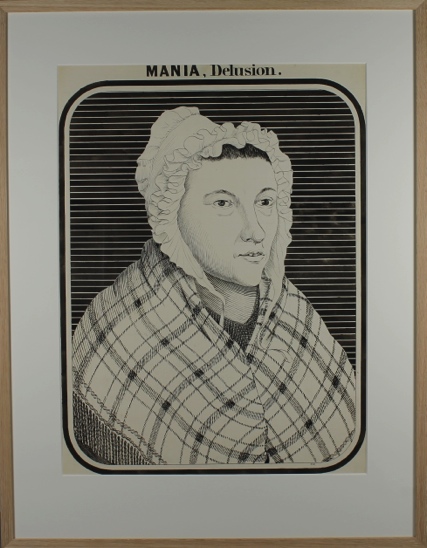
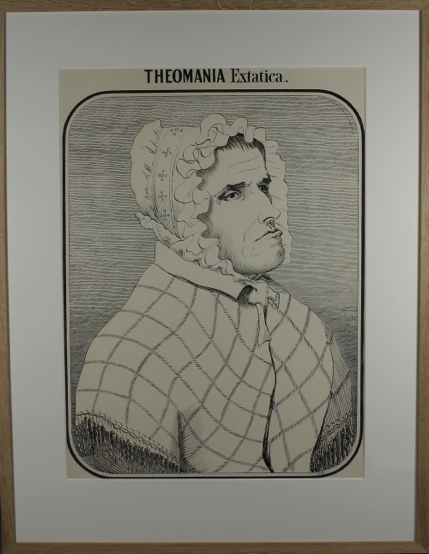
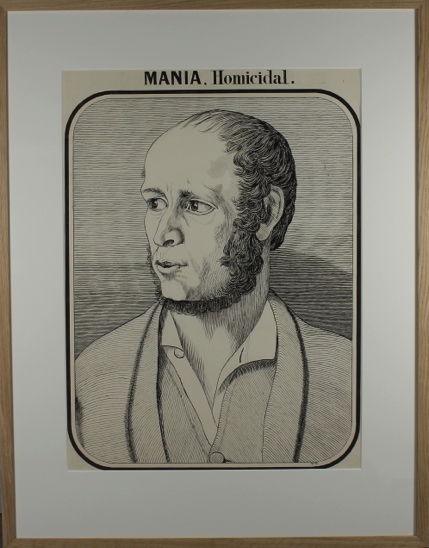
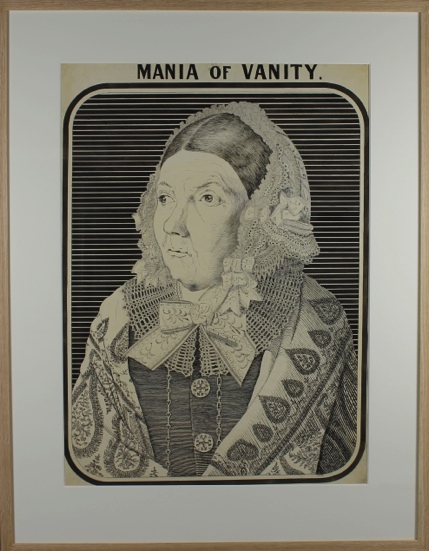
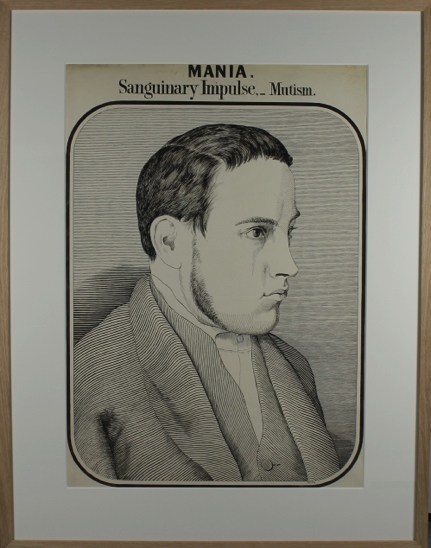
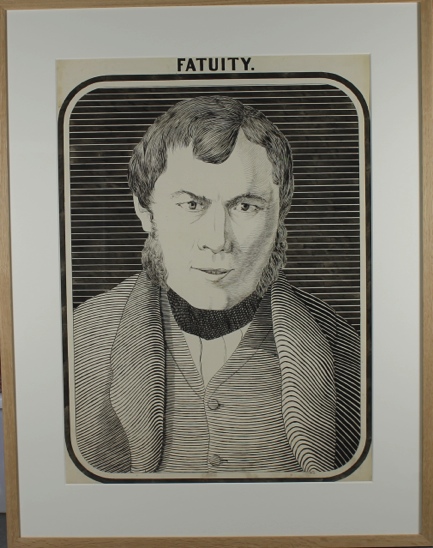
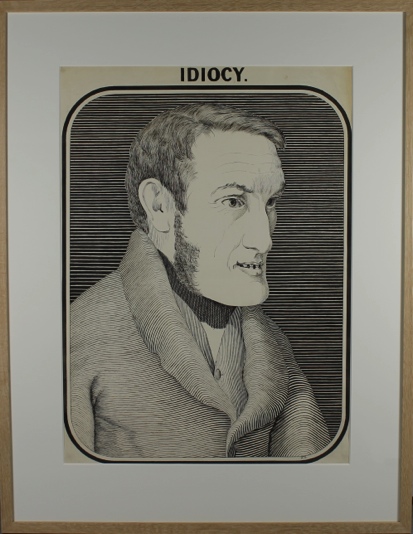
Asylum Art on Loan from Special Collections / LHSA
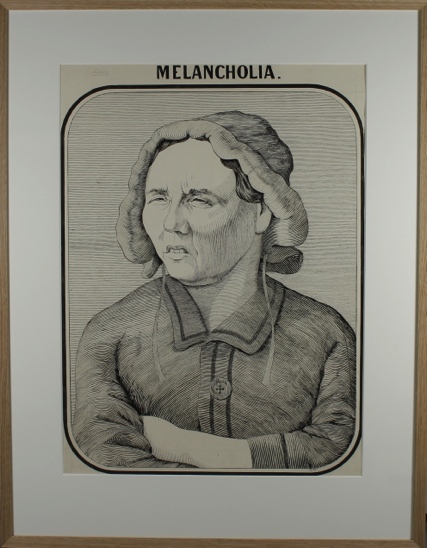
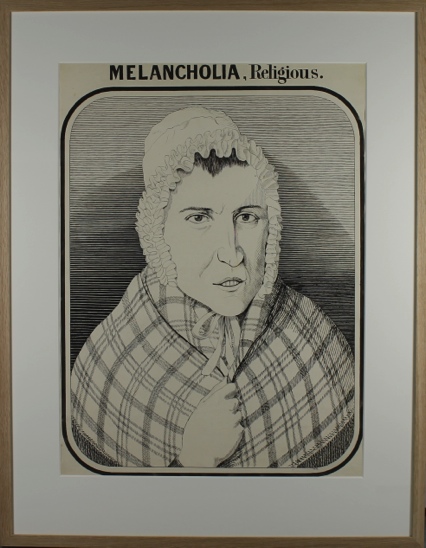
These art works, from our Laycock Collection, were created by William Bartholomew at the Crichton Royal Hospital in the 1830s. They are some of the earliest examples of art created within an asylum. They have just gone on exhibition loan to the Djanogly Art Gallery at the University of Nottingham: http://www.lakesidearts.org.uk/Exhibitions.html
Get Connected with University of Edinburgh Information Services
 Get Connected drop in sessions for Freshers Week are running in the Main Library mezzanine (above the entrance gates) on 9th-13th September between 10am-4pm. No appointments necessary, just turn up.
Take the opportunity to connect up your own personal devices e.g. laptops, phones and tablets/pads to the University network. Staff will be on hand to help and guide you – I’ll be there myself 1-2pm.
You can also find out more at : www.ed.ac.uk/is/new-students
Welcome to New College Library
A big welcome to all students starting and returning to the University of Edinburgh today, at the beginning of Freshers week 2013. We’re looking forward to meeting you. To help you get started at University, check out this guide for new students to Library & IT services.

If you want to get ahead with using New College Library, you could start with the Virtual Tour.
There will be a programme of tours for students at New College Library – students please watch your email for details. There will also be events happening all over the University Library to help you get connected with your IT and Library services.
How open should your data be?
The RECODE project is looking at open data policy for EU-funded research. I attended a workshop in Sheffield yesterday for a diverse stakeholder group of researchers, funders and data providers. Along with a nice lunch, they delivered their first draft report, in which they synthesised current literature on open research data and presented five case studies of research practice in different disciplines. The format was very interactive with several break-out groups and discussions.
The usual barriers to data sharing were trotted out in different forms. (Forgive my ho-hum tone if this is a newish topic for you – our DISC-UK DataShare project summarised these in its 2007 ‘State-of-the-Art-Review’ and the reasons haven’t really changed since.) The RECODE team ably boiled these down to technical, cultural and economic issues.
The morning’s activity included a small-group discussion about disciplinary differences in motivations for data sharing. One gadfly (not me) questioned the premise of the whole topic. While differences in practice around treatment of data is undeniable, are the motivations for sharing or not sharing data really different amongst groups of researchers?
This seemed a fair point. For any given obstacle – be it commercial viability, fear of being scooped, errors being found or data being misinterpreted, desire to keep one’s ‘working capital’ for future publication, lack of time to properly prepare the data and documentation required for re-use coupled with lack of perceived academic rewards, lack of infrastructure, or disappearance of key personnel (including postgrads) – these are all disincentives for data sharing wherever they crop up.
On the flip-side, motivations to share – making data easily available to one’s colleagues and students, adding to the scholarly record, backing up one’s reported results, desire for others to add value to a treasured dataset, increasing one’s impact and potential citations, passing off the custodianship of a completed dataset to a trusted archive, or mere compliance with a funder’s or publisher’s policy are reasons that transcend disciplinary boundaries.
“Reciprocal altruism” was a new one to me. I’m not sure I believe it exists. I’ve seen more than one study showing that researchers (also teachers, where open educational resources are concerned) crave open access to other people’s ‘stuff’ whether or not they feel obliged to share their own (and more don’t than do).
An afternoon discussion focused on how open data needed to be, to be considered open. This was an amusing diversion from the topic we were given by the organisers. The UK Data Archive funded by ESRC, while a bulwark in the patchy architecture of data preservation and dissemination, does not make any of its collections available without a registration procedure that not only asks you who you are, but what you intend to do with the data. If the data are non-sensitive in nature, how necessary is this? Does the fact that the data owner would like to collect this information warrant collecting it?
A recent consensus on a new jiscmail list, data-publication, was that this sort of ‘red tape’ routinely placed in the way of data access was an affront to academic freedom. Would you agree? Would your answer depend on whether you were the user or the owner?
Edinburgh DataShare has so far resisted the temptation to require user registration for any data deposited with us, because the service was established to be an open data repository for the use of University depositors and for re-use by other researchers as well as the public (which, in most cases paid for the research). We offer our depositors normal website download statistics, and provide a suggested citation to each dataset to encourage proper attribution. We encourage use of an open data licence which requires attribution of the data creator. For depositors who do not wish to use an open licence they are free to provide their own rights statement.
The ODC-attribution licence that we offer by default is compatible with the Budapest Open Access Initiative (BOAI), but is one step less open than “CC0″ (pronounced CC-zero) where rights to the data are waived in the interest of complete freedom for data re-users. Some argue that data – as opposed to publications – should be made completely open in this way to allow pooling of numerous datasets for analysis and machine-processing.
For example, Professor Carol Goble has just written in her blog that “BioMed Central’s adoption of the Creative Commons CC0 waiver opens up the way that data published in their journals can be used, so that it can be freely mined, analysed, and reused.”
While I agree BioMed Central’s decision is good news and that CC0 licences may be the state of the art for open data, as a repository manager I have yet to meet an academic who does not wish to be attributed for data collected by the ‘sweat of the brow’ to use a phrase from copyright case law. It is slightly easier for me to persuade researchers to share their data openly with the reassurance that an open-attribution licence brings than to persuade them to waive their rights to be attributed.
The University Research Data Management Policy asserts, “Research data of future historical interest, and all research data that represent records of the University, including data that substantiate research findings, will be offered and assessed for deposit and retention in an appropriate national or international data service or domain repository, or a University repository.”
In practice, it has been acknowledged that this would be difficult to enforce for ‘legacy’ research data, but from now on researchers embarking on a new research project are expected to create a data management plan in which the short and long term management of the data are considered before they are collected: “All new research proposals… must include research data management plans or protocols that explicitly address data capture, management, integrity, confidentiality, retention, sharing and publication.
How open will you make your next dataset? 
New books at New College Library – September

 New College Library has a regular display of new books at the far end of the Library Hall, close to the door to the stacks.
New in this month is For and against David : story and history in the books of Samuel / edited by A. Graeme Auld and Erik Eynikel, available at BS1325.52 For.
Also new is the 3rd edition of Mark as story : an introduction to the narrative of a gospel by David Rhoads, Joanna Dewey and Donald Michie, at BS2585.2 Mar.
These titles were purchased for Biblical Studies at the School of Divinity, Edinburgh University.
You can see an regularly updated list of new books for New College Library on the Library Catalogue – choose the New Books Search and limit your search to New College Library. Here’s a quick link to new books arriving in the last few weeks. A word of caution – some of the books listed here may still be in transit between the Main Library (where they are catalogued) and New College Library, so not on the shelf just yet.
Collections
 Hill and Adamson Collection: an insight into Edinburgh’s past
My name is Phoebe Kirkland, I am an MSc East Asian Studies student, and for...
Cataloguing the private papers of Archibald Hunter Campbell: A Journey Through Correspondence
My name is Pauline Vincent, I am a student in my last year of a...
Hill and Adamson Collection: an insight into Edinburgh’s past
My name is Phoebe Kirkland, I am an MSc East Asian Studies student, and for...
Cataloguing the private papers of Archibald Hunter Campbell: A Journey Through Correspondence
My name is Pauline Vincent, I am a student in my last year of a...

Projects
Cataloguing the private papers of Archibald Hunter Campbell: A Journey Through Correspondence
My name is Pauline Vincent, I am a student in my last year of a...
Archival Provenance Research Project: Lishan’s Experience
Presentation My name is Lishan Zou, I am a fourth year History and Politics student....