Home University of Edinburgh Library Essentials
June 18, 2026
Divinity Student Recommendations now available
Divinity students have been active in recommending new books for the library, some of which are being made available as e-books. Here’s just two of the titles they recommended.

 New this month is Echoes of the call : identity and ideology among American missionaries in Ecuador / by Jeffrey Swanson, available online to University of Edinburgh users. Currently in the New College Library new books display is The Ending of Time, by J. Krishnamurti.
Students can recommend books using the online Request a Book form for students. You can see an regularly updated list of new books for New College Library on the Library Catalogue – choose the New Books Search and limit your search to New College Library.
FAE Crew’s Off-Prints (1814-1940)
In addition to the off-prints of the various past organizations that made up the Roslin Institute, we have FAE Crew’s collection. The majority of the off-prints in his collection, found in 39 bound volumes, were written by other authors such as Conrad Hal Waddington, Leonard Darwin, and Alan Greenwood among others and some of the articles were even previously owned by Arthur Darbishire. The non-Crew authored material dates between 1814 and 1936 and Crew’s articles date between the years of 1930 to 1940 and he organized the bound off-prints into series: Fowl (18 volumes- GB 237 Coll-1496/1-18); Birds (2 volumes – GB 237 Coll-1496/19-20); Pigeons (2 volumes -GB 237 Coll-1496/21-22); Genetics General (9 volumes – GB 237 Coll-1496/23-31); and General Biology (8 volumes – GB 237 Coll-1496/32-39). There is a wealth of fascinating articles found in this collection – especially in the Genetics General and General Biology volumes which show Crew’s wide-ranging interests including animal genetics, human genetics, eugenics, evolution (both scientific and philosophical), teaching medical students and ethics. A few particular highlights are Major Leonard Darwin’s article Organic Evolution: Outstanding Difficulties and Possible Explanation, Cambridge University Press, 1921; 
Condemned for Teaching Lies: the following is a speech prepared by William Jennings Bryan for delivery in closing argument for the State in the Evolution Case at Dayton, Tennessee, July 21, 1925;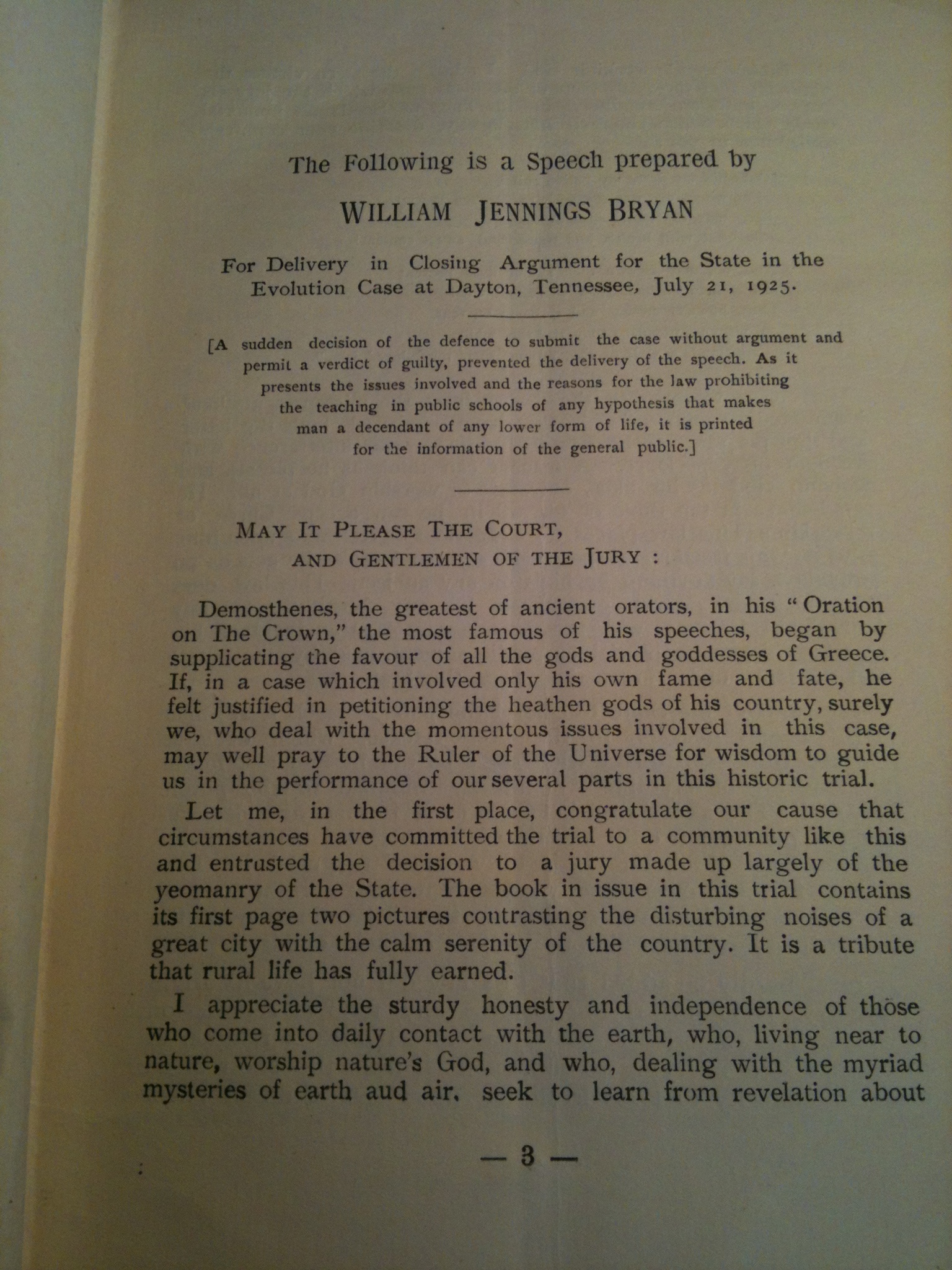
and H. Muller’s Lenin’s Doctrines in Relation to Genetics, Academy of Sciences, USSR, 1934.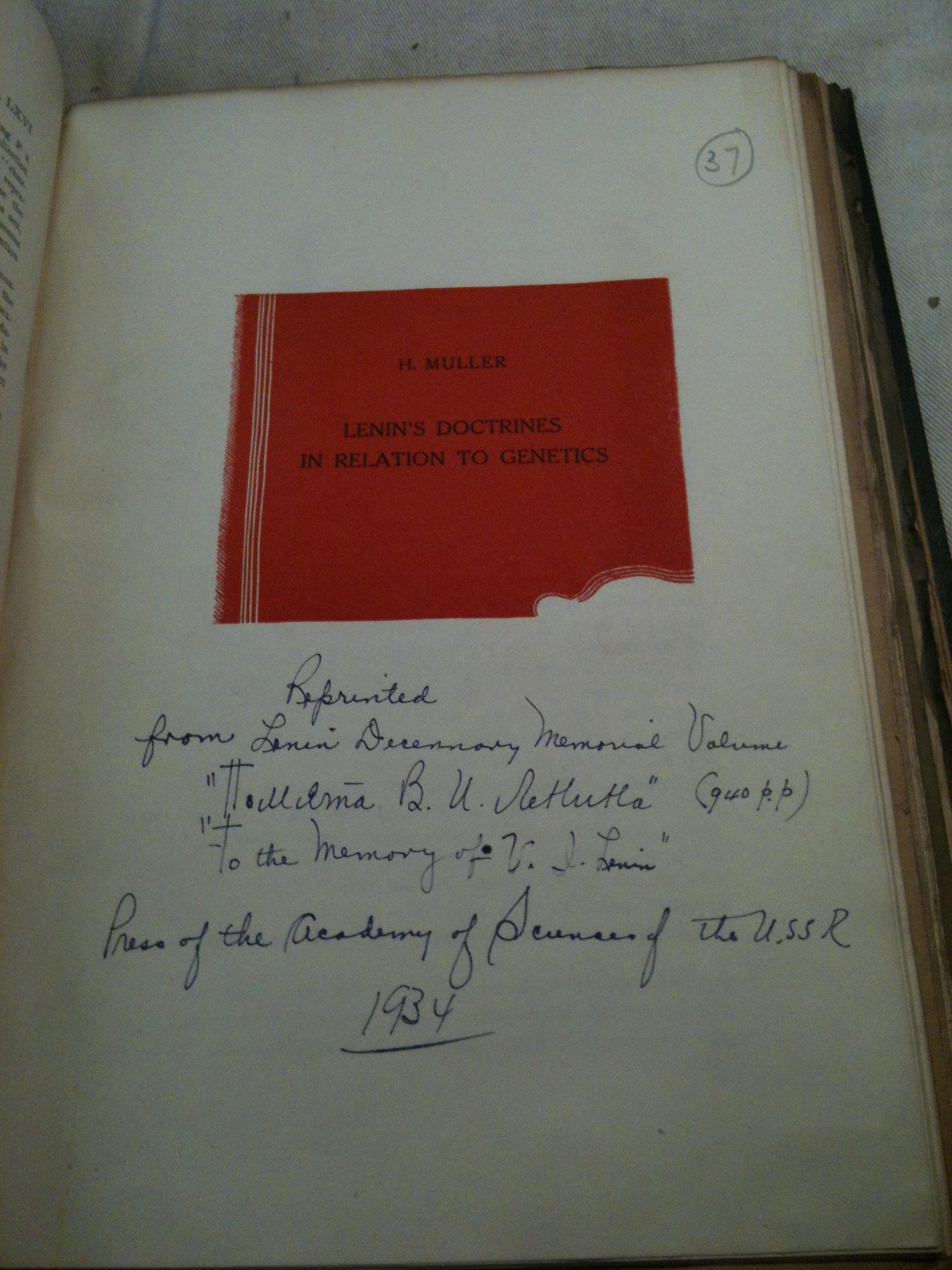
In addition to the articles collected by Crew for his research, there is a box of un-bound off-prints authored by Crew himself (GB 237 Coll-1496/40/1-70). 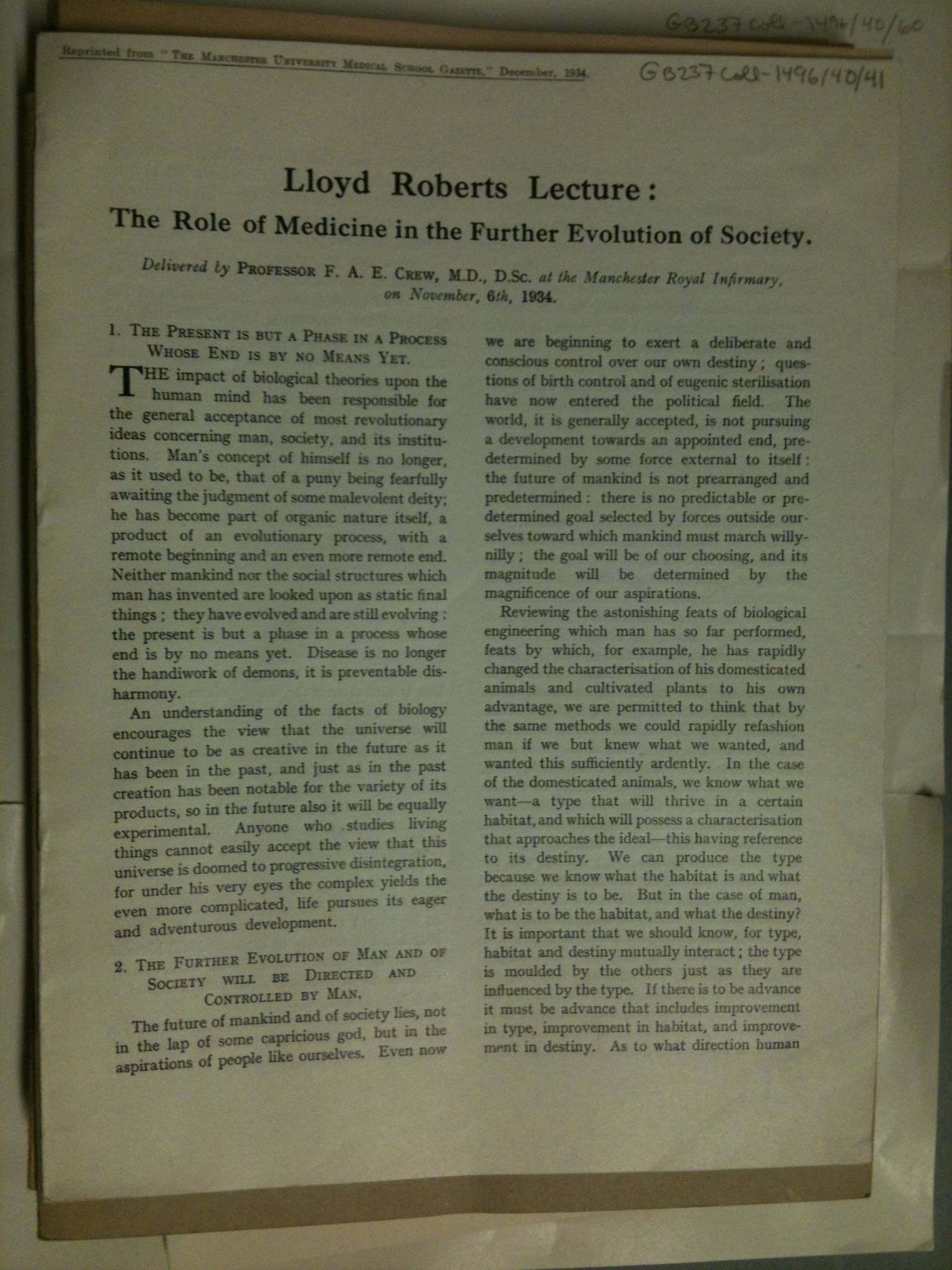 These articles span the years between 1930 and 1940 and discuss such topics as: animal breeding, sterilisation, eugenics, heredity versus environment and other genetic based topics. The last article in the collection is quite interesting since it’s Crew’s thoughts on war when he was a Lieutenant-Colonel in the British Army,
  The war and ourselves in the Journal of the British Army Medical Corps, 1940 (GB 237 Coll-1496/40/74).
This material, the collected offprints of other scientists, offers a fascinating insight into the research interests of FAE Crew by showing his diverse interests which helped to inform his work as seen in the same collection in his self-authored papers.
Ars Anatomica- back from the dead!

The image collection associated with the Ars Anatomica (Imaging the Renaissance Body) project has finally been restored into the LUNA image service in all its glory, here.
This project was a collaboration between the University of Edinburgh, University of Glasgow and the Royal College of Physicians, and was completed in 2005. It’s full of fascinating images of flayed bodies and skeletons, illustrating the writings on anatomy of Andreas Vesalius and Juan de Valverde.
The collection’s emergence is also interesting from a development perspective. While the general migration work to take it from the old Insight platform was done some time ago, we felt uncomfortable putting it live due to a significant lack of metadata on a number of items. However, in October, we unearthed the original data and were able to load this back into the Vernon Collections Management System and put through the standard processes to re-create the collection in LUNA. We have also put in place enhanced workflow steps which, if desired, would allow further cataloguing to take place in Vernon and keep it in sync with LUNA.
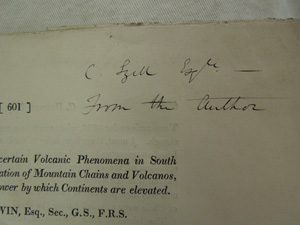
Darwin cataloguing project completed
‘Encounters of a mathematician’…
For the last few weeks, I have been cataloguing the papers of mathematician, Walter Ledermann (1911-2009). The collection largely composes of highly mathematical letters from Thomson to Ledermann. Having the somewhat dubious distinction of failing mathematics twice, its fair to say I had misgivings!
My failure as a young mathematician was due in part to my ready dismissal of mathematics as a dull, dry, monotonous subject (but in the main, a serious lack of talent!). I remember somewhat haughtily telling my long-suffering teacher that I liked subjects about people. Mathematics, as far as I was concerned, lacked any humanity and any discernible art. How wrong I was.

Ledermann as a young man, from his autobiography
Ledermann, a German-Jewish refugee, was more than used to such criticism being levelled at the subject – the art form – of his choice. In fact, he opens his autobiography, Encounters of a Mathematician, with the following:
Mathematics is a soulless occupation devoid of feeling and human values.
But that, Ledermann tells us, was never his experience:
I feel strongly that mathematics can and should form part of human relationships.
Ledermann grew up in Berlin, proving himself a talented violinist and mathematician from an early age. He loved music, and despite growing up in the midst of the depression, attended concerts regularly by any means possible. By the 1930s, the Berlin that Ledermann called home had changed rapidly, and he and his family were no longer welcome. It was his love of mathematics that gave him hope – despite the anti-Semitism he encountered, Ledermann’s ability, talent, and enthusiasm could be neither denied nor quashed. In fact, Ledermann’s talent for mathematics quite literally saved his life.
On completion of his degree at the University of Berlin in 1934, Ledermann won a scholarship created by students and citizens of St Andrews to support a Jewish refugee. He received a warm welcome from his fellow students, his lecturers, and the local community at St Andrews, and tells us: ‘it is no exaggeration to affirm that I owe my life to the people of St Andrews’ (Encounters of a Mathematician).
Ledermann completed his PhD after just two years, and found himself at the University of Edinburgh. This would be the start enduring friendships between Ledermann and the brilliant and troubled mathematician, A C Aitken, as well as Professor Godfrey Thomson.
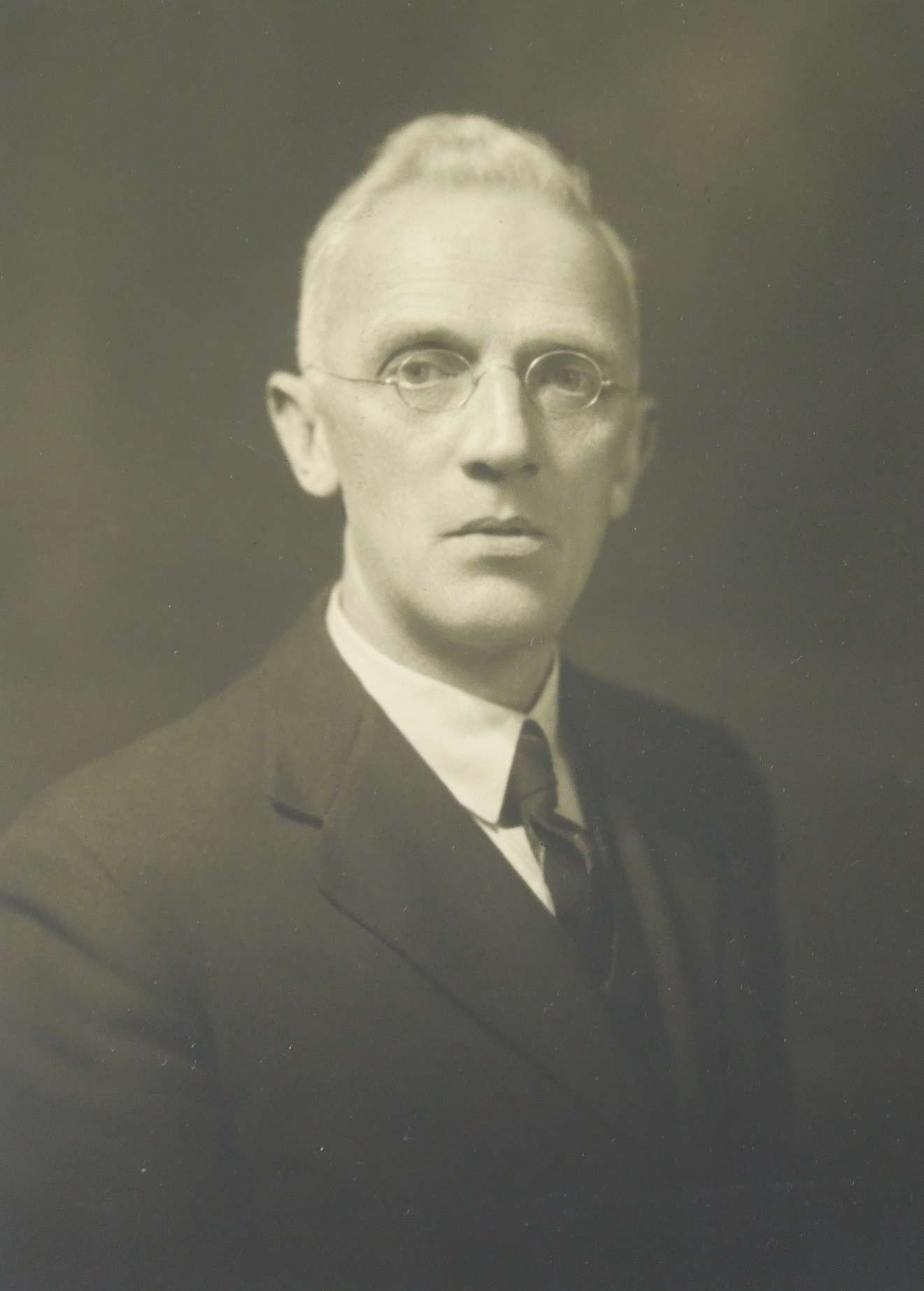
Professor Sir Godfrey Thomson

Alexander Craig Aitken
Ledermann quickly became Thomson’s mathematical assistant (or ‘tame mathematician’, as he puts it!), assisting him in writing The Factorial Analysis of Human Ability. Thomson and his contemporaries used Factorial Analysis to understand human differences (mathematics and humanity again!), and this is still a technique used by psychologists today. Thomson spoke to Ledermann in fluent German at their first meeting, much to Ledermann’s delight, and the working relationship was a successful one:
My work with Godfrey Thomson was inspiring, creative, and intimate. We met daily during the morning break at Moray House, where the Department of Education was situated. After we had briefly surveyed the progress of our research on the previous day, Miss Matthew, his charming and highly efficient secretary, brought in the coffee and some delicious buttered ginger bread.
The very intensity with which he pursued his ideas, was a great stimulus for me to solve the mathematical problems he had passed on to me. Godfrey Thomson did not claim to be a mathematician. Although he understood mathematical formulae when they were presented to him, he preferred to verify his ideas by constructing elaborate numeral examples from which the theoretical result could be guessed with some confidence.
Sadly much of Ledermann’s replies to Thomson are absent. Thomson sends Ledermann pages and pages of calculations with explanatory notes, then his next letter will be one thanking Ledermann for the brief formula he has sent in return (Thomson at one point refers to Ledermann’s formulae as ‘very pretty’!). The letters also show the warmth of feeling between the two, with Thomson frequently enquiring of Ledermann’s family, many of whom were still in Germany, and telling Ledermann about his own family.

An example of the small postcards Thomson sent Ledermann
Ledermann treasured the letters. In a letter to Lady Thomson, who was attempting to write Thomson’s biography, he writes:
I have over a hundred letters from Sir Godfrey, written between 1937 and 1946, some of them short notes, others carefully worked out in the form of a research paper, with many interesting questions and illustrations. I greatly treasure the correspondence, not merely on account of its considerable scientific, and, may I add, aesthetic value, but also because it contains so many typical examples of that human warmth and sympathy for which Sir Godfrey finds a place even at the beginning or at the end of a mathematical letter.
Letter from Ledermann to Lady Thomson, Coll-1310/1/1/1/17
Ledermann returned to St Andrews after working with Thomson, and would go on to accept teaching positions at the University of Manchester, and the University of Sussex. His love of mathematics continued to endear him to students and fellow lecturers, and he continued to undertake revision lectures for students for years following his retirement. His wife, Ruth, was a social worker and therapist, and they retired together to London, where Ledermann passed away in 2009.
For Ledermann, the beauty of the equations passed between himself and Thomson were no different to the music of his violin – each displayed ingenuity and art. His love of mathematics was the source of the most satisfying ‘human encounters’ he had throughout his lifetime, and the correspondence between himself and Thomson serves as a reminder of the beauty and humanity of mathematics.
Sources: Walter Ledermann’s autobiography, Encounters of a Mathematician
Hymnology Collections : Ravenscroft’s Book of Psalms
A guest post from Oreste de Tommasso, one of the Funk Project Cataloguers at New College Library.

A reprint of the tunes in Ravenscroft’s Book of Psalms : With introductory remarks. London, 1845. New College Library, Hymn 345.
This item, an edition of the Whole Book of Psalmes, was recently catalogued as part of the Hymnology Collections Project. It’s typical of the many nineteenth century items in the Hymnology Collection, much of which was originally collected by the Edinburgh bookseller James Thin. The pages in the volume are laid within a red line frame border, with an initial capital letter decorated in red ink. The cover title is within a rounded decorated lozenge in a golden colour.
The Whole Booke of Psalmes is one of the most important psalters of the period, though it contains much music from earlier publications. This collection includes national hymns (such as Dumferline, Dundee, and Glasgow) whose authorship remains uncertain, while the harmonizers into four parts are some of the most celebrated musicians of the Tudor era. Names such as Thomas Tallis, John Dowland, Thomas Morley, Giles Farnaby, Thomas Tomkins, all feature here. Thomas Ravescroft himself contributed fifty-five of its 105 settings.
 Ravenscroft was not only a good musician, but a man of considerable learning in his faculty. By 1598 he was chorister at St Paul’s Cathedral and graduated MusB from Cambridge at the age of fourteen.
The tunes are simple in their conception, as having a syllable for a note, thus easy to sing. It is the Sternhold and Hopkins metrical version of the psalms. Following the customs of the period, the tune was sung in the Tenor part by male voices, while the bass provided a simple foundation while the treble voices were often learnedly ornate in counterpoint style. Through the events of Civil War and Restoration, this multi-part style of singing was silenced and quickly fell into oblivion, in spite of some genuine attempts to revive it. Nonetheless, Ravenscroft’ Booke of Psalmes is the fount of Psalmody across all Great Britain, and this reprint provides a compendium-model of genuine psalmody.
Sources
The Oxford Dictionary of National Biography, v. 46
Havergal. W.H.; A reprint of the tunes in Ravenscroft’s Book of psalms : With introductory remarks. London, 1845.
‘To sow the seeds of a new science…’ Happy Birthday James Cossar Ewart
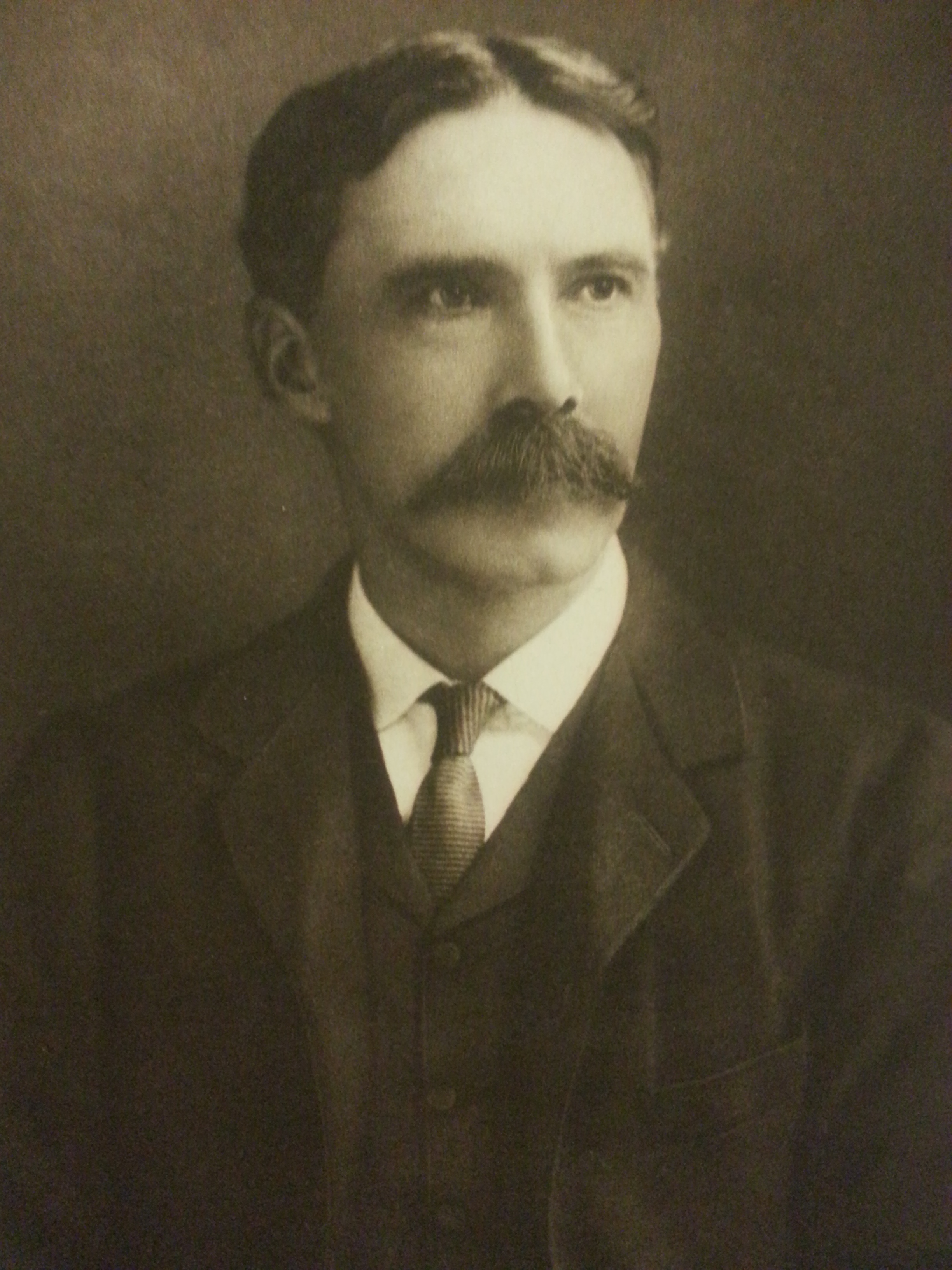 The name of James Cossar Ewart (1851-1933) has featured regularly in this blog over the past year or so, but we wish him a happy 163rd birthday for tomorrow (26th November). Ewart, who was Professor of Natural History at the University of Edinburgh from 1882-1927, is best known for his work cross-breeding zebras and horses and for being instrumental in establishing the UK’s first lectureship in Genetics in 1911. The creation of this post was to lead to a bright future for genetics and associated sciences in Edinburgh.
On this day in 1931, Professor F.A.E Crew, then director of what became known as the Institute of Animal Genetics, wrote this heartfelt letter to Ewart, expressing his admiration in no uncertain terms:
Dear Professor Cossar Ewart,
The 80th anniversary of your birthday surely warrants my writing to you my congratulations and to express my sincere hope that you may enjoy many more of these festive days.
I confess I envy you, to live for a long time means very little in itself but to have lived profitably: to have carved one’s name on the rolls of history of a science: to sow the seeds of a new science and to live to see the harvest gathered: these are things well worth the doing.
Happiness and a certain sense of contentment should be yours. It is the wish of those, who like myself are your disciples, that you shall enjoy the knowledge that you have, in a certain sense, achieved immortality. As long as biology exists, so long will your name be quoted.
On this day I send to you my homage and my affectionate regards.
Yours sincerely,
F.A.E Crew
Ewart died in his native home of Penicuik on New Year’s Eve, 1933. His two homes, the Bungalow and Craigybield House, can still be seen today in Penicuik, although both are now hotels.
Oatmeal and peppermint
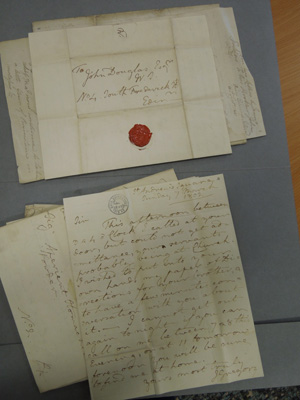
In March 2014 our main exhibition will feature items purchased for the collections with the help of the Friends of Edinburgh University Library. Our intern has been looking at possible exhibits and we will be featuring several of these on the blog over the next few months.
This correspondence, between Dr. James Gregory and John and James Douglas of Prince Edward Island, was purchased by the Friends in 1972. Dating from 1801, they contain an interesting and valuable insight into the practise of medicine in the early nineteenth century. The papers contain prescriptions, letters and instructions. Many of the letters bear the original red wax seal. Gregory at one point instructs James to eat “oatmeal, if he is a good Scotchman”. The prescriptions include peppermint water, Cathartic pills and Volatile Lineament (with ingredients written in Latin), but he elaborates in his instructions that “no medicine will cure him without strict attention to regimen”. This insight into early nineteenth century medicine demonstrates a focus on lifestyle rather than the belief in the ability of medicines to cure ailments. This is just one example of the purchases made with the help of the Friends since their foundation in 1962.
Twentieth Century Religious Thought now on trial
T wentieth Century Religious Thought, published by Alexander St Press, is now on trial until 19 December. University of Edinburgh users can access the database at http://www.ed.ac.uk/is/databases-trials.Twentieth Century Religious Thought is a multivolume, cross-searchable online collection that brings together the seminal works and archival materials related to key worldwide religious thinkers, from the early 1900s until the turn of the 21st century. It is a companion database to the Digital Karl Barth Library, to which the University already subscribes.
Volume I: Christianity includes the complete 17-volume German edition of Dietrich Bonhoeffer Werke (DBW) and 15 volumes of the English edition of the Dietrich Bonhoeffer Works Series (DBWE) (final volumes will be added in 2014); an international selection of English-language editions of key authors such as Hans Urs von Baltasar, Rudolf Bultmann, James Cone, Gustavo Gutiérrez, Adolf von Harnack, Henri de Lubac, Wolfhart Pannenberg, Rosemary Radford Ruether, Dorothee Sölle, and Ernst Troeltsch; and a selection of the papers of Reinhold Niebuhr.
The Model at ECA
It’s all go at Edinburgh College of Art at the moment for the opening of The Model exhibition, featuring items from Geology, Anatomy, and Dick Vet, alongside work by ECA and Grays School of Art lecturers and students.
Come along to our opening on Thursday at 6pm in the Sculpture Court. All welcome!
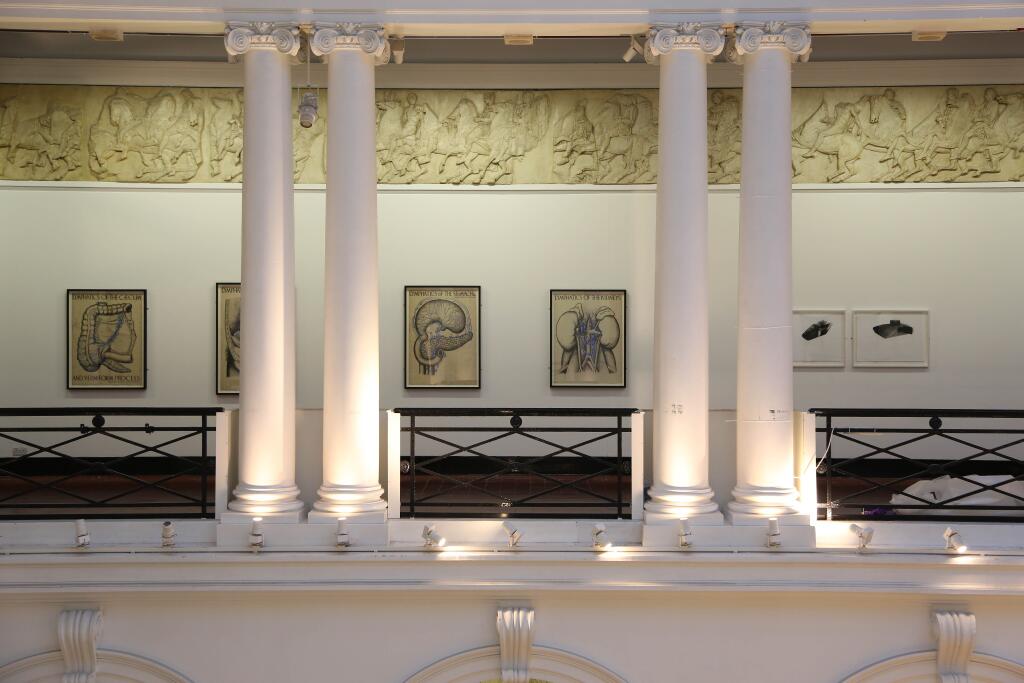
Lymphatic drawings from Anatomy installed on the ECA balcony
Collections
 Hill and Adamson Collection: an insight into Edinburgh’s past
My name is Phoebe Kirkland, I am an MSc East Asian Studies student, and for...
Cataloguing the private papers of Archibald Hunter Campbell: A Journey Through Correspondence
My name is Pauline Vincent, I am a student in my last year of a...
Hill and Adamson Collection: an insight into Edinburgh’s past
My name is Phoebe Kirkland, I am an MSc East Asian Studies student, and for...
Cataloguing the private papers of Archibald Hunter Campbell: A Journey Through Correspondence
My name is Pauline Vincent, I am a student in my last year of a...
Projects
Cataloguing the private papers of Archibald Hunter Campbell: A Journey Through Correspondence
My name is Pauline Vincent, I am a student in my last year of a...
Archival Provenance Research Project: Lishan’s Experience
Presentation My name is Lishan Zou, I am a fourth year History and Politics student....