Home University of Edinburgh Library Essentials
April 5, 2026
Ars Anatomica- back from the dead!

The image collection associated with the Ars Anatomica (Imaging the Renaissance Body) project has finally been restored into the LUNA image service in all its glory, here.
This project was a collaboration between the University of Edinburgh, University of Glasgow and the Royal College of Physicians, and was completed in 2005. It’s full of fascinating images of flayed bodies and skeletons, illustrating the writings on anatomy of Andreas Vesalius and Juan de Valverde.
The collection’s emergence is also interesting from a development perspective. While the general migration work to take it from the old Insight platform was done some time ago, we felt uncomfortable putting it live due to a significant lack of metadata on a number of items. However, in October, we unearthed the original data and were able to load this back into the Vernon Collections Management System and put through the standard processes to re-create the collection in LUNA. We have also put in place enhanced workflow steps which, if desired, would allow further cataloguing to take place in Vernon and keep it in sync with LUNA.
Darwin cataloguing project completed
‘Encounters of a mathematician’…
For the last few weeks, I have been cataloguing the papers of mathematician, Walter Ledermann (1911-2009). The collection largely composes of highly mathematical letters from Thomson to Ledermann. Having the somewhat dubious distinction of failing mathematics twice, its fair to say I had misgivings!
My failure as a young mathematician was due in part to my ready dismissal of mathematics as a dull, dry, monotonous subject (but in the main, a serious lack of talent!). I remember somewhat haughtily telling my long-suffering teacher that I liked subjects about people. Mathematics, as far as I was concerned, lacked any humanity and any discernible art. How wrong I was.

Ledermann as a young man, from his autobiography
Ledermann, a German-Jewish refugee, was more than used to such criticism being levelled at the subject – the art form – of his choice. In fact, he opens his autobiography, Encounters of a Mathematician, with the following:
Mathematics is a soulless occupation devoid of feeling and human values.
But that, Ledermann tells us, was never his experience:
I feel strongly that mathematics can and should form part of human relationships.
Ledermann grew up in Berlin, proving himself a talented violinist and mathematician from an early age. He loved music, and despite growing up in the midst of the depression, attended concerts regularly by any means possible. By the 1930s, the Berlin that Ledermann called home had changed rapidly, and he and his family were no longer welcome. It was his love of mathematics that gave him hope – despite the anti-Semitism he encountered, Ledermann’s ability, talent, and enthusiasm could be neither denied nor quashed. In fact, Ledermann’s talent for mathematics quite literally saved his life.
On completion of his degree at the University of Berlin in 1934, Ledermann won a scholarship created by students and citizens of St Andrews to support a Jewish refugee. He received a warm welcome from his fellow students, his lecturers, and the local community at St Andrews, and tells us: ‘it is no exaggeration to affirm that I owe my life to the people of St Andrews’ (Encounters of a Mathematician).
Ledermann completed his PhD after just two years, and found himself at the University of Edinburgh. This would be the start enduring friendships between Ledermann and the brilliant and troubled mathematician, A C Aitken, as well as Professor Godfrey Thomson.
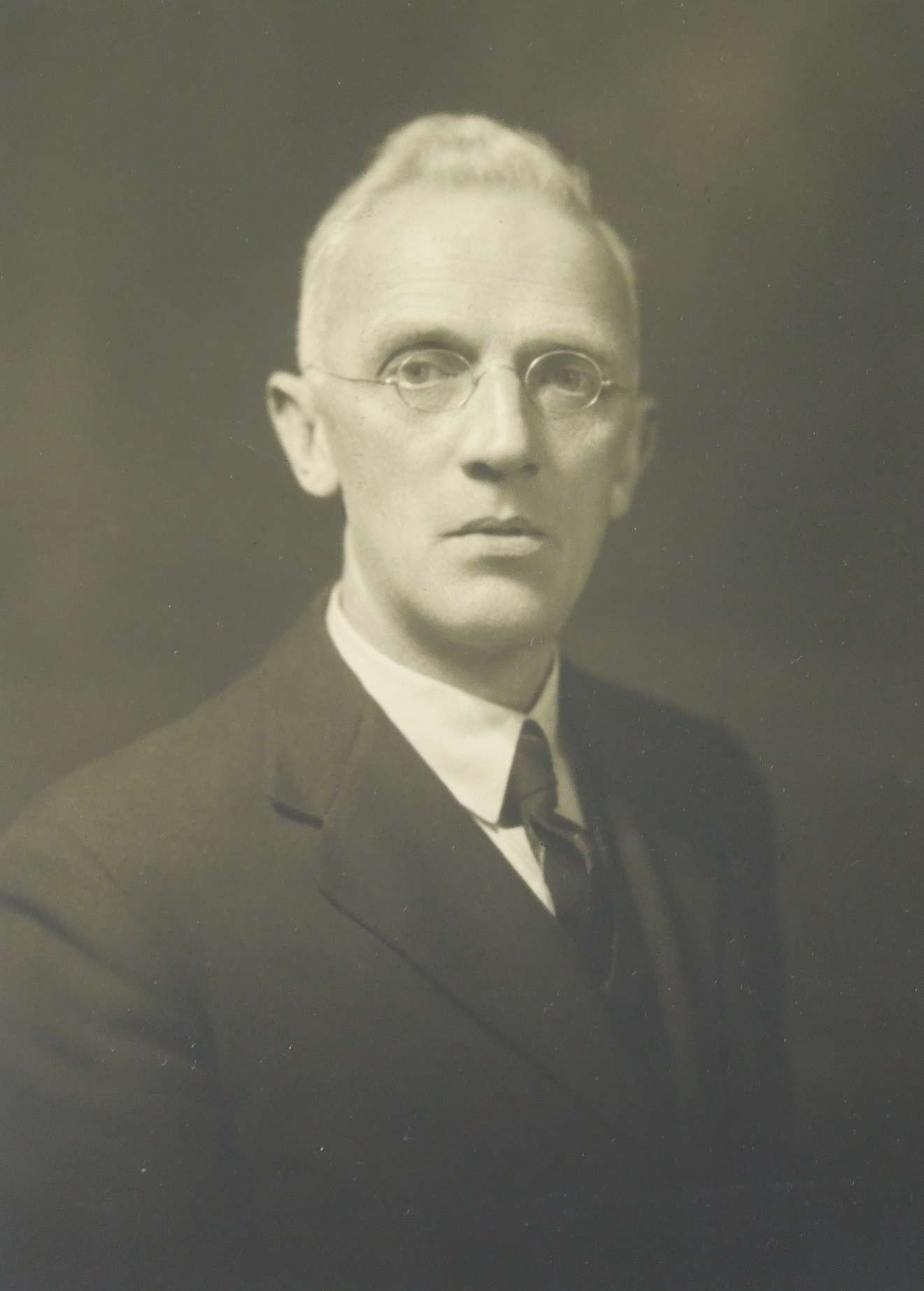
Professor Sir Godfrey Thomson

Alexander Craig Aitken
Ledermann quickly became Thomson’s mathematical assistant (or ‘tame mathematician’, as he puts it!), assisting him in writing The Factorial Analysis of Human Ability. Thomson and his contemporaries used Factorial Analysis to understand human differences (mathematics and humanity again!), and this is still a technique used by psychologists today. Thomson spoke to Ledermann in fluent German at their first meeting, much to Ledermann’s delight, and the working relationship was a successful one:
My work with Godfrey Thomson was inspiring, creative, and intimate. We met daily during the morning break at Moray House, where the Department of Education was situated. After we had briefly surveyed the progress of our research on the previous day, Miss Matthew, his charming and highly efficient secretary, brought in the coffee and some delicious buttered ginger bread.
The very intensity with which he pursued his ideas, was a great stimulus for me to solve the mathematical problems he had passed on to me. Godfrey Thomson did not claim to be a mathematician. Although he understood mathematical formulae when they were presented to him, he preferred to verify his ideas by constructing elaborate numeral examples from which the theoretical result could be guessed with some confidence.
Sadly much of Ledermann’s replies to Thomson are absent. Thomson sends Ledermann pages and pages of calculations with explanatory notes, then his next letter will be one thanking Ledermann for the brief formula he has sent in return (Thomson at one point refers to Ledermann’s formulae as ‘very pretty’!). The letters also show the warmth of feeling between the two, with Thomson frequently enquiring of Ledermann’s family, many of whom were still in Germany, and telling Ledermann about his own family.

An example of the small postcards Thomson sent Ledermann
Ledermann treasured the letters. In a letter to Lady Thomson, who was attempting to write Thomson’s biography, he writes:
I have over a hundred letters from Sir Godfrey, written between 1937 and 1946, some of them short notes, others carefully worked out in the form of a research paper, with many interesting questions and illustrations. I greatly treasure the correspondence, not merely on account of its considerable scientific, and, may I add, aesthetic value, but also because it contains so many typical examples of that human warmth and sympathy for which Sir Godfrey finds a place even at the beginning or at the end of a mathematical letter.
Letter from Ledermann to Lady Thomson, Coll-1310/1/1/1/17
Ledermann returned to St Andrews after working with Thomson, and would go on to accept teaching positions at the University of Manchester, and the University of Sussex. His love of mathematics continued to endear him to students and fellow lecturers, and he continued to undertake revision lectures for students for years following his retirement. His wife, Ruth, was a social worker and therapist, and they retired together to London, where Ledermann passed away in 2009.
For Ledermann, the beauty of the equations passed between himself and Thomson were no different to the music of his violin – each displayed ingenuity and art. His love of mathematics was the source of the most satisfying ‘human encounters’ he had throughout his lifetime, and the correspondence between himself and Thomson serves as a reminder of the beauty and humanity of mathematics.
Sources: Walter Ledermann’s autobiography, Encounters of a Mathematician
Hymnology Collections : Ravenscroft’s Book of Psalms
A guest post from Oreste de Tommasso, one of the Funk Project Cataloguers at New College Library.

A reprint of the tunes in Ravenscroft’s Book of Psalms : With introductory remarks. London, 1845. New College Library, Hymn 345.
This item, an edition of the Whole Book of Psalmes, was recently catalogued as part of the Hymnology Collections Project. It’s typical of the many nineteenth century items in the Hymnology Collection, much of which was originally collected by the Edinburgh bookseller James Thin. The pages in the volume are laid within a red line frame border, with an initial capital letter decorated in red ink. The cover title is within a rounded decorated lozenge in a golden colour.
The Whole Booke of Psalmes is one of the most important psalters of the period, though it contains much music from earlier publications. This collection includes national hymns (such as Dumferline, Dundee, and Glasgow) whose authorship remains uncertain, while the harmonizers into four parts are some of the most celebrated musicians of the Tudor era. Names such as Thomas Tallis, John Dowland, Thomas Morley, Giles Farnaby, Thomas Tomkins, all feature here. Thomas Ravescroft himself contributed fifty-five of its 105 settings.
 Ravenscroft was not only a good musician, but a man of considerable learning in his faculty. By 1598 he was chorister at St Paul’s Cathedral and graduated MusB from Cambridge at the age of fourteen.
The tunes are simple in their conception, as having a syllable for a note, thus easy to sing. It is the Sternhold and Hopkins metrical version of the psalms. Following the customs of the period, the tune was sung in the Tenor part by male voices, while the bass provided a simple foundation while the treble voices were often learnedly ornate in counterpoint style. Through the events of Civil War and Restoration, this multi-part style of singing was silenced and quickly fell into oblivion, in spite of some genuine attempts to revive it. Nonetheless, Ravenscroft’ Booke of Psalmes is the fount of Psalmody across all Great Britain, and this reprint provides a compendium-model of genuine psalmody.
Sources
The Oxford Dictionary of National Biography, v. 46
Havergal. W.H.; A reprint of the tunes in Ravenscroft’s Book of psalms : With introductory remarks. London, 1845.
‘To sow the seeds of a new science…’ Happy Birthday James Cossar Ewart
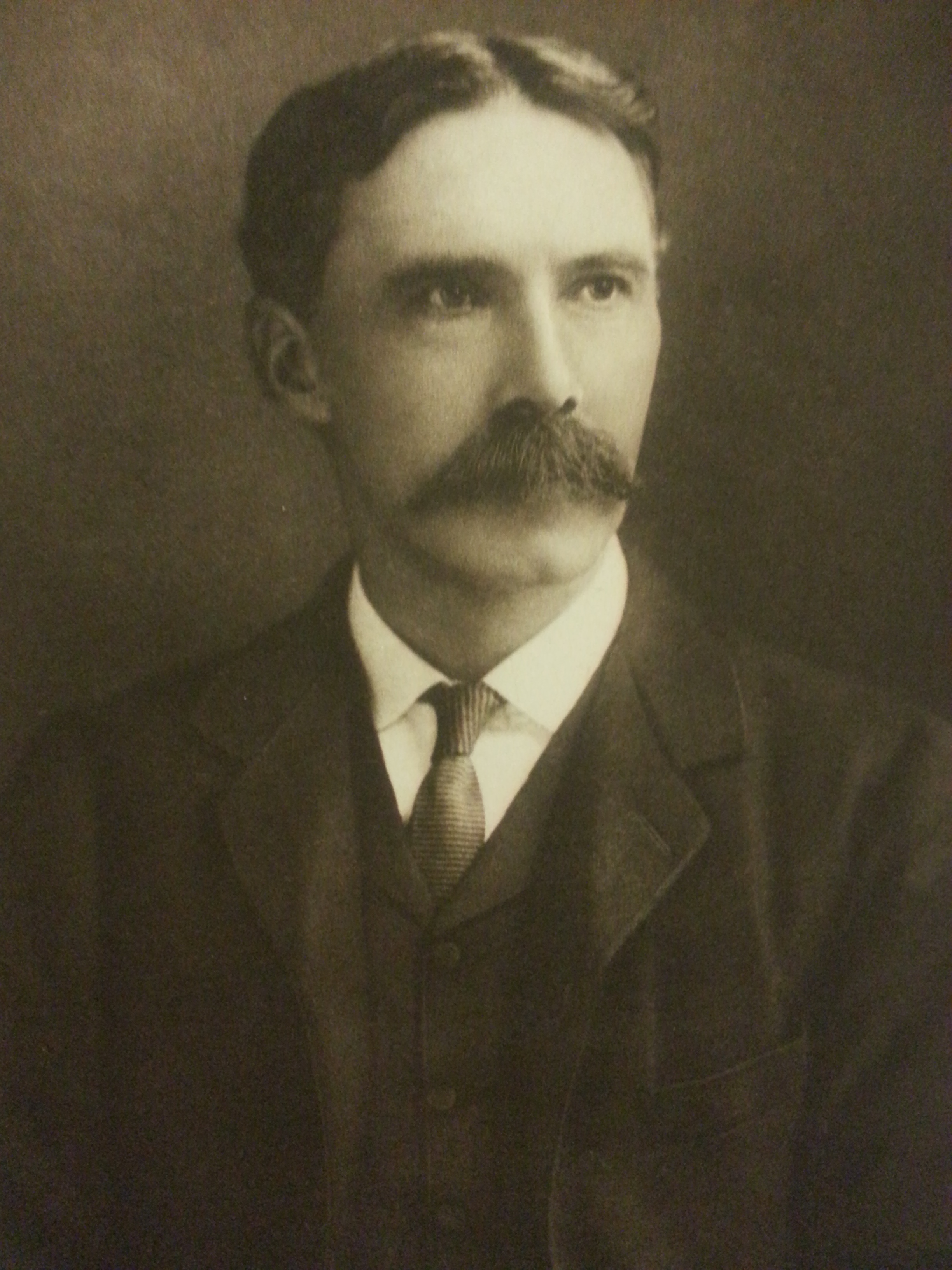 The name of James Cossar Ewart (1851-1933) has featured regularly in this blog over the past year or so, but we wish him a happy 163rd birthday for tomorrow (26th November). Ewart, who was Professor of Natural History at the University of Edinburgh from 1882-1927, is best known for his work cross-breeding zebras and horses and for being instrumental in establishing the UK’s first lectureship in Genetics in 1911. The creation of this post was to lead to a bright future for genetics and associated sciences in Edinburgh.
On this day in 1931, Professor F.A.E Crew, then director of what became known as the Institute of Animal Genetics, wrote this heartfelt letter to Ewart, expressing his admiration in no uncertain terms:
Dear Professor Cossar Ewart,
The 80th anniversary of your birthday surely warrants my writing to you my congratulations and to express my sincere hope that you may enjoy many more of these festive days.
I confess I envy you, to live for a long time means very little in itself but to have lived profitably: to have carved one’s name on the rolls of history of a science: to sow the seeds of a new science and to live to see the harvest gathered: these are things well worth the doing.
Happiness and a certain sense of contentment should be yours. It is the wish of those, who like myself are your disciples, that you shall enjoy the knowledge that you have, in a certain sense, achieved immortality. As long as biology exists, so long will your name be quoted.
On this day I send to you my homage and my affectionate regards.
Yours sincerely,
F.A.E Crew
Ewart died in his native home of Penicuik on New Year’s Eve, 1933. His two homes, the Bungalow and Craigybield House, can still be seen today in Penicuik, although both are now hotels.
Oatmeal and peppermint
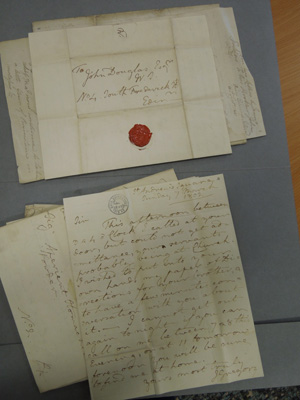
In March 2014 our main exhibition will feature items purchased for the collections with the help of the Friends of Edinburgh University Library. Our intern has been looking at possible exhibits and we will be featuring several of these on the blog over the next few months.
This correspondence, between Dr. James Gregory and John and James Douglas of Prince Edward Island, was purchased by the Friends in 1972. Dating from 1801, they contain an interesting and valuable insight into the practise of medicine in the early nineteenth century. The papers contain prescriptions, letters and instructions. Many of the letters bear the original red wax seal. Gregory at one point instructs James to eat “oatmeal, if he is a good Scotchman”. The prescriptions include peppermint water, Cathartic pills and Volatile Lineament (with ingredients written in Latin), but he elaborates in his instructions that “no medicine will cure him without strict attention to regimen”. This insight into early nineteenth century medicine demonstrates a focus on lifestyle rather than the belief in the ability of medicines to cure ailments. This is just one example of the purchases made with the help of the Friends since their foundation in 1962.
Twentieth Century Religious Thought now on trial
T wentieth Century Religious Thought, published by Alexander St Press, is now on trial until 19 December. University of Edinburgh users can access the database at http://www.ed.ac.uk/is/databases-trials.Twentieth Century Religious Thought is a multivolume, cross-searchable online collection that brings together the seminal works and archival materials related to key worldwide religious thinkers, from the early 1900s until the turn of the 21st century. It is a companion database to the Digital Karl Barth Library, to which the University already subscribes.
Volume I: Christianity includes the complete 17-volume German edition of Dietrich Bonhoeffer Werke (DBW) and 15 volumes of the English edition of the Dietrich Bonhoeffer Works Series (DBWE) (final volumes will be added in 2014); an international selection of English-language editions of key authors such as Hans Urs von Baltasar, Rudolf Bultmann, James Cone, Gustavo Gutiérrez, Adolf von Harnack, Henri de Lubac, Wolfhart Pannenberg, Rosemary Radford Ruether, Dorothee Sölle, and Ernst Troeltsch; and a selection of the papers of Reinhold Niebuhr.
The Model at ECA
It’s all go at Edinburgh College of Art at the moment for the opening of The Model exhibition, featuring items from Geology, Anatomy, and Dick Vet, alongside work by ECA and Grays School of Art lecturers and students.
Come along to our opening on Thursday at 6pm in the Sculpture Court. All welcome!
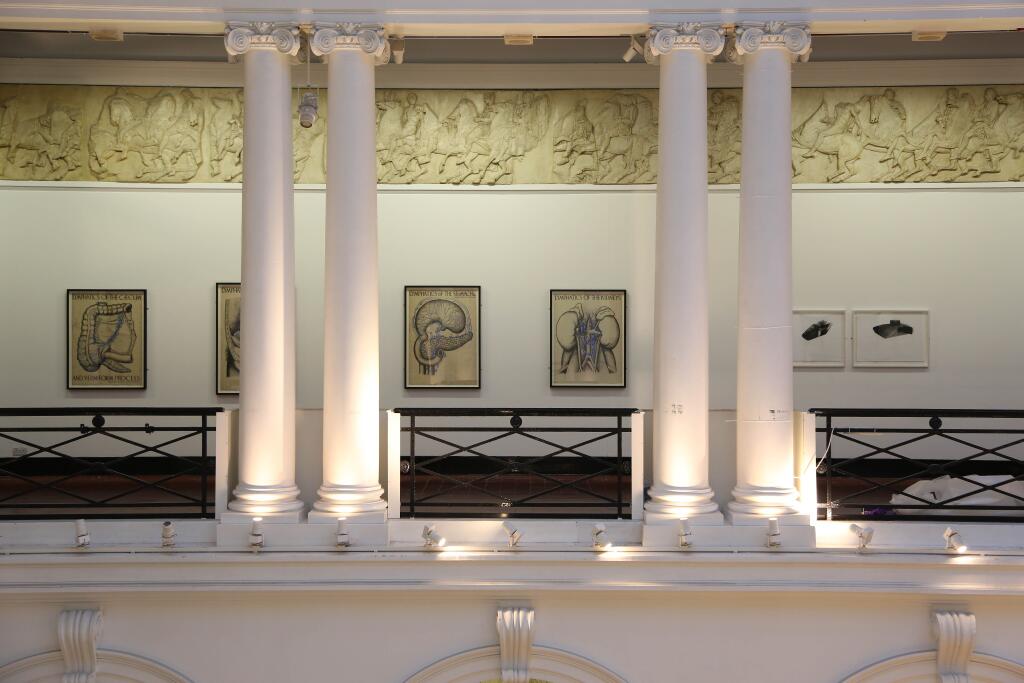
Lymphatic drawings from Anatomy installed on the ECA balcony
Electronic Laboratory Notebooks – help or hindrance to academic research?
On the 30 October 2013 the University of Edinburgh (UoE) organised what I believe to be the first University wide meeting on Electronic Lab Notebooks (ELN), and allowed a number of Principal Investigators (PIs) and others the opportunity to provide useful feedback on their user experiences. This provided an excellent opportunity to help discuss and inform what the UoE can do to help its researchers, and whether there is likely to be one ‘solution’ which could be implemented across the UoE or if a more bespoke and individual/discipline specific approach would be required.
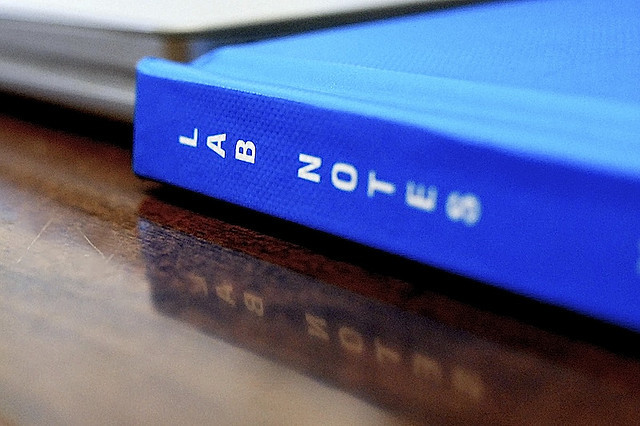
Lab Notes by S.S.K. – Flickr
Good research and good research data management (RDM) stem from the ability of researchers to accurately record, find, retrieve and store the information from their research endeavours. For many, but by no means all, this will initially be done by recording their outputs on the humble piece of paper. Albeit one contained within a hardbound notebook (to ensure an accurate chronological record of the work) and supplemented liberally with printouts, photographs, x-rays, etc. and reminders of where to look for the electronic data relevant to the day’s work (ideally at least).
Presentations from University researchers
Slides from these presentations are available to UoE members via the wiki.
The event kicked off with a live demonstration from the member of the School of Physics & Astronomy, and his positive experiences with the Livescribe system. This demonstration impressively articulated the functions of the electronic pen, which allows its user to record, stroke by stroke, their writings, and pass on this information either as a movie or document to others, and store the output electronically. Although there were some disadvantages noted, such as the physical size of the pen and the reliance on WiFi for certain features, and that to date, only certain iOS 7 devices are supported (although this list will grow in 2014). Clearly, this device has had a positive effect on both the presenter’s research and teaching duties. However the livescribe pen does not in itself help address how to store these digital files.
The remainder of the presentations from the academic researchers were from the fields of life science, although their experiences were quite diverse. This helpfully provided a good set-up for a healthy discussion, on both ELNs and indeed the wider aspects of RDM at the UoE.
Of the active researchers who presented, two were PIs from the School of Molecular, Genetic and Population Health Sciences and one was a postdoctoral researcher from the School of Biological Sciences. All three had prior experience in using previous versions of ELNs, and had sought an ELN to address a range of similar issues with paper laboratory notebooks.
Merits and pitfalls of electronic notebooks
I have chosen not to provide feedback on the specific ELNs trialled here, but the software discussed was Evernote, eCAT, and Accelyrs, and as the UoE does not recommend or discourage the use of any particular ELN to-date, I won’t either.
In all cases these electronic systems were purchased for help with key areas:
Motivation/Benefits
- Searchable data resource
- Safe archive
- Sharing data
- Copy and paste functions
- Functionality for reviewing lab member’s progress
- Ability to organise by experiments (not just chronologically)
- One system to store reagents/freezer contents with experimental data
And in general, key problematic issues raised with these systems were:
Barriers/Problems
- Need for reliable internet access
- Hardware integration into lab environment
- Required more time to document and import data
- Poor user interface/experience
- Copy and paste functions (although time-saving, may increase errors as data are not reviewed)
- Administration time by PI is required
- PhD students and postdocs (when given the choice*) preferred to use paper notebooks
*it was mooted that no choice should be given.
Infrastructure
A common theme with the use of ELNs was that of the hardware, and the reliance on WiFi. Clearly when working at the bench with reagents that are potentially hazardous (chemicals, radiation, etc) or with biologicals that you don’t wish to contaminate (primary cell cultures for instance) the hardware used is not supposed to be moved between such locations and ‘dry areas’ such as your office. A number of groups have attempted to solve this problem by utilising tablets, and sync to both the “cloud” and their office computers, and this is of course dependent on WiFi. Without WiFi, you might unexpectedly find yourself with no access to any of your data/protocols, which leads to real problems if you are in the middle of an experiment. Additionally this requires the outlay of monies for the purchase of the tablets, and provides a tempting means of distraction to group members (both of which may be frowned upon by many PIs). This monetary concern was identified as a potential problem for the larger groups, where multiple tablets would be required.
Research Data Management & Electronic Laboratory Notebooks
From an RDM perspective the subsequent discussions raised a number of interesting issues. Firstly, as a number of these ELN services utilise the “cloud” for storage, it was clear that many researchers, PIs included, were unaware of what was expected from them by both their funding councils and the UoE.

Secure Cloud Computing by FutUndBeidl – Flickr
The Data Protection Act 1998 sets out how organisations may use personal data, and the Records Management Section’s guidance on ‘Taking sensitive information and personal data outside the University’s secure computing environment’ details the UoE position on this matter, but essentially all sensitive or personal information leaving the UoE should be encrypted. This guidance would seem not to have reached a significant proportion of the researchers yet.
ELN? – not for academic research!
Whilst the first two presentations were broadly supportive of ELNs, the third researcher’s presentation was distinctly negative, and he provided his interpretation on the use of an ELN in an academic setting. Although broadly speaking this presentation was on one product, it was made clear that his opinions were not based on one ‘software product’ alone. In this case the PI has since abandoned the ELN (after four years of use and requiring his lab members to use it), citing reasons of practicality; it took too long to document the results (paper is always quicker), there is no standard for writing up documentation online**, and the data have effectively been stored twice.
He was also of the strong opinion that the use of ELNs:
“were not going to improve your research quality – it’s for those who want to spend time making their data look pretty.”
And –
“it is not for academic research, but more suited for service labs and industry.”
These would seem to be viewpoints that cannot easily be addressed.
The role of the PI
**Of course this is also true for paper versions, with the National Postdoctoral Association (USA) noting in their toolkit section on ‘Data Acquisition, Management, Sharing and Ownership’ that with the multinational approach to research that:
“many [postdocs] may prefer to keep their notes in their native language instead of English. Postdoc supervisors need to take this into consideration and establish guidelines for the extent to which record keeping must be generally accessible.”
The role of the PI cannot be overlooked in this process and to-date, even if a paper notebook is utilised, there is often no standard to observe.
The next generation of ELNs
Despite these concerns ResearchSpace Ltd are poised to release the next generation of an ELN, with an enterprise release of their popular eCAT ELN, to be called RSpace. The RSpace team seem confident that they are both aware and capable of addressing these various user requirements and it will certainly be interesting to see how they get on. Certainly they provided clear evidence of improved user interfaces, enhanced tools, knowledge of University policy, with the prospect of integration into the existing UoE digital infrastructure, such as the data repository, Edinburgh DataShare.
Researcher engagement
Importantly whilst this programme identified concerns and benefits with the various software systems available, it also highlighted issues with the UoE dissemination of RDM knowledge to the research community, and so perhaps fittingly the last word will be from the chair:
“The University has a lot of useful information on this area of data management; please look at the research support pages!”
So the fundamental question remains, what is the best way to engage researchers in RDM and how can we best address this need at all levels?
Links
- Research data management guidance
- Overview of data protection
-
Electronic Lab Notebooks at The University of Edinburgh – wiki notes/slides
David Girdwood
EDINA & Data Library
Photographing Geology Specimens
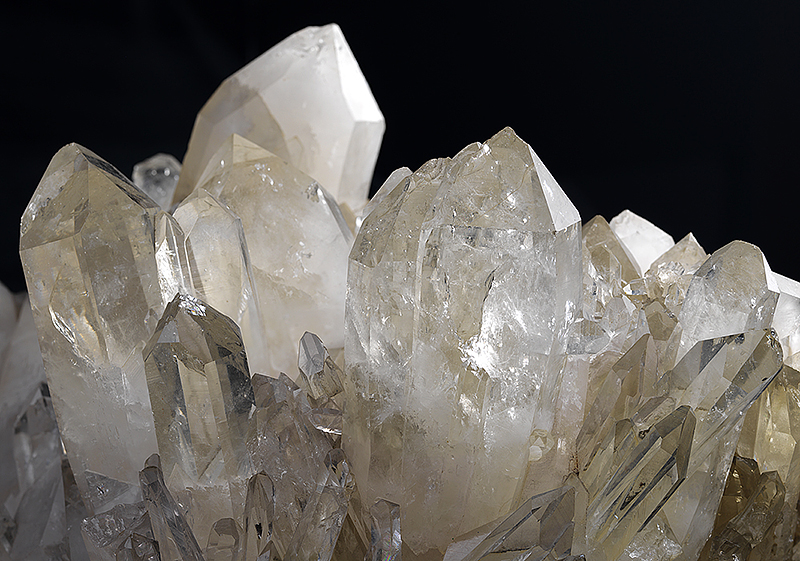
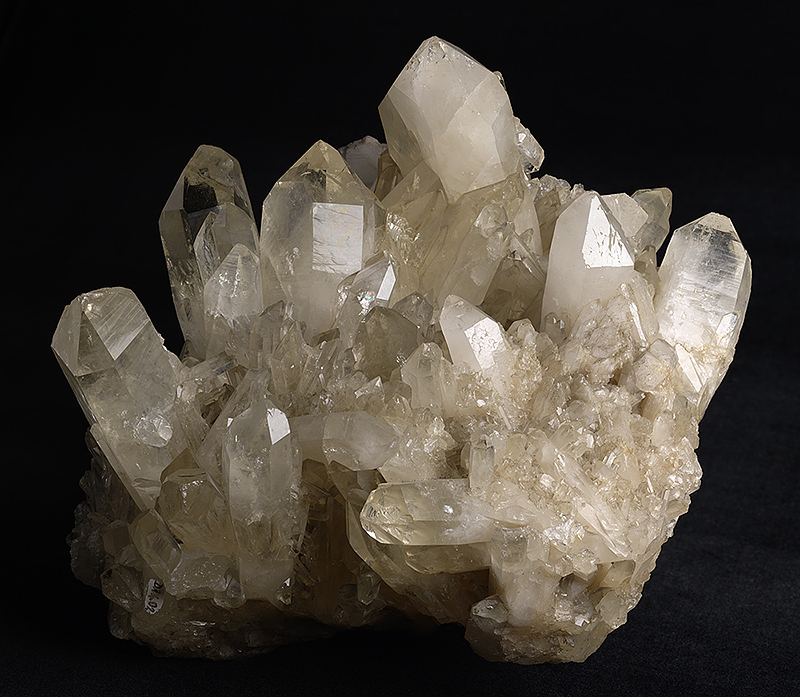
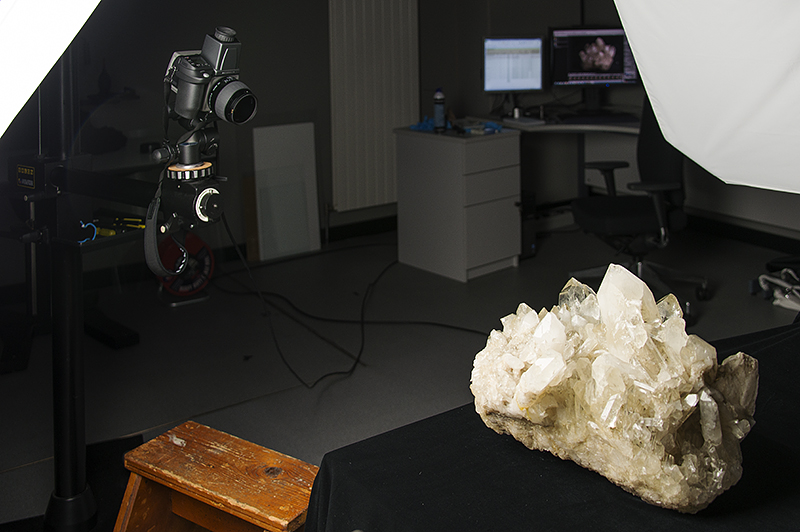
This image of Quartz crystals was commissioned for exhibition at University of Edinburgh Main Library but has also found a home at the School of Geo Science website http://www.geos.ed.ac.uk/facilities/ionprobe/TiQuartzStandards/ The image was created using 9 separate exposures each focusing on a different part of the crystal. Those were then imported into Photoshop as separate layers and a layer mask was added to each layer. Using the mask on each layer its was possible to hide or reveal parts of each individual exposure. This technique was used to create an image where many areas are in sharp focus to highlight the rich details of the crystal. The studio set up for this type of work consumes a lot of physical working space as demonstrated in the studio shots which can be seen below.
Malcolm Brown
Collections
 Hill and Adamson Collection: an insight into Edinburgh’s past
My name is Phoebe Kirkland, I am an MSc East Asian Studies student, and for...
Cataloguing the private papers of Archibald Hunter Campbell: A Journey Through Correspondence
My name is Pauline Vincent, I am a student in my last year of a...
Hill and Adamson Collection: an insight into Edinburgh’s past
My name is Phoebe Kirkland, I am an MSc East Asian Studies student, and for...
Cataloguing the private papers of Archibald Hunter Campbell: A Journey Through Correspondence
My name is Pauline Vincent, I am a student in my last year of a...
Projects
Cataloguing the private papers of Archibald Hunter Campbell: A Journey Through Correspondence
My name is Pauline Vincent, I am a student in my last year of a...
Archival Provenance Research Project: Lishan’s Experience
Presentation My name is Lishan Zou, I am a fourth year History and Politics student....