Home University of Edinburgh Library Essentials
October 9, 2026
Gathering Intelligence: A free seminar regarding Thomson’s life and work
Our Wellcome Trust funded project*, ‘Documenting the Understanding of Human Intelligence: cataloguing and preserving the papers of Professor Sir Godfrey Thomson’, is on course to deliver on all its objectives in the next few months. Continuing on from the cataloguing project, we aim to digitise Thomson’s papers, and catalogue related papers through the Moray House and University of Edinburgh collections. We will also be curating an exhibition regarding Thomson’s life and work in 2016.

Professor Sir Godfrey Thomson (1881-1955)
To mark this exciting and continuing collaboration between the academic and archival communities, we are holding a free seminar for researchers, students, and archivists at Edinburgh University Library, 16th May 2014.
Professor Sir Godfrey Thomson (1881-1955) was a psychologist, statistician, and educator. The seminar programme reflects this, and is a varied one exploring Thomson’s work in Psychology (especially cognitive testing), Statistics, Education, and Eugenics, with academic speakers from each field. Chaired by Professor Dorothy Meill, Vice Principal and Head of the College of Humanities and Social Science, It will also discuss current scientific research facilitated through data sets left from Thomson’s work, as well as the complexities involved in interpreting and cataloguing the collection itself.
Professor Ian Deary’s British Academy Lecture on Thomson
Programme
Gathering Intelligence: the life and work of Professor Sir Godfrey Thomson
Chaired by Professor Dorothy Meill, Vice Principal and Head of the College of Humanities and Social Science
9. 15: Coffee and introduction
10.00: Martin Lawn, Senior Research Fellow, Department of Education, University of Oxford: ‘’His Great Institution’’: Thomson’s advanced school of education in Edinburgh’
10.30: Professor Ian Deary, Director, Centre for Cognitive Ageing and Cognitive Epidemiology: ‘Use of Thomson’s data today in studies of cognitive ageing and cognitive epidemiology’.
11.00: Tea and coffee
11.30: Professor Lindsay Paterson, School of Social and Political Science, University of Edinburgh: ‘Use of Thomson’s survey work in current research on social mobility and life-long education’
12.00: Dr Edmund Ramsden, ‘Thomson’s research and opinions on the differential birth rate and eugenics’.
12.30: Lunch (lunch is provided), and viewing of the collection
2.00: David Bartholomew, Professor Emeritus of Statistics at the London School of Economics: Thomson’s original statistical contributions
2.30: Emma Anthony, Project Archivist, Godfrey Thomson Project: ‘Interpreting and Cataloguing Thomson’s papers’
3.00: Panel discussion
4.00: Moray House tour
4.30: Finish
The seminar is free, but please note places must be booked through eventbrite.
Wellcome Trust bursaries for accommodation and travel are available.
For further information, contact Emma.Anthony@ed.ac.uk.
*Funded by the Trust’s Research Resources grant scheme under the call ‘Understanding the Human Brain’. Continuing on from the current cataloguing project, we aim to digitise Thomson’s papers, and catalogue related papers through the Moray House and University of Edinburgh collections. We will also be curating an exhibition regarding Thomson’s life and work in 2016.
Digitising Darwin
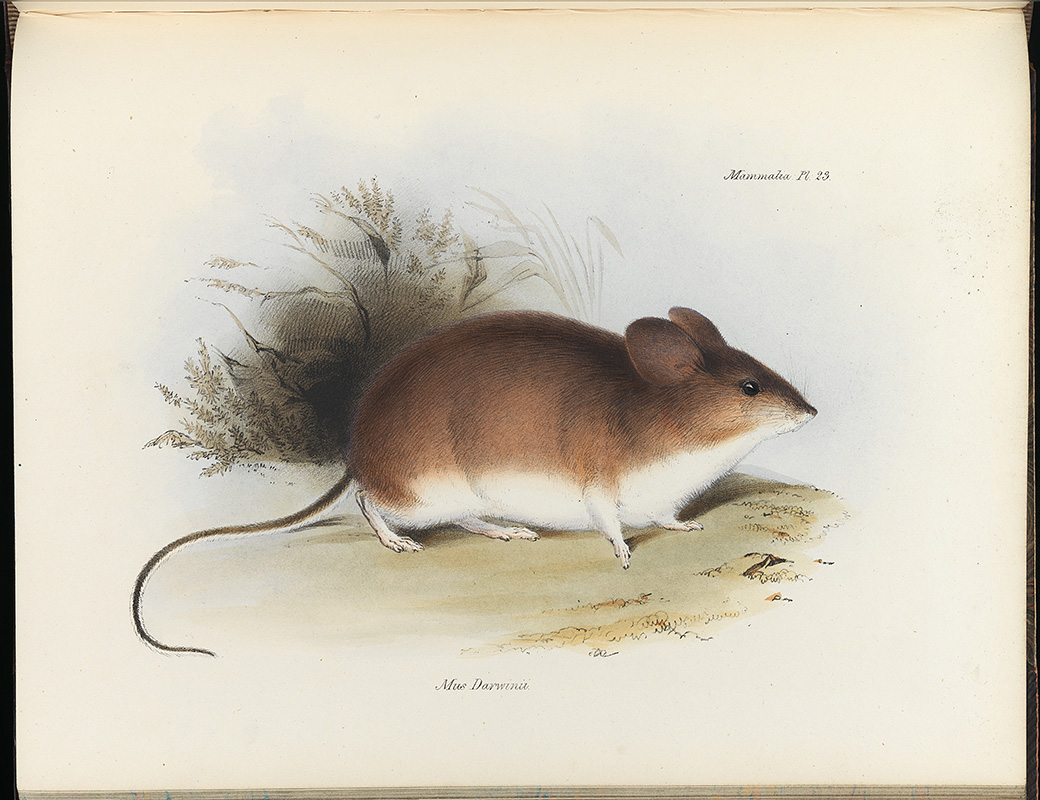
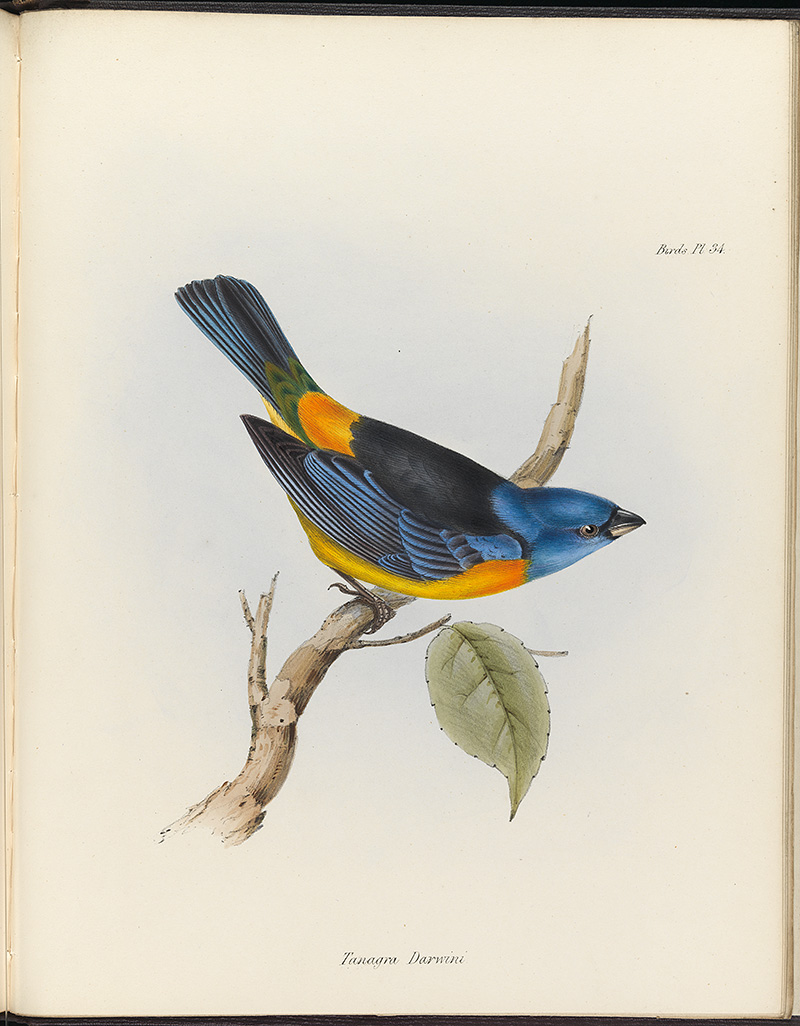
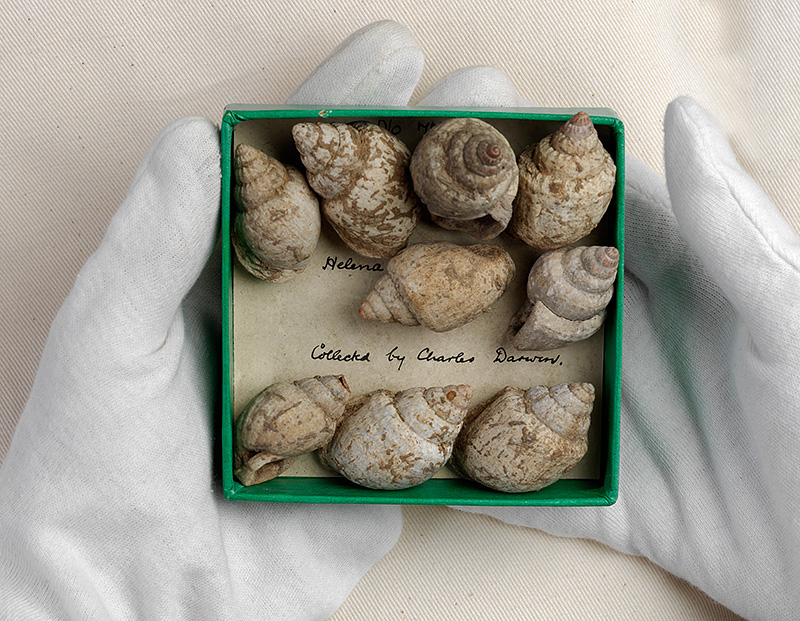
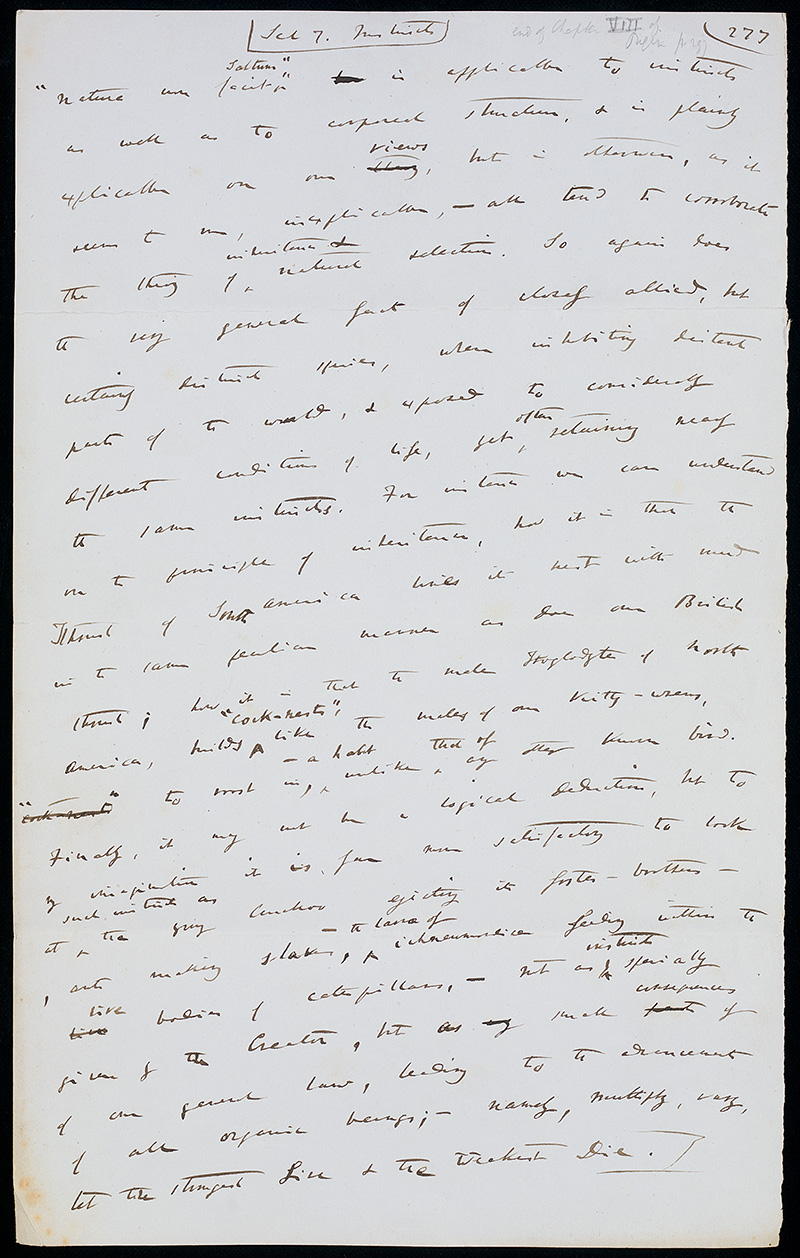
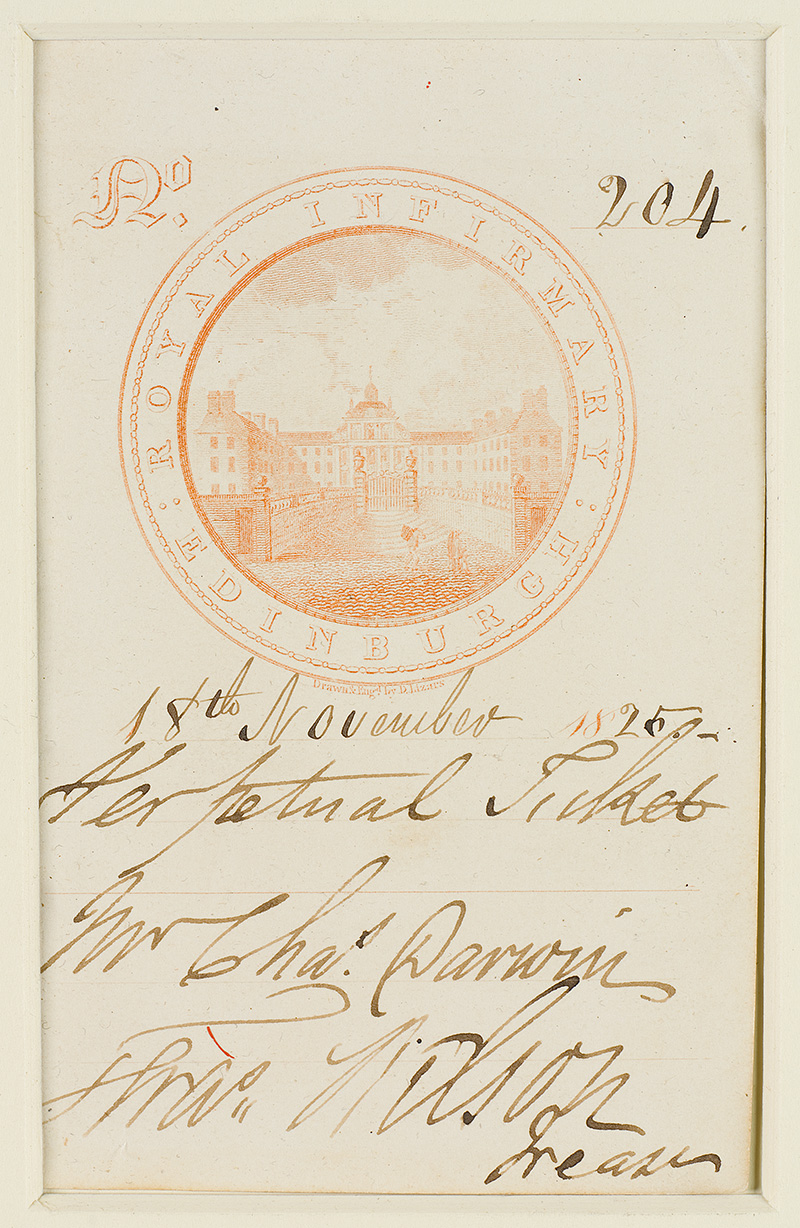
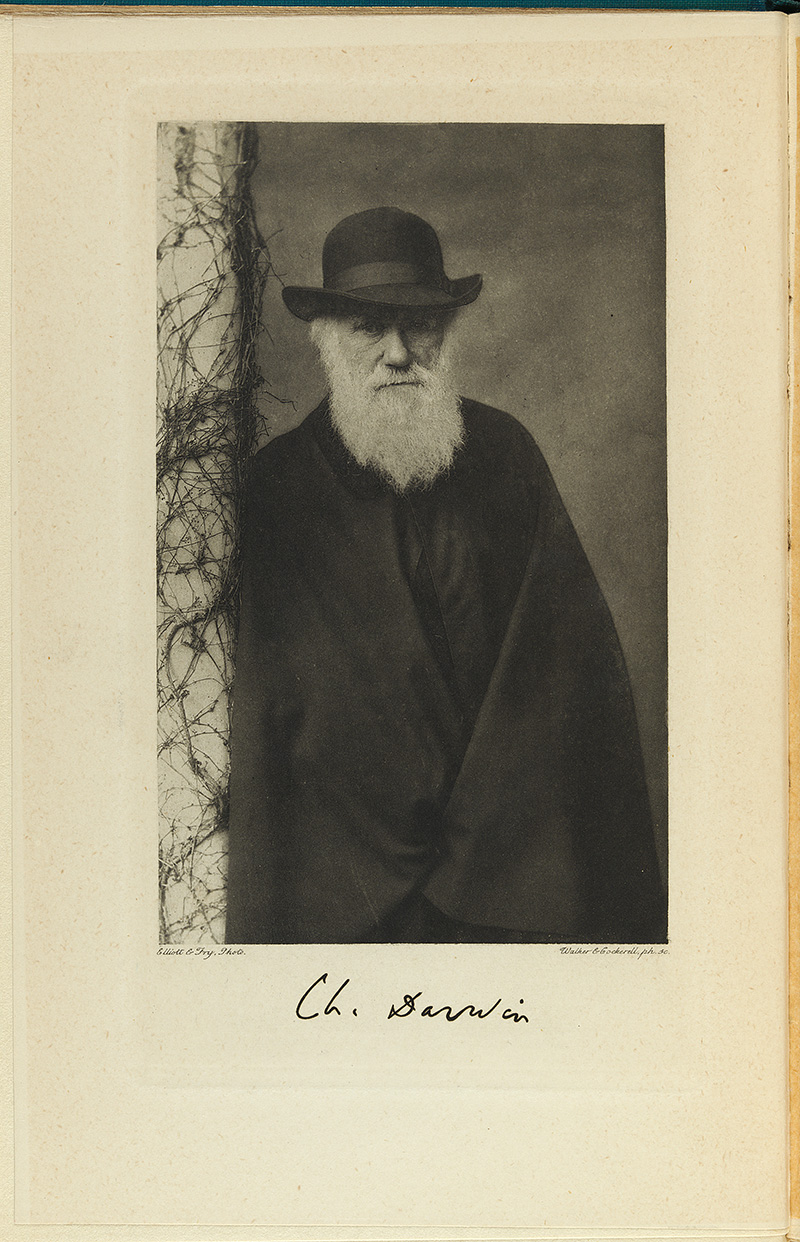 Over the years several Darwin originals have made their way to us for photography- a handwritten sheet from the manuscript of ‘On the Origin of Species’, his class cards, letters and recently some shells collected by Darwin during the voyage of the Beagle which had been rediscovered amongst Lyell’s geology collection. This week I was delighted to receive a whole trolley load of books from the Darwin collection which were being photographed in preparation for a printed catalogue. The Rare Books and Manuscripts team have already completed the online cataloguing (see their blog about this mini-project here https://libraryblogs.is.ed.ac.uk/blog/2013/08/30/darwins-voyage-of-discovery/ ).
Much of what arrived in the DIU was from the Heiskell Darwin collection- a donation of first editions made to the University in 2012 from the Heiskell Bibliographical Foundation, although some beautiful plates from the ‘The Zoology of the Voyage of H.M.S. Beagle’ came from our existing collection. As our image archive of Darwin is growing, I thought it might be nice to show some of the highlights here.
Susan Pettigrew


The disgruntlements of old age…
Disgruntlement. The archives are full of it – though I should stress I am referring to the contents of our records rather than our lovely readers (or indeed my lovely colleagues)! This week’s letter is a wonderful example of disgruntlement from the eccentric and brilliant zoologist and classicist, D’Arcy Wentworth Thompson (1860–1948). The youth, he tells us, simply aren’t what they used to be:
 Thompson wrote the letter to Thomson in 1946 to congratulate him on his Galton Lecture, ‘the Trends of National Intelligence’, which explored the idea that as a nation, our intelligence was in decline.
While he acknowledges that he may well be ‘biased by the disgruntlements of old age’, he assures Thomson:
I still believe that my students are inferior to those of thirty or forty years ago, and to my own companions of 60-70 years ago. They have less ability, much less diligence, and hardly any of the old enthusiasm and joy and happiness in their work.
And that, according to Thompson, isn’t even the half of it!:
There is something, something very subtle and mysterious, which brings the Golden Ages and the Dark Ages; which gives one, in literature, the Elizabethan, the Queen Anne, and the Victorian periods; and in Art the great and shortlived glories of Greece, Italy, Holland and our English school of Reynolds, Turner, Constable and the rest. All gone!
Indeed. And according to Thompson, who finishes on a wonderful note of pessimism, its only going to get worse:
I judge from the young people I have to do with, that we are going to be worse before we are better.

D’Arcy Wentworth Thompson
But despite appearances, Thompson loved teaching – he was a renowned speaker whose lecture halls were packed, and he encouraged his students to exercise their enquiring minds. Even while he lay on his death bed, Thompson’s students visited and livened up his last days with discussion and debate. Any disappointment hinted at in his letter to Thomson could be attributed to his own brilliance, which perhaps caused him to expect similar levels of extraordinariness in those he taught.
Thompson’s love of biology was awakened by his Grandfather, who, along with Thompson’s Aunt, brought him up in Edinburgh. This was due to the death of his Mother and his Father’s appointment as professor of Greek in Queen’s College, Galway. He was educated at the Universities of Edinburgh and Cambridge – gaining a first, naturally, and was appointed professor of biology in University College Dundee.
The importance of artefacts in teaching was clear to Thompson from the outset. Under his guidance a rich museum of zoology was created, helped by the Dundee whalers. Thompson himself was deeply interested in whaling, visiting the Pribylov Islands as a member for the British–American ‘inquiry on the fur seal fishery in the Bering Sea’. This interest would continue throughout his life, seeing him speaking at international conferences; appointed CB (1898); becoming a member of the fishery board for Scotland; and becoming a British representative for the International Council for the Exploration of the Sea. In 1917, Thompson accepted the post of senior chair of natural history in the United College of the University of St Andrews.
Thompson’s published output was vast, and included papers on biology, oceanography, classical scholarship, and natural history. He had several honours bestowed upon him, including his election as fellow of the Royal Society of Edinburgh (1885); his election as fellow of the Royal Society (1916); the Linnean gold medal (1938); the Darwin medal (1946); and his knighthood (1937). Despite his description of himself as a ‘disgruntled old man’, Thompson encouraged the youth surrounding him to think, to enquire, and to explore – something he did right up until the end of his life.
WILD ABOUT THE LIBRARY
Joanne Murdie Library Shelver
In my spare time I am a volunteer at Edinburgh Zoo where I have the privilege of spending time with and talking to visitors about many rare and fascinating creatures.
In daily life I am one of the Library Shelvers and got to thinking how I might describe us to visitors. It might be something like this:
We have a large group of Shelvers here at the Library, male and female, of various ages, who have come to us from a huge range of different countries. Strangely although large in numbers many people do not really notice them at all as they move silently around the building.
They all have large brains which contain an almost encyclopaedic knowledge of where library items can be found and exactly where each book should be placed.
They are extremely strong and agile which they need to be as they move vast amounts of books and walk many miles with their trolleys each year.
They are very friendly towards people and approachable although they can be a little territorial sometimes when their natural habitat of bookshelves is threatened by untidiness or missing book ends!
They are very social creatures with a complex system of communication, although they are not heard to speak a great deal whilst working as the ability to remain silent in the Library environment is vital to their survival. They have also been heard to emit odd squeaking noises as they move around with their trolleys, but research has yet to discover what these sounds signify!
They have never been observed eating in public but do consume vast quantities of water, and research tells us that away from the public gaze ,off show ,they are known to consume massive amounts of sweets, chocolate and home baking!
They can adapt to any temperatures including extreme heat, but ideally would prefer a cooler climate!
They are courageous and fearless in dealing with their two principal natural enemies, namely the Library lifts and the Book sorters.
Thankfully they are not yet an endangered species and are very well cared for here by their keepers, but it is worthwhile considering how soon the delicate eco system of the library would collapse without them.
So let us learn to love and appreciate the Library Shelvers, but please DO NOT ATTEMPT TO FEED THEM. Thank you.
University of Edinburgh Open Access update: Jan 2014
To restart the Open Scholarship blog for 2014 we are publishing a monthly series of posts detailing the open access activity that the Scholarly Communications Team is helping to facilitate within the University.
At the end of January there were approximately 73,800 records in the University’s Current Research Information System (PURE), of which 14,200 have open access documents available to the general public via the Edinburgh Research Explorer. This is a figure of 19% open access. In addition there are around 600 records with documents waiting for validation – this process involves checking that the document versions that are deposited are compatible with both journal copyright permissions and research funders requirements.
Looking specifically at journal articles and conference proceedings:
| All time | Open access % | 2008 onwards | Open access % | |
| Medicine & Veterinary Medicine | 5497 | 29 | 3694 | 38 |
| Humanities & Social Science | 2455 | 18 | 2072 | 29 |
| Science & Engineering | 5772 | 20 | 3883 | 28 |
Applications to the RCUK open access fund are steady following the soft launch in July. To date there have been 120 applications. Here are the monthly figures for the previous quarter:
| Month | Applications to RCUK | Applications to Wellcome |
| October 2013 | 23 | – |
| November 2013 | 27 | 20 |
| December 2013 | 19 | 9 |
| January 2014 | 31 | 13 |
Status of the RCUK fund – currently there is £519,558 left in the fund, with an additional £47,000 committed on articles submitted for publication. Altogether the fund is at 62%.
Status of the Wellcome Trust fund – since the start of the new reporting period (November 2013) the open access spend has been £76,536.
Since the last meeting the Scholarly Communications Team have carried out twelve outreach events, including holding lunchtime seminars for the College of Medicine & Veterinary Medicine at Little France, Teviot and the Western General, and attending departmental away days and briefing sessions for the College of Humanities & Social Sciences. The team are now working to identify opportunities to engage with the College of Science & Engineering.
Dumfries Presbytery Library Project at New College Library now complete

Exoticarum aliarumque minus cognitarium plantarum centuria prima by Jakob Breyne, 1678. New College Library Special Collections DPL 59.
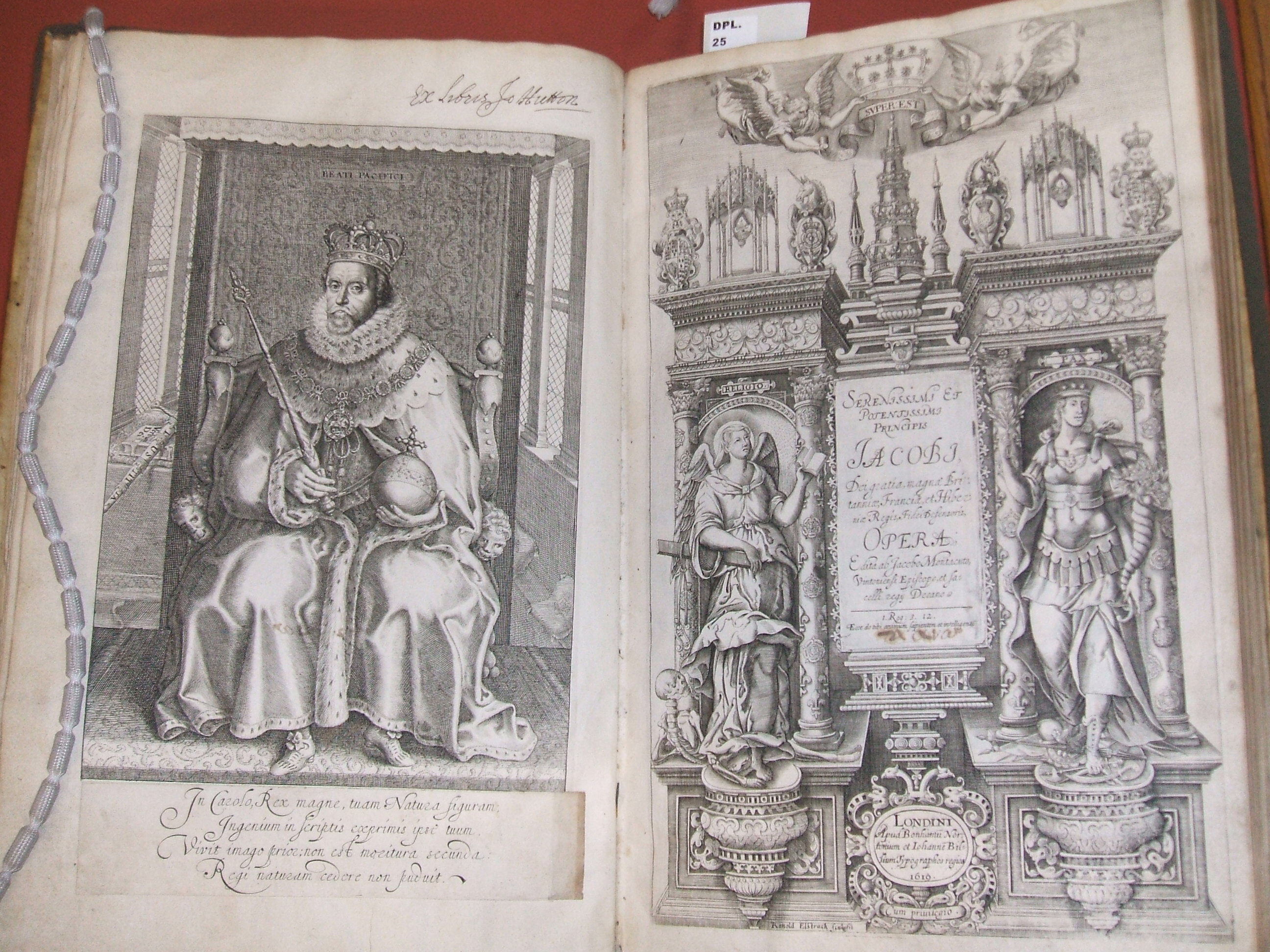
Serenissimi et potentissimi Principis Iacobi, Dei gratia, Magnae Britanniae, Franciae, et Hiberniae Regis, fidei defensoris, opera …
New College Library DPL.25
We’re pleased to announce that the Dumfries Presbytery Library Cataloguing Project is now complete. This project is one of the Funk Cataloguing Projects at New College Library.
This is a collection of just over 1800 sixteenth and seventeenth century books that was first documented in 1710, with the substantial donation of books from Dr John Hutton. It was used as a lending library, for the ministers of Dumfries, for which records survive in a ledger in Dumfries’s Ewart Library. Titles are marked : “Ex libris bibliothecae presbyterii Dumfriesiensis”
In 1884, the decision was made to transfer the collection to the General Assembly Library in Edinburgh, which was then transferred to New College Library in 1958. In 1965 John Howard took over as New College Librarian and he took a particular interest in the Dumfries Presbytery Library, reassembling it into its original pressmark order as a Special Collection.
In the process of cataloguing, we have discovered both unexpected and familiar treasures. Dumfries Presbytery Library books have featured in displays for the inaugural lecture of Professor Susan Hardman Moore, Professor of Early Modern Religion, and for the visit of the University Chancellor, HRH Princess Anne.

The booke of the common prayer and administracion of the Sacramentes : and other rites and ceremonies of the Churche, after the vse of the Churche of England. 1549. New College Library DPL 70

The Practice of Piety / Lewis Bayly, 1672. New College Library DPL 912
Volunteer of the Month – January 2014
Beth Dumas, CRC Taster Day Volunteer
Since October, I have been volunteering with the CRC, doing one or two day sessions with each department and discovering how every job contributes to the task of running the University of Edinburgh’s Special Collections. Just by volunteering one day a week, I was able to jump right into assisting with book collections, responding to queries for information or digital images, and the beginnings of rare books and archive cataloguing. Among other highlights, I discovered a fascinating drawing in a late 19th century casebook from the Lothian Health Services Archive, encountered more books in Icelandic than I’d ever imagined would be in Edinburgh, and spent a rather poignant day sorting materials associated with alumni who fought in WWI.

As a student in the MSc Material Cultures and History of the Book programme, the experience has proved invaluable in my understanding of how the modern library handles rare books, manuscripts, and archives, and the varied professions associated with an institution such as the CRC. This practical information has dove-tailed nicely with my academic interest in book history, and rounded out my studies in a way that simply completing my course-work never would. When I started volunteering, I knew I wanted to work in a library but wasn’t sure where I would be the best fit, but by learning about every department, I was able to determine that my strongest interest is in rare books, which led directly into my new position as one of two cataloguing interns in the rare books and manuscripts division of the CRC, which I am eagerly looking forward to as the next step on my career path. I would strongly suggest that anyone with an interest in literature, art, history, or, obviously, book history, take the time to volunteer at the CRC, because it’s a rewarding way to see how your academic interests can be applied to managing and preserving the wealth of material culture available at the University.
New Data Curation Profile: Interdisciplinary Social Sciences in Health
Rowena Stewart, Academic Support Librarian, Information Services, has contributed a new data curation profile to the DIY RDM Training Kit for Librarians on the MANTRA website. Rowena was one of eight librarians at the University of Edinburgh to take part in local data management training.
Rowena has profiled data-related work by Nick Jenkins, Chancellor’s Fellow, Interdisciplinary Social Sciences in Health, School of Health in Social Science. In the interview Nick discusses ethical issues involved in sharing qualitative data, among other things.
New resources for Social and Political Sciences
A new webpage has been created to promote a range of new and featured resources acquired by the University Library – New Acquisitions December 2013.
You can scroll down the webpage to find out about resources specifically for SPS:
- SAGE encyclopaedia and handbook collections
- American Periodicals
- New handbooks for 2013/14, published by Child Poverty Action Group (28 titles)
However, many of the resources featured on the page are useful across academic disciplines and illustrate the range, depth and diversity of new resources available for research and teaching use in all the main subject areas covered by the three Colleges.
So, if you are interested in Hamish Henderson, documents on British policy overseas, the entertainment industry, environmental ethics, point of care resources, British Standards, jazz music, or spiritualism, sensation and magic in Victorian culture (and much more) then there is something for you!
Have a look at New Acquisitions December 2013
New Academic Support Librarians for School of Social and Political Sciences
 On the 20th of January 2014 Caroline Stirling and Christine Love-Rodgers took over the role of Academic Support Librarian for the School of Social and Political Sciences, formerly held by Shenxiao Tong.
Caroline Stirling has worked in User Services in the Main Library for several years, most recently as a Helpdesk Supervisor at the Main Library. Caroline will be leading on information skills teaching in the School. Christine Love-Rodgers has worked as an Academic Support Librarian in various Schools in HSS over the past decade, including the School of Divinity who she continues to support. She will be leading on collection development and budgetary management.
Caroline and Christine will be working on a job-share basis, with Caroline available at the Main Library on Mondays, Tuesdays and Wednesday mornings. Christine will continue to be based at New College Library on Mondays, Tuesdays and Wednesdays, and available at the Main Library on Thursdays, working flexibly to meet teaching and meeting commitments Monday to Thursday in both Schools.
Caroline and Christine have a single e-mail contact : sps.librarian@ed.ac.uk and you can follow us on Twitter @SPSLibrarian.
Collections
 Love, Loss, and Literature: Cataloguing the Papers of Irene Jessie Young
My name is Nancy Britten, and I’m in my fourth year of studying History at...
Hill and Adamson Collection: an insight into Edinburgh’s past
My name is Phoebe Kirkland, I am an MSc East Asian Studies student, and for...
Love, Loss, and Literature: Cataloguing the Papers of Irene Jessie Young
My name is Nancy Britten, and I’m in my fourth year of studying History at...
Hill and Adamson Collection: an insight into Edinburgh’s past
My name is Phoebe Kirkland, I am an MSc East Asian Studies student, and for...
Projects
Cataloguing the private papers of Archibald Hunter Campbell: A Journey Through Correspondence
My name is Pauline Vincent, I am a student in my last year of a...
Archival Provenance Research Project: Lishan’s Experience
Presentation My name is Lishan Zou, I am a fourth year History and Politics student....