Home University of Edinburgh Library Essentials
April 5, 2026
Searching Searcher – discovering the Library’s resources
 Do you want to be able to find books, articles and other material using one search? Do you want to find material the University of Edinburgh Library owns in its collections or subscribes to online? Are you looking to use a variety of different information sources?
Searcher may be exactly what you are looking for.
Searcher is the Library’s resource discovery tool and allows you to search the Library’s Catalogue, e-journals and licensed collections i.e. what the Library owns and subscribes to, all in one search. It also lets you search beyond what the Library has in its collections and discover other resources and material that may be relevant to your research.
![[SCM]actwin,0,0,0,0;http:// MyEd - Google Chrome chrome 12/03/2014 , 09:28:28](https://libraryblogs.is.ed.ac.uk/spslibrarian/files/2014/03/SearcherboxMyEd.jpg)
There are search boxes for Searcher on the Library homepage and in the Library tab on MyEd but you can also access Searcher at http://searcher.is.ed.ac.uk/
As of 1st April 2014, when you first do your search, Searcher will limit your results to All Library Resources, which includes print books, ebooks, ejournals and database content. You can narrow this to searching just the Library Catalogue (only results which appear in the Library Catalogue will display, this includes books, ebooks and ejournal titles but NOT ejournal content) or expand this to search out with the Library’s collections.
There are Basic and Advanced search options, various limiters are available to refine your search results, you can create your own account to save searches and results, and there are options for downloading/saving references.
Where full-text is available to you online then there will be a link to go straight through to this, the link may be slightly different depending on the source of the search result. Look out for the following links Click here for full text, PDF Full Text, HTML Full Text or findit@edinburgh.
More information about using Searcher can be found at learn more about Searcher. See also Searcher: BIG change.
If you find a book in the Library that is already out on loan (Not Available) then you can click on the Retrieve Catalogue Item link to place a request on the book – Requesting an item which is on loan.
If you find material that is not available within the Library’s collections then you may want to consider requesting the material via the Inter-Library Loans service, or visiting another library to access the material or in the case of a book you may wish to recommend this is purchased for the Library – Book recommendations.
If you want to do a more focused search in your subject area or are looking looking for material most relevant to your topic then you should use some of the online databases the Library subscribes to. Find these by subject area or through the Subject Guides.
Caroline Stirling – Academic Support Librarian for Social and Political Science.
New faces at the Data Library
We are pleased to introduce two new staff members who have joined the Data Library team.
Laine Ruus has taken up a six-month post as Assistant Data Librarian, helping out during Stuart Macdonald’s productive secondment at CISER, Cornell University. Laine has worked in data management and services since 1974, at the University of British Columbia, Svensk Nationell Datatjänst, and the University of Toronto. Laine was Secretary of IASSIST for eighteen years. She received the IASSIST Achievement award upon her retirement from the University of Toronto in 2010 and the ICPSR Flanigan Award in 2011.
She is perhaps best known for “ABSM: a selected bibliography concerning the ‘Abominable Snowman’, the Yeti, the Sasquatch, and related hominidae, pp. 316-334 in Manlike monsters on trial: early records and modern evidence, edited by Marjorie M. Halpin and Michael M. Ames. Vancouver: University of British Columbia Press, 1980.”
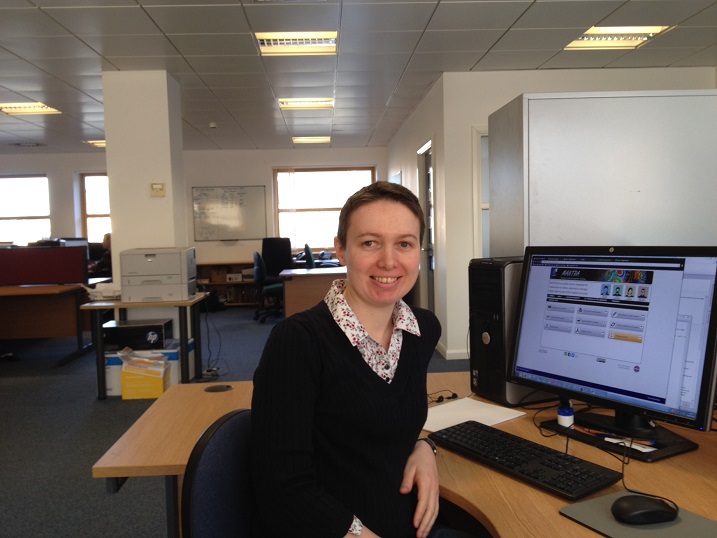
Pauline Ward, Data Library Assistant, will be contributing to the Data Library and Edinburgh DataShare services for University of Edinburgh students and staff, and helping to deliver new research data management services and training as part of the wider RDM programme. Pauline has a bioinformatics background, and has worked in a variety of roles from curation of the EMBL database at the European Bioinformatics Institute in Hinxton to database development (with Oracle, MySQL, Perl and Java) and sequence analysis at the Wellcome Trust Centre for Molecular Parasitology in Glasgow. She also worked more recently as a Policy Assistant at Universities Scotland.
Pauline said: “It’s great to be back in academia. I am really chuffed to be working to help researchers share their data and make the best use of others’ data. I’m really enjoying it.”
You can follow Pauline on twitter at @PaulineDataWard or check out her previous publications.
by Robin Rice and Pauline Ward
Data Library
The University benefits from Christmas
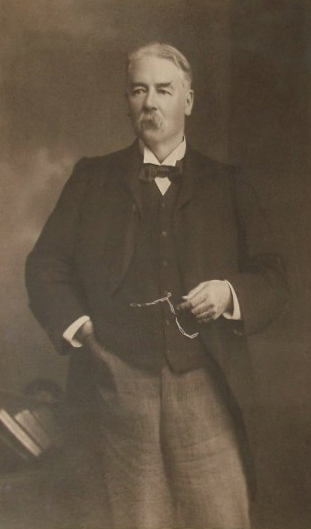
Robert Irvine (1839-1902) FRSE. Endowed the Chair of Bacteriology.
A recent enquiry about a benefactor has thrown up an interesting set of connections within and beyond the University.
The son of Robert Irvine, manager of The Scotsman newspaper, Robert Irvine was born in Edinburgh in 1839. By 1871 he was married to Margaret Sclater and living in a large house in Baltic Street, Leith, the manager of a chemical works. By 1891 he was the owner of Caroline Park at Granton. This included, the marine station, laboratories and warehouse as well as his own home. He was now a Chemical Manufacturer. He was a friend of oceanographer, Sir John Murray (1841-1915), assistant on the Challenger Expedition and founder of the Marine Station at Granton, either on or adjacent to Irvine’s property (accounts differ).
Murray was also involved in establishing the Christmas Island Phosphate Company. One of the investors was Irvine and it was part of the fortune realised by this lucrative venture that was bequeathed to the University of Edinburgh. This established the Chair in Bacteriology and the first Professor was James Ritchie (1864-1923), MA, BSc, MD, FRCPE.
He was elected a Fellow of the Royal Society of Edinburgh in 1886, his proposers including Sir John Murray, and David Mather Masson, Professor of Rhetoric and Belles Lettres (English Literature). The winner of the Neill Prize 1892-5, he also served as Councillor 1899-1902.
Irvine died in 1902 at his home at Granton, predeceased by his wife. They had no children.
Irvine appears in our collections not only as a benefactor to the University but also in the records of the Granton Marine Station, which suggest his was role in it was quite hands-on. The station closed shortly after Irvine’s death by which time most of the work had already moved to the west coast (for further information, see http://www.sams.ac.uk/about-us/our-history).
Grant Buttars, Deputy University Archivist
Waverley 200
Waverley 200: An Exhibition Marking the Bicentenary of Sir Walter Scott’s Seminal Novel
CRC Display Wall, 6th Floor, Main Library, George Square, 2 April-4 July
Tis 200 years since …
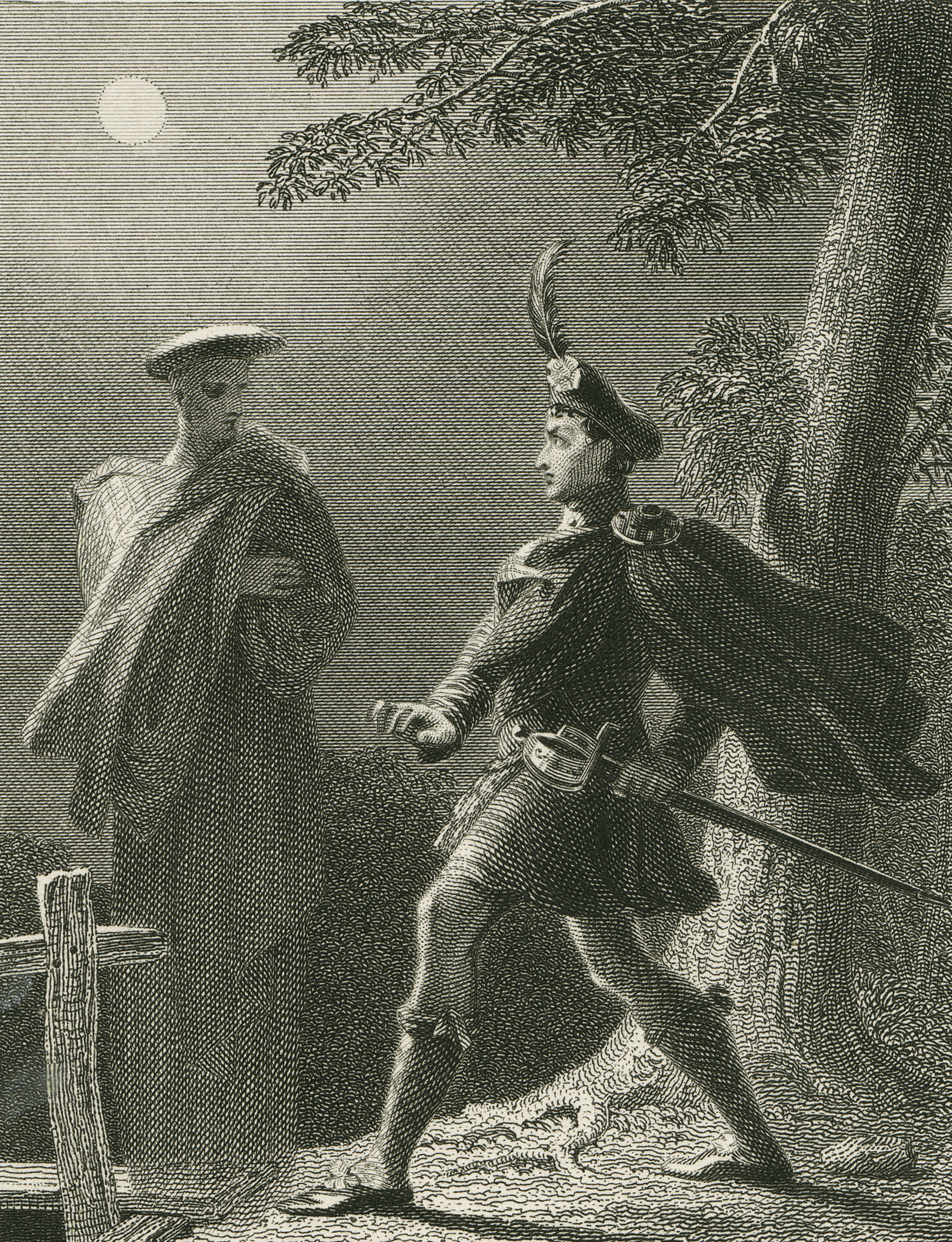
The new exhibition in the CRC Display Wall marks the bicentenary of Waverley (1814), Sir Walter Scott’s ground-breaking tale of the 1745 Jacobite uprising.
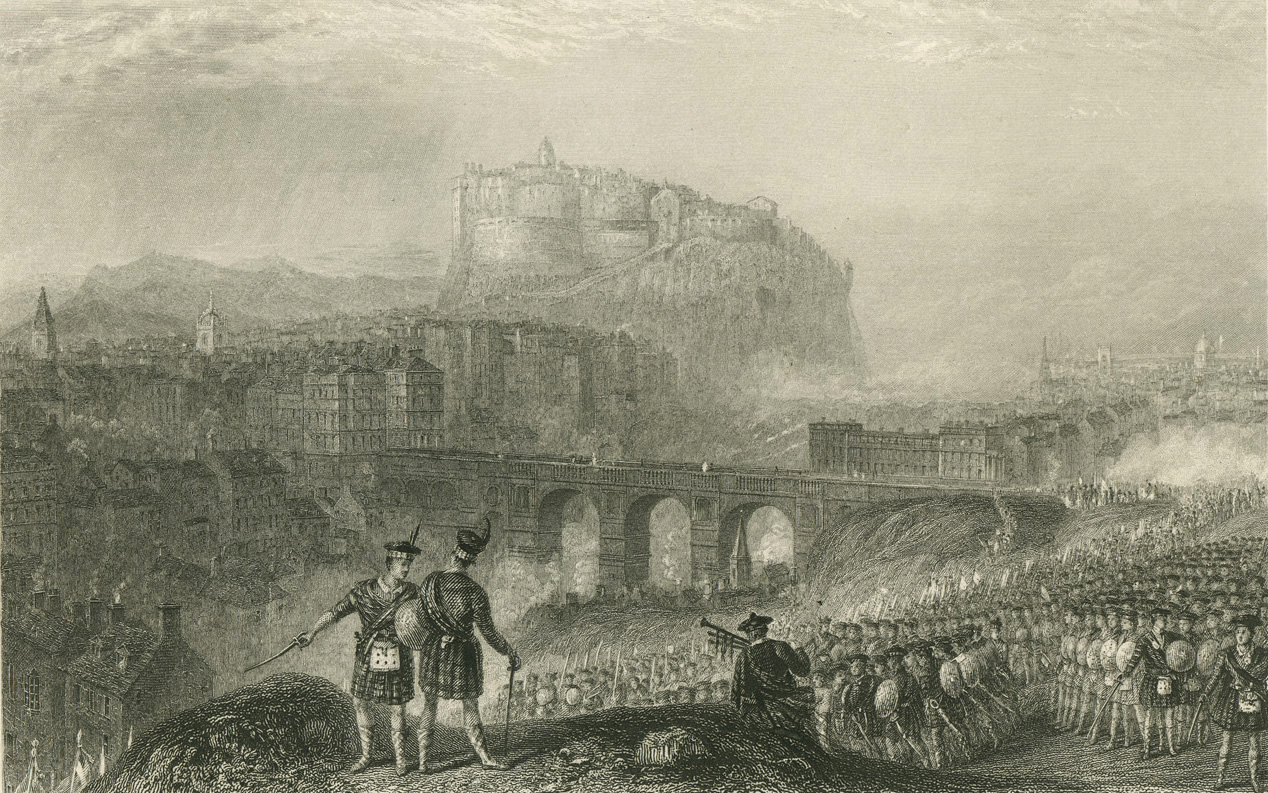
Scott’s anonymously published debut novel introduced a dynamic new vision of history and landscape which galvanised writers, musicians, and artists throughout the world and drew countless visitors to Scotland. Novelists like Tolstoy, Balzac, and Dickens, composers like Donizetti, Rossini, and Bizet, painters like Delacroix, Millais, and Turner (see print above) all found inspiration in his work. More operas and paintings are based on Scott than any writer except Shakespeare. No other novelist has been so widely adapted for stage, screen, and television. Such was Scott’s enduring contribution to Scotland’s tourist industry, that both Edinburgh’s main railway station and the line heading northwards from England were named after Waverley.
The works on display are drawn from the Corson Collection of Walter Scott materials, a collection of nearly 7,000 books and over 10,000 artworks, which Edinburgh University acquired from James C. Corson, former Deputy Librarian and lifelong Scottophile, in 1978.
They include presentation copies of the first edition of Waverley, French and Italian translations, a chapbook abridgement, and a popular theatrical adaptation. Other items attempt to unmask the stubbornly anonymous ‘author of Waverley’ or cater to public curiosity as to the real events, people, and scenes behind Scott’s fiction. An 1820s tract accuses Scott of corrupting the innocent, but by the end of the century school editions and abridgements show how he came to be seen as the ideal writer for the young. There is a wide selection of engraved illustrations, along with original sketches by Scott’s friend James Skene of Rubislaw. The exhibition concludes with Edinburgh University Press’s landmark ‘Edinburgh Edition of the Waverley Novels’ which has won a whole new audience for Scott.

This exhibition is open from 02 April 2014 to 04 July 2014, Monday to Friday, 09:00-17:00.
For more information on the Corson Collection, see the Walter Scott Digital Archive.
Prints above:
- The March of the Highlanders, engraved by Thomas Higham after J. M. W. Turner (1836)
- Mac-Ivor Warned of his Fate by the Grey Spirit, engraved by James Mitchell after Charles Robert Leslie (1832)
- Flora in the Glen of Glennaquoich, engraved by Charles Heath after Charles Robert Leslie (1832)
Paul Barnaby, Project Officer, Walter Scott Digital Archive, Centre for Research Collections
Searcher: BIG change
The Library is working on a review of Searcher, our branded EBSCO Discovery Service (EDS). We are making some changes which we hope improves your experience of using Searcher.
Default search
As of 1st April, Searcher defaults to search All Library Resources (print and e-content).
This means that your initial search will be limited to searching printed books, e-books, journals articles, databases content and other subscription and local collections- in short, ‘All Library Resources’.
The results screen
On the result screen, you will see that the limiter, ‘All Library Resources (print and e-content)’ is checked by default. Catalogue items (books and e-books) are weighted to appear at the top of the results lists.
You may also notice that you have fewer results than you’re used to. However, you should also notice that it’s easier to find and access Library Resources via Searcher – no more clicking on results for content to which we don’t subscribe and which you can’t access!
Help
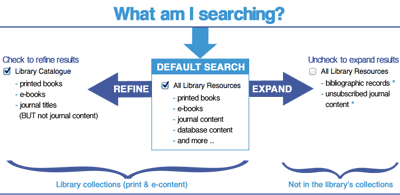
We’ve also added the image below to the basic search screen to help explain what you’re searching and how to manage your results.
Refine your search
To refine a search and limit it to items in the Library Catalogue, CHECK the ‘Library Catalogue’ limiter. This will more or less mirror the current OPAC search and limit your search to printed books, e-books and journal titles (BUT NOT journal content).
Expand your search
To expand a search, UNCHECK, ‘All Library Resources’ the amount of results will increase significantly to include content for which we do NOT provide direct access. This content may include bibliographic records and unsubscribed journal content.
Use the Inter Library Loans service, Book recommendations or RAB (Request A Book) to access this content.
Feedback
Please feedback any comments to Library.Learning@ed.ac.uk
Angela Laurins, Library Learning Services
New Books for SPS in the Main Library – April
 This month we’re featuring a selection of new titles purchased to support the area of Science, Technology and Innovation Studies in the School of Social and Political Science.
Science in the twentieth century and beyond by Jon Agar is available on the shelves at Q125 Aga. in the Hub and on the 3rd floor.
 Charting the history of molecular biology, The molecular vision of life : Caltech, the Rockefeller Foundation, and the rise of the new biology by Lily Kay can be found at QH506 Kay.
 Sustainable food systems : building a new paradigm edited by Terry Marsden and Adrian Morley is available online as an ebook via the library catalogue.
Don’t forget that there’s a regularly updated display of new books in the Main Library on the first floor, adjacent to the current journals display.
Christine Love-Rodgers, Academic Support Librarian – School of Social and Political Science
‘Towards a better understanding of human relations’
This week’s letter from Thomson’s collection comes courtesy of psychologist and psychoanalyst, John Carl Flügel (1884–1955):


The letter was one of many sent from eminent psychologists, mathematicians, scientists, and former students to Lady Thomson following Thomson’s death in 1955. Flügel’s rather amusing anecdote, where he recounts a conference in Sweden Thomson chaired and describes how Thomson threatened to ‘chop off the heads’ of anyone who spoke over their allotted time, is true to character! This was, in fact, a pet hate of Thomson’s, well known to his students and colleagues.
Lady Thomson’s annotations on the reverse of the letter are also important. They refer to a documented account of the seminar, though sadly the cutting is long gone, and endorse Flügel’s account, stressing it was the ‘correct description of Godfrey’s manner’. Her annotations can be found throughout the collection, and were most likely for her projected biography of Thomson (which she never undertook due to ill health) or to aid James Fitzjames Duff in his introduction to Thomson’s posthumously published autobiography, Education of an Englishman.

- Flugel, c1930

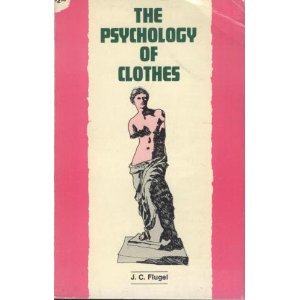
Like Thomson, Flügel was a psychologist. He was born three years after Thomson, and died a few short months after sending this letter. However, the course of his career and study was very different to Thomson’s. While Flügel was an experimental psychologist, first and foremost he was a practising psychoanalyst. He is credited as one of the few psychoanalysts who successfully bridged both academic psychology and psychoanalysis. His publications included The Psychology of Clothes (1940); Man, Morals and Society: a Psychoanalytical Study (1945); and the neo-Malthusian Population, Psychology and Peace (1947).
Flügel spent most of his working life in the psychological laboratory of University College London, starting off as psychologist Charles Spearman’s assistant, then progressing to senior lecturer (1920) and assistant professor (1929). Following his retirement in 1944, he was appointed special lecturer. Throughout this time, he managed to balance lecturing on psychoanalysis alongside working with Spearman, thus utilising both an emotional and cognitive approach to understanding the human mind. As his obituarist, Roger W Russell, argues:
During the six years I knew him personally, he occasionally discussed the conflicts which these two roles had produced, for he believed that such conflicts could not be resolved by accepting one role and abandoning the other. He felt strongly that the two approaches were working towards similar, general goals, toward a better understanding of human relations, and he did all he could to encourage each to proceed as far and as rapidly as possible.
The American Journal of Psychology, vol. 69, no. 2
The letter hints at a close relationship between Thomson and Flügel – and indeed, they shared many correspondents and acquaintances including Spearman (with whom Thomson had a 30 year professional feud!) and Cyril Burt. Flugel rather eloquently comforts Lady Thomson:
We were so fond of you both, and we felt we had suddenly lost a friend whom we both loved and admired…at such moments, little poignant memories keep creeping in…all of them rousing tender and nostalgic feelings. Our hearts go out to you who have to bear the chief burden of his loss, but we are only too aware of the many who must be mourning with you today and perhaps the thought that your sorrow is so deeply and so widely shared may help in some measure to ease the sad and heavy burden.
The most touching aspect of the letter for me, however, was not Flügel’s kind words, but the letter’s tone. He refers also to the death of his friend, Mollie Rees, ‘another charming person who, alas, has left us’, and the reader is left with his general feeling of acceptance that both he and Thomson’s generation is coming to an end.
Personal archives from any period of change are significant. Thomson’s collection is a case in point, covering eugenics, intelligence testing, and social mobility. They help in our understanding of these ‘big’ themes through the professional and personal relationships represented. At the risk of sounding twee, they allow us to explore what it means to be human at any given time, and give us ‘a better understanding of human relations’. This is perhaps their greatest value.
Volunteer work at the Digital Imaging Unit
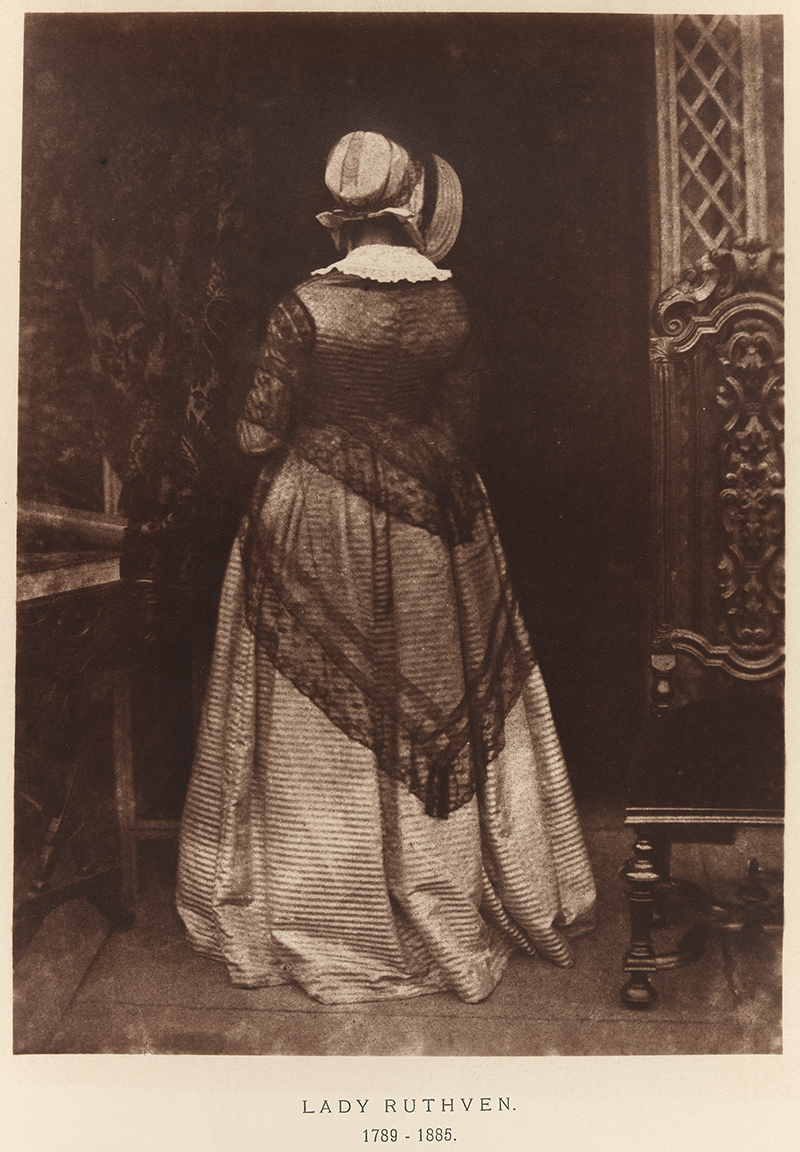
The Centre for Research Collections is a remarkable resource for students at Edinburgh University, not only for research purposes, but also for experience working with collections. I am an MSc student studying Material Cultures and the History of the Book. As part of the course we were encouraged to volunteer within the CRC. My interests lie in the field of the visual arts and the materiality of books, specifically the in the world of digital media. Serena Fredrick at the CRC was able to match me up with the Digital Imaging Unit and within the DIU I have been researching and enhancing the metadata for one of the university’s photographic image collections: the Hill and Adamson Collection. Hill and Adamson are world-renowned pioneers of early photographic techniques. Building on the work of Englishman Henry Fox-Talbot, they created some iconic images of mid-nineteenth century Edinburgh from their studio on Calton Hill.
Hill and Adamson’s original creative remit was to capture portraits of leading members of the Free Church of Scotland who had been involved in the disruption of the established Church of Scotland in 1843, with the intent of using these portraits as study aids for a massive painting commemorating the disruption.

Soon word of this new means of portraiture spread and Hill and Adamson started creating images of and for Edinburgh society. The collection is full of images of friends and family of Hill and Adamson, as well as being a veritable who’s who in Edinburgh.

Hill and Adamson realised that this artform could also be used as a form of documentary reporting and began taking photographs of the Newhaven fishermen and women, as evidence of a strong, united and self-sufficient community.

Unfortunately Hill and Adamson’s collaboration was short-lived due to Adamson’s continually failing health and eventual death at the age of only 27 in 1848. However, during their prolific partnership they were responsible for the creation of thousands of incredible images. I have loved being a part of the team bringing this collection onto a digital platform and increasing access to such an important and exciting set of images. Here are a few of my favourite images, all of which can be found at: http://images.is.ed.ac.uk/luna/servlet/UoEcar~4~4


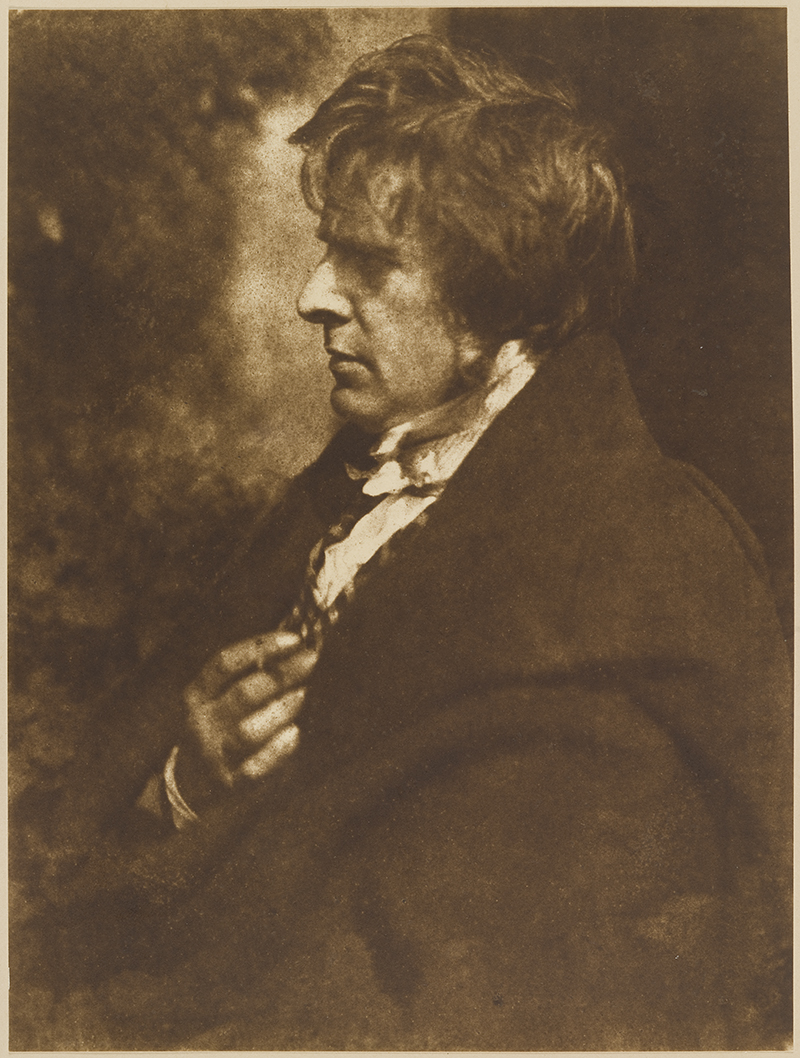
Caroline Ramsay, MSc Material Cultures and the History of the Book
Code4Lib
Last week I was lucky enough to attend the Code4Lib conference taking place in Raleigh, North Carolina. To quote from their website, Code4Lib “is a volunteer-driven collective of hackers, designers, architects, curators, catalogers, artists and instigators from around the world, who largely work for and with libraries, archives and museums on technology stuff”. The conference lasted four days in total and was highly enjoyable from start to finish. The most striking feature of the conference is the community nature of it – the program is largely selected online by public vote, and the sessions are hosted by community volunteers, as are any social events. The majority of attendees were north american as you would expect, but there were a small number of international attendees.
At a technical level the conference reflected modern themes, particularly User Experience. At least three quarters of the presentations featured Javascript (apologies for lapsing into techie speak).
On the social front there was a visit to the NCSU Hunt Library. I went expecting to be underwhelmed and was stunned by what I saw. This is a purpose built modern library incorporating all the modern features you could imagine and plenty more besides. The first thing you notice is that there are no bookshelves, all access being taken care of by a robot! But perhaps most impressive are the various multimedia rooms and open spaces. Worth noting that much of the software for these spaces was developed by students at NCSU. Here is a little taster but please do check out the website https://www.lib.ncsu.edu/huntlibrary.
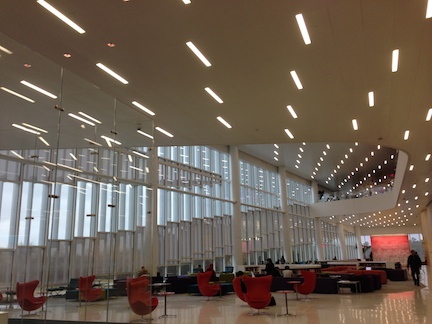
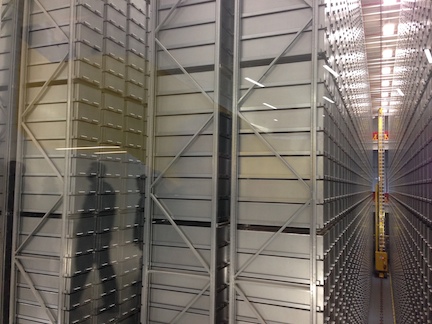

Robin Taylor – Library Digital Development
From Noah to New Labour – New books at New College Library in April
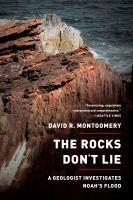
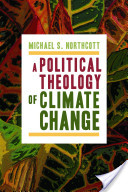 Floods are a theme linking two of our new books this month. Looking back to the Biblical Flood is The rocks don’t lie : a geologist investigates Noah’s flood, by David Montgomery, available at QE39.5.P3 Mon. Also new is A political theology of climate change by Professor Michael Northcott from the School of Divinity, at Folio BR65.A9 Oxf.
You can see an regularly updated list of new books for New College Library on the Library Catalogue – choose the New Books Search and limit your search to New College Library. Here’s a quick link to new books arriving in the last few weeks. A word of caution – some of the books listed here may still be in transit between the Main Library (where they are catalogued) and New College Library, so not on the shelf just yet.
Christine Love-Rodgers, Academic Support Librarian – School of Divinity
Collections
 Hill and Adamson Collection: an insight into Edinburgh’s past
My name is Phoebe Kirkland, I am an MSc East Asian Studies student, and for...
Cataloguing the private papers of Archibald Hunter Campbell: A Journey Through Correspondence
My name is Pauline Vincent, I am a student in my last year of a...
Hill and Adamson Collection: an insight into Edinburgh’s past
My name is Phoebe Kirkland, I am an MSc East Asian Studies student, and for...
Cataloguing the private papers of Archibald Hunter Campbell: A Journey Through Correspondence
My name is Pauline Vincent, I am a student in my last year of a...
Projects
Cataloguing the private papers of Archibald Hunter Campbell: A Journey Through Correspondence
My name is Pauline Vincent, I am a student in my last year of a...
Archival Provenance Research Project: Lishan’s Experience
Presentation My name is Lishan Zou, I am a fourth year History and Politics student....