Home University of Edinburgh Library Essentials
April 6, 2026
Top 5 women’s studies library resources
Emmeline Pankhurst, leader of the British suffragette movement and one of the most important feminist public figures of all time, was born today (15th July) in 1858. To celebrate her birthday and work we thought we would give you a taster of women’s studies resources here at University of Edinburgh Library.
1. Take a look at the database Women, War & Society (part of Archives Unbound). The First World War had a revolutionary and permanent impact on the personal, social and professional lives of all women. This database is a collection of primary source materials sourced from the Imperial War Museum, London that documents the essential contribution women made to the war in Europe. You can access this and other relevant databases at databases for women’s studies.

A Photo Opportunity
“A picture is worth a thousand words”. As this often quoted adage alludes to, photographs have the ability to capture a moment in time. Whether they are images of stern Victorian family portraits or informal snaps of loved ones; spontaneous scenes of celebration or harrowing depictions of war and violence; shots of nature in all its glory or nature at its most powerful and destructive – photographs have the capacity to produce a wide spectrum of emotions in the viewer.
It is for such reasons that photographs form an invaluable part of the collections held by the University and why it is important that appropriate steps should be taken to ensure that they are preserved for future generations. I was fortunate, therefore, to have the opportunity to attend a three day course at West Dean College in Sussex on the ‘Conservation of Photographs’, led by photographic conservator Susie Clark.
During the course, I was introduced to the numerous photographic techniques and processes, which are many and varied. These range from daguerreotypes, developed by Louis Daguerre and introduced in 1839 – a date often cited as the ‘birth’ of photography – to glass plate slides, and right through to modern ink jet printing. What was clear from the outset of the course was that each process comes with its own associated conservation needs and, as a result, there is no “one size fits all” approach that can be taken when deciding on appropriate treatment options.
Damage to photographs can range from gradual deterioration due to natural ageing or poor storage and housing, to actual loss and breakage (to which glass slides, by their nature, are particularly susceptible). It was beneficial, therefore, that part of the course was dedicated to interventive ‘practical’ treatment options that could be carried out, with particular reference to the more vulnerable glass plate slides. This included polishing replacement cover glass (a rather messy process), which is in important step to ensure that any glass that is to come into contact with the photographic emulsion layer is completely clean and free of dirt and residue. We also had the opportunity to undertake different methods of repairing cracked or broken glass slides using various adhesives.

Polishing a replacement cover glass

Repairing glass slides with a resin adhesive
However, when it comes to caring for photographic collections, preventive measures are a far more favourable approach. Adopting correct storage, housing and environmental conditions (as discussed in our previous conservation blog post) can slow down the rate of deterioration, and ultimately reduce the need for more interventive conservation treatment further down the line. These measures can be particularly important when dealing with the more volatile photographic materials such cellulose acetate film. Upon degrading, this film material can suffer from the aptly named ‘Vinegar Syndrome’ due to its propensity to release acetic acid resulting in a distinctively strong odour.
Photographic techniques, for example tintypes (produced by creating a positive image on a sheet of iron), were often inexpensive and easy to produce. They were therefore in popular use at recreational destinations such beaches, promenades and parks, and were often taken on the spur of the moment to mark the day or capture a cherished event. Such photographs were not necessarily intended for longevity, and yet many now form an important part of our shared cultural collections.
This may make you look at your own collection of holiday snaps in a different way!
Trial ending Thursday 17th July
There are a couple of days left to try out 37 e-books from Dō Sustainability.

DōShorts are short, practical ebooks that give you the latest thinking on a broad range of business sustainability issues. Written by experts with hands-on experience in the field, DōShorts consolidate the facts, providing clear guidelines for making sustainability within your organization a reality.
Feedback and further info
We are interested to know what you think of these e-books as your comments influence purchase decisions so please do fill out our feedback form.
Previous trials are listed on our trials webpage.
The World History of Rashid al-Din, 1314. A Masterpiece of Islamic Painting
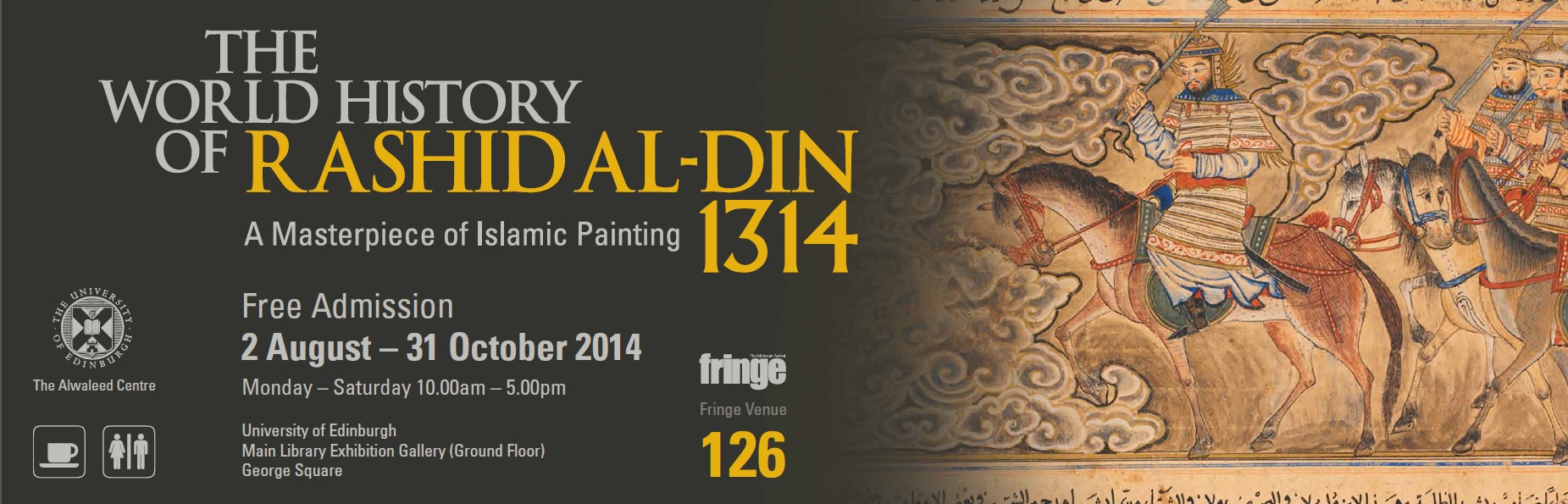
Iconic Persian Manuscript in New Exhibition at Main Library: ‘The World History of Rashid al-Din, 1314. A Masterpiece of Islamic Painting’
The Centre for Research Collections and the Alwaleed Bin Talal Centre for the Study of Islam in the Contemporary World are delighted to announce the opening date for the public exhibition The World History of Rashid al-Din, 1314. A Masterpiece of Islamic Painting at the Main Library, University of Edinburgh.
The exhibition, opening on 2 August, features folios from the Jami’ al-Tawarikh (or “World History”) of Rashid al-Din: one of the most important illustrated medieval manuscripts to have survived from either East or West.
Datable to 1314, it was produced in the city of Tabriz, a seat of power of the Ilkhanid rulers, descendants of the Mongol Chingiz Khan, who held sway over an empire encompassing Persia and large parts of present-day Azerbaijan and Turkey.
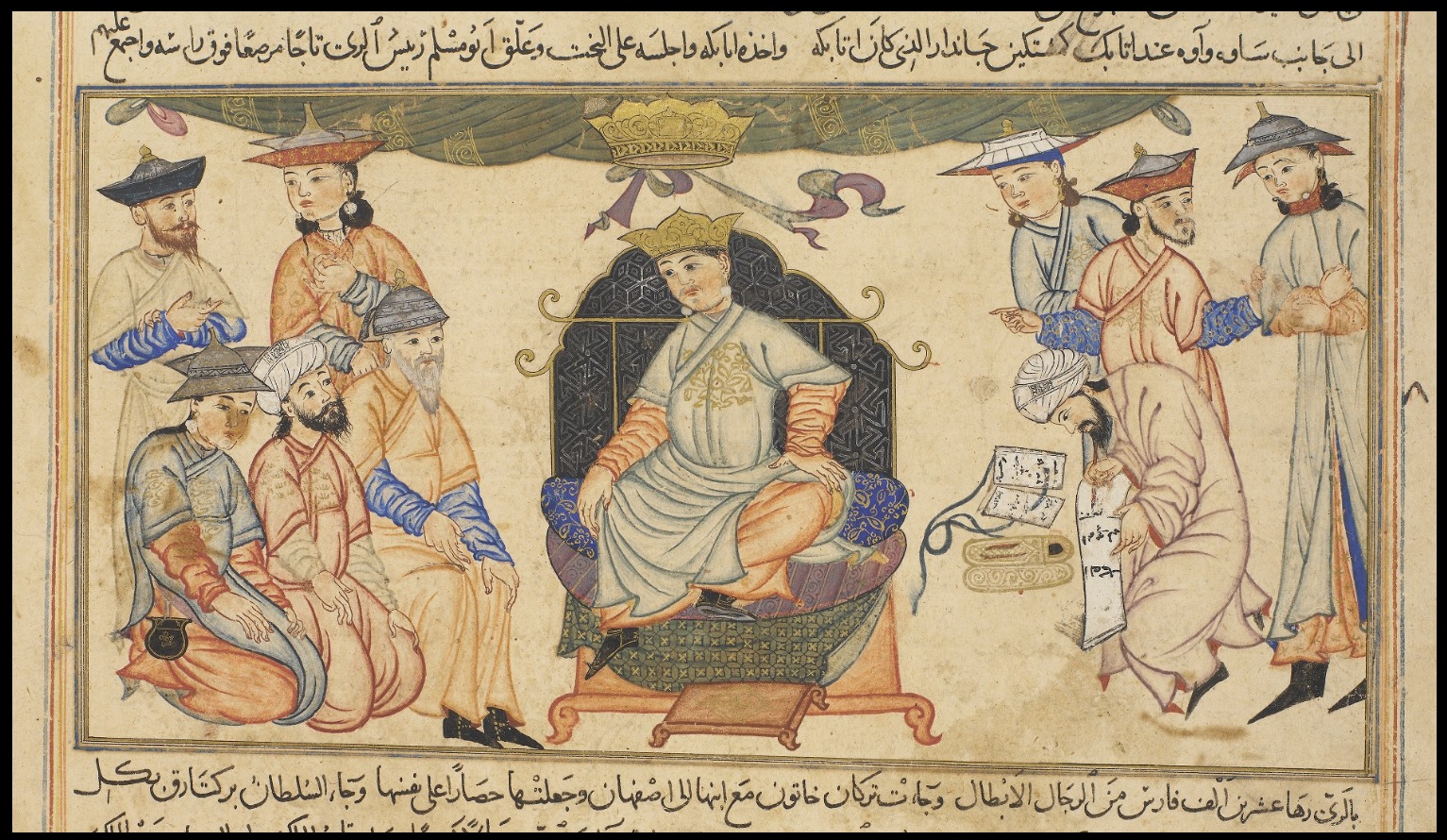
Detail of miniature showing Sultan Berk-Yaruq ibn Malik-Shah. Ruler of the Seljuk Empire from 1093-1105. Or.Ms 20 f.139 v
The author, Rashid al-Din, was a physician and court historian to the Ilkhanid court. Born about 1247 AD into a Jewish family, he converted to Islam and served as vizier (prime minister) to the sultan. He met an unhappy end in 1318 AD, being executed on a charge of poisoning his royal master. Before that, however, he wrote what would become one of the world’s most important historical and artistic documents. The Arabic copy of his Jami’ al-Tawarikh in the exhibition is a history of the world as it was then known, covering not only the history of the Mongols, but also that of the Chinese, Franks and Indians.
Situated in the highly international and multi-cultural city of Tabriz in modern-day Iran, the scriptorium of Rashid al-Din welcomed artists from all parts of the Mongol empire and beyond. Elements of Byzantine, Chinese and other Islamic traditions are all evident in the illustrations. The Jami’ al-Tawarikh manuscript demonstrates a profound fusion of techniques, and marks the birth of a new and distinguished style within Persian painting.
The Edinburgh portion of the manuscript made a long journey, from early fourteenth-century Iran to Victorian Scotland. The original manuscript left Iran and eventually passed to the court of the Mughals in India. It was divided into two parts around the mid-1700s, but both sections remained in India until the nineteenth century, when they were acquired by the British. The Edinburgh portion was acquired by Colonel John Baillie(1772–1833) of the East India Company, and together with other Islamic manuscripts, it was passed to Edinburgh University Library in 1876. The other portion was bequeathed to the Royal Asiatic Society and is now in private ownership. The manuscript on display is one of the greatest treasures of Edinburgh University Library.
This exhibition offers a unique chance to view folios of the original manuscript, complemented by loans relating to the material culture of fourteenth-century Iran from the National Museum of Scotland.
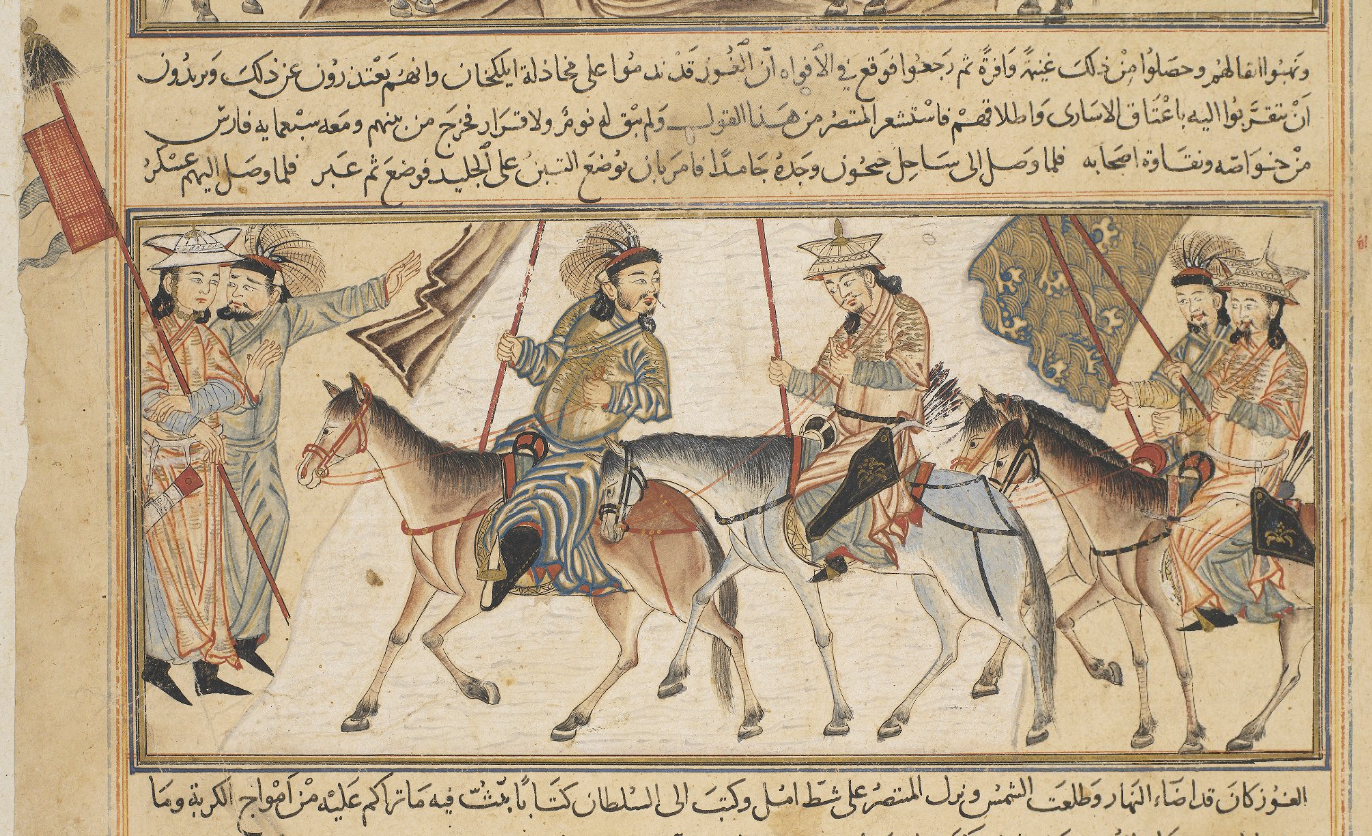
Detail of miniature showing the Samanid king Al-Muntasir crossing the frozen river Jayhun (Syr Darya) in central Asia. Or.Ms 20 f.122 r
The exhibition is free and open to the public from 2 August 2014, Monday to Saturday, 10am to 5pm.
Exhibition Opening: 2 August 2014 | Where: Exhibition Gallery, Main Library, George Square | Closing: 31 October 2014 | Curated by: Prince Alwaleed Centre and the Centre for Research Collections, University of Edinburgh
Blog posted by:
Emma Smith and Steven Skeldon, Centre for Research Collections.
With kind thanks to Andy Grout (Friends of Edinburgh University Library) for contributions, and the University of Edinburgh Digital Imaging Unit.
Very Short Introductions – Social Sciences
 The Library has recently subscribed to the online version of Oxford University Press’ Very Short Introduction series for the Social Sciences.
The Social Sciences collection includes titles within the following fields of study:
- Anthropology
- Human Geography
- Politics
- Sociology
- Warfare & Defence
And also includes titles on business, management, economics, education, research and information.
You can access Very Short Introductions via the Databases A-Z list on the Library website. Once into the site you can click on Browse by Subject and click on the relevant subject under the Social Sciences heading. Or you can use the search facility on the site, though full text access is only available to titles within the Social Sciences collections.
Launched in 1995 by OUP, Very Short Introductions offer concise introductions to a diverse range of subject areas. Since the series was launched it has continued to offer new books each year for students and scholars, and the avidly curious, offering a bridge between reference content and higher academic work. All titles provide intelligent and serious introductions to a huge range of subjects, written by experts in the field who combine facts, analysis, new ideas, and enthusiasm to make challenging topics highly readable.
The Library also holds the print copies of many of the Very Short Introduction titles; you can find these in the Library Catalogue.
Caroline Stirling – Academic Library Support for Social and Political Science.
Trials ending Tuesday 15th July
Last chance to try out the following databases! These all expire tomorrow and are available on campus or via the VPN at the links below.
From Adam Matthew we have two databases on trial.
Foreign Office Files China 1957 – 1966 and Foreign Office Files China 1967 – 1980
These 2 databases make available British Foreign Office files dealing with China, Hong Kong and  Taiwan between 1957 and 1980. We already subscribe to content between 1949 and 1956.
From North Waterloo Academic Press we have 1 database on trial.
Waterloo Directory of English Newspapers and Periodicals 1800-1900 Series 3
 This is a subject-inclusive, language-inclusive bibliography of
73,000 publications, 68,000 personal names, 6,300 issuing bodies, 2,400 publishing towns, 23,000 title pages, 2,000 subjects.
Feedback and further info
We are interested to know what you think of these databases as your comments influence purchase decisions so please do fill out our feedback form.
A list of all trials currently available to University of Edinburgh staff and students can be found on our trials webpage.
Wiley Online Library access restored
 Access has been restored to our e-books and e-journals accessed via the Wiley Online Library platform.
Centre for the Study of World Christianity Update
With the print collections of the Centre for the Study of World Christianity (CSWC) Library, set up by Professor Andrew F. Walls, now having been in our care at the Annexe for a year, the time to say goodbye again is approaching.
Over his long career spanning over 50 years Professor Walls has held posts (among others) at the UK universities of Aberdeen, Liverpool Hope and, of course, Edinburgh. The scope and nature of his research led the magazine Christianity Today to describe him in 2007 as ‘a historian ahead of his time’ and ‘the most important person you don’t know’.

Professor Andrew F. Walls set up the Centre for the Study of World Christianity at Edinburgh
As the topic of the influence exercised by different religious groups within British society is at the forefront of the public interest the moment, Professor Walls’s outlook on the way Christianity has moved and developed over the years is certainly pertinent. And his unique outlook is reflected in this collection that he gradually built up over the years of his career as a missionary and academic. Apart from Professor Walls’s main interest in the development on Christianity and Christian mission in Africa (which he saw as a reflection of the future of Christianity as a whole), the collection contains material that illuminates the way that the Western world has viewed eastern religions and vice versa. The CSWC collection is a unique resource on the topic. However, previous access to this collection was irregular.
When the collection was added to the fold at the Annexe, it was partially to make it accessible on a wider basis (via intra-library loans available to all users), but also to allow work to be performed on this diverse collection. Indeed, over the past year requests for CSWC items became a regular part of our workflow at the Annexe. As the collection has gradually grown over the years since its donation to the New College library by Professor Walls, now was an opportunity to streamline it and make easier to both access and manage.
To this end, here at the Annexe we have used our time with the World Christianity collection, in collaboration with colleagues throughout Information Services, in order to carefully work through the 11,000 items contained in it. A number of projects were set up to ensure that the material is consolidated, itemised, and re-classified. Each item (books and pamphlets) will be individually processed and the collection streamlined, ready for its re-integration to the Library of Congress stock at New College library later this summer. As an off-shoot of this process, a small part of the collection will be divided and sent to complement the Andrew Walls Collection currently held at Liverpool Hope University, forging a strong collaborative link.
Iraklis Pantopoulos, Library Annexe Assistant
[Article] Christianity Today: Historian Ahead of His Time
Wiley Online Library website down
All e-books and e-journals accessed via the Wiley Online Library platform are currently unavailable due to an unforeseen technical issue.
Wiley hope to restore access as soon as possible but have given no timescale. We will update you once we have more information.
This issue is now resolved.
Employ.Ed Hidden Collections Intern – Weeks 5 to 6
Three quarters of the internship now behind me, I have decided to focus on actually finishing off projects that I have been working on – and that means the New Zealand House periodicals collection first and foremost. That is now almost entirely listed, and should hopefully start appearing on the catalogue in the foreseeable future (and a few things are already available under an NZSC Per. Shelfmark). The list currently contains 125 series, some of which are unique in the UK, ranging from art magazines, through government journals and statistics, to environmental agencies’ reports.
On a more serendipitous note, I stumbled across a collection of works of the hitherto unknown to me Ukrainian poetess Lesya Ukrainka, and found really good poem about… Robert Bruce. The poem was written in 1893, when Ukraine was within the borders of the Russian Empire, and played its part in the national resurrection and independence movements of the Ukrainian people. For all the differences between the circumstances they are in, with one country considering independence and the other at risk of losing it yet again, the history of both Ukraine and Scotland is currently being written, and in that context this poem sounds very relevant and appropriate.*
*We only have the book in Ukrainian; I am afraid that the full text of Robert Bruce, King of Scotland is not available in English online or at Edinburgh University Library, but here is a link to the UK holdings of her collected works in English translation:
COPAC holdings for Lesya Ukrainka
Nik Slavov, Hidden Collections intern
Request Lesya Ukrainka books and other authors through Inter-Library Loans
Not available at University of Edinburgh? Recommend a book
Find New Zealand House periodicals on the online catalogue
Collections
 Hill and Adamson Collection: an insight into Edinburgh’s past
My name is Phoebe Kirkland, I am an MSc East Asian Studies student, and for...
Cataloguing the private papers of Archibald Hunter Campbell: A Journey Through Correspondence
My name is Pauline Vincent, I am a student in my last year of a...
Hill and Adamson Collection: an insight into Edinburgh’s past
My name is Phoebe Kirkland, I am an MSc East Asian Studies student, and for...
Cataloguing the private papers of Archibald Hunter Campbell: A Journey Through Correspondence
My name is Pauline Vincent, I am a student in my last year of a...
Projects
Cataloguing the private papers of Archibald Hunter Campbell: A Journey Through Correspondence
My name is Pauline Vincent, I am a student in my last year of a...
Archival Provenance Research Project: Lishan’s Experience
Presentation My name is Lishan Zou, I am a fourth year History and Politics student....