Welcome to arriving students at New College Library!

HelpdeskA big welcome to all our new students arriving today. New College Library holds over 250,000 volumes, including rich and unique Special Collections, making it one of the leading theological libraries in Britain.  In addition to the books there are online collections – electronic journals, electronic books and databases which the University subscribes to support your studies and research. As the Academic Support Librarian, my role is to help students get the most out of using the Library. Freshers Week is a good opportunity to take a little time to get to know the Library – do this now and you’ll be paid back later on in your studies.

Here’s my top tips for arriving students to get to know New College Library:

 1. Come to the Library

  • Bring your University card to get into New College Library
  • From next week the Library is open 9am-6pm-10 Mon-Thurs, 9am-5pm Fridays, 12noon – 5pm on Saturdays. Remember that you can also use the Main Library which is open longer at weekends.

2. Take a tour

  • I’m running Library Tours on Wednesday 11th for postgraduate students and on 17, 22 and 24 September at 1.15pm for undergraduates – and anyone else who would like a tour.
  • You should have received a New College Library Guide leaflet in your welcome pack  – it’s also available online.
  • Or have a look at the Virtual Tour

3. Check out what’s online

And don’t be afraid to ask us for help !

Christine Love-Rodgers – Academic Support Librarian, Divinity

Posted in Library, New College Library | Tagged , , , | Comments Off on Welcome to arriving students at New College Library!

Welcome to the new Statistical Accounts of Scotland blog

Welcome to the first post on the new Statistical Accounts of Scotland Blog. My name is Helen Aiton, and I am the User Support Manager for EDINA, based at the University of Edinburgh. I’m also a member of the Statistical Accounts of Scotland Editorial Board, which means I help to steer the development of the Statistical Accounts of Scotland service. I’ve been a huge fan of the Accounts since I started doing that back in 2001.

In this blog I will give a brief outline of how the Old Statistical Accounts came about – future posts will draw out more of what is in these Accounts, The New Statistical Accounts and will feature guest posts from those who regularly use the Accounts including academics. Please get in touch with us if you would like to share your own guest post on your experiences, thoughts, or personal highlights from the Accounts.

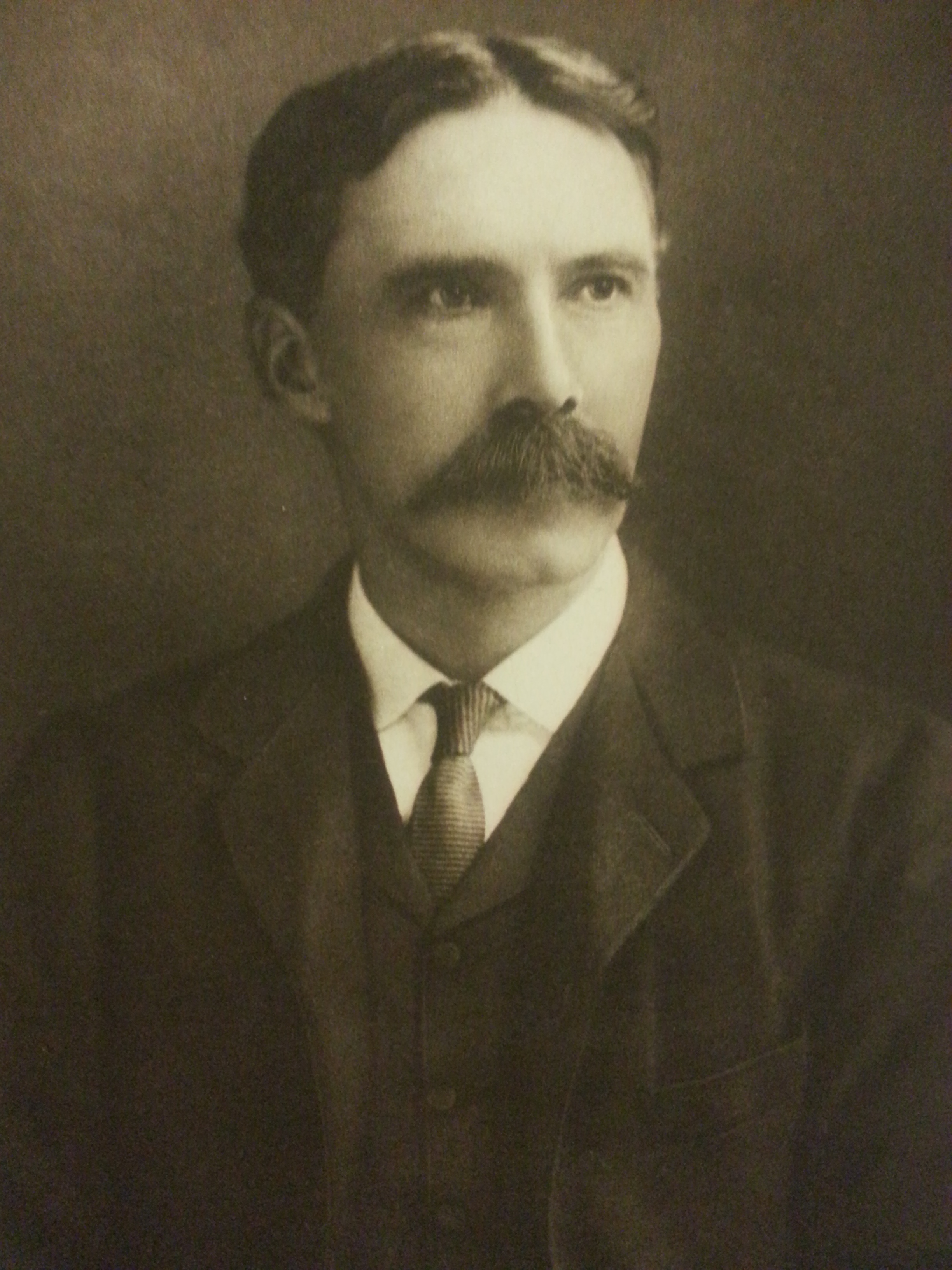
Painting of Sir John Sinclair

Portrait of Sir John Sinclair.

In the late 18th century – a decade before the first modern census of Great Britain – Sir John Sinclair of Ulbster, MP for Caithness, decided he’d undertake the modest challenge of recording the agricultural and social statistics for the whole of Scotland. And, although he’d been inspired by German statistics gathering, he definitely had his own idea of what “statistics” might mean:

the idea I annex to the term is an inquiry into the state of a country, for the purpose of ascertaining the quantum of happiness enjoyed by its inhabitants, and the means of its future improvement; but as I thought that a new word might attract more public attention, I resolved on adopting it, and I hope it is now completely naturalised and incorporated with our language.

In order to gather data on every part of Scotland for his comparative analysis of physical, economic and social life, Sir John wrote to the ministers in every one of the 938 parishes asking them to complete a survey for him. A pretty ambitious survey too… 160 questions… plus an additional 6 in the addendum and then 5 additional questions in his follow up letter about schools, alehouses, housing, employment and jails… A total of 171 questions!

Sir John Sinclair, Extract from the first letter to clergy, 25th May 1790:

… In many parts of the Continent, more particularly in Germany, Statistical Inquiries, as they are called, have been carried to a very great extent; but in no country, it is believed, can they be brought to such perfection as in Scotland, which boasts of an ecclesiastical establishment, whose members will yield to no description of men, for public zeal, as well as for private virtue, for intelligence, and for ability…

Not everyone replied promptly to Sir John’s first request… This is the fifteenth circular letter to the non-responding clergy date April 1797:

I AM very much disappointed, at not having hitherto received the Statistical Account of your parish. There are very few now deficient, and you cannot imagine the bad effect which the want of those must have, in the opinion of many who are perpetually inquiring, whether the Statistical Account of Scotland is, or is not, completed? It is unnecessary for me, I am persuaded, to urge you more upon the subject. You may easily judge of my impatience and anxiety about it, when I can think about any literary matter at so busy a time in Parliament as this.

I remain, with esteem, your faithful and obedient servant, JOHN SINCLAIR.

And finally by July 1797 the six remaining errant clergy receive a letter from Whitehall in red ink…

SIR JOHN SINCLAIR presents his compliments to

He sets out for Scotland next week, and will be much disappointed indeed, if he has not the pleasure of finding the Statistical Account of                      ready for him; as, on his arrival, he must bring the Work to an immediate conclusion. There are now only six deficient parishes; and from the Draconian colour of his ink, any Statistical delinquent may fee, what the rear rank has to look for. Sat sapienti

Sir John published individual volumes of the parish accounts as the returns came in over the years. Eventually in 1799 – some 9 years after his first requests went out – Sir John had collected twenty-one huge volumes of data about Scotland, its people, its agriculture, its “quantum of happiness”. About 13,000 pages!

Image of Volumes from the Statistical Accounts of Scotland

Volumes from the Statistical Accounts of Scotland.

The accounts contained so much more than “facts”. There were statistics like the price of sheep; numbers of births, deaths and marriages; records of flora and fauna; and measures of the number of fishermen, labouring servants, Jews and “negros” but it also included rich accounts of daily life of ordinary people in each parish, local history and folklore.

The returns Sir John collected depend on how the minister interpreted the questions. All of the survey responses are seen through the eyes of the minister and so there’s a lot of opinion and judgement there too… and the accounts were edited before publication as well…

The next post will consider Sir John’s questions and show how they shaped the general structure of each of the Parish reports. Here is a one of the more unusual questions

  • Question 151: Are the people of the country remarkable for strength, size, complexion, or any other personal or mental qualities

How would you answer that question? And how has your Parish changed since the Old Accounts? We would like to hear your thoughts on your “parish” in the comments below.

If you are looking up your own (or perhaps an ancestor’s) parish remember that anyone can access the Statistical Accounts Online service from anywhere in the world. You can browse images of the pages for free, or you can subscribe to access full transcripts and a wealth of useful additional features and related resources. To find out more you can watch me giving an introduction to the service in this video:
Posted in Uncategorized | Comments Off on Welcome to the new Statistical Accounts of Scotland blog

Pop-up Week 8th-12th September

Pop Up Weekly Timetable

Posted in Pop-up Library | Tagged | Comments Off on Pop-up Week 8th-12th September

De Gruyter E-Journals – Access Issue

logo

We have currently lost access to our De Gruyter e-journals.  This has been reported and we hope to have this resolved asap.

This issue is now resolved.

Posted in Access issues | Tagged , | Comments Off on De Gruyter E-Journals – Access Issue

New release of Research Data MANTRA (Management Training) online course

The Research Data MANTRA course is an open, online training course that provides instruction in good practice in research data management. There are nine interactive learning units on key topics such as data management planning, organising and formatting data, using shared data and licensing your own data, as well as four data handling tutorials with open datasets for use in R, SPSS, NVivo and ArcGIS.

This fourth release of MANTRA has been revised and systematically updated with new content, videos, reading lists, and interactive quizzes. Three of the data handling tutorials have been rewritten and tested for newer software versions too.

New content in the online learning modules with the September, 2014 release:

  • New video footage from previous interviewees and introducing Richard Rodger, Professor of Economic and Social History and Stephen Lawrie, Professor of Psychiatry & Neuro-Imaging
  • Big Data now in Research Data Explained
  • Data citation and ‘reproducible research’ added to Documentation and Metadata
  • Safe password practice and more on encryption in Storage and Security
  • Refined information about the DPA and IPR in Data Protection, Rights and Access
  • Linked Open Data and CC 4.0 and CC0 now covered in Sharing, Preservation & Licensing

MANTRA home pageThis release will also be more stable and more accessible due to back-end enhancements. The flow of the learning units and usability of quizzes have been improved based on testing and feedback. We have simplified our feedback form and added a four-star rating button to the home page. A YouTube playlist for each unit is available on the Data Library channel.

MANTRA was originally created with funding from Jisc and is maintained by EDINA and Data Library, a division of Information Services, University of Edinburgh. It is an integral part of the University’s Research Data Management Programme and is designed to be modular and self-paced for maximum convenience; it is a non-assessed training course targeted at postgraduate research students and early career researchers.

Data management skills enable researchers to better organise, document, store and share data, making research more reproducible and preserving it for future use. Researchers in 144 countries used MANTRA last year, which is available without registration from the website. Postgraduate training organisations in the UK, Canada, and Australia have used the Creative Commons licensed material in the Jorum repository to create their own training. The website also hosts a ‘training kit’ for librarians wishing to increase their skills in supporting Research Data Management.

Visit MANTRA and consider recommending it to your colleagues and research students this term! http://datalib.edina.ac.uk/mantra/

Usage Statistics

According to Google Analytics, the following organisation’s websites were the top ten referrers to the MANTRA website for the academic year 2013-2014 (discounting Data Library, EDINA and Information Services):

  • Institute for Academic Development, University of Edinburgh
  • LIS Links (India)
  • Digital Curation Centre
  • eScience Portal for New England Libraries at University of Massachusetts Medical Library
  • Oxford University
  • University of Nebraska-Lincoln (USA)
  • Carleton University (Canada)
  • Glasgow University
  • Food and Agriculture Organization of the United Nations
  • Jisc

Social media sites Facebook, Twitter and Slideshare provided a large number of referrals; several more came from other UK institutions, and HEIs in Australia, the rest of Europe, and North America—University Library pages especially. Forty percent of sessions came  from a referring website.

Visitors to MANTRA over the year came from 144 countries. Google searches accounted for 4,000 sessions, 25% of the total. Nearly ten thousand visits were from new users (based on IP addresses) over the year from 22nd August, 2013 – 23rd August, 2014. Here is a link to a Google Analytics summary spreadsheet extracted from our account.

We expect to have more detailed usage statistics over the forthcoming year due to moving the learning units out of the authoring software (Xerte Online Toolkits) onto the main MANTRA website.

Postscript, 15 Sept: See my Storify story, “Research Data MANTRA Buzz” to find out who’s been talking about MANTRA on twitter!

Robin Rice
Data Librarian


Posted in Uncategorized | Comments Off on New release of Research Data MANTRA (Management Training) online course

Congressional Record – New Database

ProQuest logoWe have purchased the Congressional Record database from ProQuest.

ProQuest Congressional is a comprehensive online collection of primary source congressional publications and legislative research materials covering all topics, including government, current events, politics, economics, business, science and technology, international relations, social issues, finance, insurance, and medicine. Finding aid for congressional hearings, committee prints, committee reports and documents from 1970-present, and the daily Congressional Record from 1985-present. Compiled legislative histories from 1969-present.

The database has been added to our A-Z list and our History A-Z list and will appear on the catalogue soon.

Further information about our databases is available from http://www.ed.ac.uk/schools-departments/information-services/library-museum-gallery/finding-resources/library-databases.


Posted in Library, New e-resources, Online library resources | Tagged , , , , , , , , , , , , , | Comments Off on Congressional Record – New Database

Trial – Oxford Medicine Online E-Books

OxfordMedicineOnline_Banner

We have trial access to 3 e-books on the Oxford Medicine Online platform ending on 2nd October:

 Feedback and further info

We are interested to know what you think of these e-books or using this platform as your comments influence purchase decisions so please do fill out our feedback form.

A list of all trials currently available to University of Edinburgh staff and students can be found on our trials webpage.

Tagged , , , , | Comments Off on Trial – Oxford Medicine Online E-Books

Engineering Village – additional content

EV-logoWe have increased the coverage available in our Compendex and Inspec databases which are hosted on the Engineering Village platform.

Previously we only had access to the archive content of the databases, now our access is to all available records.

  • Compendex is now 1884 to the present.
  • Inspec is now 1896 to the present.


Further information about our databases is available from http://www.ed.ac.uk/schools-departments/information-services/library-museum-gallery/finding-resources/library-databases.

Posted in Library, Online library resources, Updates | Tagged , , , , | Comments Off on Engineering Village – additional content

Aberdeen Connections #RBSCG14

Last week I was privileged to attend the CILIP Rare Books and Special Collections conference at the Sir Duncan Rice Library at Aberdeen University. I was able to take a poster about the Funk Donation Projects at New College Library, which fitted well with the theme of buildings and refurbishment projects for Special Collections.

Christ's College Library, Aberdeen

Christ’s College Library, Aberdeen

I began the conference with a visit I’d arranged to Christ’s College Library, Aberdeen, thanks to the College Administrator, a New College alumnus. In the course of the Centre for World Christianity Library project that I’ve been working on over the summer, I’ve come across a number of books marked Christ’s College Library Aberdeen, so I was keen to see this Divinity library. The last remaining departmental Library at the University of Aberdeen, it’s supported by the Church of Scotland to provide books for undergraduate students of Divinity. The  beautiful nineteenth century library environment also provides a setting for seminars and events for Christ’s College, which has a historic role overseeing the preparation and support of candidates for the ministry of the Church of Scotland. Recently it has developed a new Centre for Ministry Studies. I took the opportunity to visit Kings College Chapel, where I realized that the war memorial stained glass window was designed by Sir Douglas Strachan, who designed the windows in the Free High Kirk building which is now New College Library.

The conference included a visit to the University of Aberdeen’s Special Collections, where we were treated to a fabulous display of treasures, including an illuminated Dutch Book of Hours from the early 15th century that I could have looked at all afternoon. The background to the donors of many of the items on display and the complex library history of the two colleges, Kings and Marischal had been aptly descibed that morning by Dr Iain Beavan. I was fascinated to hear from after Conference Dinner speaker Prof Peter Davidson that another of the treasures on display, the Aberdeen Bestiary, was once posted out to M.R.James as part of his work cataloguing the Aberdeen University manuscripts. Other days, other ways …
I had learned before coming to the University of Aberdeen about their Pamphlets collection, which has a relationship with the newly catalogued Pamphlets Collection at New College, Edinburgh. Following the Union of the United Presbyterian Church with the Free Church of Scotland in 1900, the United Presbyterian College Library was dispersed among the three Free Church Colleges (including New College), and the pamphlet volumes were part of the collection that came to the Free Church College in Aberdeen (now Christ’s College). The older part of Christ’s College Library was deposited in Aberdeen University Library in 1986.

Sir Duncan Rice LibraryA tour of the newly built Sir Duncan Rice Library showed the importance of donor support for the Library project, with every area and room of the library named after a donor or supporter. I met  Mrs Janet MacKay, Information Consultant for Divinity, History and Philosophy in the Elsevier Information Consultants Room for a helpful chat about the similarities and differences in our roles. I’d been struck by the Subject Information point desks on each floor of the Sir Duncan Rice Library, and also by the balance of bookstock vs study spaces / PCs in this library. Shared themes were supporting PhD students and the continued importance of the printed book to Divinity.


Christine Love-Rodgers, Academic Support Librarian – Divinity

Posted in Featured, Library, New College Library | Tagged , , | Comments Off on Aberdeen Connections #RBSCG14

New online resource for SPS: Media Education Foundation digital films

The Library has recently subscribed to the Media Education Foundation (MEF) digital films service via the Kanopy streaming service. MEF produce and provide documentary films and other educational resources to inspire critical thinking about the social, political, and cultural impact of American mass media. IF Read More

Posted in New SPS library resources | Tagged , , , , , , , , | Comments Off on New online resource for SPS: Media Education Foundation digital films

Follow @EdUniLibraries on Twitter

Collections

Default utility Image Hill and Adamson Collection: an insight into Edinburgh’s past My name is Phoebe Kirkland, I am an MSc East Asian Studies student, and for...
Default utility Image Cataloguing the private papers of Archibald Hunter Campbell: A Journey Through Correspondence My name is Pauline Vincent, I am a student in my last year of a...

Projects

Default utility Image Cataloguing the private papers of Archibald Hunter Campbell: A Journey Through Correspondence My name is Pauline Vincent, I am a student in my last year of a...
Default utility Image Archival Provenance Research Project: Lishan’s Experience Presentation My name is Lishan Zou, I am a fourth year History and Politics student....

Archives

Subscribe to Blog via Email

Enter your email address to subscribe to this blog and receive notifications of new posts by email.