Home University of Edinburgh Library Essentials
April 6, 2026
Trial – LLMC Digital
 We have trial access to LLMC Digital until the 30th November. Access this e-resource on campus or off campus via the VPN.
LLMC-Digital is an archive of historical legal and government documents, managed by a not-for-profit consortium of libraries in the US, but including a great deal of UK, European and global content. It currently includes over 85,000 volumes.
Feedback and further info
We are interested to know what you think of this e-resource as your comments influence purchase decisions so please do fill out our feedback form.
A list of all trials currently available to University of Edinburgh staff and students can be found on our trials webpage.
freebies, prizes and your digital footprint
 Managing your digital footprint was at the Pop-Up Library this morning (20 October 2014) and we will be back on 3 November with more freebies, prizes and activities.
What is your digital footprint?
It’s the data you leave behind when you go online. It’s what you’ve said, what others have said about you, where you’ve been, images you’re tagged in, personal information, social media profiles and much more.
Prizes and activities
(Eligibility: University of Edinburgh students)
- You could win a Kindle! There are a number of ‘you have found a foot’ posters around campus. There are also a number of ‘you have found a foot’ images on various University web pages, Facebook pages and blogs. Find at least 5 (all on campus, all online, or both) and enter the competition for an opportunity to win a Kindle*.The competition will take place from 29 Sept-31 Oct 2014.
- You could win a £10 book token! Take a few minutes to complete the ‘managing your digital footprint’ survey. Further details www.ed.ac.uk/iad.digitalfootprint
- Contribute to our virtual walls (Padlets). We would like you to contribute to the virtual walls (Padlet), so that we can collect and share a variety of resources. You can add text, links, images, and audio to the virtual wall. You can add as many as you would like to the different Padlets. Further details www.ed.ac.uk/iad.digitalfootprint
Follow and find us:
Discover Gaelic Special Collections from New College Library

—Grant, Peter. Dain spioradail. Elgin : Peter Macdonald, bookseller, 1837. New College Library Gaelic Collections 250.
Did you know that over 400 items which together form the Gaelic Collections at New College Library have recently been catalogued online. This collection of monographs and pamphlets was put together from various sources, including a substantial donation from the bequest of the Rev. Roderick Macleod. Come and join me at the Pop-up Library (on the first floor of the Main Library) on Wednesday 22 October, 10-12 pm, to find out more.
The Gaelic Collection contains several editions of “Dain spioradail ” by the celebrated hymn writer Peter Grant, and this edition at Gaelic Coll. 250 is the fifth edition, considerably enlarged and improved from earlier editions. It was published in Elgin, in the highlands of Scotland.
The title page information refers to Grant’s Gaelic name Pàdraig Grannd nan Òran, which means ‘Peter Grant of the songs’. Grant was a Baptist minister, born on 30 January 1783 at Ballintua, Strathspey, Scotland. He was a skilled fiddle player, who was able to set his poems on evangelical themes to well known tunes which were popular into the twentieth century. This work is typical of the works in the Gaelic Collection, which contains many volumes of religious poetry.
Christine Love-Rodgers, Academic Support Librarian – Divinity
Questions, questions, questions plus answers (and lollies) at Resources Plus.
 Q. Do you know how to request a book (RAB) to be bought for the library?
A. We can show you.
Q. Do you know how to get hold of items that we do not hold in the library collection?
A. We can show you how to use the Inter Library Loans (ILL) service.
Q. Is there a journal or database you think the library should subscribe to?
A. We’ll tell you how you can contact your Academic Support Librarian.
We’ll reveal all this and more at our next Resources Plus pop-up library session on Tuesday 21st October from 2 till 4 on the 1st floor of the Main library.
Margaret Redpath
Main Library Helpdesk
What’s on 20th – 24th October
#LibraryPop
Drop in sessions -1st Floor Main Library
20th October- 24th October

| AM | PM | |
| Monday | Digital Footprint – managing your digital footprint | Getting full text journal articles – fast! |
| Tuesday | Carmichael Watson Project(Centre for Research Collections) | Resources Plus: How do I get hold of the book I need? |
| Wednesday | Discover Special Collections from New College Library | Be in charge of the Library for the day! |
| Thursday | MyEd Mobile | School of Scottish Studies Archive |
| Friday | Help with literature reviews: Q&A session | Copyright: Everything you need to know |
HSH Prince Albert II of Monaco ‘meets’ his great-great-grandfather, Prince Albert I

Rachel Hosker, Archivist CRC, meets Prince Albert II of Monaco. Dr. Graeme D. Eddie, Assistant Librarian Archives & Manuscripts CRC, looks on (16 October 2014).
Today, His Serene Highness Prince Albert II of Monaco visited the Edinburgh Centre for Carbon Innovation (ECCI), and met the Director of ECCI and staff from the School of Geosciences at the University’s remodelled Old High School in High School Yards .
The evening before – Thursday 16 October 2014 – a number of items from the Centre for Research Collections (CRC) were displayed before the Prince when he attended a reception at Old College, Edinburgh University.

Dr. Graeme D. Eddie, Assistant Librarian Archives & Manuscripts CRC, meets Prince Albert II of Monaco, Rachel Hosker, Archivist CRC, and Professor David M. Munro look on (16 October 2014).
The Prince was given a private viewing of the display just before the Thursday evening reception and was accompanied by, among others, the University Principal, Professor Sir Timothy O’Shea, and Professor David M. Munro OBE, Ph.D of the Royal Scottish Geographical Society and a member of the Technical and Scientific Committee of the Prince Albert Foundation.

A sketch by William Speirs Bruce of the survey trawling gear on board ‘Princesse Alice’, 1898. Gen. 1646.39.1-2
For the display, items from the William Speirs Bruce collection curated by Special Collections were chosen to reflect the connection between the scientist and explorer William Speirs Bruce (1867-1921) and the Prince’s great-great-grandfather Prince Albert I of Monaco (1848-1922) who was a renowned oceanographer. Items from Edinburgh University Archives were shown too, and these described the award of an Honorary Doctor of Laws by the University to Prince Albert I in 1907.

Ms notes showing temperature and salinity observations made by Bruce from ‘Princesse Alice’, during July, August and September 1899, and between Tromsø, northern Norway, and the west coast of Spitsbergen.
Gen. 1651.101.10
William Speirs Bruce led the famed Scottish National Antarctic Expedition, 1902-1904, on his vessel Scotia. Prior to his southern expedition he carried out research in the Arctic. He sailed the Barents Sea to Novaya Zemlya and Svalbard on the steam yacht Blencathra in May 1898, returning to Tromsø, northern Norway, in July. There he met Prince Albert I of Monaco (1848-1922) and was invited aboard the vessel Princesse Alice which had been constructed for oceanographic research.

In a log-book entry for 13 July 1906, Bruce writes about the improving weather with clouds dispersing so that ‘in the evening the sky was practically cloudless and all the peaks and glaciers clear. At midnight there was brilliant sunshine’. After lunch that day, a party of men went ashore at 3pm ‘when the Prince and the rest of us toasted them’. Gen. 1650.89.3.1-2
Bruce then accompanied the Prince on a hydrographic survey to Spitsbergen, the main island in the Svalbard archipelago. The Prince’s oceanographic research vessel took them to Bear Island as well as Spitsbergen. At the end of the expedition he returned to Edinburgh briefly, before wintering in Monte Carlo and continuing with oceanographic work on the vessel. In 1899 a return expedition was made with the Prince to Spitsbergen, and during the summers of 1906 and 1907 Bruce again visited Spitsbergen. He had been invited by Prince Albert to take part in topographical mapping of Prins Karls Forland off the west coast of the island.

From the Minutes of the Senatus Academicus, 1905-1908, and recording the decision to award the Honorary LLD. EUA IN1/GOV/SEN/1
In January 1907, Prince Albert was to be addressing the Royal Scottish Geographical Society but prior to this, at the last meeting of Senatus for 1906, it was intimated that an honorary Doctorate of Laws (LLD) would be awarded to the Prince. This had been recommended to Senatus by the LLD Committee, triggered by information from Professor James Geikie (1893-1915). A Special Graduation Ceremony was planned for the same day as the visit to the Royal Scottish Geographical Society – 17 January 1907. It was around this time too that Bruce established the Scottish Oceanographical Laboratory.

The display set out for Prince Albert II of Monaco included items from the William Speirs Bruce Collection.
But… fast forward again to October 2014… and to Prince Albert II…

Dr. Graeme D. Eddie, Assistant Librarian Archives & Manuscripts CRC, introduces the display to Prince Albert II of Monaco, and his party. Rachel Hosker, Archivist CRC, Professor David M. Munro and the University Principal, Professor Sir Timothy O’Shea look on (16 October 2014).
Born in 1958, HSH Prince Albert II is the reigning monarch of the Principality of Monaco, and the son of Prince Rainier III of Monaco (1923-2005) and Princess Grace of Monaco (1929-1982). He is the great-great-grandson of the oceanographer Prince Albert I and his first wife Lady Mary Victoria Douglas-Hamilton (1850-1922) daughter of the 11th Duke of Hamilton.

Items illustrating a performance by Princess Grace of Monaco at St Cecilia’s Hall in 1976, loaned from the Edinburgh International Festival and from the Herald & Times Group.
After a brief introduction to the display given by CRC staff, Professor Munro very eloquently described the collection items to Prince Albert II, as well as the connections between Bruce and Prince Albert I. The Prince was heard to indicate that he hadn’t ever seen the photograph of his great-great-grandfather taken by Herbert Mather Spoor, and which had illustrated the 1907 report in The Student.

‘The Student’ was a magazine produced by the Students’ Representative Council. It covered student life at the University alongside a broad range of topics thought to be of interest to the student body. The magazine format was later abandoned and ‘The Student’ today is a newspaper. On 25 Jan 1907 it reported that Prince Albert of Monaco had been awarded an honorary Doctor of Laws. The article included a photograph taken by medical student Herbert Mather Spoor (1872-1917), MB ChB, 1908. Spoor was later killed at Ypres in 1917. EUA.P.11
The Prince also observed that when his mother had participated in the poetry recital An American Heritage performed at St. Cecilia’s Hall during the Edinburgh International Festival in 1976, he too had accompanied her on the visit to the city. Princess Grace together with actors Richard Kiley and Richard Pasco had recited poems illustrating American History in four separate performances in the 1976 Festival. Their performance was themed to coincide with the bicentennial of American independence from Great Britain in 1776.
CRC staff in attendance in the Carstares Room, Old College, during the evening agreed that the items selected for the display certainly hit the spot with the Prince and with Professor Munro, and deemed the evening a great success (thanks due, not least, to supporting Conservation and Exhibitions colleagues).

Display set before the Prince… Carstares Room and adjoining Raeburn Room, Old College.
Graeme D. Eddie, Assistant Librarian Archives and Manuscripts, Centre for Research Collections
Scotland: “still a long way to go”: The Student, 18/10/84

The digitised 18 October 1984 edition of The Student is now available to read online.
Catching the headlines this week:
- Secretary of State for Scotland George Younger describes the “massive disinterest” in Scotland on the subject of devolution;
- Controversy rages over a EUSA sabbatical officer’s part-time role at the BBC;
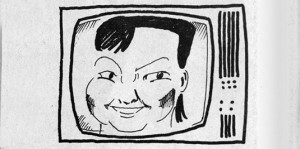
- Details of a “mega” party to celebrate the 20th birthday of a Pollock Halls residential house are revealed;
- The University’s Rugby team clinch a win over Grangemouth, despite off-field distractions.
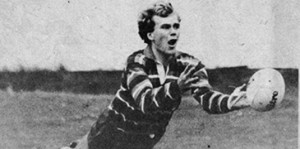
Read the original articles, and more, at https://libraryblogs.is.ed.ac.uk/thestudent/
Web of Science Upgrade Sunday 19th October

Upgrade/Maintenance will be managed between Sunday 19 Oct 14.00 GMT – Monday 19 Oct 02.00 GMT. There is no disruption to access expected however there may be intermittent issues during the maintenance period. Thomson Reuters apologise for any inconvenience this may cause.
There are no upgrades to EndNote (Online) or Researcher ID at this time and access to these resources is not affected, links of these products to Web of Science records may be subject to a slight disruption.
Changes
- New return to search link
- New open access indicator
- Search by pubmed id
- Enhanced SciELO Citation Index Collections Search and Display
- Revised Chinese Science Citation Database Author Names
- Journal Info Overlay on Search Results
- New Refine for ESI Top Papers
- Updated ESI Overlay
Release Notes
Release notes for WoS 5.15 can be found at: http://wokinfo.com/news/new/
View/download directly at: http://wokinfo.com/media/pdf/wos_515_releasenote.pdf
Web of Science Training
Webinars/Live training at: http://wokinfo.com/training_support/training/
A full list of the databases held by the Library can be found at http://www.ed.ac.uk/schools-departments/information-services/library-museum-gallery/finding-resources/library-databases/databases-a-z
Dame Anne McLaren (1927-2007)
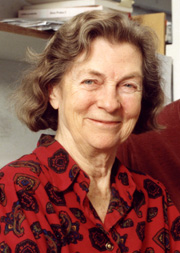
Anne McLaren (picture sourced from http://en.wikipedia.org
It’s always great to receive comments and feedback from our blog readers, especially those which suggest subjects or people which we haven’t yet featured. We have a growing list of posts to respond to our readers’ suggestions, and we are delighted that our first of these focuses on Dame Anne McLaren.
Anne McLaren was a hugely important figure in the fields of mammalian reproductive and developmental biology and genetics, and she is possibly best known for her work as director of the Medical Research Council Mammalian Development Unit at University College London. Her long and rich career in the techniques and ethics of fertility is covered in ample detail in John Biggers’ excellent obituary: http://www.theguardian.com/science/2007/jul/10/uk.obituaries
In this blog, I want to focus specifically on McLaren’s time in Edinburgh, and her appearances in our archive collections. After gaining her degree at Oxford and completing postdoctoral work in London, McLaren moved to Edinburgh in 1959 with her then-husband Donald Michie. She joined the Agricultural Research Council’s Unit of Animal Genetics (based within the Institute of Animal Genetics), working initially on the reproductive physiology of the mouse with Alan Beatty and others. During her time at the Institute, McLaren’s research spanned mammalian fertility, embryo transfer techniques and immunocontraception. She was particularly interested in egg transfer, the hormonal control of ovulation, superovulation and its effects on pregnancy, placental and foetal growth, and the effects of the uterine environment on skeletal character. She and John Biggers were the first to demonstrate that a mammalian embryo grown in vitro for several days would subsequently develop into a normal adult. McLaren also worked with chimeras (organisms consisting of two or more genetically different kinds of tissue), and her later book on the subject, published in 1976, became a classic text.
McLaren was well liked and respected in Edinburgh. The correspondence of Institute of Animal Genetics director C.H. Waddington reveals that he proposed McLaren for Fellowship of the Royal Society in 1968 (he was disappointed that she was not elected until 1974, after she had left the Institute), with F.W. Rogers Brambell as seconder. Waddington’s statement of support commends McLaren’s work on the reproductive biology of the mouse, and in particular the rigour of her statistical and quantitative approach. Waddington also praises her personal attributes: ‘She has in a high degree an ability found only in some scientists of being both highly critical and extremely helpful. Very many workers, at all levels from the young to quite mature ones, like to talk over with her some subject they are tackling, confident that she will spot any weaknesses in their arguments, or, more positively, coax them into thinking straighter than they had done before.’ (Coll-41/9/4/4)
Alan Beatty’s papers contain the most information relating to McLaren, as they worked closely together until McLaren departed for London in 1974. They secured a series of grants from the Ford Foundation for a sustained programme of work on reproductive physiology, and together with colleagues, they lobbied for a Centre for Reproductive Biology to be established in Edinburgh (which occurred in 1980). Beatty’s archive reveals an active and busy schedule of planning meetings and funding applications underpinning he and McLaren’s research. Letters from McLaren after her departure to London show that she continued to take an interest in matters in Edinburgh, and stayed in touch with old colleagues and friends.
In London, McLaren’s research took her on to study the development of mammalian primordial germ cells, and she published an acclaimed book on the subject in 1980. After her retirement from the MGU, she became principal research associate at the Welcome Trust/Cancer Research UK Gurdon Institute in Cambridge. Anne McLaren died aged 80, along with her former husband Donald Michie, in a car accident en route from Cambridge to London on 7 July 2007.
Importantly, McLaren’s scientific work formed the basis of her wider engagement with ethical and societal issues surrounding fertility and reproduction, and, later, stem cell research and cloning technologies. She sat on the Warnock Committee, which contributed to the passing of the 1987 Family Law Reform Act and the 1990 Human Fertilisation and Embryology Act. A copy of one of her articles, titled ‘The Future of the Family’, was retained by Waddington in his papers, and demonstrates that, for McLaren, science has the potential to direct humans towards a better society. The article, written in 1972, concludes:
People in the future will be faced with more leisure: I hope that they will use it for a greater degree of democratic participation in the running of our society; for self-education, aided by computers whose tutorial intelligences will soon be at our disposal; and above all for the benefit of their smaller families of children. It is in the early years of life that personalities are moulded and the foundations of ethical systems laid: we must find out how not to cripple children’s minds as most, perhaps all, are crippled today, and how to instil an ethic of loyalty and protectiveness which begins with other members of the family and does not stop at national boundaries, but extends for the first time over the entire human race.
Clare Button
Project Archivist
If you have a topic relating to animal genetics in Edinburgh which you’d like to see covered, get in touch!
Win a University of Edinburgh Hoodie!
At the Library pop up session this afternoon Leisa and Serena will be there to talk to you about how to get involved with library work and projects.
Leisa will be there from the Development and Alumni department and will be talking about what they do to fundraise for the Library and how students can help with this work. Leisa will also be joined by one of her colleagues from Alumni engagement.
Serena co-ordinates the volunteers and interns who work with the Library and all of the collections – if you’ve ever thought about a career in libraries, museums or archives, this is your opportunity to find out more!
![20140908_140608[1]](https://libraryblogs.is.ed.ac.uk/popuplibrary/files/2014/10/20140908_1406081.jpg)
Jamie – one of our lovely interns!
Collections
 Hill and Adamson Collection: an insight into Edinburgh’s past
My name is Phoebe Kirkland, I am an MSc East Asian Studies student, and for...
Cataloguing the private papers of Archibald Hunter Campbell: A Journey Through Correspondence
My name is Pauline Vincent, I am a student in my last year of a...
Hill and Adamson Collection: an insight into Edinburgh’s past
My name is Phoebe Kirkland, I am an MSc East Asian Studies student, and for...
Cataloguing the private papers of Archibald Hunter Campbell: A Journey Through Correspondence
My name is Pauline Vincent, I am a student in my last year of a...
Projects
Cataloguing the private papers of Archibald Hunter Campbell: A Journey Through Correspondence
My name is Pauline Vincent, I am a student in my last year of a...
Archival Provenance Research Project: Lishan’s Experience
Presentation My name is Lishan Zou, I am a fourth year History and Politics student....