Home University of Edinburgh Library Essentials
April 9, 2026
Bicentennial of the birth of Professor Edward Forbes (1815-1854), marine biologist, geologist, natural historian and biogeographer
DRAWING & SKETCHING, STUDYING & RESEARCHING, TRAVELLING & DREDGING, DESCRIBING MOLLUSCS & SHELLFISH, MUSEUM CURATION & PALAEONTOLOGY, PRESIDING OVER SCIENTIFIC BODIES & CLASSIFIYING TERTIARY FORMATIONS, AND LECTURING – ALL IN A SHORT BUT PACKED 39-YEARS… PROFESSOR EDWARD FORBES… ‘A BRILLIANT GENIUS’…

Signature of Forbes on letter, 11 March 1848. Dc.4.101 Forbes.
12 February 2015 marks the 200th anniversary of the birth in Douglas, Isle of Man, of Edward Forbes the marine biologist, geologist, naturalist and pioneer in the field of biogeography (the study of the geographic distribution of plants and animals). On the Isle of Man, Forbes is most noted for his cataloguing of the marine life inhabiting the island and the neighbouring sea.
Born on 12 February 1815, Edward Forbes received his early education in Douglas and even in those early years he showed a taste for natural history, literature and drawing. His parents were said to have been so impressed with the artistic talent behind the drawings and caricatures on his schoolbooks that they sent him to London to study art with ambitions for a place in the Royal Academy Schools. His artistic talent was not good enough for the Royal Academy however, so in 1831 he entered Edinburgh University as a medical student instead.

Signature of Edward Forbes, from the Isle of Man, Edinburgh University session 1831-32. The signature was written in November 1831, and Forbes was the 115th student to matriculate. Volume ‘Matriculation 1829-1846’.
His 1832 vacation was spent looking at the natural history of the Isle of Man, and in 1833 he travelled to Norway, sailing on a brig from Ramsey on the Isle of Man to Arendal in Norway. He described his Norwegian trip in a journal – his Journal in Norge – illustrated with his own sketches. Barely four lines into his journal, started on Monday 27 May 1833, we find the first natural history log of the trip, ‘Caught some Gurnards … on one of them were several parasite insects’.

Title to the journal Edward Forbes wrote on his trip to Norway, 1833. From the ‘Journal in Norge’. Dc.6.91

On Saturday 22 June 1833, Forbes was in the country around Stavanger, ‘hilly but apparently fertile’ where the rock was chiefly gneiss and mica slate. There he found an immense boulder though with ‘neither rule or hammer’ he ‘could obtain neither specimen or correct measurement’. From the ‘Journal in Norge’. Dc.6.91

On Tuesday 3 July 1833, in the evening, Forbes arrived at a little village in the vicinity of the Glacier at Bondhus on Hardanger Fjord. He sat down at ‘a table plentifully supplied with the staple food of the country’. From the ‘Journal in Norge’. Dc.6.91
Other natural history during these years included dredging work in the Irish Sea, and travels in France, Switzerland and Germany. Indeed he spent the winter of 1836-37 in Paris studying at the Le Jardin des Plantes which included attending the lectures of De Blainville (1777-1850) and Geoffroy Saint-Hilaire (1772-1844), and looking at the geographical distribution of animals. He then travelled to the south of France and across the Mediterranean to Algeria collecting specimens. A born naturalist rather than a student of medicine, he had earlier – by 1836 – abandoned the notion of a medical degree and instead devoted his studies to science and literature.

Sketch by Forbes of Stavanger, Norway, including Stavanger Cathedral (Stavanger domkirke) in his ‘Journal in Norge’. Dc.6.91

Sketch by Forbes of Kronborg Castle (Hamlet’s Castle) at Helsingør, Denmark, in his ‘Journal in Norge’. Dc.6.91
While at Edinburgh University, Forbes and John Percy were joint publishers of a magazine, called the University Maga, which was published weekly during session 1837-1838. Its frontispiece was sketched by Forbes and contained subjects within it which were similar to those commented on by Sir Archibald Geikie much later on in 1915. Forbes’s animals and figures are ‘in all kinds of comical positions and employments’, said Geikie (quoted from Manx Quarterly, p.329. Vol.V. No.20, 1919).
Detail from the cover of the ‘University Maga’ (pen and ink drawing) is shown here. Dc.4.101 Forbes.


Investigations by Forbes into the natural history of the Isle of Man occupied much of his time, leading to a volume on Manx Mollusca once he was back in Edinburgh. The remainder of the 1830s saw him touring Austria, delivering scientific papers and lecturing in Newcastle, Cupar and St. Andrews and to the Edinburgh Philosophical Association, on subjects such as terrestrial pulmonifera in Europe, the distribution of pulmonary mollusca in the British Isles, and British marine life. In 1839 he obtained a grant for dredging research in the seas around the British Isles, and towards the end of that year he published a paper on British mollusca in which he established a division of the coast into four zones.
The 1840s opened for Forbes with a series of lectures in Liverpool. He also visited London where he met other scientists, and he travelled and did more dredging. In 1841 he published a History of British Starfishes based on his own observations – and many observed for the first time – and that year too he was appointed as naturalist on board HMS Beacon engaged in surveying work in the eastern Mediterranean and the Aegean Sea. He also explored upland Turkey, looking at its antiquities, freshwater mollusca, plants and geology.

Small pen and ink sketch of a ray and reference to membership of the ‘ray club’ on a letter, showing the signature of Edward Forbes. The ‘ray club’ may refer to the Ray Society, a scientific text publication society founded in 1844. It was named after John Ray, the 17th-century naturalist. Gen.524.3.
Back in Britain again, Forbes took a post as Curator of the museum of the Geological Society, and in 1844 he became Palaeontologist to the Society. He presented a report on his research in the Aegean to the British Association and lectured before the Royal Institution on his studies of the littoral zones and his discoveries in these. Also in 1844 he became a Fellow of the Geological Society and Palaeontologist to the Geological Survey, and in 1845 a Fellow of the Royal Society. He was also voted as a member of the Athenaeum Club. Dredging in Shetland and around the west of Scotland occurred during this period, as did the presentation of a course of lectures at the London Institution and then also at King’s College.
Forbes was instrumental in the founding of the Palaeontological Society in 1847, and in 1849 he was working on the position in geological time-scale of the Purbeck Group (the Purbeck Beds) famous for its fossils of reptiles and early mammals. More dredging occurred, this time in the Hebrides, and more lecturing, and preparation for the on-going co-publication of a History of British Mollusca which appeared 1848-1852. His many dredging excursions contributed to this work. Between 1849 and 1850 he was busy arranging a new geological museum at the Geological Survey premises in Jermyn Street, London, which would open in 1851. Before that though, more dredging occurred in the western Hebrides, and more lecturing in the Royal Institution.

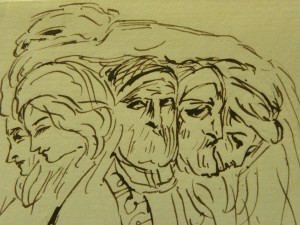 Throughout their work, ‘Memoir of Edward Forbes, F.R.S.’, Macmillan & Co., Cambridge and London, 1861, Archibald Geikie and George Wilson include vignettes and tail-pieces by Edward Forbes at chapter-ends… Probably not unlike these here. Gen.524.3.

In the summer of 1851, Forbes became Lecturer in Natural History in a new School of Mines (the Government School of Mines and Science Applied to the Arts, later the Royal School of Mines) which had been formed out of the efforts of geologist Sir Henry De La Beche (1796-1855). Indeed the staff of the Geological Survey became the Lecturers and Professors of the School of Mines, and the new School was located in the same Jermyn Street premises as the museum.

Tabular lists by Forbes. Gen.524.3.

Tabular lists by Forbes. Gen.524.3.
The winter of 1852-1853 saw Forbes working on the classification of the tertiary formations, and still a comparatively young man – in his late-30s – he was elected as President of the Geological Society in 1853. The following year, in 1854, he became Professor of Natural History at Edinburgh University, succeeding Professor Robert Jameson who held the Chair for nearly half a century from 1804 until 1854. In his History of the University of Edinburgh 1883-1933, Arthur Logan Turner would write that Forbes was among ‘a remarkable group of outstanding men’ whose ‘individual influence’ after the mid-19th century would help science become ‘seriously recognised in the University’ – the other remarkables included Lyon Playfair (Chair of Chemistry), P. G. Tait (Chair of Natural Philosophy), and Archibald Geikie (Chair of Geology). Another historian – Sir Alexander Grant – would describe Forbes as ‘a brilliant genius’.

Tabular lists by Forbes. Gen.524.3.

Tabular lists by Forbes. Gen.524.3.
Professor Edward Forbes delivered his inaugural lecture on 15 May 1854 but during the meetings of the Geological section of the British Association held in Liverpool he suffered from a fever. Forbes would not live to see publication of his work on the tertiary formations, and after only a few month’s tenure as Professor – after only a few days into the winter session 1854-1855 – he had to cancel his lectures owing to ill-health. He died shortly afterwards on 18 November 1854 at the age of 39. The brilliant genius ‘was extinguished’, his light ‘having just shown itself above the horizon’, Sir Alexander Grant was to write later.
Professor Edward Forbes was buried in Edinburgh’s Dean Cemetery.

Tabular lists by Forbes. Gen.524.3.
A student of Edward Forbes, James Hector (1834-1907), later Sir James Hector the Scottish geologist, naturalist, and surgeon, would name a mountain after his former Professor. Hector had participated in the Canadian Palliser Expedition to explore new railway routes for the Canadian Pacific Railway, and named the 8th highest peak in the Canadian Rockie Mountains after Forbes. Mount Forbes (3,612 metres) is in Alberta, 18 km southwest of the Saskatchewan River crossing in Banff National Park.
Organised by the Department of Environment, Food and Agriculture in partnership with Manx National Heritage, the Isle of Man Natural History and Antiquarian Society and the Society for the Preservation of the Manx Countryside, the Edward Forbes Bicentenary Marine Science and Conservation Conference will take place 12-14 February 2015 at the Manx Museum, Douglas, Isle of Man. The Museum will also stage pop-up displays on the life and legacy of Edward Forbes during the Conference.

Signature of Forbes on letter, 15 June 1851. Dc.4.101 Forbes.
Dr. Graeme D. Eddie, Assistant Librarian Archives and Manuscripts, Centre for Research Collections
Sources:
- Manx Worthies. Professor Edward Forbes (from the Manx Note Book, by A. W. Moore): Edward Forbes [accessed 2 Feb 2015]
- Eric L. Mills. Oxford Dictionary of National Biography Forbes, Edward (1815-1854), marine biologist, geologist, natural historian [accessed 2 Feb 2015]
- Grant, Sir Alexander. Story of the University of Edinburgh during its first three hundred years in 2 volumes. London: Longmans Green and Co., 1884. Vol.II., p.434-435.
- Turner, A. Logan. History of the University of Edinburgh 1883-1933. Edinburgh: Oliver & Boyd, 1933. p.240.
- Material contained within Coll-133, Papers of Edward Forbes, Edinburgh University Library (Centre for Research Collections)
The National Monument of Scotland
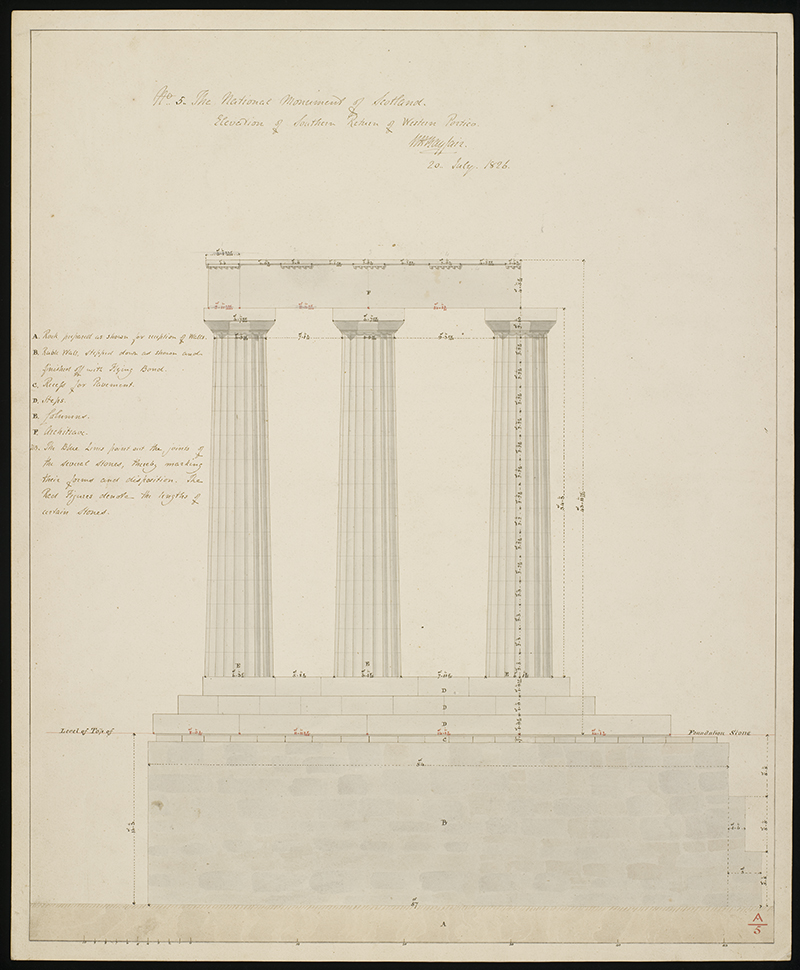
Playfair, William Henry (b.1789, d.1857) Return of Western Portico, 1826
The Digital Imaging Unit has digitised many architectural drawings held in University of Edinburgh special collections over the years. They always present a challenge because of thier scale. They offer a fascinating glimpse of history in relation to many of the buildings in Edinburgh that we are familiar with on a daily basis. I think many of us have a positive relationship with the National Monument more commonly known as the Acropolis on Calton Hill. Read More
Tag It, Find It!
Pop-up Library is back for a limited time only in Innovative Learning Week (ILW) and we want you to say what you see!
 Combining two of our most popular Pop-up Library sessions from last semester you will get the opportunity to play our 1980s inspired game, learn how tagging and metadata can help your studies and get up close and personal with some highlights from the University’s Art Collections.
This time we are not limiting ourselves to the 1st floor of the Main Library and instead will be popping up in other locations.
Pop-up Library on tour!
– On Tuesday 17 February you can find us at the Noreen and Kenneth Murray Library at Kings’s Buildings.
– On Wednesday 18 February we are back in the Main Library but you will find us in the ground floor forum when you come through the swipe gates.
– And on Thursday 19 February you can find us at the Edinburgh College of Art (ECA) Library at Evolution House.
On all 3 days items from the art collections will be on display, and you’ll be able to play the game between 12:30 – 14:30. Please pop-up and see if you can achieve the highest score!

These are drop-in sessions and are open to all staff and students at the University.
Find out more about other sessions being run by Library and University Collections and Information Services during ILW via the calendar of events.
More information about ILW can be found on their website:
http://www.ed.ac.uk/staff-students/students/academic-life/studies/innovative-learning
About the Project
Welcome to the Fairbairn Blog.
William Ronald Dodds Fairbairn (1889-1964) was a leading psychoanalyst whose pioneering work helped children suffering from trauma in the early 20th century. His personal library including works by Freud and Jung is held by Edinburgh University Library. His papers, diaries and correspondence are in the National Library of Scotland. This project, funded by the Wellcome Trust, will see these collections fully catalogued and conserved and made accessible online through a new collaborative website.
New donation of Scottish poetry
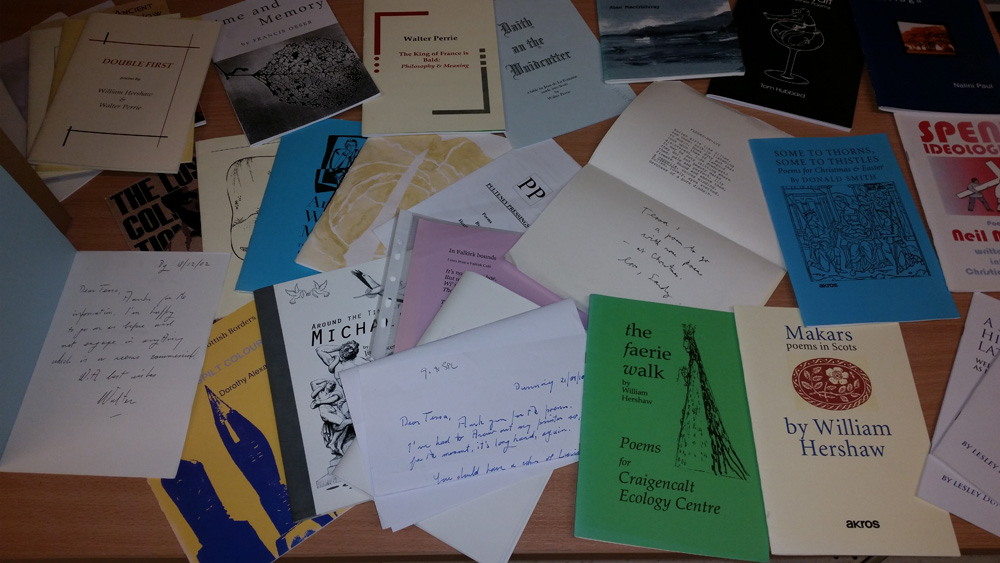
Tessa Ransford, poet activist and founder of the Scottish Poetry Library, has gifted to the University of Edinburgh her personal collection of poetry pamphlets. This is a major new acquisition for Special Collections which strengthens our excellent existing holdings of modern literature and Scottish poetry.
‘No one has done more for the cause of poetry in Scotland than Tessa Ransford’ asserted Dorothy McMillan in the Scottish Review of Books in 2008, and her influence on contemporary poetry in Scotland has been profound. Born in India, Tessa has spent most of her life in Scotland, and has published numerous collections of poetry since the 1970s. She founded the Scottish Poetry Library in 1984 and directed it until 1999. She has edited Lines Review poetry magazine and set up the Callum Macdonald Memorial Award to encourage the publishing of poetry in pamphlets (www.scottish-pamphlet-poetry.com). As a student at the University of Edinburgh she was influenced by philosopher John Macmurray, whose papers we also hold.
This collection includes many rare works produced in small editions, and numerous copies signed or annotated by the writer – as well as letters and other handwritten documents. It will be kept together as a new named special collection.
http://www.wisdomfield.com/biograph.html
http://www.scottishpoetrylibrary.org.uk/poetry/poets/tessa-ransford
Trial – Nineteenth Century Collections Online: British Politics and Society
 We have trial access to Nineteenth Century Collections Online: British Politics and Society until the 27th February. Including papers of British statesmen, Home Office records, ordnance surveys, working class autobiographies, and other unique collections, British Politics and Society is a remarkable resource for scholars looking to explore the political and social history of Britain. Source libraries are the British Library, Oxford University, and The National Archives, Kew.
Feedback and further info
We are interested to know what you think of this e-resource as your comments influence purchase decisions so please do fill out our feedback form.
A list of all trials currently available to University of Edinburgh staff and students can be found on our trials webpage.
The Foundation of Anatomy: Class List of Alexander Monro (primus)
From time to time we ‘rediscover’ items in our collections. It’s not that we didn’t know we had them; rather that they have not come to anyone’s specific attention within the many, many items we hold.
This is certainly the case with the earliest class list we hold for anatomy students. It has a comprehensive name index, which is usually what people refer to, seldom asking to see the item itself. However, when double checking some catalogue references, it was necessary to have a quick look at the original item. It revealed itself to be far more significant than the index recorded.
It is a volume of principally students’ names and those they were studying under, beginning in 1720, when Alexander Monro primus began giving classes in anatomy in autumn 1720. Monro had just been appointed Professor of Anatomy. Although the official establishment of the Faculty of Medicine was still six years away, many view the appointment of Monro as the clear starting point.
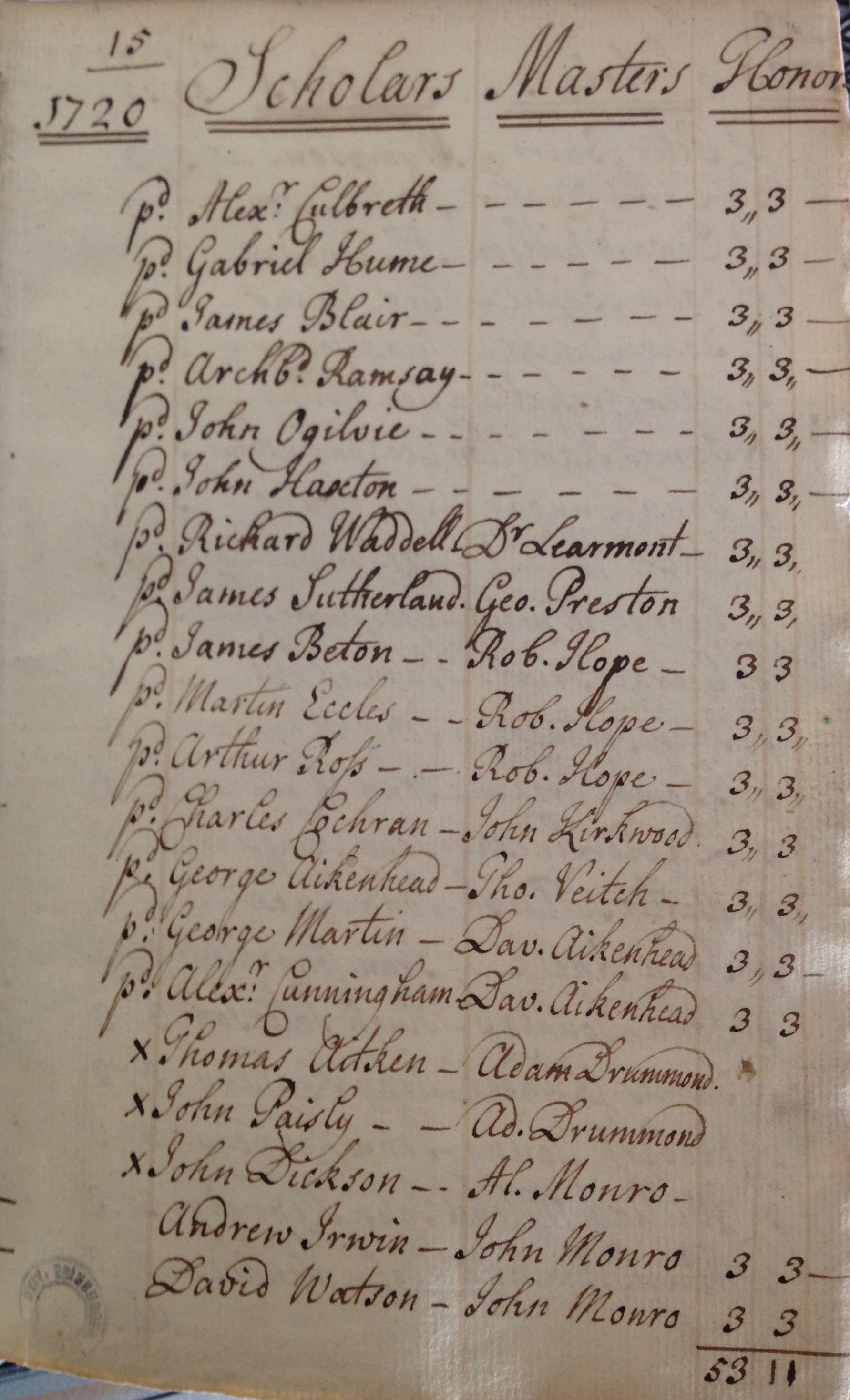
Page from 1820. Includes the name of Martin Eccles. (Royal College of Physicians of Edinburgh. Died 1778.)
Monro was educated at the Universities of Edinburgh and Leiden and learned anatomy under Frederik Ruysch in Amsterdam. He returned to Edinburgh in 1719 and passed the examinations for admission to the Incorporation of Surgeons. The Professorship of Anatomy had been established by Edinburgh Town Council in 1705 but for Monro, unlike his predecessors, his appointment was clearly defined as a university chair.
Students were apprenticed to masters (surgeons), often boarding with them as well. Teaching was conducted at Surgeons Hall and not within the precincts of the University until 1725, the move at least partly fuelled by public rioting over accusations of grave robbing.
A random check of names in the volume has as yet failed to yield a match with actual medical graduates, though names of identifiable surgeons and physicians are present, illustrating the fact that the formality of a degree was not mandatory to practice medicine.
The volume was donated to the University Library in 1924 by James Watt, LL.D., W.S., F.F.A., F.R.S.E (1863-1945). He lived in Craiglockart House, which was built for Monro’s son, Alexander Monro secundus (1733-1817). The volume was found by Watt inn the cistern room of the house. Fortunately, he was able to recognise its significance and pass it on to the then University Librarian, L. W. Sharp.

Copy of letter from James Watt to Lord Amulree, 1945, sent to Lauriston William Sharp, University Librarian.
Sources:
- Alexander Monro, class list (1720-1749), Special Collections, EUA GD60 (Dc.5.95)
- Anita Guerrini, Oxford Dictionary of National Biography: Monro, Alexander, primus (1697–1767), surgeon and anatomist [accessed 30 Jan 2015]
- Sir Alexander Grant, The story of the University of Edinburgh during its first three hundred years (1884)
E-Book News – January update
 A further 260 new titles have been added to our Cambridge Books Online Collection across the following subject areas; American History, Archaeology, Art, Astronomy, British History, Classical studies, Earth and Environmental Sciences, Economics, Education, English Literature, European History, General Science, Geography, History Cross Discipline, History Other Regions, Language and Linguistics, Law, Life Sciences, Management, Mathematics, Medicine, Music, Philosophy, Physics, Politics and international relations, Psychology, Religion, Sociology . See the list here.

Dawsonera – We have purchased a further 73 e-books across most subject areas and from a variety of publishers. These are all on our catalogue. See the excel list of titles here.
 EBL – We have purchased a further 98 e-books from a variety of publishers across most subject areas. These have been added to our catalogue. See the list of titles here.
 Ebsco/MyILibrary –
  A further 45 titles have been added to our catalogue. See the list here.

We have added a further 201 titles to our Oxford Scholarship Online Collection. Subject areas include: Business and Management, Classical Studies, Economics and Finance, History, Law, Linguistics, Literature, Mathematics, Music, Palliative Care, Philosophy, Physics, Political Science, Psychology, Public Health and Epidemiology, Religion, Social Work and Sociology. See the list here.
 We have access to a further 464 titles from Palgrave in the following subject collection areas: Business & Management Collection 2015, Economics & Finance Collection 2015, Education Collection 2015, History Collection 2015, International Relations & Development Collection 2015, Language & Linguistics Collection 2015, Literature Collection 2015, Media & Culture Collection 2015, Political Science Collection 2015, Religion & Philosophy Collection 2015, Social Sciences Collection 2015 and Theatre & Performance Collection 2015. New titles will be added weekly until September when the collections will become complete. See the latest new titles added to our catalogue/Searcher here.
 Elsevier Science Direct – We have added a further 16 e-books to our catalogue. See the list here.

On the Taylor & Francis e-book platform we have access to a further 674 titles primarily in the subject areas of Education, Environment and Sustainability, Philosophy. See the title list here.
Further info
Further information about our e-books is available from http://www.ed.ac.uk/schools-departments/information-services/library-museum-gallery/finding-resources/resource-types/ebooks
If a book you require is not held by the library, please visit our Library Resources Plus webpage.
Trial – Independent Digital Archive 1986-2012
 We have trial access to the Independent Digital Archive 1986-2012 until the 27th February. The Independent Digital Archive, 1986-2012 is a digital collection that covers the full run of the newspaper from its very first issue until the end of 2012. The archive includes The Independent on Sunday (1990-onwards) and editions from 2005 are available in full colour.
Feedback and further info
We are interested to know what you think of this e-resource as your comments influence purchase decisions so please do fill out our feedback form.
A list of all trials currently available to University of Edinburgh staff and students can be found on our trials webpage.
It’s Bound to be a Pamphlet
As part of my ongoing conservation treatment plan, I have been asked to address the needs of the Special Collections popular and regularly consulted pamphlet series. We are all used to seeing, and using, pamphlets as part of our everyday lives, whether they are marketing the latest products, persuading us how to vote (you may see a lot more of these pamphlets in the coming months!), or why we should be eating healthier. However, the use of pamphlets is by no means new, and has been around for centuries, becoming widely used with the invention of the printing press. Then, as now, they were an effective, low cost and simple means by which to distribute information to a large audience, often being used for propaganda purposes, whether religious or political.
But what exactly is a pamphlet? Thankfully, following their 1964 General Conference, UNESCO provided us all with a handy classification. A pamphlet can be defined as “a non periodical printed publication of at least 5 pages but not more than 48 pages, exclusive of the cover pages, published in a particular country and made available to the public”. Anything with more than 48 pages would be classed a book. And with that cleared up…

Examples of damage, including detached spine and cover board
Pamphlets, when they are first produced, will usually be held loosely together along the inner margin. However, many of the pamphlets in the collection have, at some point in the past, been bound together to create larger volumes. Although this does have benefits, allowing them to be more easily shelved, accessed and consulted, there are now a number of associated conservation issues with these volumes. These have ranged from surface dirt through to detached or loose cover boards and/or detached or partially detached spines.
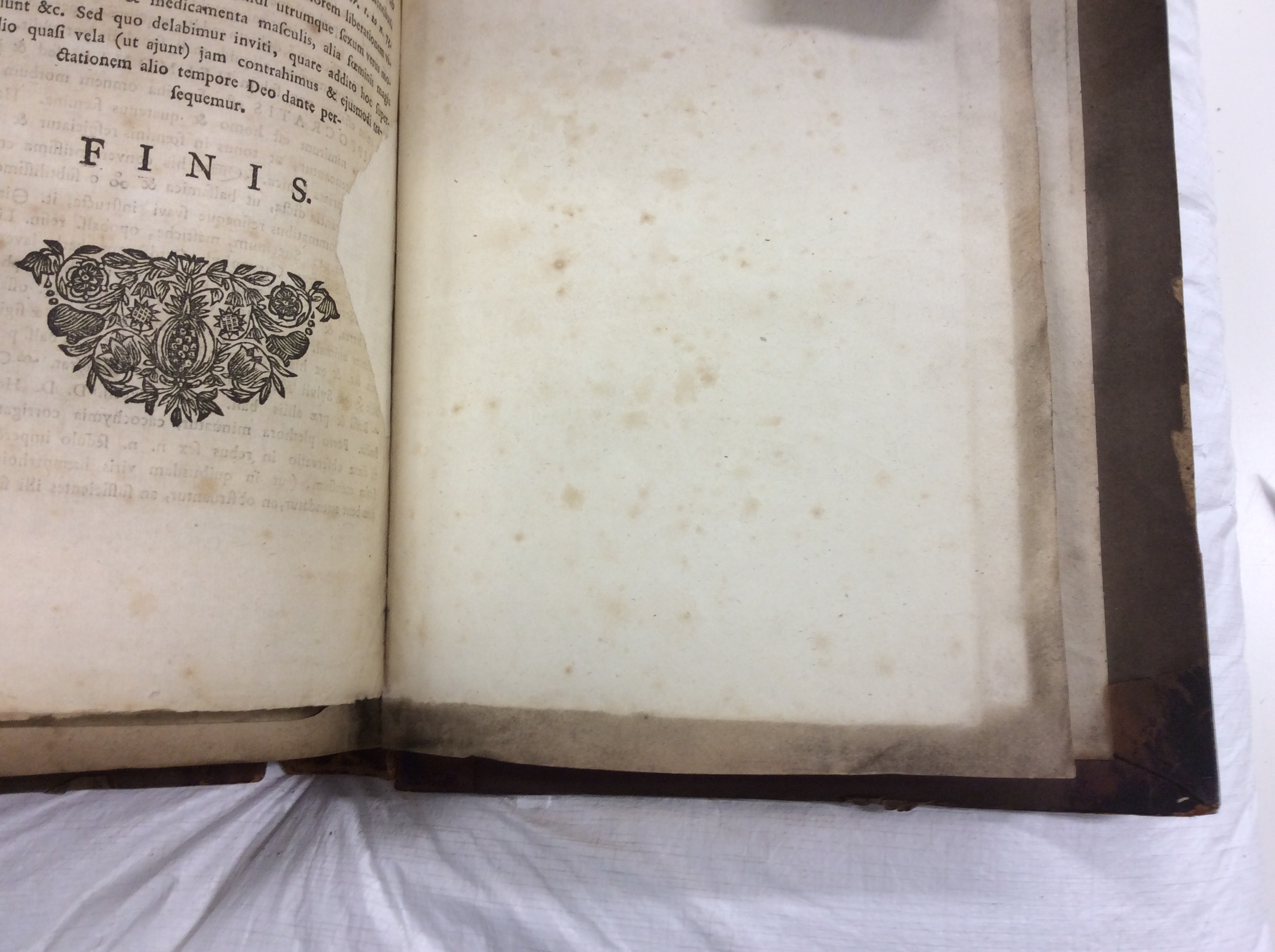
Example of excessive dirt to uneven page edges
Prior to undertaking any interventive conservation treatment, the volumes were surface cleaned. Many of the pamphlets which have been bound together are different sizes, resulting in irregular edges to the textblock. This has allowed surface dirt to collect between the pages and page edges, as the image amply demonstrates. Firstly, the volumes are lightly cleaned with a soft brush along the textblock edges to remove any loose dirt, before a smoke sponge (made using vulcanised natural rubber) is used to reduce the surface dirt affecting the pages.
If the volume’s boards have become detached, or are loose, I am, in most cases, able to reattach the board, or reinforce the inner join, with the use of Japanese tissue (a thin, strong paper which comes in varying thicknesses depending on the repair required) and wheat starch paste.
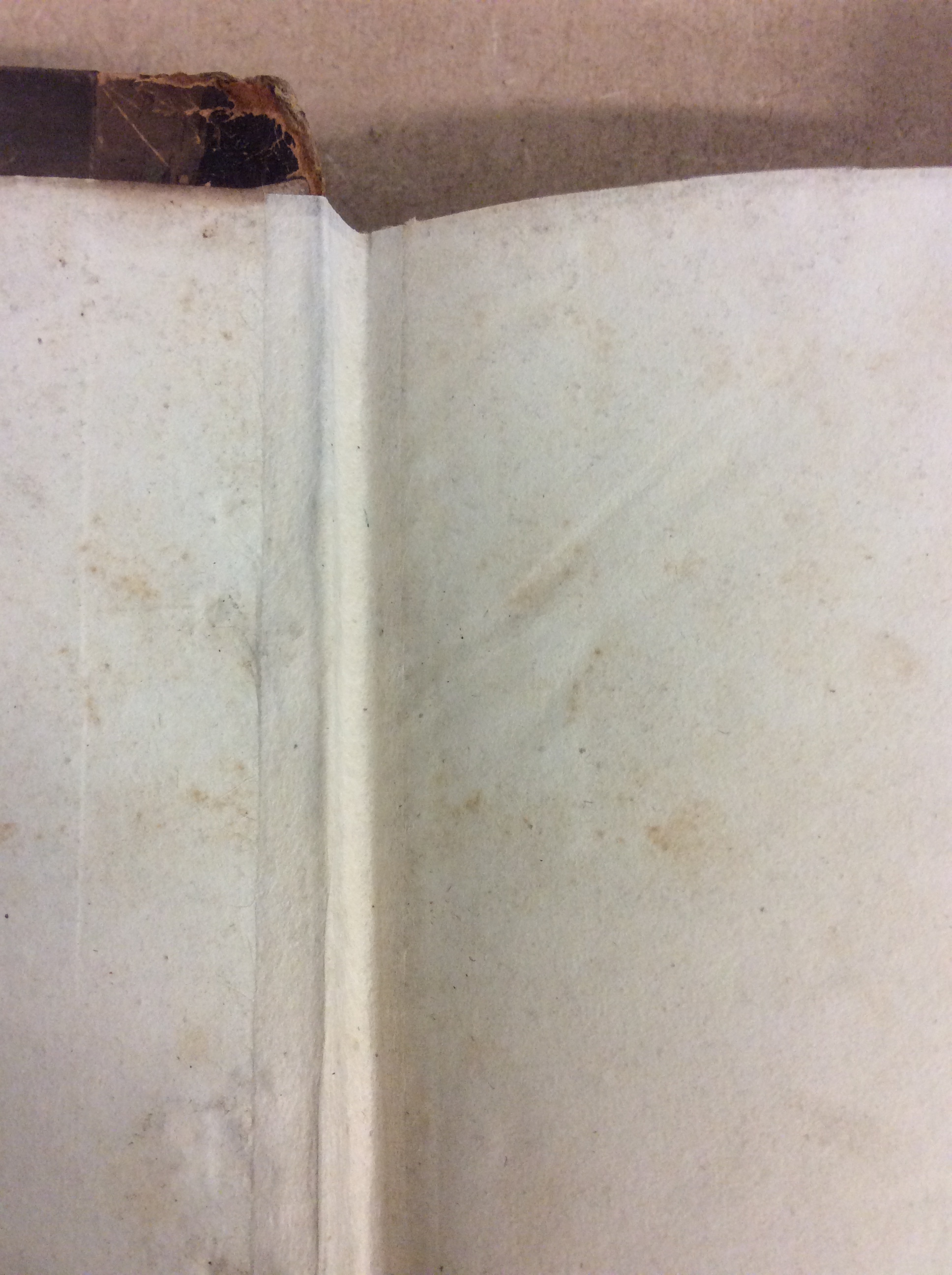
Detail of inner join repair, using Japanese tissue and wheat starch paste
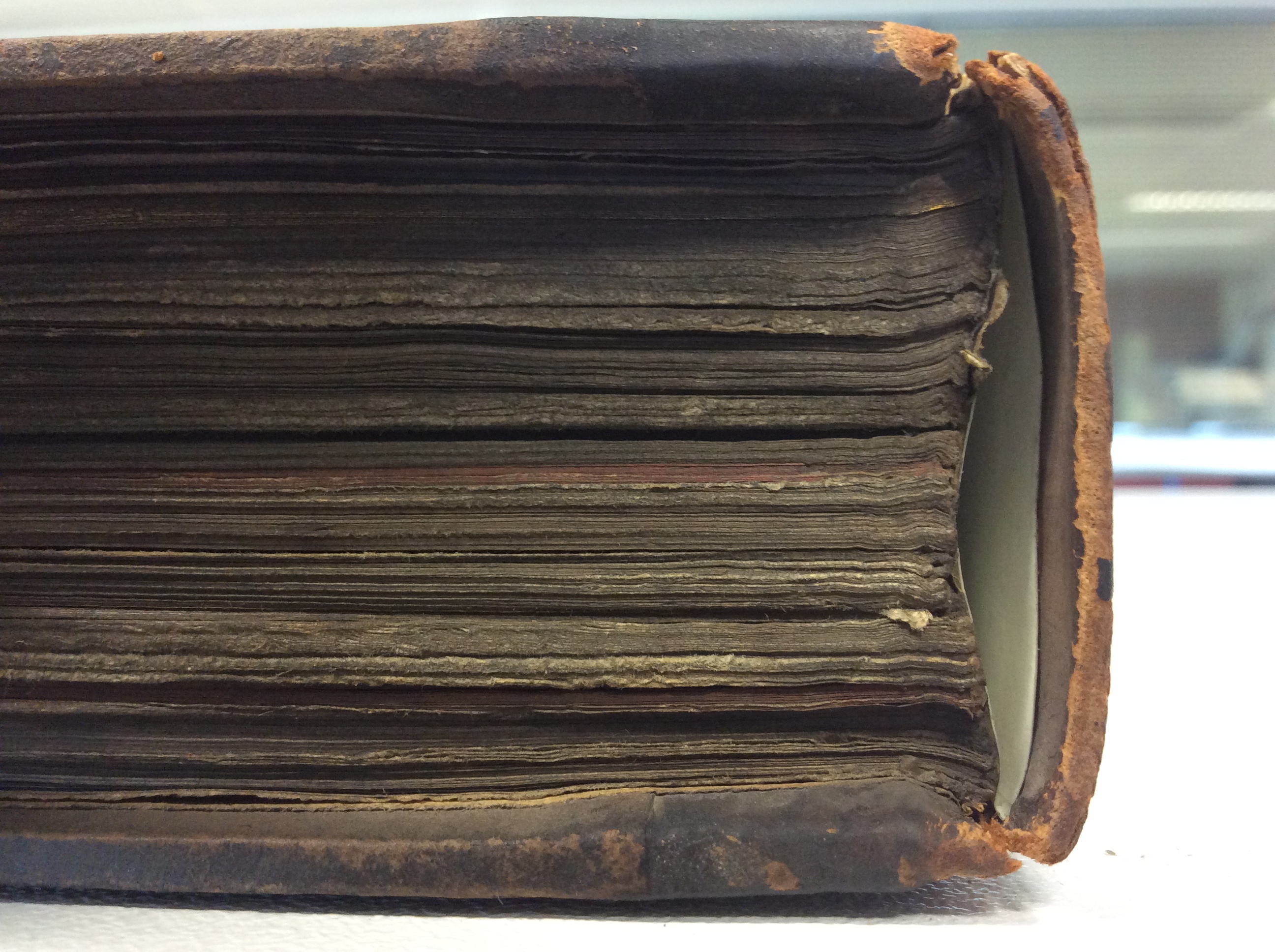
Detail of new spine hollow
The reattachment of the spine is slightly more involved, as it requires accurately measuring and fitting a new spine hollow – these create a gap or ’hollow’ between the spine and the textblock, reducing pressure on the binding. Using acid-free paper and paste (a combination of wheat starch paste and a stronger Evacon adhesive), the new hollow is first adhered to the textblock upon which the spine piece can then be positioned and pasted in place. Although, judging by the picture, it appears that a horrible accident has befallen the poor object; bandages can be used to ensure that there remains good contact between the new spine hollow and the textblock/spine piece whilst drying.

The use of bandages to aid drying
So next time you see a discarded and unlooked at pamphlet, give a thought to their long history and importance in spreading the word, allowing people a platform to express their thoughts and beliefs in the pre-television and internet era.
Post by Emma Davey, Conservation Officer
Collections
 Hill and Adamson Collection: an insight into Edinburgh’s past
My name is Phoebe Kirkland, I am an MSc East Asian Studies student, and for...
Cataloguing the private papers of Archibald Hunter Campbell: A Journey Through Correspondence
My name is Pauline Vincent, I am a student in my last year of a...
Hill and Adamson Collection: an insight into Edinburgh’s past
My name is Phoebe Kirkland, I am an MSc East Asian Studies student, and for...
Cataloguing the private papers of Archibald Hunter Campbell: A Journey Through Correspondence
My name is Pauline Vincent, I am a student in my last year of a...
Projects
Cataloguing the private papers of Archibald Hunter Campbell: A Journey Through Correspondence
My name is Pauline Vincent, I am a student in my last year of a...
Archival Provenance Research Project: Lishan’s Experience
Presentation My name is Lishan Zou, I am a fourth year History and Politics student....