Home University of Edinburgh Library Essentials
March 28, 2026
Sample Furniture for New Study Areas
We are going to locate an assortment of different study desks and chairs which will form part of the new study areas being created later this Summer on the first floor Mezzanine from Monday 27th June to Friday 1st July.
We would very much like you to try them out and provide feedback on the link below by 5.00pm on 8th July.
Spotlight on Digital National Security Archive (DNSA)
This is the first in an occasional series highlighting some of the online resources available at the Library that will be of interest to students and staff in History, Classics and Archaeology.
The Digital National Security Archive (DNSA) from ProQuest gives you access to a vast collection of important declassified U.S. government documents. This provides valuable primary source material central to U.S. foreign and military policy since 1945 and helps advance research in history, politics and international relations.
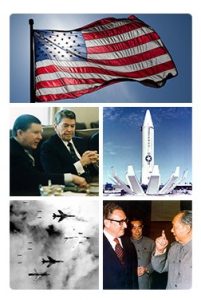 Within DNSA are collections that cover U.S. policy towards critical world events, including their military, intelligence, diplomatic and human rights dimensions. Each collection is overseen by a subject expert and they allow researchers to directly access the original documents that shaped responses to these critical world events.
With the recent purchase of the collections U.S. Policy in the Vietnam War, Part I and II the Library now has access to 7 collections via DNSA.
[As of August 2017 4 new collections have now been added.]
Student and Community Engagement
How can libraries, archives, and museums reach out to students, get people interested in their collections, and engage with the wider public? Sometimes it takes doing something completely unexpected. Student Engagement Officer Serena Fredrick and Learning and Engagement Curator Sarah Deters shared how they are working to engaged people with the vast arrays of items housed at the Centre for Research Collections.
![taster-day-300x225[1]](https://libraryblogs.is.ed.ac.uk/librarykew/files/2016/06/taster-day-300x2251-300x225.jpg)
This presentation explored the concept of ‘engagement’ and how its meaning may differ between institutions; what are the different types of audiences institutions may focus on; and how funding opportunities may impact the types of activities an institution may provide.

An interactive session ended the presentation with participants creating their own event around one of the University’s more gruesome artefacts – a letter written in the blood of the notorious killer, William Burke.
‘In a World full of infinite choice, context – not content – is King’

Yesterday we discussed contextual cataloguing in the group. By this I mean creating meaningful catalogues with interconnections, or a web of relationships so that a collection or item is put in its context and it can be made sense of. Take one side of correspondence out of context or a photograph and this can change its meaning, so there can be a responsibility in trying to represent something as close to what it actually is from provenance and original order as we can.
Having worked for over 16 years in the archives sector I’ve seen the same discussions and hear the same issues being raised about how we provide good descriptions of our stuff, to standards, making them user friendly and discoverable. Part of our investigations and discussion yesterday was to be honest about this and place ourselves in a global context thinking about how we can follow standards, but be open, flexible, experimental and avoid getting tied into one solution. We thought about how we can layer approaches to make it easier but also more user friendly and how to be mindful of mapping catalogues and standards as new ways of doing things will always appear. Stepping back from the technology and thinking like the user, in human terms and for as wide an audience as possible.
We explored some of the work we’re doing here at Edinburgh with open source approaches such as ArchivesSpace, metadata and authority mapping as well as the embedding of images.
What was great was that it showed that this is the tip of the iceberg and opened up a discussion that resonated across the group. This was just the start of the exchange of ideas in this area and we’re keen to see what comes out of the week as we share more.
Here are the prezi slides. Do get in touch if you’re interested in finding out what we’re doing at the Centre for Research Collections, University of Edinburgh
http://prezi.com/jmzbgrxcteq5/?utm_campaign=share&utm_medium=copy
Paolozzi: mosaics to maquettes.
Recently Art Collections Curator, Neil Lebeter, and I made a short video interview with Professor Bob Fisher and Phd student Alex Davies of the Informatics Department. Bob and Alex have been working with the images I produced of the Eduardo Paolozzi mosaics within the DIU (for an introduction to the project click here). This cross departmental work seems particularly fitting as Paolozzi had close ties to the Informatics department. This relationship is visible in the form of several Paolozzi sculptures dotted about the Informatics building.
Using their combined expertise, Bob and Alex have been employing a number of image processing techniques on the images of the individual mosaic fragments in line with images of the original mural design, in situ at Tottenham Court Road Tube Station, London. This is to assess what percentage of the original mural we possess and how accurately it could potentially be pieced back together. The interview provides an insight into their work processes, the challenges, and uniqueness, of this particular project and the results they have found to date. It is an interesting watch!
Group Study Pods on the Ground Floor
NOTICE: Works Underway
Works to the group study pods on the ground floor will take place week beginning 20th June. you will still have access to the study pods on the 1st floor throughout this time.
Main Library Foyer
How do you use the library?
The only thing that you absolutely have to know is the location of the library
Albert Einstein
We are proud of the services we offer to our students, from study spaces to books and beyond. We think the foyer of the Main Library could be a more welcoming space for everyone. We want to make sure all users can easily find what they need in this building.
There is a project underway to observe how the foyer is currently used and to see what could be improved. This work will involve tracking how people move through the building. This will be a simple and completely anonymous observation exercise. We hope that this will help us to provide an even better environment for learning in the future!
We would also love to hear your thoughts on the space! Please comment below, or contact us on Facebook or Twitter, if you have any ideas about what we could do to improve the foyer, or if you’d like to find out more about the project.
Welcome to KEW!
And we’re off! The Knowledge Exchange Week is now officially underway!

It was my pleasure to extend an official welcome and greeting from Edinburgh University Library to the fifteen delegates from across Europe. As a highly ranked and prestigious world university, we are privileged to have world-class facilities, libraries, services, collections, and staff. We are looking forward to sharing these with the delegates this week, and in learning from them and their experiences, as together we exchange professional knowledge.
If you wish to follow the week remotely, then we’re using the hashtag #EdLibKEW
Stuart Lewis (stuart.lewis@ed.ac.uk)
Deputy Director of Library & University Collections
Mission to the Middle East : discovering collections
This week New College Library welcomes delegates of the 2016 conference of the Yale-Edinburgh Group on the History of the Missionary Movement and World Christianity.
I’ve been discovering that New College Library’s unique collections include some fascinating materials from the Church of Scotland’s development of missions to Jews in the Middle East, in the nineteenth century. In particular we hold books, archives and objects relating to Rev. Andrew A. Bonar and Rev. Robert Murray McCheyne, and a selection of items from these collections are now on display in the New College Library entrance. Bonar and McCheyne were appointed by the Church of Scotland in 1838 as part of a deputation to visit Jewish communities in Europe and the Middle East, with a view to future mission activity. Read More
Cambridge University Press e-Journals and e-Books Downtime

Cambridge Journals Online, Cambridge Books Online, Cambridge Histories Online, Cambridge Companions Online, Shakespeare Survey Online and University Publishing Online will be unavailable Sunday 26th June from 9am to 1pm.
Cambridge University Press apologise for the inconvenience of this downtime and have advised that it is due to essential maintenance work ahead of the migration of content held on the above platforms to their new integrated platform branded Cambridge Core and scheduled for release mid 2016. See http://librarians.cambridgecore.org/watch-the-cambridge-core-video/ for an introduction to Cambridge Core.
Collections
 Hill and Adamson Collection: an insight into Edinburgh’s past
My name is Phoebe Kirkland, I am an MSc East Asian Studies student, and for...
Cataloguing the private papers of Archibald Hunter Campbell: A Journey Through Correspondence
My name is Pauline Vincent, I am a student in my last year of a...
Hill and Adamson Collection: an insight into Edinburgh’s past
My name is Phoebe Kirkland, I am an MSc East Asian Studies student, and for...
Cataloguing the private papers of Archibald Hunter Campbell: A Journey Through Correspondence
My name is Pauline Vincent, I am a student in my last year of a...
Projects
Cataloguing the private papers of Archibald Hunter Campbell: A Journey Through Correspondence
My name is Pauline Vincent, I am a student in my last year of a...
Archival Provenance Research Project: Lishan’s Experience
Presentation My name is Lishan Zou, I am a fourth year History and Politics student....