Home University of Edinburgh Library Essentials
March 24, 2026
The Indian Primer: iconics in raking light

According to researchers at the Centre for Research Collections, The Indian Primer is a tiny book containing Christian instruction, mainly in the native American Algonquian language. Printing began in America in 1640 and was used by missionary John Eliot, who translated the Bible and many other works into the native language for the first time. This unique 1669 copy was gifted to the University Library in 1675 by James Kirkton. Amazingly, this copy is still in its original American binding, of decorated white animal skin over thin wooden boards. Read More
New books in the Library for Social and Political Science
Thanks to recommendations from members of staff and requests via RAB from students the Library is continually adding new books to its collections both online and in print. Here are just a (very) small number of the books that have been added to the Library’s collections in semester one, 2017/18 for the School of Social and Political Science and these demonstrate the wide range of subjects being taught, studied and researched within School.
–> Find these and more via DiscoverEd.
 Controlling capital: public and private regulation of financial markets edited by Nicholas Dorn (shelfmark: K1066 Con. Also available as e-book).
The rise of the outsiders: how mainstream politics lost its way by Steve Richards (shelfmark: JC423 Ric.)
Decolonizing anthropology: moving further toward an anthropology for liberation edited by Faye V. Harrison (shelfmark: GN345 Dec.)
Transforming patriarchy: Chinese families in the twenty-first century edited by Gonçalo Santos and Stevan Harrell (shelfmark: HQ684 Tra. Also available as e-book).
Residential child and youth care in a developing world. 1, Global perspectives 1 edited by Tuhinul Islam and Leon Fulcher (shelfmark: HV862 Res.) Read More
Spotlight on Adam Matthew digital primary sources
On Tuesday 30th January we’ll be holding a Discovery Day event in the Main Library where representatives from 3 publishers of digitised primary source collections and our very own Centre for Research Collections will be on hand to help you navigate through and find useful material in the huge range of primary sources you have access to at the Library. Adam Matthew are one of the publishers who will be attending and this blog post highlights the fantastic collections the Library has access to through them.
The Library has access to a large and broad range of digital primary source collections that can be accessed via the Primary Source database list (see also the separate lists for Newspapers & Magazines and Images & Moving Images).
Adam Matthew are a publisher who specialise in producing high-quality, digitised primary source collections online. They put together thematic collections sourced from libraries, archives, museums, etc., around the world and they have databases that cover the Medieval period onwards.

The Library is very lucky to have access to 11 of these collections (or databases) from Adam Matthew and all can be accessed via the Primary Source database list.
China: Culture and Society
The Edinburgh DataShare Awards!
The Research Data Service team applauds those researchers at the University of Edinburgh who share their data. We therefore decided to show our appreciation by presenting awards to our most successful depositors, as part of the Dealing With Data conference. The prizes themselves do not come with a cash research grant attached unfortunately. However, the winners did receive a certificate bearing an image of our mascot for the day, Databot. We think you’ll agree the winning depositors and their data demonstrate the diversity of our collections, in terms of subject matter, formats and sheer size. We were particularly pleased with the reactions from both the recipients and the attendees, both in person, by email and on twitter (#UoEData was the Dealing with Data hashtag). Who doesn’t love the drama of an awards ceremony! A video is available.
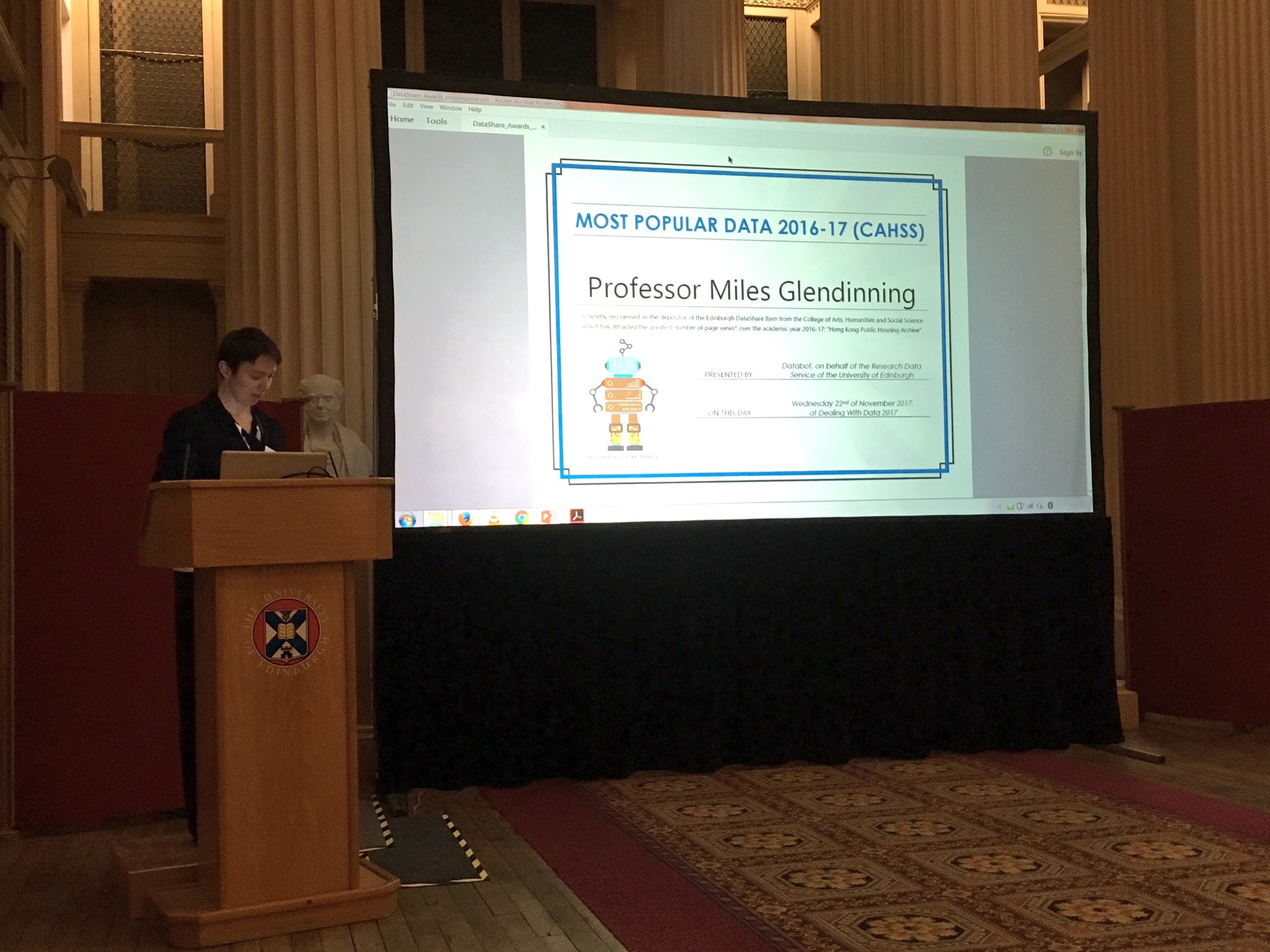
Photo: CC-BY Lorna M. Campbell
The winners in full…
MOST DATASHARING SCHOOL: Edinburgh Medical School
– the School which boasts the greatest number of Edinburgh DataShare Collections currently. Thirty-three eligible Collections (already containing at least one dataset) such as “Connectomic analysis of motor units in the mouse fourth deep lumbrical muscle”, the Edinburgh Imaging “Image Library” and “Generation Scotland”.
MOST PROLIFIC DATASHARER: Professor Richard Baldock
– the most prolific depositor into Edinburgh DataShare for the academic year 2016-17, and over the lifetime of the repository, having shared a grand total of 1,105 data items with full metadata. These are grouped together into numerous Collections under the heading of “e-Mouse Atlas”. The majority of these detailed images show microscope slides of stained tissue, others are 3D models. They accompany a book and website published by Professor Baldock, building on the seminal work of Professor Matt Kaufman in developmental biology. The metadata for each of the slides links to a lower definition version within the e-Mouse Atlas website, where the data may be viewed and navigated in context. The original slides themselves are held by the University’s Centre for Research Collections.
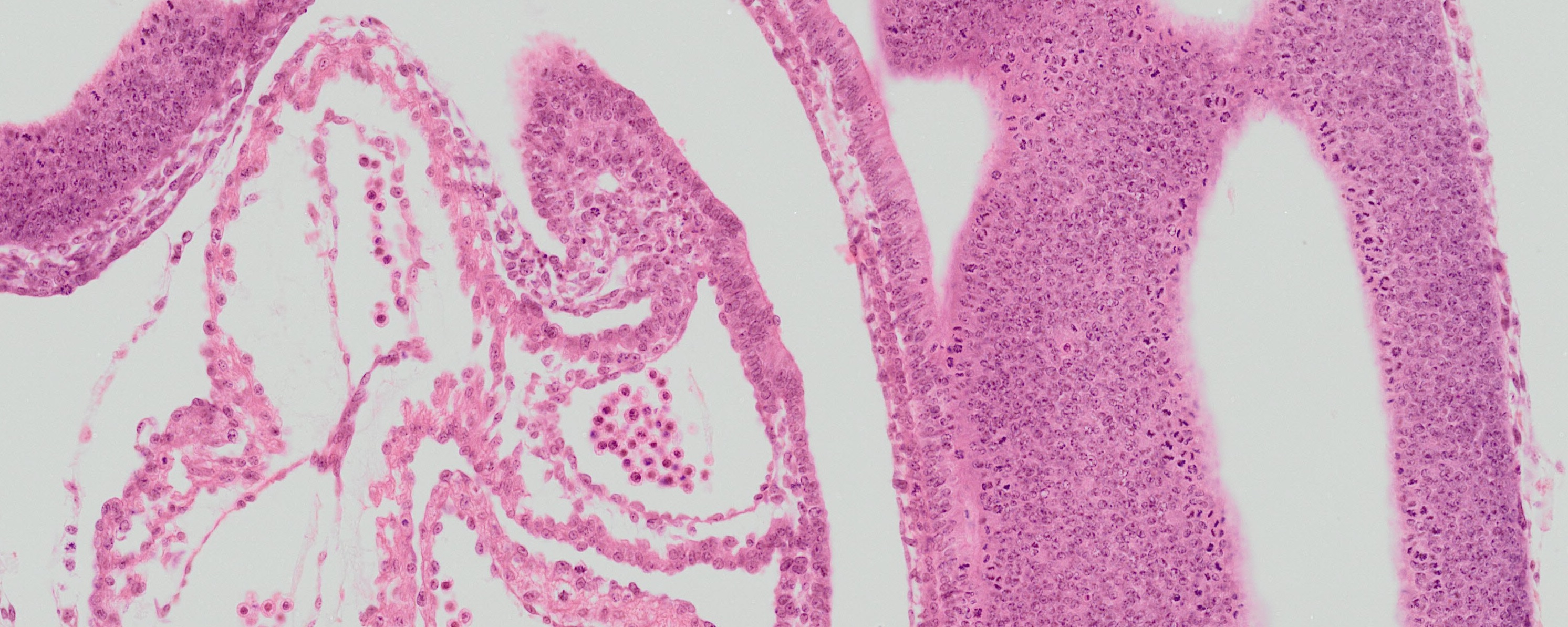
Detail from Elizabeth Graham; Julie Moss; Nick Burton; Yogmatee Roochun; Chris Armit; Lorna Richardson; Richard Baldock. (2015). eHistology Kaufman Atlas Plate 21a image d, [image]. University of Edinburgh. College of Medicine and Veterinary Medicine. http://dx.doi.org/10.7488/ds/735.
– the depositor of the greatest number of Edinburgh DataShare items from the College of Science and Engineering in academic year 2016-2017. Euan deposits his coordination chemistry research data so frequently that we set up a Collection template on the Brechin Research Group, which automatically pre-populates some of the metadata fields for him, saving Euan time. If only we could find a way to mention metallosupramolecular cubes here.
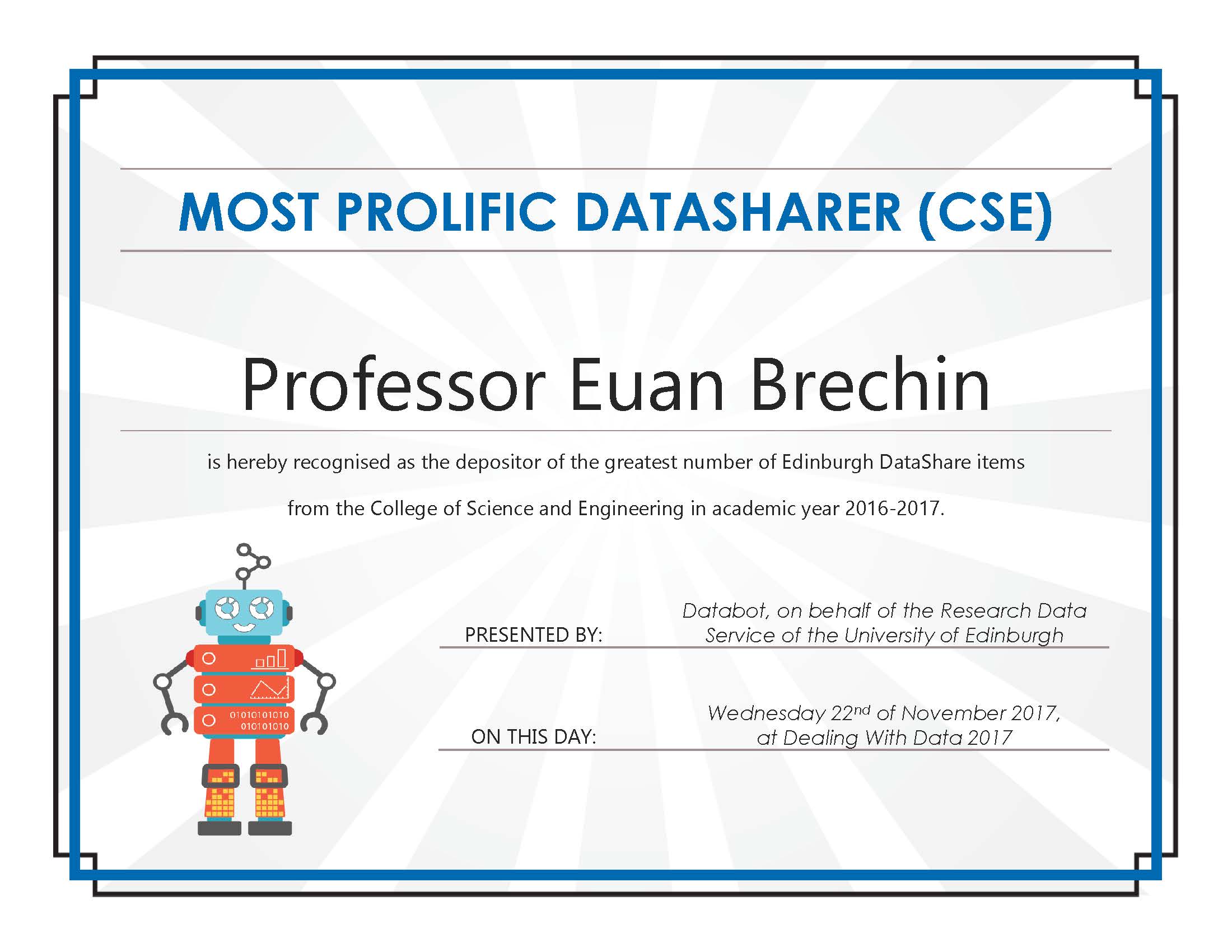
The certificate awarded to Professor Euan Brechin
MOST PROLIFIC DATASHARER (CAHSS): Dr Andrea Martin
– the depositor of the greatest number of Edinburgh DataShare items from the College of Arts, Humanities and Social Sciences in academic year 2016-2017. Some of these “Language Cognition and Communication” data items are still under temporary embargo. Users may nonetheless see all the metadata.
MOST POPULAR SHARED DATA: Professor Peter Sandercock
– the depositor of the Edinburgh DataShare item which has attracted the greatest number of page views over the lifetime of the repository: “International Stroke Trial database (version 2)” (aka IST-1). These data from the International Stroke Trial provide a great example of how clinical trial data may be anonymised to allow them to be shared. For more information, you may want to watch Prof Sandercock’s very accessible and detailed public lecture. Admittedly, one other item is higher up DataShare’s table of page views than IST. However we believe the traffic drawn by “RCrO3-xNx ChemComm 2016” to be artifactual, arising from the appearance of the word ‘doping’ in its abstract, and the fact the deposit was made at a time when doping in sport was very prominent in the news media. Additionally, the earlier, superseded, version of the IST-1 dataset also appears in the all-time top ten, and if we combine the number of views, it is in the No.1 spot outright 🙂
MOST POPULAR DATA 2016-17: Dr. Junichi Yamagishi
– the depositor of the Edinburgh DataShare item which has attracted the greatest number of page views (1,720 to be precise, as counted by Google Analytics) over the academic year 2016-17: “Automatic Speaker Verification Spoofing and Countermeasures Challenge (ASVspoof 2015) Database”. Here’s the suggested citation, which DataShare compiles automatically, and displays prominently, to encourage users to cite the data:
Wu, Zhizheng; Kinnunen, Tomi; Evans, Nicholas; Yamagishi, Junichi. (2015). Automatic Speaker Verification Spoofing and Countermeasures Challenge (ASVspoof 2015) Database, [dataset]. University of Edinburgh. The Centre for Speech Technology Research (CSTR). http://dx.doi.org/10.7488/ds/298.
MOST POPULAR DATA 2016-17 (CAHSS): Professor Miles Glendinning
– the depositor of the Edinburgh DataShare item from the College of Arts, Humanities and Social Sciences which has attracted the greatest number of page views (1,374 to be precise, as counted by Google Analytics), over the academic year 2016-17: “Hong Kong Public Housing Archive”. The Research Data Service is working closely with Miles, Personal Chair of Architectural Conservation, on a series of batch imports to put his fabulous array of photographs of public housing tower blocks from all around the world on DataShare over the coming months – keep an eye on DOCOMOMO International Mass Housing Archive.

Image cropped from “HKI_H_Yue_Fai_Ct.jpg” from Glendinning, Miles; Forsyth, Louise; Maxwell, Gavin; Wood, Michael. (2015). Hong Kong Public Housing Database, 2006-2015 [image]. University of Edinburgh. Edinburgh College of Art. http://dx.doi.org/10.7488/ds/322.
– the depositor of the Edinburgh DataShare Collection page from the College of Medicine and Veterinary Medicine which has attracted the greatest number of page views over the academic year 2016-17: “Diseases of Wild Birds”. Hundreds of grotesquely beautiful photographs of dead wild birds, bodies ravaged with viruses, bacteria and protists, found at locations all around the United Kingdom; these images support the PhD thesis of Dr Tom Pennycott from our Veterinary School.
You can see usage statistics for any DataShare Item or Collection simply by clicking on the “View usage statistics” button on the right-hand-side of the page.
Pauline Ward, Research Data Service Assistant
EDINA and Data Library
An insight into Joseph Joachim’s life and work – Sarah and Devon’s experiences as CRC interns
Earlier this year, our two interns Sarah and Devon spent a few months re-housing and listing the papers of the Hungarian violinist Joseph Joachim (1831-1907), recently donated to the CRC. They share their experiences with us.
Sarah Hendriks:
When I was about eight years old my violin teacher gave me a new piece of music and said, ‘now you get to play a real piece’. It was Joachim’s Hungarian Dance No. 4 and I loved it. It’s remained one of my favourite pieces to play and its folksy, vibrant style inspired my later love of other composers like Bloch and Kreisler.
Despite loving his music, I knew relatively little about Joachim the man until I took on this internship at Special Collections. By going through the collection I discovered so much about Joachim, his family, his music, and his life. I also got to meet his relatives and talk about the collection and hear their recollections of the items. Matching the stories to the items I’d been reading and examining for the last two months reinforced the human aspect of the material I’d been working with: such a rare experience!
Over the last three months I’ve catalogued what feels like hundreds of newspaper clippings, notes, concert programmes, photographs, and music. I’ve had the chance to brush up my German whilst reading the mountain of obituaries and anecdotes about him, his violins and his performances. There were also notes about his life in Hungarian and a poem in French on the occasion of his death. Buried amongst the newspaper clippings was a handwritten account of a family holiday: I’d never read a more touching portrait of the man.
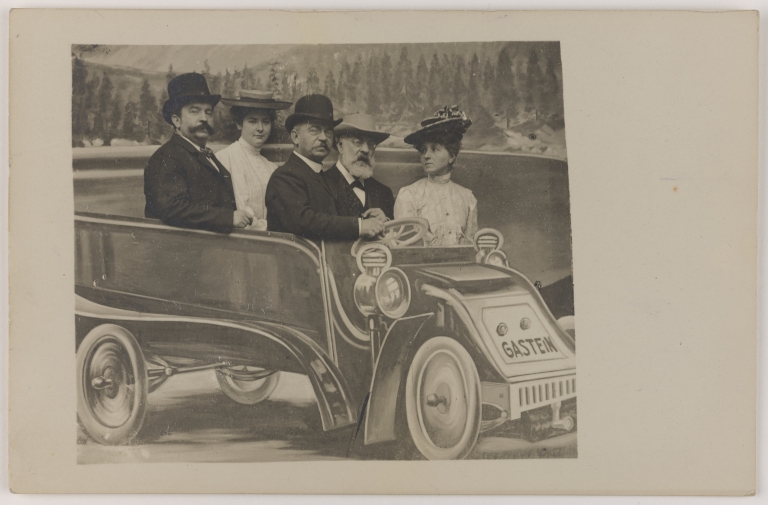
Postcard of Joseph Joachim in a fake car with the Mendelssohn brothers, 1890-1907 (Coll-1711/5/5)
The highlights for me, however, were the photographs. Joachim apparently loved a joke and you can see this in the picture of him in a fake car. The images also captured his pensive side, reading his letters in front of a fire or concentrating on some German verse. A particularly special picture for me is the one of Joachim with Nellie Melba, a fellow Australian whose alma mater I also attended. Apparently they were great friends with an equally adventurous sense of fun that often perplexed those around them. I like to think you can see a touch of this camaraderie in their portrait.
Working with archives is, for me, always exciting. You never quite know what you’re going to come across or discover and so often the material hasn’t been examined in a long time. The Joachim archive was so full of delights and surprises and it exceeded all my expectations. This internship has been a wonderful experience and one I would highly recommend. It would not have been possible without the generosity of the Joachim family and the support of the Special Collections Team and I’d like to thank them both for the opportunity. I’ve learnt so much about the practical side to archive management and processing, but also had an awful lot of fun learning about a hero in the process. I can’t wait for the next one!
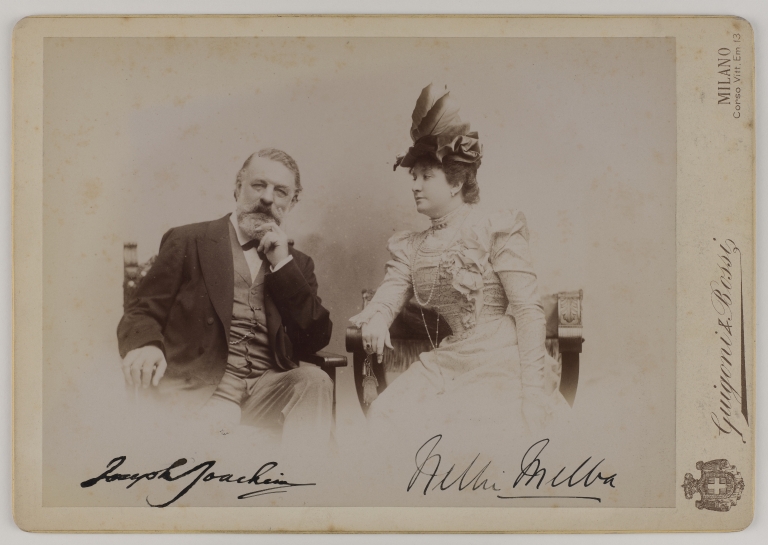
Signed image mounted on card of Joseph Joachim and Nellie Melba, taken by Guigoni & Bossi, Milan, late 19th/early 20th c. (Coll-1711/5/7)
Devon Barnett:
I wanted to be an Archive Intern so that I could learn first-hand the processes behind turning a collection of items into an organised and usable resource. As a Music graduate, it was an added benefit that the archive I would be working on centred around an important figure in classical music – Joseph Joachim. While working on the Joseph Joachim collection I have learned how to box list items, how to identify anything that may need to be sent to conservation, how to think about what items may be useful and beneficial to be digitised, and how to best categorise, arrange, and reference the items as well as a collection of books.
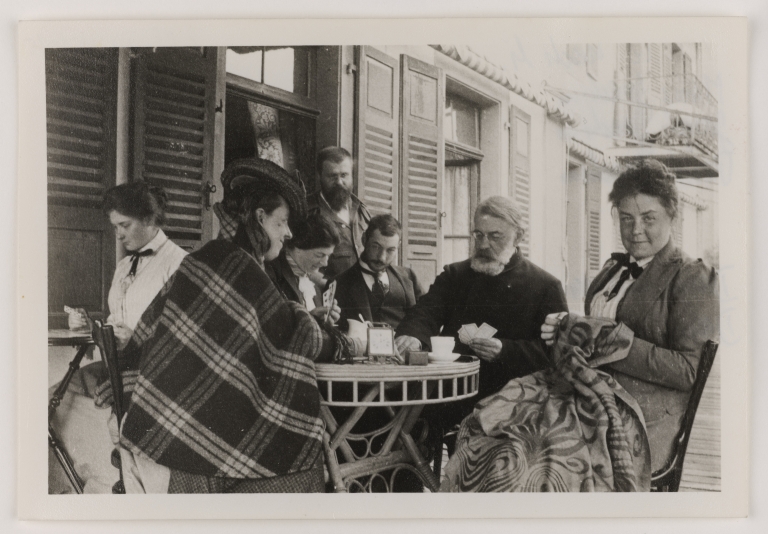
Image of Joseph Joachim playing cards outside a coffee shop, 1890-1907 (Coll-1711/5/12/5)
I have also learned a lot about Joseph Joachim, both his musical output and his personal life. Shockingly, I had never heard his name even once in my entire four years of studying a music degree and I did not know that he is owed at least in part for helping Johannes Brahms to find success and for helping Clara Schumann to care for Robert Schumann in his final years of critical mental illness. My favourite item of the collection by far was a letter written in 1907 by Donald Francis Tovey. It was written to an unspecified ‘Mrs Joachim’ and concerned the recent passing of Joseph Joachim. The letter is beautifully and poetically written, and really shows the loss felt by the music world. The letter is also important for its personal connection to Edinburgh. Tovey was a composer, musician, musicologist, and close friend of Joseph Joachim. Tovey became the Reid Professor of Music at the University of Edinburgh’s Reid School of Music (from which I have just graduated), and at which there now exists the position of Tovey Professor and the award of the Sir Tovey Memorial Prize for outstanding promise shown in composition or performance. As the university is home to not only the Joseph Joachim collection but also a collection of Tovey’s large collection of books and music scores, this letter is significant and relevant to both, tying them nicely together to both each other and the university.
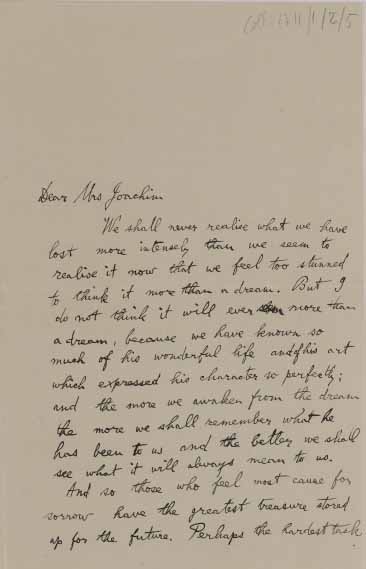
Letter to ‘Mrs Joachim’ from Donald Francis Tovey on the subject of Joseph Joachim’s death, 1907, p.1 (Coll-1711/1/2/5) (click here for a higher resolution image)
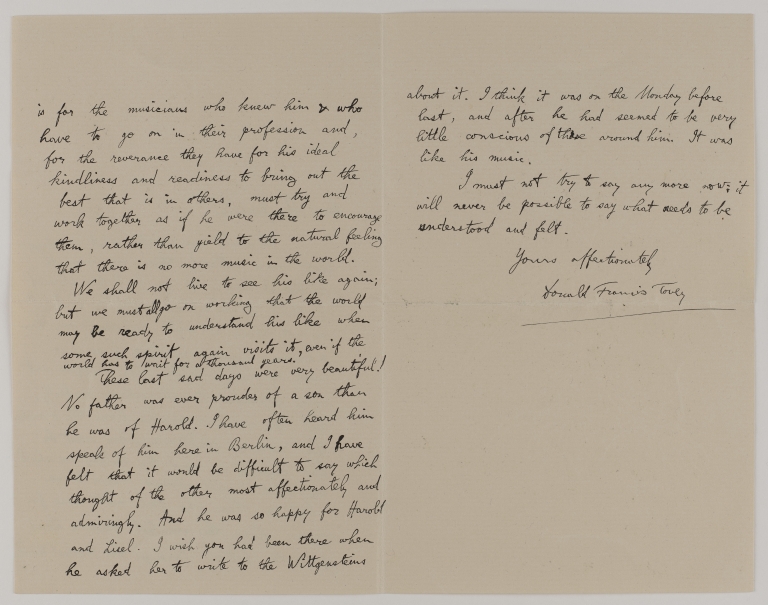
Letter to ‘Mrs Joachim’ from Donald Francis Tovey on the subject of Joseph Joachim’s death, 1907, p.2 (Coll-1711/1/2/5) (click here for a higher resolution image)
Their fantastic work has enabled us to create a great resource on our online discovery platform, ArchivesSpace. Click here to see the catalogue.
Riddle’s Court, a Discovery
With our this project currently in progress, our eyes and ears are particularly attuned to Patrick Geddes material elsewhere in our collections. It was a delight recently to stumble across a volume entitled Records relating to the Mechanics’ Library and University Hall, Riddle’s Court. We have been working very closely with the Education Officer at the Patrick Geddes Centre, Riddle’s Court, so this is an extra special find at this time.
In the late 1880s, Patrick Geddes acquired Riddle’s Court for the purpose of creating University Hall. Prior to this, it had been in the possession of the Mechanics Library, who had been based there since the mid 1850s.
A volume in our collection contains extracts of records relating to the building’s time as the Mechanics Subscription Library, including the earlier history of the buildings, as well as records of its time as University Hall. As well as text, the volume is peppered liberally with illustrations.
The first residents moved in for the Winter Session of 1889-90. There were only three of them – William Speirs Bruce, Riccardo Stephens and William Grant Burn-Murdoch. All three had a strong connection to Geddes.

Illustration by Louis G Irvine
E-Resource Trials ending soon
Last chance to try out the following e-resources and send in your feedback – these trials all end on the 30th November.
AcademicFocus
AcademicFocus is a one-stop access platform for China English journals, including:
1. Academic journals originally published in English in mainland China
2. English translations of top China academic journals (which we have access to via the China Academic Journals database platform)
3. Proceedings of international conferences held in China.
As of October 2017, there are 267 journals and 2447 conference proceedings and the numbers will grow. Subjects cover all areas in science, technology, medicine, social sciences, arts and humanities.
Arab World Research Source:™ Al-Masdar
Arab World Research Source is a dedicated resource of scholarly journals, quality magazines, trade publications, industry profiles, country reports, market research reports and conference papers related to the Arab World. This resource reaches across all major subject disciplines, including business, economics, science, technology, humanities and sociology. The database contains more than 140 scholarly full text titles, with the majority of the journals featuring Arabic full text.
Bloomsbury Design Library
The Bloomsbury Design Library is a comprehensive online resource offering coverage of design and crafts worldwide, from 1500 BCE to the present day. It combines carefully curated text and image content of the highest quality with an intuitive taxonomy for research and discovery. It can be used to enhance teaching, learning and research in the field of Visual Arts and Design.
EBSCO eBooks™ Arabic Collection: Al-Kotob
Serving the countries and territories of the Arabic League and beyond, this Middle Eastern collection of 4,600 Arabic e-books covers a broad range of academic subjects, including art, biography, business, child development, education, medicine, social sciences, humanities, Islamic studies, history, law, music, religion, political science, technology, engineering and more. The collection includes content from noteworthy publishers as well as award-winning authors including Abbas Mahmoud El Akkad, Fatima Naaot, Mohamed Awad Aidi, and Ibrahim Abdel Qader Mezni.
MedOne Neurosurgery
MedOne Neurosurgery is a unique online resource providing the global neurosurgical community with unprecedented access to Thieme’s entire neurosurgery collection (E-Books, Journals, Procedures, Cases, Media and Training Center).
One Belt, One Road Reference Source
One Belt One Road Reference Source is a collection of full-text journals and publications to support the understanding and study of the One Belt One Road mega-region including parts of Asia, the Middle East, and Central and Eastern Europe. It is the only comprehensive source of full text journals and publications published in, and about the 65 countries which make-up the One Belt One Road initiative.
Further info.
Access these and other trials from our Trials Webpage.
Research Data MANTRA gets a refresh
Research Data MANTRA updates
MANTRA, the free online training course which provides guidelines for good practice in research data management (RDM), has recently been refreshed. The course content remains applicable to all research disciplines, and is particularly appropriate for postgraduate students and early career researchers who would like to learn more about managing their research data.
The latest release helps ensure that content from each of the eight learning modules remains up-to-date, with interactive elements across all units being revised to make them more user friendly, and new content added to some units.
Additionally, as part of the CEPAL, United Nations project some video content used within MANTRA has been translated. Claudia Vilches and Gabriela Andaur from Hernán Santa Cruz Library (Santiago, Chile) have helpfully translated several of the video interviews with research staff, and these can now be viewed with Spanish subtitles within MANTRA or on our Youtube channel, helping to widen accessibility to these training materials for researchers outside the UK. Please contact us if you wish to translate any of the MANTRA materials.
MANTRA learning units now available via Zenodo
In addition to being a free-of-charge online learning resource, all content from MANTRA is openly available for use and re-use by others. For those interested in developing their own RDM training materials based on MANTRA content, all MANTRA units (along with four sets of data handling exercises) are now available for direct download from the Zenodo repository’s RDM Open Training Materials community. The eight individual MANTRA units were created using open source software Xerte Online Toolkits and units can be imported and edited in Virtual Learning Environments (VLE) such as Moodle. All that we ask is for attribution according to our CC-BY licence.
Content from a number of shorter MANTRA ‘taster’ units is also openly available from Zenodo. These provide an overview of RDM in four very short modules which can be edited so as to add information about local RDM support services, before deploying locally in a VLE or on the Web.
Family history and the Statistical Accounts
We’re always interested to hear how you use the Statistical Accounts. Family historians are one of the key groups who make use of our service so we were delighted to see Jane Harris recently publish a blog on using the Statistical Accounts for family history research. Jane has kindly agreed that we republish her post – we hope it’s useful for those of you researching your Scottish roots!

Jane Harris
Jane specialises in Scottish genealogy and family history. A member of the Association of Professional Genealogists and the Scottish Genealogy Network, Jane provides both family history research and tutoring so you can do research yourself. Her particular interests include the Stirling area, where she lives, and Orkney, where she was born and grew up. Jane described her experience with the Statistical Accounts for us:
A row of books with rather dull dust jackets; a couple of interesting quotes in a lecture or course book. That sums up my knowledge of the Statistical Accounts from my student days. When I started seriously researching my own family history many years later that view changed rapidly. Checking the earlier censuses, I was fascinated by the number of distinctively Highland surnames in my father’s home parish of Walls, Orkney. The Old Statistical Account provided an explanation: that a large number of people had come from “Strathnaven”, having been cleared to make way for sheep, so early victims of the clearances. I was hooked.
The Statistical Accounts are now one of my standard sources for client research in the late eighteenth to mid nineteenth centuries, both for general background and also for specific information on churches, migration, occupations and so on.
Now for Jane’s original blog, with some great pointers…
S is for Statistical Accounts of Scotland
Keep reading! They are far more than numbers. The Statistical Accounts are two fascinating sets of reports on each Scottish parish in the 1790s and the 1830s/40s. They cover economic and social activities as well as natural resources.
What, when, who, how?
Sir John Sinclair of Ulbster sent out 171 queries to the ministers of each of the 938 parishes in Scotland in the 1790s. Their responses form the Old Statistical Account (OSA). In 1832, because of all the changes that had taken place in Scotland, a new survey was agreed. The responses are collectively known as the New Statistical Account (NSA). Find out more about the background.
How are the Statistical Accounts useful for family history?
- Context for our ancestors’ lives.
“The prejudices, entertained by the inhabitants of this parish, against inoculation [sic] were, for a long time, invincible. But the better sort, setting the example, the rest gradually followed… In one season 460 were inoculated, of whom only 3 died” (Kilmalie, Invernesshire, Old Statistical Account, p409). Mortality by age group statistics (Glasgow, Old Statistical Account p508).
- Information on churches other than the established Church of Scotland.
“There is in St Ninians a Relief meeting-house… there is another meeting-house in Ba-burn connected with the United Secession” (St Ninians, Stirlingshire, New Statistical Account p336).
- The state of the parish registers: “the fourth is a mere ragged fragment” (Wick, Caithness, New Statistical Account p137). May explain why you can’t find a baptism:

Excerpt from the New Statistical Account for Wick, Caithness, Vol XV, 1845, p137.
- Names of landowners, which could lead you to estate records.
For example, see Menteith, Perthshire, New Statistical Account p1108.
- Local history generally, development of industries, migration and so on.
“What accounts for this [population] increase of 71 is the settlement of a colony of Highlanders, who had been forced to emigrate from Strathnaven [sic], where their farms had been converted into sheep pasture” (Walls, Orkney, Old Statistical Account p313).
- The minister’s view on his parishioners.
This snip from the Dalziel, Lanarkshire, (Motherwell area) New Statistical Account is particularly rich:

Excerpt from the New Statistical Account for Dalziel, Vol VI, 1845, p454.
In summary
Topography, geology, botany, agriculture, weather, population statistics, diseases, the state of the church and manse, manufactures, occupations (for example see table from Inverness’ Old Statistical Account below), wages, prisons, schools, language, history, antiquities, communications – and much more. Each account as individual as the minister who wrote it. You can find them all on the Statistical Accounts of Scotland website.

Table of occupations from the Old Statistical Account for Inverness, Vol IX, 1793, p622.
Thanks to Jane for letting us share her thoughts. You can find Jane’s blog here:
http://www.janealogy.co.uk/blog/
Follow Jane on Twitter @janenharris
Let us know your story
Could you share your Statistical Accounts experience with us? What have you found that’s been particularly helpful in your local or family history research? We’d love to hear from you. Comment below or email us, edina@ed.ac.uk.
Explore Your Archive 2017
The Explore Your Archive Campaign is run in conjunction with the Archives and Records Association, the professional body for archivists in the UK and Ireland. The University of Edinburgh is joining in this campaign, running from 18 to 25 November, led by colleagues in the Centre for Research Collections. Throughout social media you will see archivists promoting their archives, whether they are interesting, intriguing, puzzling or pleasing, using the hashtag #exploreyourarchive.
Here at New College Library we have made a significant step to help you explore your archive. For the first time, the catalogues which have previously only been available in the Library itself are now available online. There are over 530 catalogue entries for New College archives now freely searchable on archives.collections.ed.ac.uk . You can browse the whole collection, or search by person, organisation, place (in some instances), and limit searches by date.
The process of creating the online catalogue has revealed the strengths of the collection and the breadth of topics covered. Far from being simply a treasure trove of Scottish church history material, the collections include:
- centuries of theological thought and sermons: https://goo.gl/xw46oZ
- records on 20th century ecumenism: http://archives.collections.ed.ac.uk/repositories/5/resources/85506 and
http://archives.collections.ed.ac.uk/repositories/5/resources/85442 - photographic materials relating to the Holy Land and teaching in New College http://archives.collections.ed.ac.uk/repositories/5/resources/86230
- 17th century correspondence on the provision of Gaelic bibles to the Highlands and Islands, http://archives.collections.ed.ac.uk/repositories/5/resources/85389
- journals of devout protestant women, http://archives.collections.ed.ac.uk/repositories/5/resources/86326 and http://archives.collections.ed.ac.uk/repositories/5/resources/86286
- newspaper cuttings on the Scottish Potato Famine, http://archives.collections.ed.ac.uk/repositories/5/resources/86426
- a letterbook belonging to Hugh Miller, geologist, http://archives.collections.ed.ac.uk/repositories/5/resources/86490
- 1970s student cartoons, and http://archives.collections.ed.ac.uk/repositories/5/resources/85709
- botanical drawings and samples http://archives.collections.ed.ac.uk/repositories/5/resources/86596
In addition, digital images of some of the archives and special collections, including our copies of the National Covenants can be found on https://images.is.ed.ac.uk – click on the New College icon.
Should you wish to consult any material you find through the online catalogue you are welcome to visit New College Library or contact new.college.library@ed.ac.uk. All archives and manuscripts are consulted in the Funk Reading Room at New College Library.
The first of the daily hashtags for Explore Your Archive week is #archivecatwalk. The annual class and graduation photographs taken in New College, the earliest of which is from 1857 (ref. AA1.8.2), provide a fascinating timeline of fashions. The students below would look quite at home in today’s hipster cafes, especially those with the extra cachet of having a cane.
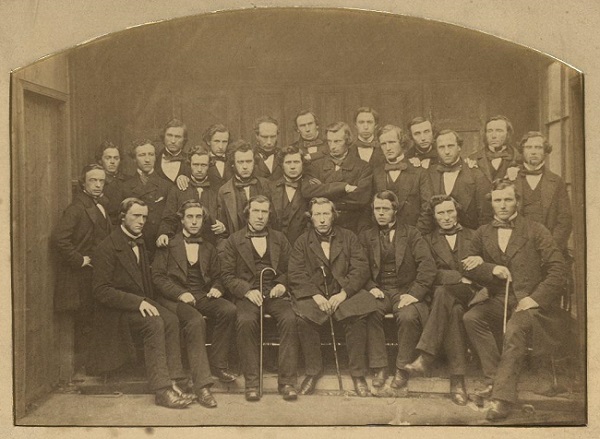
Staff and students at New College, Edinburgh, 1860 (ref. AA1.8.2)
Keep an eye on our tweets and those of our colleagues @EdUniLibraries, @CRC_EdUni, @EU_SSSA, and www.facebook.com/crc.edinburgh/ for further archives exploration.
Kirsty M Stewart, New College Collections Curator
Collections
 Hill and Adamson Collection: an insight into Edinburgh’s past
My name is Phoebe Kirkland, I am an MSc East Asian Studies student, and for...
Cataloguing the private papers of Archibald Hunter Campbell: A Journey Through Correspondence
My name is Pauline Vincent, I am a student in my last year of a...
Hill and Adamson Collection: an insight into Edinburgh’s past
My name is Phoebe Kirkland, I am an MSc East Asian Studies student, and for...
Cataloguing the private papers of Archibald Hunter Campbell: A Journey Through Correspondence
My name is Pauline Vincent, I am a student in my last year of a...
Projects
Cataloguing the private papers of Archibald Hunter Campbell: A Journey Through Correspondence
My name is Pauline Vincent, I am a student in my last year of a...
Archival Provenance Research Project: Lishan’s Experience
Presentation My name is Lishan Zou, I am a fourth year History and Politics student....