Home University of Edinburgh Library Essentials
March 23, 2026
Scotland’s Music and Dance: Amusement, Traditions and Work
If someone was to say to you “music and dance in Scotland” you would automatically think of bagpipes and ceilidh dances. But, looking at the Statistical Accounts of Scotland, you would discover a wider world of music and dance. It is very much central to Scottish traditions, from social gatherings through to religious settings, and even in work. It plays an important role in the lives of people, no matter what class or age. The country and its people are embodied and given life through song. There are also some surprising revelations, with many parishes reporting an actual loss in the taste for music!
In the first of three posts on music and dance in Scotland, we look at music in social settings, musical traditions and music while working.
Music in social settings
Music, along with sport, provided light relief after a long hard day or week of work, especially in the winter. In Dryfesdale, County of Dumfries, “the principal diversion or amusement is curling on the ice in the winter, when sometimes scores of people assemble on the waters, and in the most keen, yet friendly manner, engage against one another, and usually conclude the game and day with a good dinner, drink, and songs.” (OSA, Vol. IX, 1793, p. 432)
The principle amusements in Durness, County of Sutherland, were playing ball and shinty on the sands of Balnakiel. “The whole population turns out on old Christmas and new-year’s day, and even old men of seventy are to be seen mingling in the crowd, remaining till night puts an end to the contest. Indeed, the inhabitant, of this parish have always been noted for the enthusiasm with which they engaged in these sports. To keep up the tone of action, they retire in the evening, and mingle in the dance to the music of the bagpipe, regardless of the bruises and scars of the contest.” (NSA, Vol. XV, 1845, p. 96)
Most farmhouses and all cottages in Dornock, County of Dumfries, were constructed using mud or clay. “The manner of erecting them is singular… Some [people] fall to the working the clay or mud, by mixing it with straw; others carry the materials; and 4 or 6 of the most experienced hands, build and take care of the walls. The walls of the house are finished in a few hours; after which, they retire to a good dinner and plenty of drink which is provided for them, where they have music and a dance, with which, and other marks of festivity, they conclude the evening. This is called a daubing; and in this manner they make a frolic of what would otherwise be a very dirty and disagreeable job.” (OSA, Vol. II, 1792, p. 22)
Music also played an important part in festivals. One example is that of the annual St Columba’s Day fair at Largs, County of Ayrshire, which was held on the second Tuesday of June. “The whole week is a kind of jubilee to the inhabitants, and a scene of diversion to others. Such a vast multitude cannot be accommodated with beds; and the Highlanders, in particular, do not seem to think such accommodation necessary. They spend the whole night in rustic sports, carousing and dancing on the green to the sound of the bagpipe. Every one who chooses is allowed to join in this, which forms their principal amusement. The candidates for the dance are generally so numerous, that it is kept up without intermission during the whole time of the fair.” (OSA, Vol. XVII, 1796, p. 519)

The Ballroom at Eglinton Castle, 1840. By Hodgson (The Eglinton Tournament) [Public domain], via Wikimedia Commons
Some parishes set up assembly rooms wherever they could, such as Tiree and Coll, County of Argyle. “They frequently entertain themselves by composing and singing songs, by repeating Fingalian and other tales, by dancing assemblies at different farms by turns. In this qualification they are remarkably neat.” (OSA, Vol. X, 1794 p. 414) Others had a specific assembly room where people would dance, such as Edinburgh. “In 1763, there was one dancing assembly room; the profits of which went to the support of the Charity-Workhouse. Minutes were danced by each set, previous to the country dances. Strict regularity with respect to dress and decorum, and great dignity of manners were observed.” (OSA, Vol. VI, 1793, p. 618)
In fact, there were many dances organized for charitable purposes. In Strathdon, County of Aberdeen, subscription dances were “set on foot for the relief of some case of poverty or incidental distress in the neighbourhood; and thus, at the individual cost of a few pence, a considerable sum is realized for a needy neighbour. Another charitable practice prevails. When an extraordinary case of helpless distress occurs, the young men in the locality assemble together, and, often accompanied with music, go from house to house, where they receive a donation in kind or money. In this way a considerable supply is speedily raised in behalf of the object of their charitable exertions.” (NSA, Vol. XII, 1845, p. 549) A similar practice was carried out in Kirkmichael, County of Dumfries, where “a friend is sent to as many of their neighbours as they think needful, to invite them to what they call a drinking… The guests convene at the time appointed, and, after collecting a
shilling a piece, and sometimes more, they divert themselves for about a couple of hours, with music and dancing”. This sometimes resulted in 5, 6, or 7 pounds being raised for the needy person or family. (OSA, Vol. I, 1791, p. 59)
In Liberton, County of Edinburgh, there were carter’s plays. “The carters have friendly societies for the purpose of supporting each other in old age or during ill-health, and with the view partly of securing a day’s recreation, and partly of recruiting their numbers and funds, they have an annual procession. Every man decorates his cart-horse with flowers and ribbons, and a regular procession is made, accompanied by a band of music, through this and some of the neighbouring parishes. To crown all, there is an uncouth uproarious race with cart-horses on the public road, which draws forth a crowd of Edinburgh idlers, and all ends in a dinner, for which a fixed sum is paid.” (NSA, Vol. I, 1845, p. 12)
Musical traditions
It is easy to see how such musical pastimes became traditions. There are some wondrous customs involving music and dance described in the parish reports. One such tradition was the holding of an annual festival in Perth, County of Perth, during which the Saint Obert’s Play was performed. On the 10th December, people “attired themselves in disguise dresses, and passed through the city piping and dancing, and striking drums, and carrying in their hands burning torches. One of the actors was clad in a particular kind of coat, which they designated the Devil’s Coat, and another rode upon a horse, having on its feet men’s shoes. There is no account extant of its minute particulars, but, from the manner in which the kirk session and the corporation officials dealt with the performers, it appears to have been idolatrous, profane, and immoral in its tendency.” So much so that action was taken by the Kirk Session against such pastimes, especially the Saint Obert’s play. (NSA, Vol. X, 1845, p. 80)
In the Peebles parish report there is a very interesting description of the Beltane Festival, which is held every year on the 1st May. It mentions a poem by King James I “entitled Peebles to
the Play, in which he represents a great annual festival of music, diversions, and feasting, that had long been in use to be held at Peebles, attended by multitudes from the Forth and the Forest, in their best apparel.” (OSA, Vol. XII, 1794, p. 14) This poem can be found in The Miscellany of Popular Scottish Poems.
However, some traditions had fallen by the wayside even by the time the Statistical Accounts of Scotland were written. Formerly, in Lady, County of Orkney, “it was customary for companies of men, on new year’s morning, to go to the houses of the rich, and awake the family, by singing the New Year’s song, in full chorus. When the song was concluded, the family entertained the musicians with ale and bread, and gave them a smoked goose or a piece of beef.” (NSA, Vol. XV, 1845, p. 142)
Other festivals that formerly took place was the Trades Race fair that was held every June in Beith, County of Ayrshire, “in which the trades assembled and went in procession through the town with music and flags. On the day after the Trades Race, the merchants of the town used to meet and walk in procession, and afterwards dine together” (NSA, Vol. V, 1845, p. 592) and the Maiden Feast which was held at the end of harvest time in Longforgan, County of Perth, the maiden referring to the last handful of corn reaped in the field. “One of the finest girls in the field was dressed up in ribbands, and brought home in triumph, with the music of fiddles or bagpipes. A good dinner was given to the whole band, and the evening spent in joviality and dancing, while the fortunate lass who took the maiden was the Queen of the feast.” This custom was later replaced with each shearer being given 6d. and a loaf of bread, although “some farmers, when all their corns are brought in, give their servants a dinner, and a jovial evening, by way of Harvest-home.” (OSA, Vol. XIX, 1797, p. 550)
In the Statistical Accounts of Scotland there are also some very unusual anecdotes involving music, including:
- the story of an unfortunate piper in a cave somewhere in Kilmalie, County of Inverness, whose music could be heard 10 miles away. The tune that he played was “”Oh! that I had three hands I two for the bagpipe, and one for the sword” signifying that he had been attacked by subterranean foes.” (OSA, Vol. VIII, 1793, p. 421)
- a young man in Lundie and Fowlis, County of Forfar, who, one day, played a tune on the shepherd’s pipe. “Hearing his music distinctly repeated three times over, he got up in great terror, averring that the Devil was certainly in the place; that he had never before engaged with Satan, and he was determined he never would again; whereupon he broke his pipe in pieces, and could never afterwards be prevailed upon to play any more.” (OSA, Vol. VII, 1793, p. 282)
In the parish of Leuchars, County of Fife, it was reported that the fiddle was played to ease the suffering of people affected with St Vitus’ Dance (another name for Sydenham’s chorea). “It was not
regular music that gave relief, but the striking of certain strings, which the person under agitation, desired should be struck again. The effect was astonishing; the person affected, became quiet, sat down, and in a little, asked to be put to bed, but still called for the person to play, till the feelings that produced the agitation were abated.” (OSA, Vol. XVIII, 1796, p. 606)
Music as you work
Music was not only found in social settings. There are some mentions of people, especially fishermen, using the power of song and music to get them through their work. In Prestonpans, County of Haddington, it was reported that, at a particular time of year, fishing for oysters forms the principal occupation of a number of seafaring men. “Long before dawn, in the bleakest season of the year, their dredging song may be heard afar off, and, except when the wind is very turbulent, their music, which is not disagreeable, appears to be an accompaniment of labours that are by no means unsuccessful.” (NSA, Vol. II, 1845, p. 312)

Silver Darlings, Unknown Artist. North Ayrshire Heritage Council. [Re-used through Creative Commons Attribution 4.0 Licence]
Music may also improve the end product! Rutherglen, County of Lanark, “has long been famous for sour cakes. As the baking is wholly performed by the hand a great deal of noise is the consequence. The beats, however, are not irregular, nor destitute of an agreeable harmony, especially when they are accompanied with vocal music, which is frequently the case.” (NSA, Vol. VI, 1845, p. 384) It would be very interesting to see and hear the process, as well as taste the results.
The power of music
Looking at the references to music and dance in the Statistical Accounts you can see how much it pervaded every aspect of life from work to play. Music and dance may have changed in many ways since these parish reports, but the one constant is that they have the power to bring joy, to heal and to allow people to express themselves.
In the next post on Scotland’s dance and music we will look at examples of Scottish ballads found in the Statistical Accounts of Scotland and eminent musicians, especially musical families.
Annual Reviews Sciences Collection New E-Journals Available

With the renewal of our Annual Reviews Sciences Collection, we gain access to 3 new e-journals.
The Annual Review of Biomedical Data Science provides comprehensive reviews in biomedical data science, focusing on advanced methods to store, retrieve, analyze, and organize biomedical data and knowledge. The scope of the journal encompasses informatics, computational, and statistical approaches to biomedical data, including the sub-fields of bioinformatics, computational biology, biomedical informatics, clinical and clinical research informatics, biostatistics, and imaging informatics. The mission of the journal will be to identify both emerging and established areas of biomedical data science, and the leaders in these fields.
The Annual Review of Control, Robotics, and Autonomous Systems provides comprehensive reviews of significant theoretical and applied developments that impact the engineering of autonomous and semiautonomous systems. The broad fields of control and robotics are the major areas covered, together with connections to theoretical and applied mechanics, optimization, communication, information theory, machine learning, computing, and signal processing. The journal will cover important intersections with fields outside of engineering, including biology, neuroscience, and human behavioral sciences.
The Annual Review of Criminology provides comprehensive reviews of significant developments in the multidisciplinary field of criminology, defined as the study of both the nature of criminal behavior and societal reactions to crime.
Further info
All 3 titles are available via DiscoverEd or our Journals AZ list.
Cataloguing the Sir Patrick Geddes papers
Our project archivist, Elaine MacGillivray, provides an update on cataloguing work.
One of the major aims of our Wellcome Research-Resource funded project is to catalogue the papers of Sir Patrick Geddes held at both the University of Edinburgh and the University of Strathclyde. The completion of the cataloguing work will allow the remaining project conservation work to be undertaken and will facilitate the eventual virtual reuniting of the two collections of papers held at both institutions.
I am delighted to report that, after a 6 month hiatus, the cataloguing work which was started in 2017, has re-commenced in earnest. I have been undertaking a stock-take of the Geddes family photographs that are held at the University of Edinburgh, along with creating descriptive content of these for the new collection catalogue.
The Geddes family photographs held at the University of Edinburgh are a fascinating series of approximately 175 photographs which range in size, format and content. Photographic processes discovered include ambrotypes, albumen prints, Carte de Visite through to black and white photographic prints. These illustrate not only Sir Patrick Geddes in formal portraits but also include informal compositions of his family and associates in a variety of locations including, but not exclusive to, their home in Perth, Scotland; the College des Ecossais at Montpellier, France; and also in Mumbai (then Bombay), India. The collection contains original items, duplicates and some related items or duplicates can be found within our own collections at the University of Edinburgh and the University of Strathclyde but also at other institutions, such as the National Library of Scotland.

Sample of images from the Sir Patrick Geddes family photographs held at the University of Edinburgh (Ref: Coll-1167/3/GFP).
To create a catalogue of a photographic collection, an incredible amount of descriptive content needs to be captured, not only in relation to the photograph subject matter but also in relation to the photographers; photograph formats; the photographic processes; and whether the items are original or duplicate (which is not always easy to establish!). I have also been looking to record the relationships with duplicate or related archive items held elsewhere in other institutions. Thankfully, much of this information had already been captured previously in the extensive work undertaken by our colleagues at the former Patrick Geddes Centre.

Sample of legacy catalogues and indexes created by colleagues at the former Patrick Geddes Centre.
Containing a phenomenal amount of information these inherited lists and indexes were previously only available as hand-written lists and were each arranged in a different way; some numerical, some chronological and some alphabetical and sometimes with differing descriptive content relating to the same photographic item. A sometimes complex process, the descriptive information gleaned from the legacy catalogues and indexes, was however successfully captured and condensed into one electronic document. Creating an electronic and condensed version of these catalogues which combined all of their content has provided us with a fairly comprehensive interim catalogue of the Geddes family photographs. This is already a fantastic step forward in enabling access to this part of the Sir Patrick Geddes collection.

Illustration of new electronic interim catalogue
A stock-take of the physical photographs is now well underway. During the stock-take we will also assess the physical condition of the photographs to inform remaining conservation work (this will include re-housing the collection); and additional descriptive content and corrections will be added to the interim catalogue. Once thoroughly checked and edited the content from the interim catalogue will be transferred to the University of Edinburgh’s online archive and manuscript collections catalogue and made available to the public. In the mean-time, we look forward to sharing many of the highlights from the Sir Patrick Geddes photographic collections that we discover in the coming weeks.

Sir Patrick Geddes sat in window recess with sculpture to his right. (Ref: Col1167/3/GFP/5).
Can you help?
I would be very interested to hear from any Geddes experts who may be able to help me identify the sculpture in the background of the photograph above of Sir Patrick Geddes sat in a window recess. If you can help, I would be delighted to hear from you, you can email your thoughts to me at elaine.macgillivray@ed.ac.uk
On trial: Sabin Americana, 1500-1926
Thanks to a request from staff in HCA I’m pleased to let you know that the Library currently has trial access to Sabin Americana, 1500-1926 from Gale Cengage. This is an expansive and comprehensive collection of works written or published in the United States, as well as items printed elsewhere, that document the history of the Americas over more than 400 years. The database is based on Joseph Sabin’s famed bibliography Bibliotheca Americana.

You can access this online resource via the E-resources trials page.
Access is available both on and off-campus.
Trial access ends 10th April 2018.

[Screenshot from] Galv~ao, António. The discoveries of the world from their first originall vnto the yeere of our Lord 1555. Londini, 1601. 107pp. Sabin Americana. Gale, Cengage Learning. 14 March 2018
Erasmus+ visit to University of Amsterdam

The Red Room at the University of Amsterdam Library
Over the last few months Library Research Support has received a number of international visitors, from places like the University of Helsinki, University of Amsterdam, and the Czech Academy of Sciences Library, who have all come to visit and learn how our Library supports it’s researchers in open access publishing, digitisation, and research information and data management. We recently decided to reverse this trend and go visit somewhere to gain insights into how other institutions tackle similar problems that we face. The University of Amsterdam was chosen because they are a comparator institution, with a similar profile and size as the University of Edinburgh. The trip was funded by funding from a successful bid to the Erasmus+ mobility programme.
On the 8th March 2018 the Scholarly Communications Team visited the University of Amsterdam Central University Library. Over the course of two days we learnt about the services UvA offer to support open access publication, copyright support, research data management and bibliometrics. The visit was finished with a tour of the Central University Library which is based in the centre of the Amsterdam right next to the Singel canal.

University Library Amsterdam, Photo by Universiteitsbibliotheek Amsterdam CC BY 3.0 https://commons.wikimedia.org/w/index.php?curid=22027868
The Central Library actually consists of three buildings, all of different sizes and ages, merged together which presents a quite a few challenges – particularly for accessibility and continuity of services. The current library site has a rich history beginning in the 1880s when the library moved in to the Handboogdoelen building (furthest left in the picture above), which was a former home of long-bow militia and incorporated a shooting range. The building next door (central building in the pic above), with a façade from 1600s, used to be a former royal stables (you can see the two large doorways for horses) and was added to the Library complex in the 1940s. Finally, the main building (building on the far right in the pic above) was built in a vacant plot alongside in the 1960s. The buildings are linked together, with short staircases used to account for the different levels of the buildings internally.There is a plan to move the Central Library to a purpose built building in 2020.
 The Library has a unique contemporary style which tries to live up to Amsterdam’s reputation as being on-trend, forward thinking and liberal. It was redesigned by Amsterdam-based designers Roelof Mulder and Iro Koers who went for a minimalistic design moving away from the traditional stereotype of a library. An example of this is the Red Room (see first picture above), which provides a self-service pick-up point for closed stack materials. The Library also had many interesting small quirky features, like free-to-use massage chairs, relaxation pods, phone booth cubicles and standing tables. The Library will also be participating in a scientific study to assess the impact of plants used in interior decor to affect the mood and learning capabilities of students. One suite of rooms will be filled with plants, with another devoid of vegetation used for a control group. I really liked the idea of the library building being used as a natural laboratory space to test scientific hypotheses.

relaxation pod at UvA Central Library
The visit has forged friendships between the two institutions which we hope to build upon in the future. We have come home from the trip with a whole new range of ideas to improve the services we currently deliver, but we also have a greater appreciation of our shared cultural similarities and differences.
Thompson-Walker Internship
This week, we have a final blog post from Irene, our fourth Thomson-Walker Intern….
Times goes by so quickly, and I am already reaching the last week of my internship at the Centre for Research Collections (CRC). The main purpose of this internship was to conserve a collection of medical portraits in the Thomson-Walker collection. This mainly involved removing prints from acidic backings and rehousing them. Some of the prints were adhered completely to the backing board, so the verso of the print could not be seen. When removing the backing from one print, I found that there was writing on the back which was previously hidden. This means that as well as improving its condition, more information can be learned about the print.
Crowdsourcing at Strathclyde University
In February we held a crowdsourcing event at Strathclyde University. The event took place over two days with the help of 23 volunteers. The aim of the two days was to rehouse the Geddes papers in archival four flap folders. The collection required new housing due to it being in non-archival folders that were too small and over filled. This was causing significant damage to the collection and making it difficult to access when an item was requested.
The part of the collection best suited for this event consists of 180 boxes of which 153 required rehousing. The rest of the collection has already been rehoused and is made up of journals and photographs. The damage found in the collection was tears, surface dirt, creasing and folds which were caused by unsuitable housing and poor handling before the collection arrived at the archives. Conservation work was carried out to stabalise the material before work could begin.

Over filled folders
Each day began with a short presentation given by the University Archivist, Victoria Peters and Project Conservator Nicole Devereux. This involved introducing the work of Patrick Geddes, described the conservation work carried out and explaining why the collection needed rehousing. This was followed by a training session on how to rehouse the collection with the rest of the day to start the practical work. In the afternoon subject librarians joined us to chat to volunteers about their roles within the library which was a great way for everyone to network.

Volunteers at work rehousing
It was estimated it would take an individual conservator ten weeks to rehouse the material which we aimed to complete in two days. The event was also a great way to promote the collection and to make individuals aware of the Patrick Geddes collection held at Strathclyde University and the University of Edinburgh.

Box after rehousing
The two days were a great success with 143 out of 153 boxes rehoused! The event was well attended with a variety of people from different backgrounds. We would like to say a massive THANK YOU to everyone who was involved.
LGBT+ History Month book display
Following the success of the Main Library’s Black History Month ‘micro-exhibition’ in October, which was co-hosted with student groups LiberatEd and Project Myopia, the Library is currently displaying books for LGBT+ History Month.
The pop-up display features a selection of books from the Library’s collections, and encourages students not only to look at what the Library holds, but to browse and borrow readings.
This is part of a broader nationwide movement to diversify university curricula , which is being driven at Edinburgh by students from the EUSA LiberatEd group and Project Myopia:
The Library is looking forward to continuing our work with these groups and to hosting further themed, pop-up displays to highlight our wide-ranging collections.
The LGBT+ History Month display will be in the Library foyer from Monday 26 February. A resource list of some of the readings available can be found here:
The woman behind the windows at New College Library
 Visitors to New College Library can’t fail to be impressed by the beautiful stained glass windows which surround the Library Hall. These windows were the gift of Miss Grace Warrack, who worked with the prominent stained glass artist Douglas Strachan to design the windows over a twenty year period. Read More
Women and religion books for International Women’s Day 2018
Here’s a selection of new books at New College Library to celebrate International Women’s Day!

The Grace of Sophia :a Korean North American women’s Christology, by Grace Ji-Sun Kim, was recommended by a Divinity student and is now available at New College Library at BS580.W58 Kim.
Students can recommend books for the library using the online form at www.ed.ac.uk/is/rab
New out on the shelves at New College Library are:
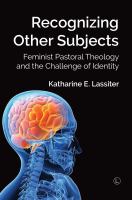
Recognizing other subjects : feminist pastoral theology and the challenge of identity, by Katharine E. Lassiter, 2016. BT83.55 Las.
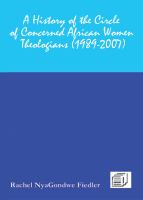
A history of the Circle of Concerned African Women Theologians (1989-2007), Rachel Nyagondwe Fiedler, 2017, BR1430 Fie.
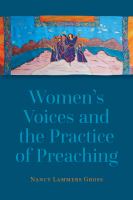
Women’s voices and the practice of preaching by Nancy Lammers Gross, 2017 BV4211.3 Gro.
Newly available as ebooks are :
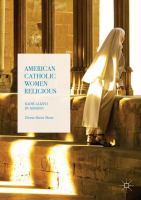
American Catholic Women Religious Radicalized by Mission by Donna Maria Moses, 2017
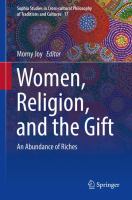
Women, Religion, and the Gift : An Abundance of Riches, ed. Morny Joy 2017
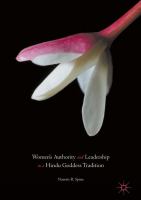
Women’s Authority and Leadership in a Hindu Goddess Tradition by Nanette R. Spina, 2017
New College Library has a regular display of new books at the far end of the Library Hall, close to the door to the stacks. Details of all new books are available via DiscoverEd.
Christine Love-Rodgers, Academic Support Librarian – Divinity
Collections
 Hill and Adamson Collection: an insight into Edinburgh’s past
My name is Phoebe Kirkland, I am an MSc East Asian Studies student, and for...
Cataloguing the private papers of Archibald Hunter Campbell: A Journey Through Correspondence
My name is Pauline Vincent, I am a student in my last year of a...
Hill and Adamson Collection: an insight into Edinburgh’s past
My name is Phoebe Kirkland, I am an MSc East Asian Studies student, and for...
Cataloguing the private papers of Archibald Hunter Campbell: A Journey Through Correspondence
My name is Pauline Vincent, I am a student in my last year of a...
Projects
Cataloguing the private papers of Archibald Hunter Campbell: A Journey Through Correspondence
My name is Pauline Vincent, I am a student in my last year of a...
Archival Provenance Research Project: Lishan’s Experience
Presentation My name is Lishan Zou, I am a fourth year History and Politics student....