Charles Lyell’s World Online events

On the 9th and 16th of February we were joined by over 250 people from 17 countries to learn about our progress and future plans to make Charles Lyell’s notebooks and archives accessible online through our forthcoming Charles Lyell’s World Online website. For those who were unable to join us may view these recordings. Whilst the first 35 minute section of each event are similar each event had a unique live question and answer part.

9th Feb event

16th Feb event

Charles Lyell’s World Online events

To learn more about our new funding priorities to help us accelerate our digitisation and online plans please contact David McClay, Philanthropy Manager, Library & University Collections david.mcclay@ed.ac.uk 

Find out more about supporting the Collections. 

Charles Lyell’s World Online funded

We are delighted to announce that we will shortly be receiving a generous donation from the International Association of Sedimentologists to fully fund the design and development of a new website: Charles Lyell’s World Online.

Daryl Green FSA FSAScot, Head of Special Collections, writes “This gift will allow us, over the next two years, to develop an online resource of digital photographs of the archives and notebooks, alongside transcriptions, indexes and catalogues, interpretation and contextual content so that anyone, from seasoned researcher to the merely curious, can easily navigate and discover the richness of the Lyell archives.

Thank you to the IAS Bureau and members for sharing our vision for making the Lyell archives accessible.”

The International Association of Sedimentologists is a Not for Profit Organisation, known for academic publishing and supporting students field and lab work, conferences and other public events.

To learn more about our new funding priorities to help us accelerate our digitisation and online plans please contact David McClay, Philanthropy Manager, Library & University Collections david.mcclay@ed.ac.uk 

Find out more about supporting the Collections. 

Introducing Charles Lyell’s World Online events

We’d like to invite you to our Introducing Charles Lyell’s World Online event, running on Tuesday 9th and 16th. Hear from Library staff and guests why Lyell and his archives are so important and how we plan to share them. This will include hosting high quality images on  our new website Charles Lyell’s World Online.

For the question and answer part we are pleased to receive questions in advance (email: protocol.office@ed.ac.uk) or during the event. If we are unable to answer all questions during the events we will post answers on this blog.

Looking ahead the fuller potential of the Lyell notebooks and archives are about to be realised, we look forward to sharing these ambitions and progress with you.

To book [ctrl + click to follow link]

Introducing Charles Lyell’s World Online Tickets, Multiple Dates | Eventbrite

If you have any issues booking or have any other questions please contact David Mcclay, Philanthropy Manager, Library & University Collections at david.mcclay@ed.ac.uk

Lyell notebooks


The Charles Lyell archives feature in the Arts Council England’s Cultural Gifts Scheme and Acceptance in Lieu annual report 2020/21 .

Both schemes are remarkably important in ensuring important cultural collections are cared for by the right public institutions. The 2020 allocation of the extensive Charles Lyell archives to the University of Edinburgh Library, thereby reuniting them with his other papers including his 294 notebooks, is just one example of the scheme producing a wonderful result.

Sincere thanks from the University of Edinburgh go to all of the staff, volunteers and supporters who make these schemes such a success.


David McClay david.mcclay@ed.ac.uk

Philanthropy Manager, Library & University Collections

Lyell’s School of Rock

Juliette Lichman working on Lyell digitisation assessment

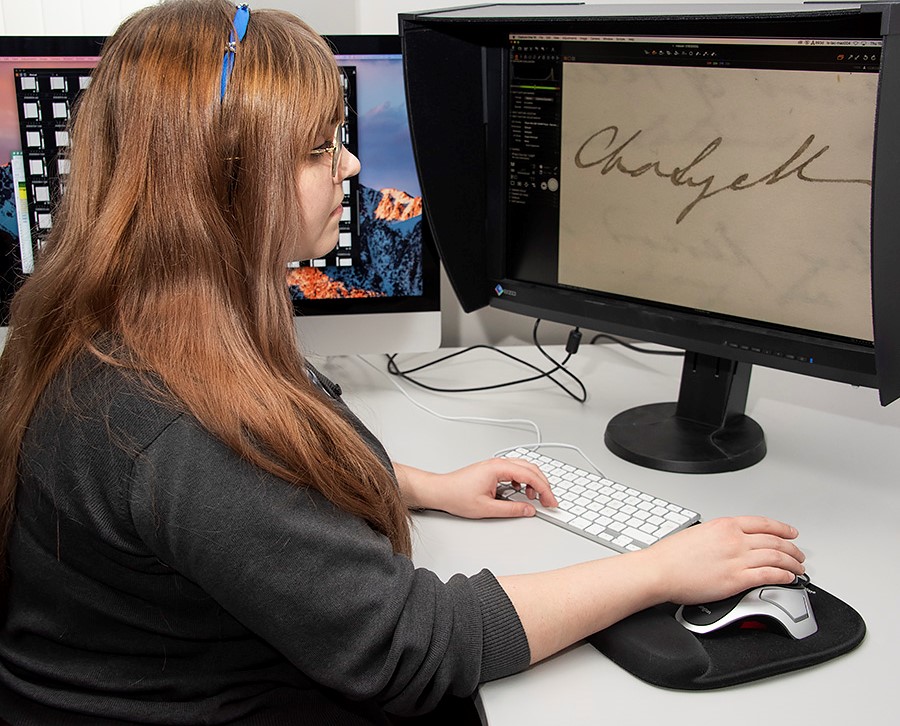
In November 2019 the Library excitedly welcomed Sir Charles Lyell’s two hundred and ninety-four notebooks into its Special Collections. With support and funding from leading institutions, groups and donations pledged from over 1000 individuals, this tectonic acquisition meant the notebooks were able to stay in the UK and join the Library’s existing collection of Lyell-related materials. As part of the DIU team, I was lucky enough to photograph Lyell’s notebooks, working with the world’s finest quality cameras to digitise a previously private collection into the public sphere and beyond.

Before I dig a little deeper I would like to share a quote from Charles Withers, who we filmed late last year talking about Lyell. He captures the essence of these notebooks perfectly in his description;

“They contain, in a sense, the emergence of thought of one of the world’s leading Earth scientists. But Lyell is much more than that. Lyell was a leading geologist but he was also a geographer, an antiquarian, an archaeologist. He writes with literary references, he writes with a lawyer-like precision, and he’s in touch with very many people whose names, along with Lyell’s, inform our understanding of the emergence of 19th century science.”

Professor Charles W J Withers, Ogilvie Chair of Geography,
University of Edinburgh, Geographer Royal for Scotland


We’re very lucky that Lyell was such a great organiser and essentially catalogued his notebooks for us. With a robust system of pagination and a glossary, he was able to quickly reference information when needed. These small, unassuming notebooks accompanied him everywhere, and in his regular ‘Memoranda for Town’ (a.k.a. to-do lists) there are mentions of particular notebooks which he wanted to pack for later reference, as seen in no.4 below. Very conveniently the locations he visited are neatly labelled on the front of the notebooks. The writing within, however, can be difficult to decipher in some cases, especially where Lyell used his own form of shorthand and references, or if he was in the field resisting against the elements and pressure of the wind.

I find that to-do lists are a simple and yet revealing insight into our every day lives and passing thoughts; little reminders which help us to achieve a larger goal or shape our daily lives. Without having to read a whole passage as you would in a journal, we are able to get a sense of Lyell’s day to day life.


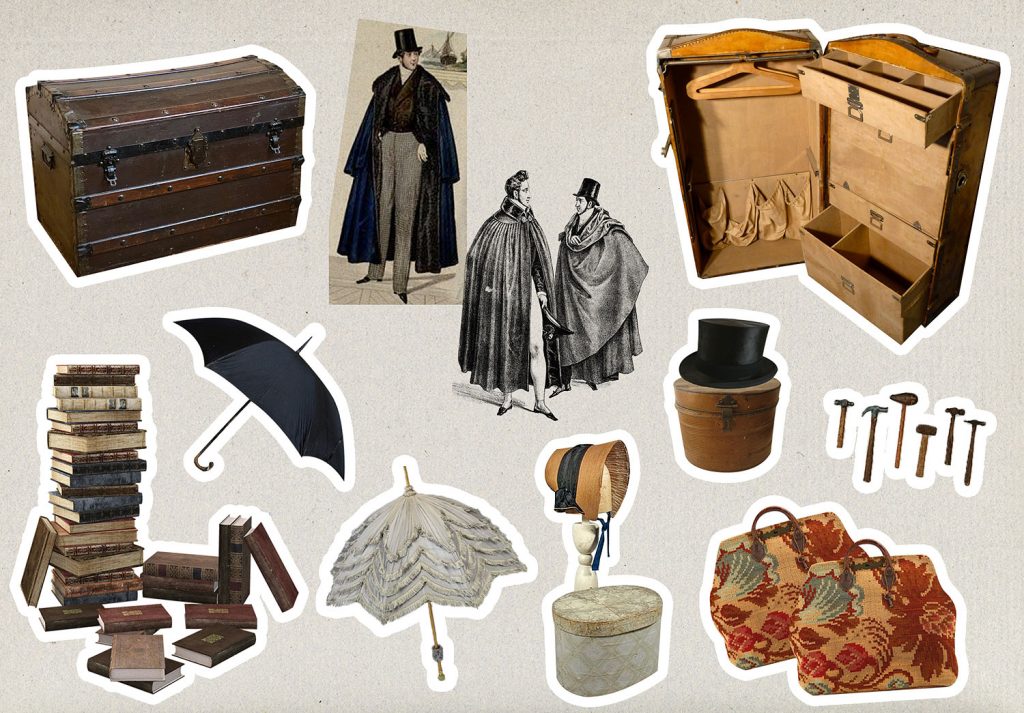
My favourite list is for items to take on an upcoming voyage. There is a glimpse of ‘Lyell the husband’, as he mentions a hat box and a bonnet box, separately, and again, a parasol and an umbrella, alluding to his wife’s presence with him. Indeed, this notebook is from 1837 and the catalogue description indicates:

“This notebook was kept by Lyell during his travels with Mrs. Lyell to Denmark and Norway, where they focused on contact zones between sedimentary rocks and large intrusive bodies of granite and syentie, as well as dykes and sills.”

If you wondered what it was like to travel with Lyell, this is a great example of how he packed light.

 

I came across an example of ‘Lyell the brother’ in this simple note. His sister, Marianne was a keen lepidopterist, and enjoyed collecting and naming insects. This was especially popular in Scotland, where much of the flora and fauna had no official name. He writes, ‘Curtis –  No. 1. Did he not find a spider’.  Maybe it was of personal interest, but there is no doubt he would have had illuminating conversations with his sister about entomology and the natural world, perhaps describing foreign insects he encountered in the field, to her delight!


Lyell was well acquainted with the notable entomologist, John Curtis which is evident in this letter he sent to his sister in 1827;

“Dear Marianne, Curtis sends me a note to say that there are good things among the Spring insects, and says the Miss Lyells will do wonders in Scotland. He hopes you will get some general knowledge of botany, as a little knowledge even of Scotch plants, would, he says, double the value of your entomological information. “


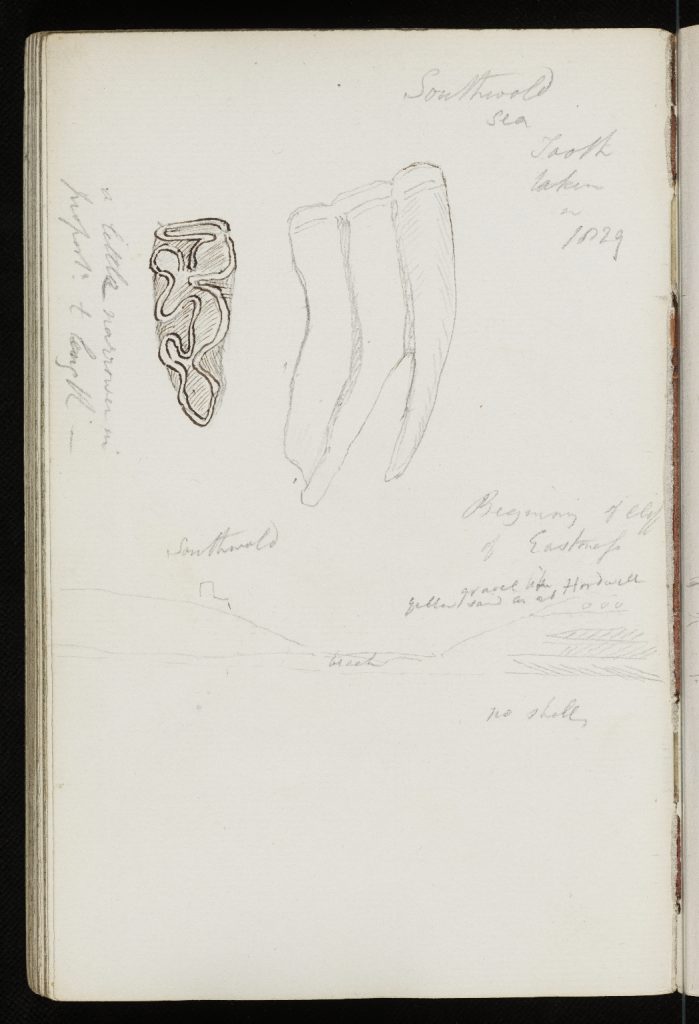
Another favourite find of mine was this illustration of what I assume to be a bovine tooth, with a sketch of Southwold Sea and the beach where he found it. After walking back and forth along the beach, looking intently at the sand for specimens, he stops and notes sadly “no shells”, only teeth!
 

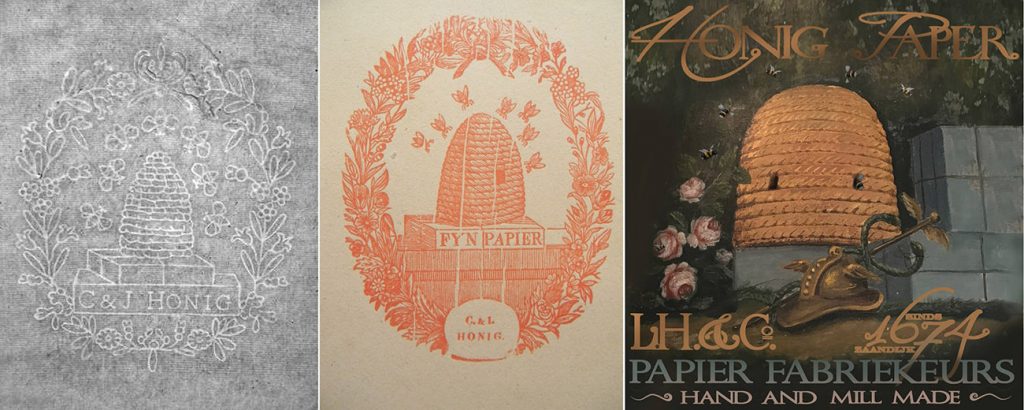
My most recent find in the notebooks was the most exciting by a landslide. We often come across interesting and unique watermarks in our department, but we found one in the notebooks which was very sweet and ornate. This was found in a loosely bound section that Lyell added to the start of a notebook, acting as a preface. The watermarks in the corresponding volume do not bear the same image, so it’s likely that he needed extra paper while travelling and bought some directly from the supplier.


The ‘Beehive’ watermark originated with a family of Dutch papermakers by the name of Honig [honey], who owned mills in Zaandyk (1675–1902). The coat of arms of the Honig family (incorporating the beehive motif) became a watermark extensively copied throughout the Netherlands and abroad in places such as Russia and Scandinavia.1 The ‘Beehive’ watermark became a common motif for Dutch papermakers and those who wished to allude to Dutch papermaking. Eventually it also came to represent a particular paper size.

National Gallery of Australia
https://nga.gov.au/whistler/details/beehive.cfm


Here are a few examples of watermarks and branding from C&J Honig. Note that ours is very similar to the first watermark, with the exception of larger bees.
 

We’re thrilled that this second batch of notebooks is now digitised and available online for all to enjoy. I photographed Lyell’s notebooks for the majority of the year, and with the added lockdown and social distancing restrictions, for a time it was just myself and the notebooks in the DIU. I will certainly miss seeing Lyell’s familiar scrawling hand and pencilled field sketches – intimate notes that he likely never anticipated sharing with anyone.

It’s been just over a year since our acquisition of these notebooks and it feels as though we have only scratched beneath the surface of the treasures contained within. They are a rare and fascinating glimpse into this famed geologist’s daily life, and like many others I shall be eagerly awaiting the transcriptions and new discoveries from this most beloved rockstar!

Juliette Lichman
Photographer


Useful Links:
Virtual Event: An Introduction to Charles Lyell

Engraving of Charles Lyell, and the quote "The present is the Key to the past."We are excited to offer a new opportunity to experience this collection, a Zoom presentation by the Lyell Project staff on 10 December 2020 at 1pm GMT. This event reveals the ongoing work  at the University of Edinburgh with the geological collection of Sir Charles Lyell, a rich corpus of material including his notebooks, family papers, and geological specimens.
Elise Ramsay, Project Archivist, will introduce Lyell and show several key pieces of the collection using the Centre for Research Collection’s new innovative visualizer technology. This collection includes specimens collected by Charles Darwin, letters between Lyell and Darwin, and notebooks in Lyell’s own hand during his fateful tours to France and Italy. Dr. Gillian McCay, from the Cockburn Geological Museum at the Grant Institute, will connect Lyell’s legacy to modern scientific perspectives. Each will discuss adapting working practices over the past year to continue opening up this rich collection of earth science material.

You can find out more about the Sir Charles Lyell Collection here in this blog, and at https://www.ed.ac.uk/information-services/library-museum-gallery/crc/the-sir-charles-lyell-collection

This talk is part of the Carlyle Circle 30th Anniversary online exhibition. The Carlyle Circle was formed in 1990 and in 2020 it celebrates three decades of impact, highlighting the many ways legacy giving has supported opportunities for world-leading teaching and research.

Instructions to join this free talk will go out to all attendees in advance of the online event. We welcome any who are interested, and look forward to seeing you.

https://www.eventbrite.co.uk/e/mapping-a-remarkable-life-a-virtual-introduction-to-the-lyell-collection-tickets-129715619911

From the Stores #3: Notebook No. 13

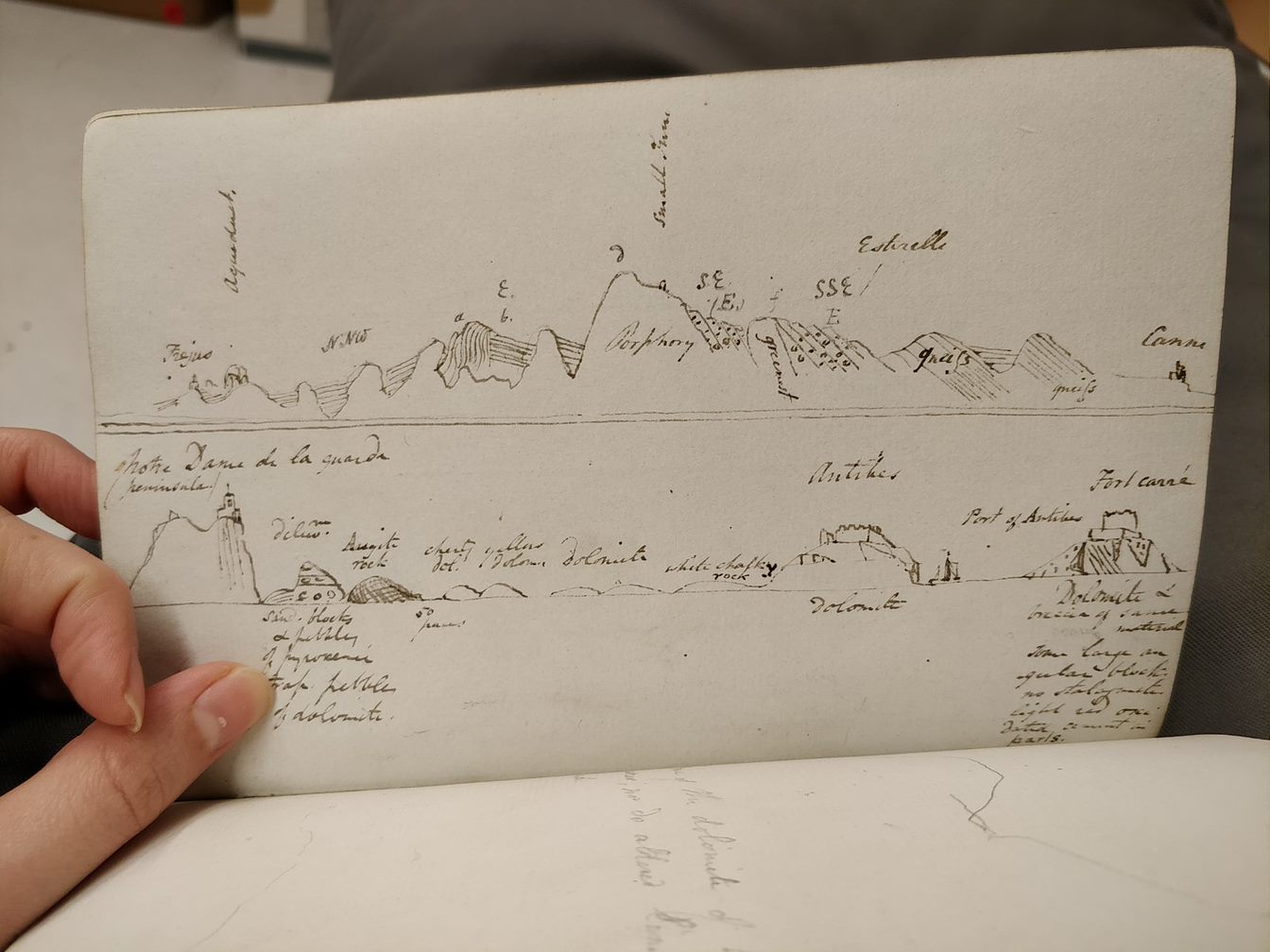
This week I spent some time working with the following notebook, No. 13, which Charles Lyell kept during his tour in southern France in 1828. This tour was originally started with Roderick and Charlotte Impey Murchison, and was foundational in Lyell’s decision to devote his work to geology over law, and also to begin work to write Principles of Geology. It was in comparing the rock formations of Paris to the south of France, Montpellier, Nice, and Italy that he found common fossilised shellfish, and concluded that these areas must at some point have been underwater, and have since been slowly lifted. (Maddox, p. 42) It was here, too, that in writing to Murchison from Naples 15 January 1829, he devoted himself to the study of geology, “I shall never hope to make money by geology, but not to lose, and tax others for my amusement.”

The notebook is filled with journal style writing, daily entries, with full page detailed sketches, as pictured below. Lyell writes in ink and pencil. Subjects include: Valley of Magna, Etangs, Comparison of Montepellier calcium deposits to those in Paris.

References:

Maddox, Brenda. Reading The Rocks. Bloomsbury Publishing, 2017.


Elise Ramsay

Project Archivist (Charles Lyell Collection)

Centre for Research Collections, University of Edinburgh

enewcome@ed.ac.uk

From the Stores #2: Gideon Mantell

This week in the stores, I began to delve into the box lists which describe the new-to-us collection of further papers of Charles Lyell and the family which was received by the University in the summer through the Acceptance in Lieu scheme. These are 18 boxes of papers and correspondence of Lyell, and I have embarked on scanning these box lists which will prepare for more in-depth cataloguing in the short to medium term. Here is what most box lists look like:

Gideon Mantell was a frequent correspondent of Lyell, and their life-long relationship started with a bang in 1821, when Lyell casually called on Mantell while visiting his old school at Midhurst. Having heard tell of the doctor from some workmen in the nearby quarry, Lyell rode the 25 miles over the South Downs and knocked on Mantell’s door nearly at dusk. Presumably they might have known each other’s names from the Geological Society, but one would imagine the visit would still have come as surprise at best. However, common interest prevailed, a well-stocked fossil cabinet provided great amount of conversation, and the two reportedly gossiped until morning. (Bailey, p. 48) Their published letters cover all from scientific theories, discoveries, to the latest gossip and accounts from the GeolSoc and Royal Society, of which they were both members.

In a week which is dominated by a race for a vaccine, we see similar scientific rivalries in the early years of geological science. Today Mantell is known for bringing to light and describing dinosaur reptiles. These letters from 1851 with Lyell may relate to a legendary dispute between Mantell, Lyell, and Sir Richard Owen surrounding a reptile fossil which was found in ancient rock, which previously had only yielded fish. At this time, years before Darwin’s Origins of the Species, views of the evolution of life were split into two camps; progressionists (today, this sect is called orthogenesis) believed that organisms have an innate tendency to evolve to a particular goal, and most followers believed this to mean a trend of increasing biological complexity through time. Any description of a tree of life usually falls within this hypothesis. Lyell and Mantell opposed this belief, identifying as anti-progressionists. A famous dispute occured between Lyell, Mantell, and Owens when Mantell and Owens wrote opposing descriptions of this curious fossil. The legend resolved with Owens in the wrong, and Lyell and Mantell in the right, but research using the archival collections of Owens and Mantell proves the legend wrong, revealing that Lyell urged Mantell, thought infirm and ailing, to write the description long after Owens had already been tapped to view and describe the fossil, and it was Mantell and Lyell who were in the wrong. This is a woefully clipped version of events, but I find the true value of work with archives here: with access and research to correspondence archives such as this one, the true stories of history are told, and legends can be found faulty.

References:

Charles Lyell, Sir Edward Bailey, 1962

For more about this progressionist dispute, see Michael J. Benton’s Progressionism in the 1850s: Lyell, Owen, Mantell and the Elgin fossil reptile Leptopleuron (Telerpeton)


Elise Ramsay

Project Archivist (Sir Charles Lyell Collection)

From the Stores #1: Packing List for Fieldwork

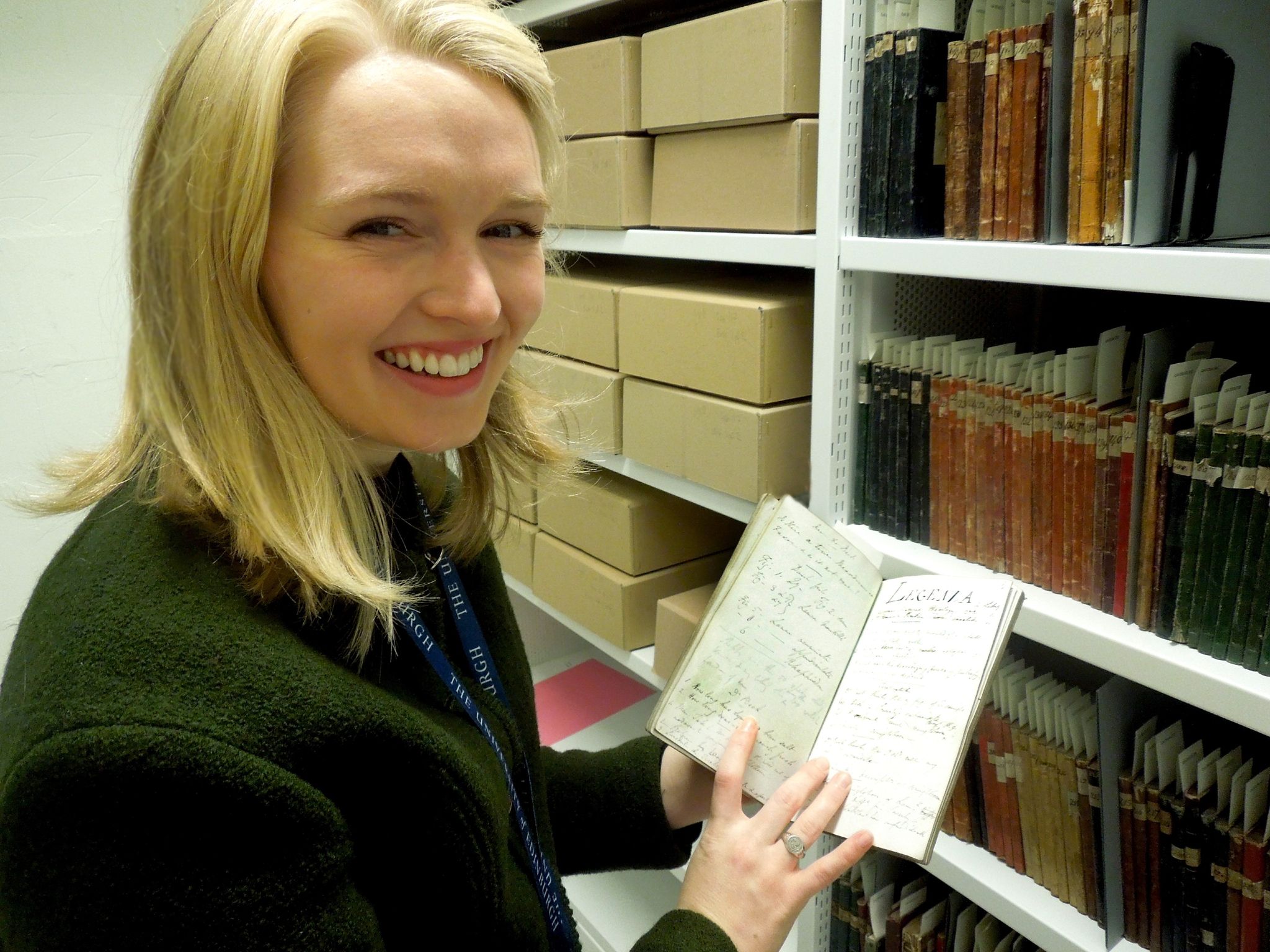
Elise Ramsay, Project Archivist, holding an open scientific notebook and smiling

Elise Ramsay at work in the stores

Progress in the Lyell project has taken a giant leap these last two weeks thanks to two developments. Firstly, physical work in the stores where the collection is secured at the University Main Library has been deemed safe, if approached with new procedures, which has meant I have been able to access the collection in person for the first time since March 10th. This has meant the first stage of rapid capture and transcription of Lyell’s indexes has begun. This level of detail will make for rich metadata in the catalogue, and eventually allow researchers to search across the notebooks by subject matter. Thus the need for a new series of blog posts, released each week on Tuesday, where I can highlight all the discoveries I made in working with the collection!

Secondly, I am so excited that Nicky Monroe, a former History of the Book student, has agreed to volunteer on the project remotely. He will be transcribing these indexes and researching Lyell’s life for extra context in the catalogue. We will hear about his progress and discoveries in the collection in the coming weeks!

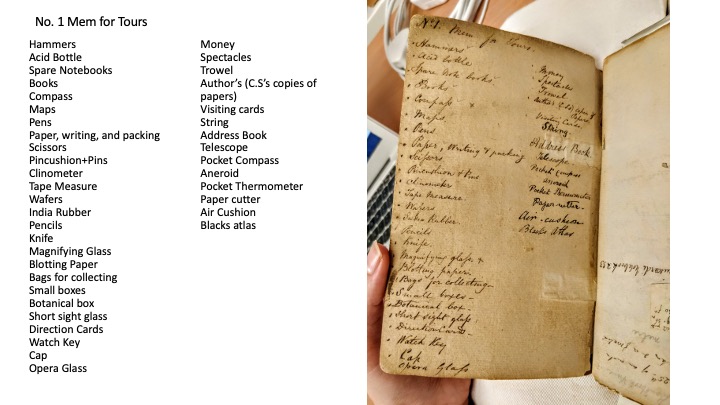
From my time in the stores last week, I captured this fantastic packing list, inscribed by Lyell in the earliest notebook we have of his, from 1825. During this time he would have been balancing his fondness for geology with his law work, which is reflected in the organisation of this notebook. The first half is brief notes on cases, mainly tenancy law and divorce cases. The second half begins from the back of the notebook, and reverse orientation compared to the first half, where Lyell writes notes from a Geology lecture he attended April 29 1825.


It is during this time, while he struggled with his law practice and his eyesight, that he invested more in geological field trips, often with visiting gentleman scientists. In the early summer of 1824 Lyell and Prevost travel from London to Bristol and Land’s End, ending up at Lyme Regis when Mary Anning made her great discovery of two complete Ichthyosauri. (Bailey, 1962) In the autumn, Lyell focuses on his Scottish roots, living at the Kinnordy estate and hosting William Buckland (his geology tutor from Oxford) to venture to Stonehaven, Aberdeen, Elgin, and Inverness to Brora; then back to Inverness and, after a quick jaunt to Brora, south by Blair Atholl, Glen Tilt, Perth, and Kinnordy to Edinburgh. Throughout these journeys, they were  “comfortably interlarded with breakfasts and dinners without end”, stopping to see Sir James Hall near St. Abb’s Head, and twice at the Jameson’s. (Lyell and Lyell, 2019) I would bet that this packing list would have been in preparation for any of these foundational field trips. Stay tuned for Tuesday next week when another installment will be published!


References

Bailey, E., 1962. Charles Lyell. Edinburgh: Thomas Nelson and Sons Ltd.

Lyell, C. and Lyell, K., 2019. Life, Letters And Journals Of Sir Charles Lyell, Bart. Alpha Editions.

Thank you Friends

Friends of the National Libraries

Friends of Edinburgh University Library

The University of Edinburgh’s Lyell archives continue to grow, thanks to the support of our generous friends. The Friends of the National Libraries and the Friends of Edinburgh University Library united to help us acquire a fascinating Lyell family album of 118 letters and 57 portraits.


The album’s correspondents are quirkily described as “Divines, metaphysicians and philologists.” They date from 1805 to 1899 and include letters from Charles Kingsley, Samuel Wilberforce, Ralph Waldo Emerson, John Stuart Mill, Herbert Spencer and Wilhelm and Jacob Grimm.

Lyell album of letters and portraits

The correspondence appears to be mainly unpublished and will be an important resource for researchers seeking to understand the vital social, scientific and intellectual network of Sir Charles Lyell and his extended family.

The album cost $22,000 from an American dealer and was supported by a £10,000 from the Friends of the National Libraries and £500 from the Friends of Edinburgh University. The album’s contents will join his notebooks and other archives as part of our ambitious Creating Charles Lyell’s World Online project. The ongoing support of our many Friends deserves our heartfelt and warm thanks.

David McClay, Philanthropy Manager, Library & University Collections

david.mcclay@ed.ac.uk