Over the course of digitising the Roslin Slide Collection, amongst all the slides of tables, charts and the like, it has been the images of people, and their animals, that have grabbed my attention most of all. I have noticed two particular styles of photographic composition that are common throughout; the group shot (still popular today of course!) and the ‘one man and his animal’ shot. These images provide a sort of typology where the composition often remains the same with the people and environment changing.
Category: <span>Browse by School</span>
As there were several separate requests recently for images from the splendid ‘Song School St Mary’ manuscript by Phoebe Anna Traquair, we decided the time was right to digitise the book from cover to cover, replacing some fairly mixed quality old digital images and preparing it for the LUNA Book Reader http://images.is.ed.ac.uk/luna/servlet/s/109unz . This item is one of my favourites (yes, I know I have many…), and it is a beautifully illuminated, vibrantly coloured, jewel-like treasure. Although made in 1897, Traquair created this on vellum, which adds to the impression of exquisite quality.
Last week Mercator’s beautiful Atlas sive Cosmographicae found its way into the DIU, only after it arrived did we discover that it was actually his 503rd Birthday, a fact celebrated by google with a Google Doodle http://www.google.com/doodles/gerardus-mercators-503rd-birthday.
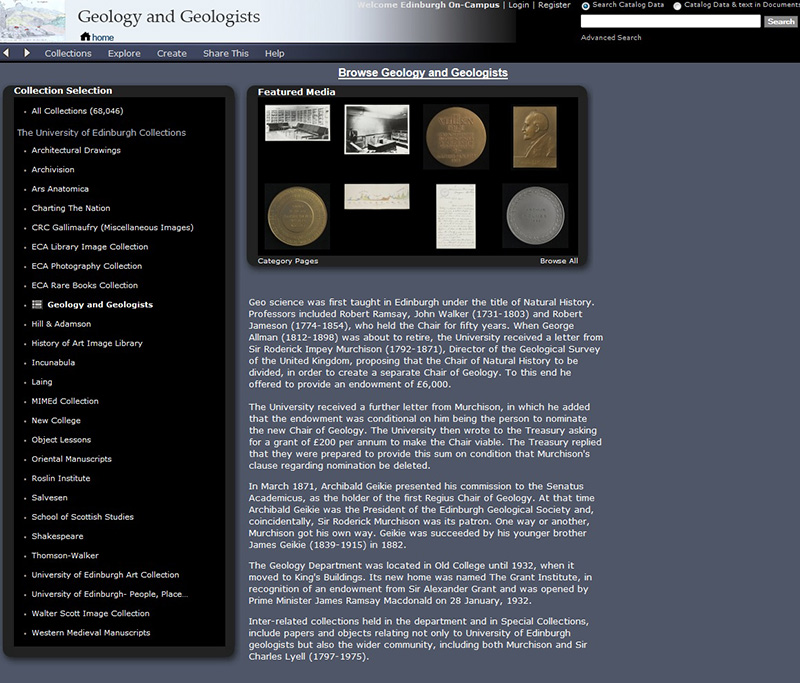
Last week we were very excited to see a new LUNA collection go live- ‘Geology & Geologists’. This brings together images from the CRC’s Lyell collection (a wonderful mixture of correspondence and drawings), Arthur Holmes Geology medals, as well as recent images from The Cockburn Museum, School of GeoSciences. The Cockburn collection contains photographs of past Professors, and historic photos of the department as well as plates of fossilised fish.

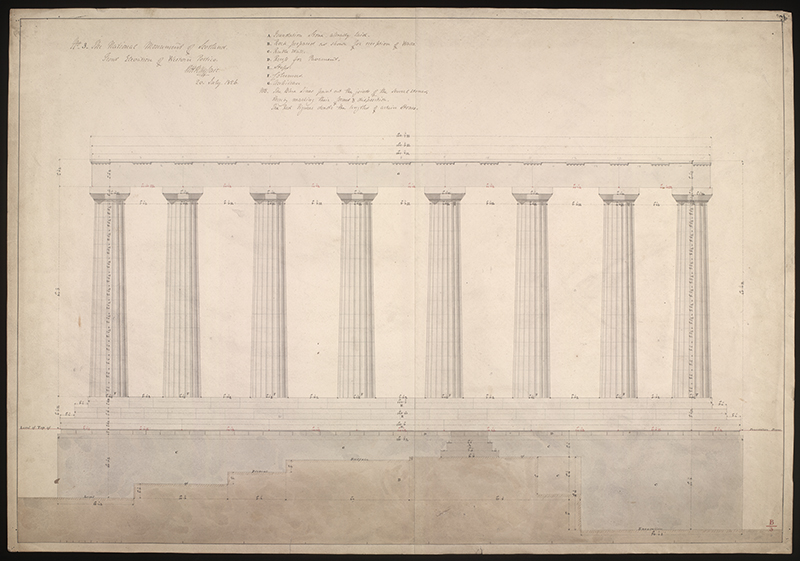
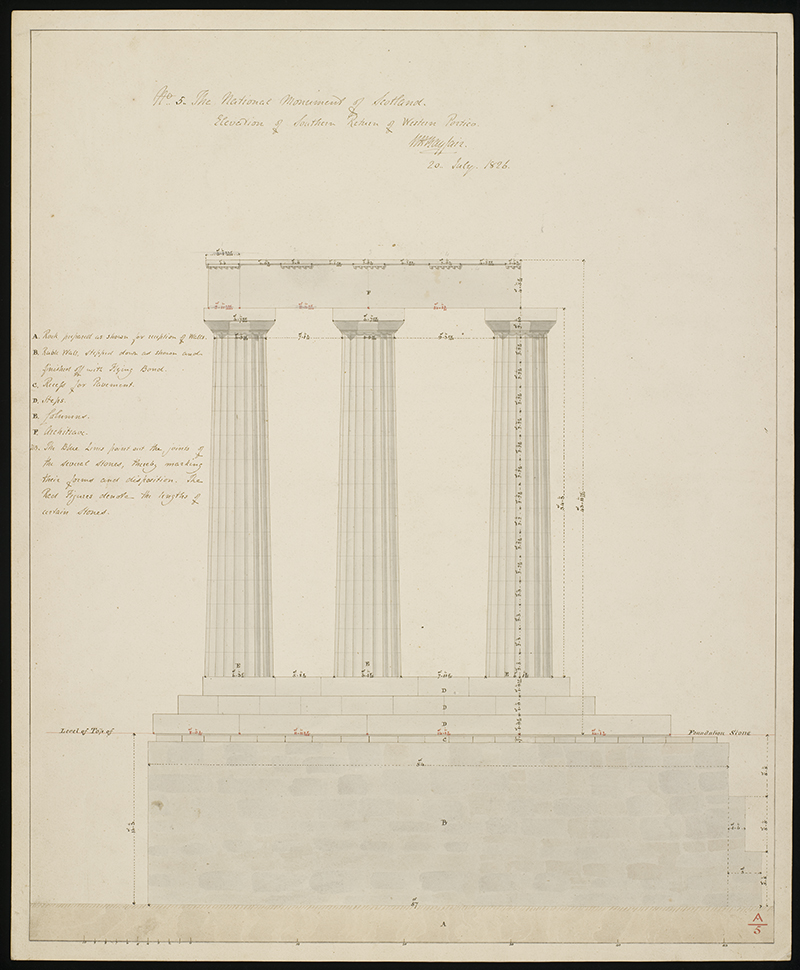
The Digital Imaging Unit has digitised many architectural drawings held in University of Edinburgh special collections over the years. They always present a challenge because of thier scale. They offer a fascinating glimpse of history in relation to many of the buildings in Edinburgh that we are familiar with on a daily basis. I think many of us have a positive relationship with the National Monument more commonly known as the Acropolis on Calton Hill.
We kick off 2015 with the addition of 3 new Book Readers added to LUNA. The first two are both music manuscripts that came down to the DIU as part of the Readers Orders trolley. It is not often that we receive volumes to be digitised in their entirety this way, so it seemed a good opportunity. As a result we spared a bit of time to do the additional work to prepare them for the book reader software after the High Resolution images had been delivered to the customers.
Currently I am based in the Digital Imaging Unit where I am responsible for digitising a large number of glass plate positive slides (about 3500!) which make up part of the Towards Dolly Project within the Roslin Collection. The digitisation project itself – aptly named ‘Science on a Plate’ – is funded by the Wellcome Trust and is due for completion at the end of April 2015. Only this week, the first batch of 1000 images have been made publicly accessible via the University of Edinburgh Image Collections website.
Having worked through over 1300 images so far, it is difficult to know where to start when attempting to whittle down the numbers to a small selection of favourites to post here. I have, therefore, simply chosen a handful of images that seem to jump out at me for one reason or another. These images do something to represent the wide-reaching nature of the Roslin Glass Slides Collection; many document people and animals at a particular time and place, whilst others are more informative and study-based. The collection contains images that span the globe. I am constantly surprised as I move through them. One minute I will be looking at a photograph of a Clydesdale horse at a show in Brunstane Park, Edinburgh, and the next minute I will be looking at a sable in eastern Africa or an indigenous tribe in India. The collection is vast, diverse and engaging all at once.
An exciting new exhibition on the 6th floor of the main library in the Centre for Research Collections opens on the 13th November 2014 and runs until 27th of February 2015. The exhibition will include a selection of Edinburgh Universities collection of Paolozzi plaster maquettes which are wonderful three dimensional drawings of his ideas. The Digital Imaging Unit was tasked to photograph the Josephine Baker Bronze to coincide with this exhibition. We have produced a short day in the life film of the Digital Imaging Unit at work on the Paolozzi Bronze which you can see below. A larger better quality version is available by clicking the vimeo link below the film.
I first became aware of Paolozzi through an exhibition held at the Royal Scottish Academy for the Edinburgh 1984 International Festival called "Recurring Themes” , I still own the catalogue. His work and life made a lasting impression on me as a young man. The early collage work blew my mind and the way he fed pop culture back to ourselves dismantled and rearranged raising questions about pop culture itself was remarkable.

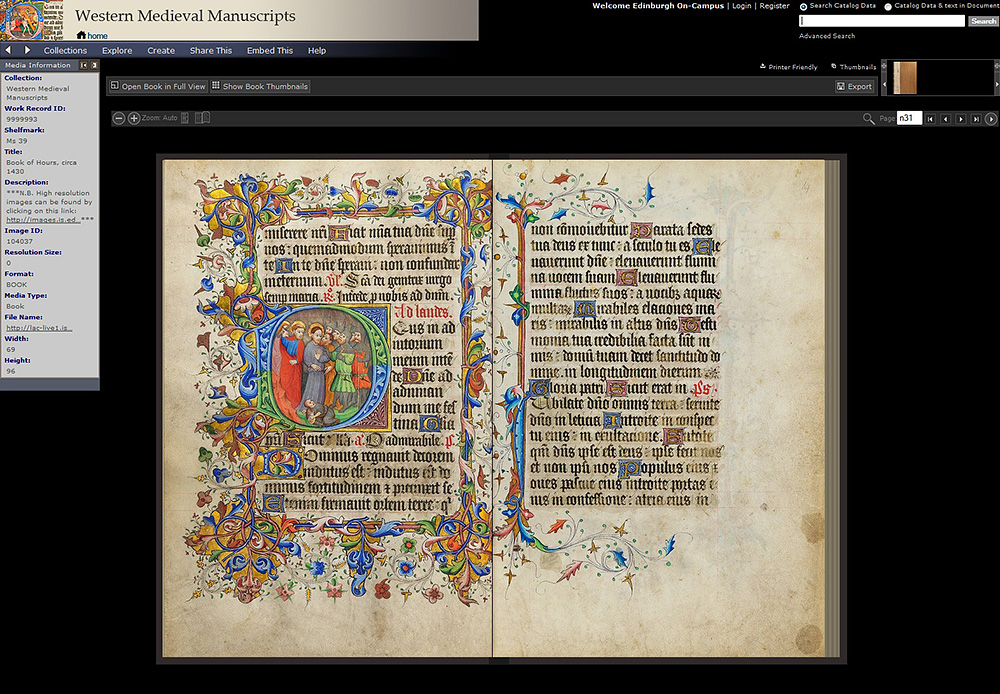
We are delighted to announce that 2 manuscripts have been added to our growing collection of Book Readers in LUNA!
The first is Ms 39, an amazing early 15th century Book of Hours, with rich gold work, detailed miniatures and vibrant colours. See http://images.is.ed.ac.uk/luna/servlet/s/d4wx22 for the Book Reader. A note in the front of the book claims this is the most beautiful book in Scotland, what do you think? What are the other contender’s?

Part of our remit in the DIU has been to work through a list of ‘Iconic’ Items from the collection in our spare time. Over the years we have completed the digitisation of some outstanding manuscripts and collections in this way, from the Hill and Adamson photographs (a personal favourite- see http://images.is.ed.ac.uk/luna/servlet/s/jl5w63) to the wonderful Laing Album Amicorum (see http://images.is.ed.ac.uk/luna/servlet/s/6oh338 ).