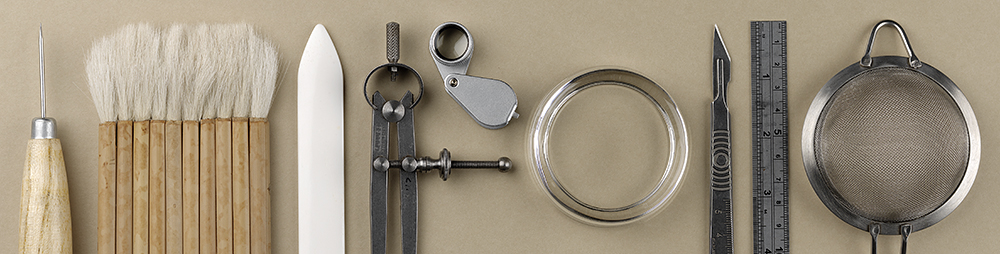
Today’s blog comes from Katherine Richey, an Edinburgh student who undertook a five-month internship with Heritage Collections from March to the end of July 2025. The internship focused on the care, documentation, and rehousing of two key paper-based collections held within the New College Collections at the University of Edinburgh: The Alumni Photograph Collection, and the Chaplains’ Files of the Church of Scotland.
People are at the heart of every collection, but never have I felt that more strongly than during my time working with the New College Collections.
When I began my role as the New College Collection Conservation Intern back in March 2025, I expected to learn a lot about paper. I didn’t, however, quite expect to encounter so many people – their stories, their portraits, their grief, and their humour – and to feel so connected to them through the material they left behind.
Split between the new conservation studio on the fifth floor of the Main Library, and New College itself, my role has involved caring for two very different, but equally fascinating collections: a series of graduation photographs dating from 1857 to the present day, and a group of Chaplains’ files belonging to the Church of Scotland. While the work focused on conservation and collections care, it also offered a rare glimpse into the lives that passed through these institutions.
A Collection of Faces
The heart of my internship was spent with the New College Alumni Photograph Collection, a series of over 180 class portraits dating from 1857 to the present day. Each one captured a graduating class from New College, tracing students, professors and expressions over a century and a half of history.
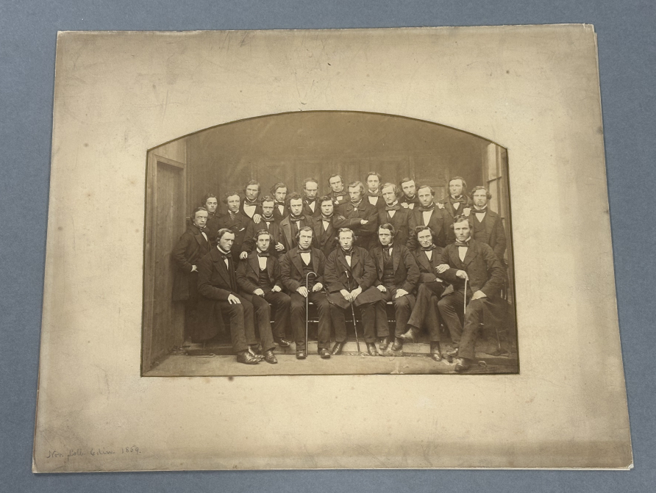
Class portrait from the New College Collection
When I first encountered the collection, it was tucked in the corner of stores and had seen better days. Although loosely organised by decade, the folders were all one size, meaning items were often sliding around or sticking out of the sides. Some were torn or delaminating, others just very, very dirty.
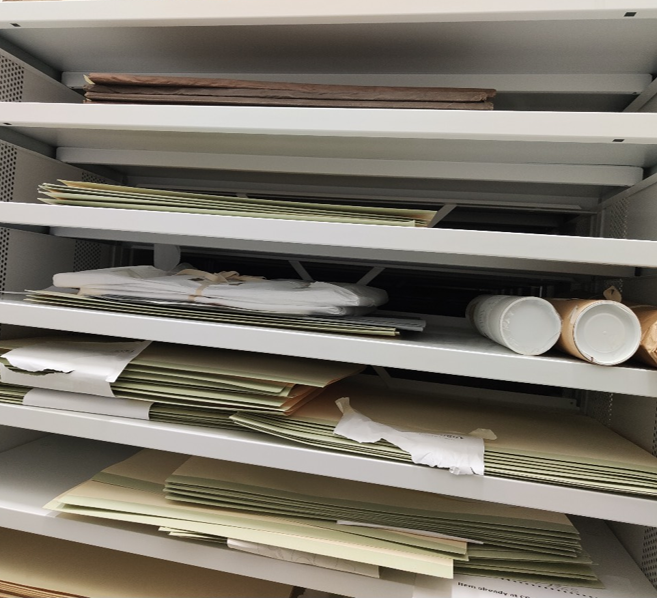
Collection on the shelf, before treatment
With a project of this scale, the first step was planning (and in turn, testing my love-hate relationship with excel). I logged each item into a spreadsheet, recording dimensions, condition issues, treatment plans and rehousing needs. This helped me break the project down into stages and order the right materials for rehousing down the line.
Then came the cleaning, with some photographs gathering more than a century of dirt. Cleaning was done in two steps: first brushing away loose debris, then gently lifting ingrained dirt with a smoke sponge. In some case, for example an 1857 image with a hand-drawn name map, I used only dry brushing to avoid damaging sensitive areas. The images responded incredibly well to this non-invasive method, with many vastly improving aesthetically as a result.
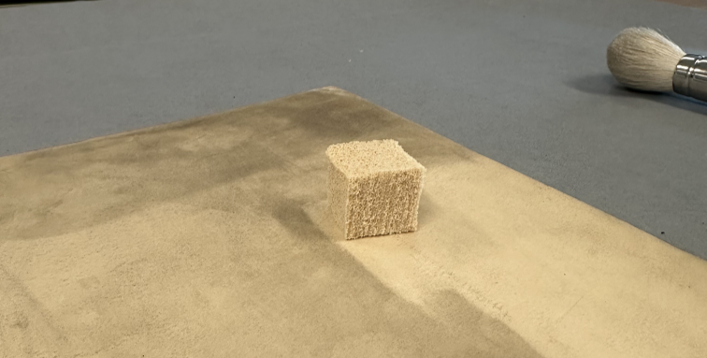
Surface cleaning the photographs with smoke sponge
After cleaning, I moved on to repairs. Using Japanese tissue and wheat starch paste, I reinforced tears and crumpled corners, repaired delaminated board, and stabilised weak areas. The limited timescale of the project meant that treatments were focused on function over aesthetics, ensuring they could be handled safely ready for future digitalisation.
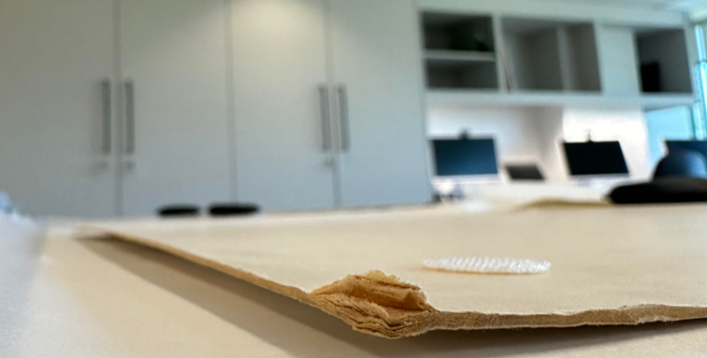
Photograph with delaminating corners, before treatment
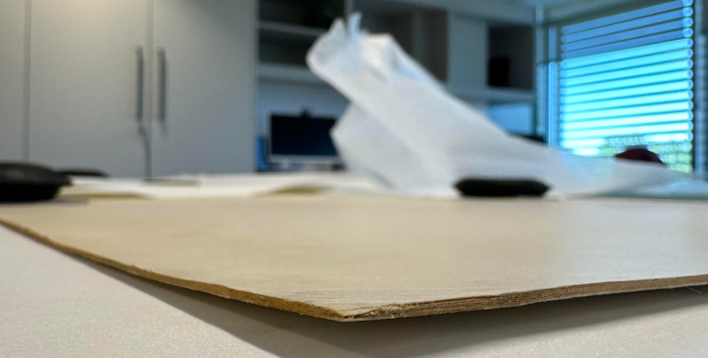
Photograph with delaminating corners, after treatment
Finally, I rehoused the collection in individual photon paper folders, placing them into groups inside drop-spine boxes. These were mostly organised by decade, where this correlated with the object’s size, but any outliers were also placed in size-appropriate boxes, with each item carefully labelled. The result is a clean, stable, and much more accessible collection, ready to be accessed more easily in New College.
Working on this project deepened my understanding of conservation as both a practical and intellectual task, and a careful balance of ethics, planning, and material knowledge.
Meeting the Ministers
Midway through my internship, my focus expanded beyond the photo collection when I was asked to support a second project: the Chaplains’ files held at New College.
These files, mostly dating from the early to mid-20th century, trace ministers of the Church of Scotland, offering a moving portrait of Scottish clerical life across the period. Many of these men had served during periods of enormous social upheaval, particularly the Second World War, with many files reflecting the emotional weight of that time, including items such as death notices, letters from ministers taken as prisoners of war, and quiet reflections on personal trauma. Here, my job was to catalogue the contents of each file, adding additional administrative data from the Fasti Ecclesia Scoticanae to ensure our records were up to date. Then, I cleaned and stabilised the materials, removing damaging fastenings, before rehousing them into archival folders for future longevity and reference.
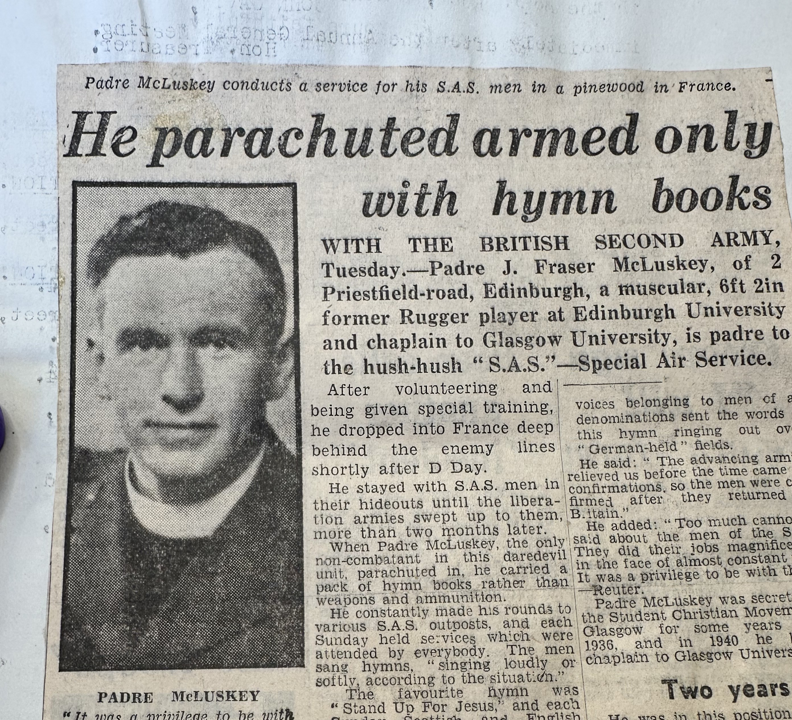
Newspaper clipping from the Chaplains’ files
Taken together, these records show how spiritual leaders themselves were shaped by the very crises they helped others to navigate. Many letters were steeped in a deep sense of duty and service, framing ministry as both a calling of faith and an act of national resilience. What stood out to me in each file was the emotional control embedded in their language; their need to appear strong, composed, and unwavering. At the same time, these documents subtly reveal how psychological strain was minimised or spiritualised, couched in terms like “exhaustion” or “unsuitability”.
I hope, from this project, further study can be done into the impact of attitudes of the period, and it goes to show how even in the most seemingly administrative of collections, the human voice finds a way through. While this collection gave me immense technical experience in rehousing, surface cleaning, and cataloguing, it also taught me to slow down, read between the lines, and respect the weight that paper can carry.
Reflections
As I come to the final days of this experience, I cannot help but to look back and realise how much I have learnt over the last five months. Where my practical conservation and collections management skills have flourished thanks to working so closely with experts, I have also developed a deeper appreciation of the true value of collections teams, and the quiet but vital work they do to ensure that our history is accessible for those to come.
My time has been greatly enriched by some brilliant experiences: hearing all about developments of the discipline at the Scottish Paper Conservators News and Ideas Exchange in the National Library of Scotland, spending time learning to treat 19th-century books, and seeing the daily ins and outs of the conservation studio, from pest traps to acquisition choices. Each of these moments have given me a wider perspective of what conservation looks like across an institution.
More than anything, however, I did not expect this work to feel so personal. A lot of conservation is described in technical terms and processes, and of course that is a significant part of the job. But what I quickly realised was that I was not just handling paper, but encountering people. Someone was in this space before me, and this is what they left behind.
Just a week before this internship ended, I graduated myself. After spending so long with the classes who had come before me, this work made my own moment even more special. I was more aware than ever, when crossing the stage, of the community I had stepped into, and the importance of the work we do to ensure their stories do not disappear.
I am incredibly grateful to have had the opportunity to support that work, and more importantly, to the incredible team who have aided me in making these collections remain accessible in the future.