‘Scotland’s last martyr’ : remembering James Renwick

February was a suitable month to remember James Renwick  (15 February 1662 – 17 February 1688). Renwick was a graduate of Edinburgh University who accepted a call to the ministry within the independent Presbyterian church ‘societies’. These communities were formed by the Covenanters, so named because they bound themselves in ‘covenants’ to maintain the Presbyterian doctrine as the sole form of religion in Scotland. They rejected the attempts of the Crown to control church government and patronage in Scotland.

Renwick’s short career included illegal field preaching, baptizing, and eluding capture by the authorities. His sermons and letter were published as tracts and pamphlets, some of which are preserved in New College Library’s Pamphlets Collection.
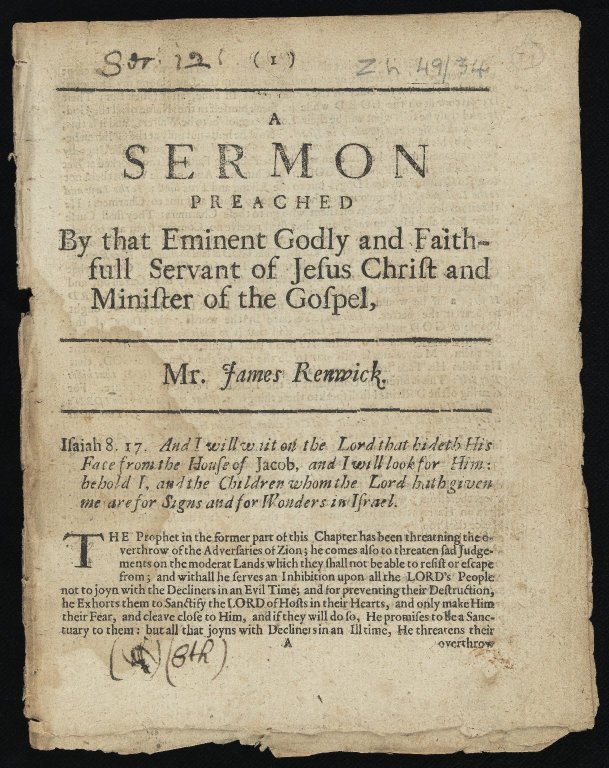
Renwick, James. A sermon.

Renwick, James. A sermon. Glasgow? : s.n., 17? .Z.h.49/34

Renwick was arrested in the Cowgate, Edinburgh, on 1 February and hanged for treason in the Grassmarket on 17 February. New College Library holds this manuscript letter of testimony:
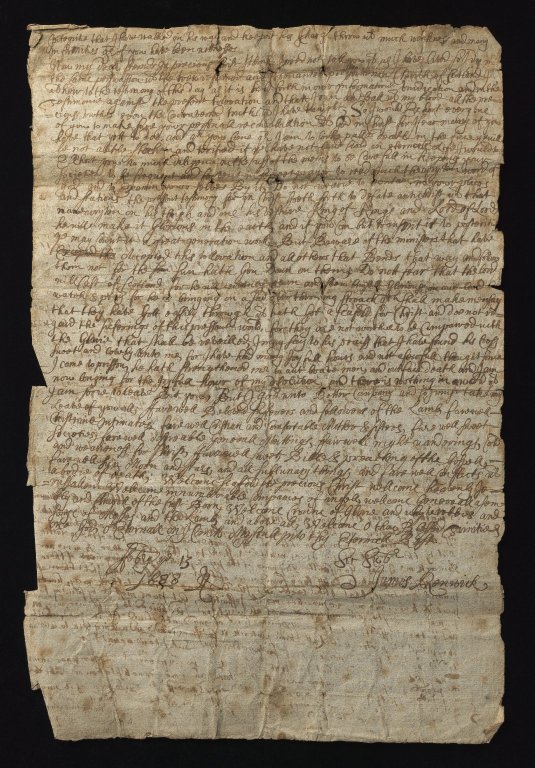
Renwick, James. Letter of testimony, Edinburgh, 13 February 1688. MS BOX 4.4.1

Renwick, James. Letter of testimony, Edinburgh, 13 February 1688. MS BOX 4.4.1

Written in prison days before his execution, he reasserts his Christian beliefs and bids a touching farewell :

“Farewell beloved sufferers and followers of the Lamb…farewell, night wanderings, cold and weariness for Christ…farewell, sun, moon, and stars, and all sublunary things…”

James Renwick’s Letter of testimony will be on display at the Centre for Research Collections, University of Edinburgh April-July 2016, as part of the ‘Given in Good Faith’ exhibition.

Christine Love-Rodgers, Academic Support Librarian – Divinity

Kirsty Stewart, New College Collections Curator
You in your small corner

The New College Library has a marvellous series of manuscript sermon notebooks dating as far back as the 1640s (ref. MS SER). It is quite common within manuscript holdings to have collections made of document type (maps, photographs, postcards etc) although that approach to archives is largely defunct now with the emphasis being on record creators and context. The provenance of the sermon notebooks varies widely and, perhaps unsurprisingly, there are sermon notebooks scattered throughout the New College archives. Some notebooks are the work of the preacher, some are copies of those who were there listening and some are copies of sermons or lectures written down by someone else.

One such notebook comes from the records of Robert Wodrow (1679-1734) (ref. MS WOD 3). Wodrow was part of a famous family of ministers, was for a time librarian at the University of Glasgow, and is an ancestor of the former President of America, Thomas Woodrow Wilson. In 1721-22, Wodrow published an important work entitled The History of the Sufferings of the Church of Scotland from the Restoration to the Revolution. Dealing with the persecution of the Covenanters after the Restoration, he coined the phrase “The Killing Time”, a phrase which persists to this day.

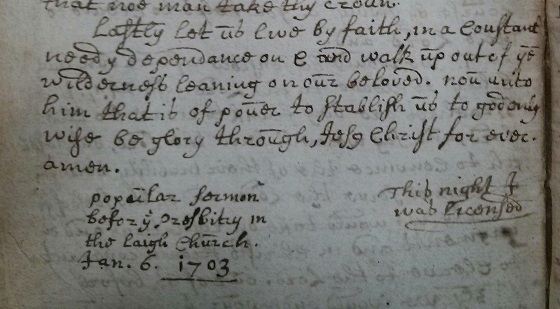
Part of the sermon notebook of Rev Robert Wodrow, ref. MS WOD 3.1.

Part of the sermon notebook of Rev Robert Wodrow, ref. MS WOD 3.1.

As you can see from the above image, taken from one of Robert Wodrow’s notebooks (ref. MS WOD 3.1), he has a neat hand and, as he did for many of his sermons, he has noted the date and place of preaching. However, the part which stood out was the short, personal note: ‘This night I was licensed’. Ministers of the Church of Scotland are given a license to preach before they can be ordained so that this must have been quite an occasion for him and of importance enough to record it in a small corner of his notebook. Working with archives, it is easy to become blasé about how old the material is or how famous or significant the person who created the document was, but moments like his make documents personal again. Not only do they remind you how special and valuable the archives are but that the famous and important of long ago were human too. Had it been today, might this have constituted Wodrow’s Facebook status?

Kirsty M Stewart, New College Collections Curator
Transcription
Lastly let us live by faith, in a constant
need & dependence on C[hrist] and walk up out of the
wilderness leaning on our beloved. nou unto
him that is of pouer to stablish us to god only
wise be glory through, Jesus Christ for ever.
amen.
popular sermon
befor the Presbitry in
the Laigh Church
Jan. 6. 1703.

The Laigh Church was a name for the Tron Kirk, Glasgow.
Laigh or laich is Scots for low.

Keeping in with the old

One of the delights of the New College Library archives is that it contains information on an array of subjects not just theological or religious topics. This is thanks in part to the original composition of New College Library from donations of libraries, which were given more often than not without worrying too much about content.

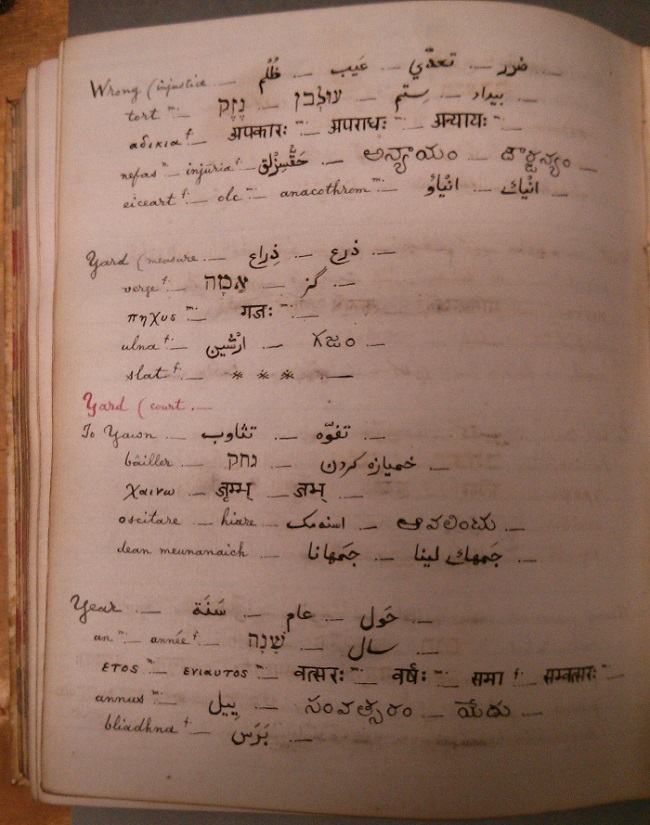
There are several places where records relating to the study and understanding of languages other than English can be found. This image is from a volume of polyglot vocabulary (ref.BIN5) written by Robert Blair Munro Binning (http://www.docs.is.ed.ac.uk/docs/lib-archive/bgallery/Gallery/records/eighteen/binning.html). According to the catalogue the languages represented are English, Arabic, French, Hebrew, Persian, Greek, Sanskrit, Latin, Turkish, Telugu, Gaelic and Hindi.

Page from Polyglot Vocabulary by Robert Blair Munro Binning ref. MSS BIN5

Aside from being a useful tome, I thought that the mix of scripts gave it a certain beauty. The page I have chosen, struck me as appropriate for this time of year, containing as it does the words ‘year’ and ‘yawn’.

Happy New Year! Bliadhna Mhath Ùr! A Guid New Year! Bonne Année! etc etc…

Kirsty M Stewart, New College Collections Curator
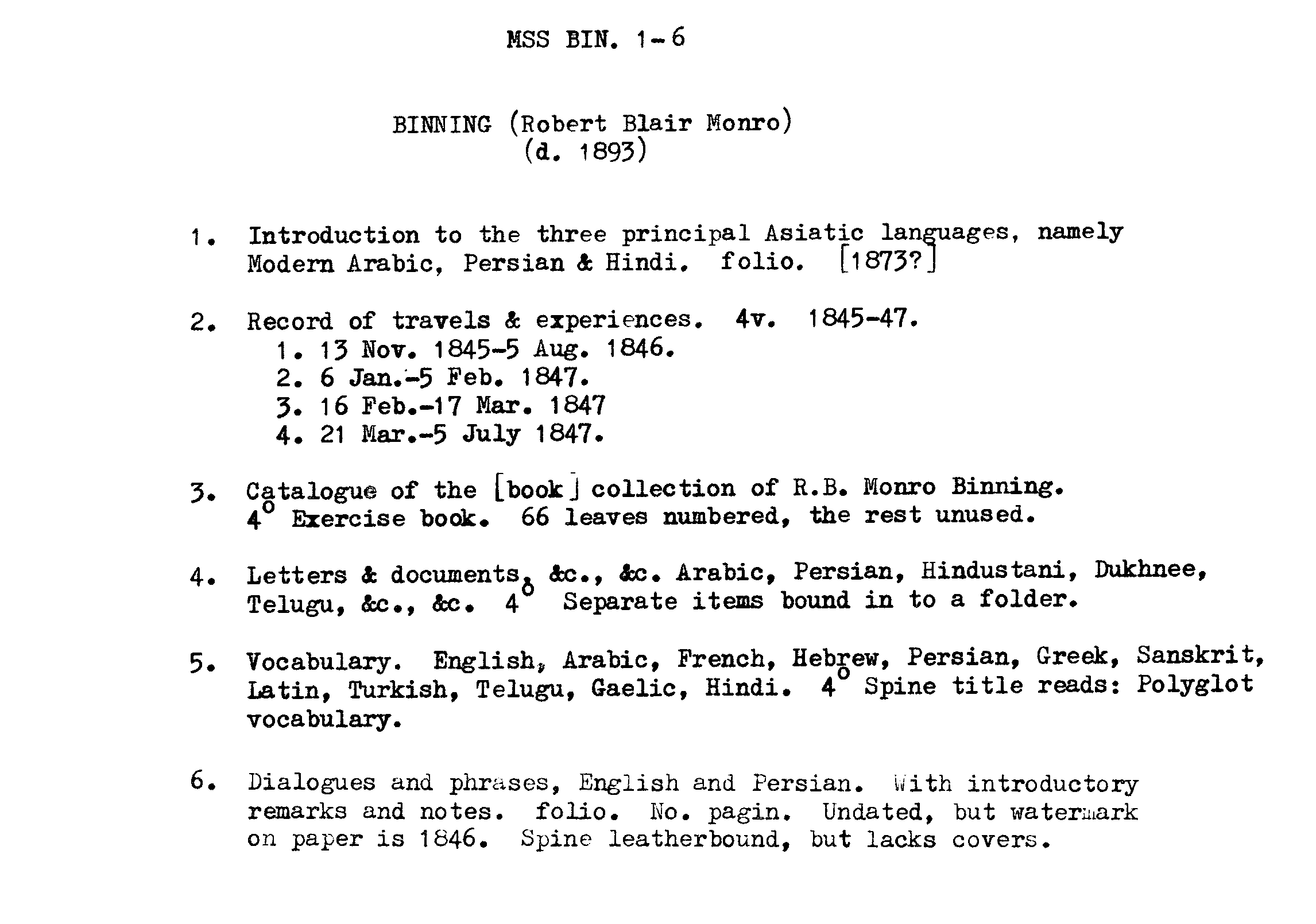
Further information: catalogue of items in the Binning collection.Catalogue entry for MSS BIN , records created by or belonging to Robert Blair Munro Binning

A Christmas Celebration


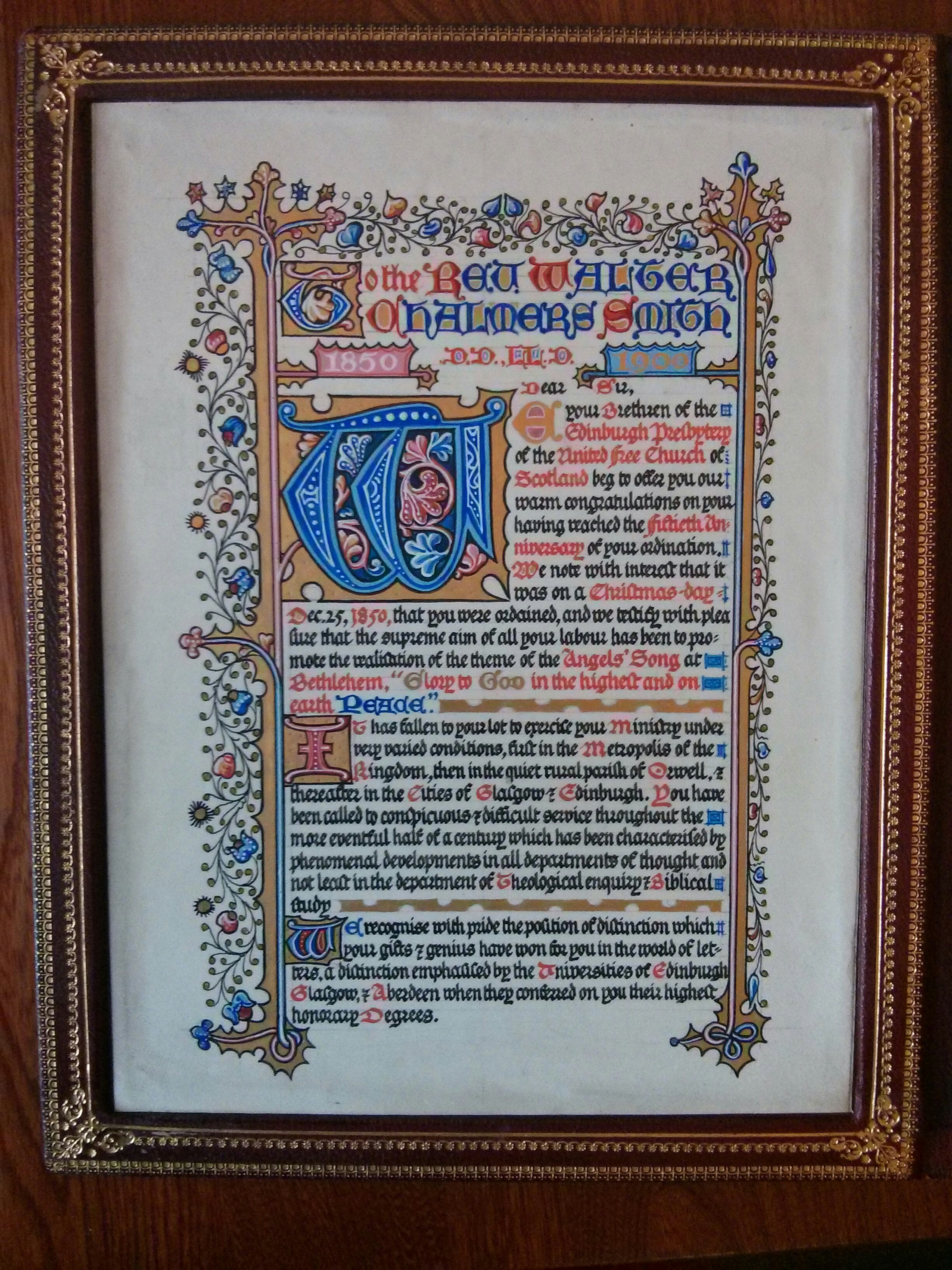
Fiftieth Anniversary Certificate - Walter Chalmers Smith. New College Library MSS SMI 4.5

Fiftieth Anniversary Certificate – Walter Chalmers Smith. New College Library MSS SMI 4.5

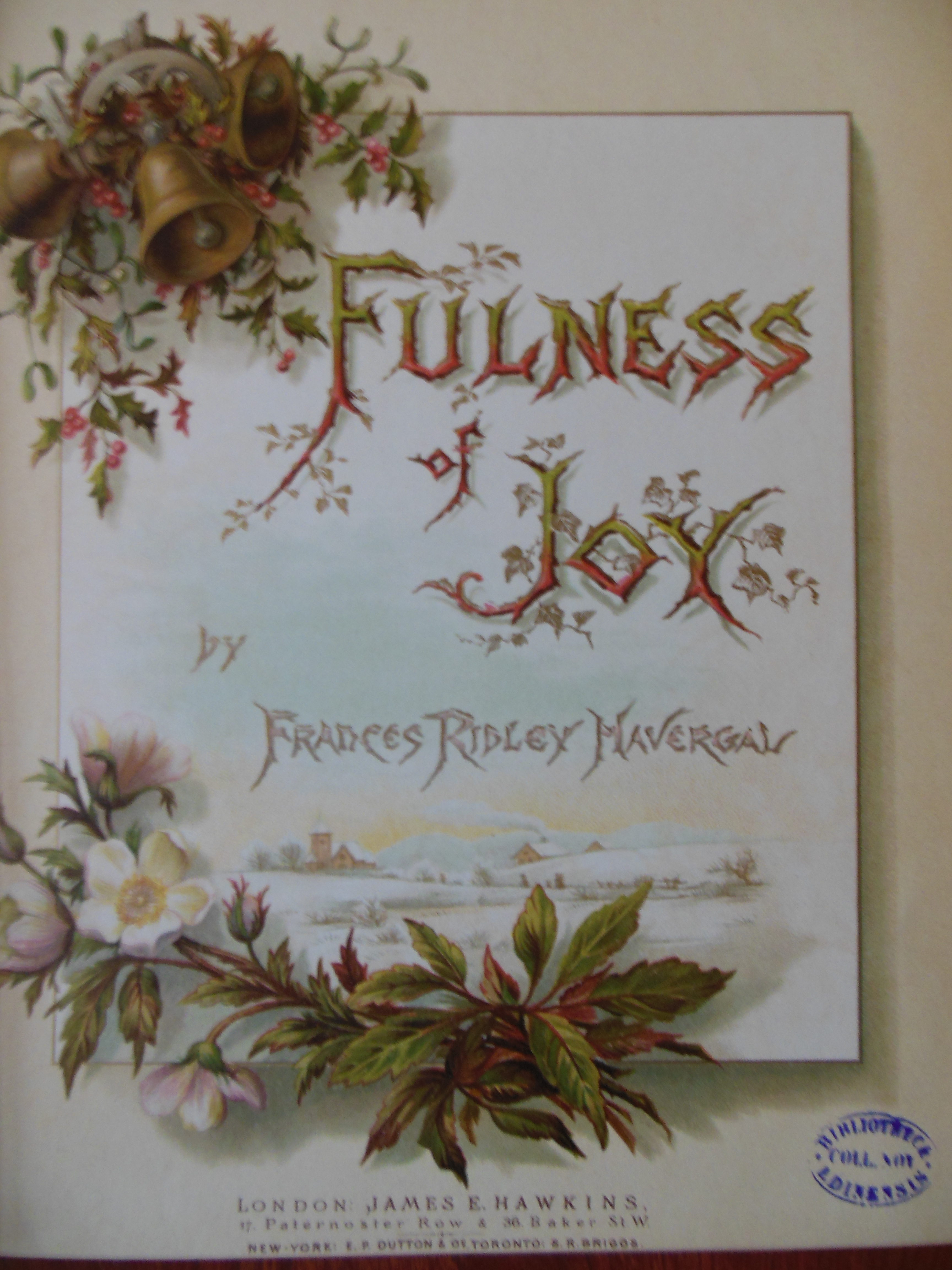
New College Collections Curator Kirsty Stewart & I were delighted to find this lovely ‘illuminated manuscript’ certificate, which celebrates the fiftieth anniversary of the ordination of Rev. Walter Chalmers Smith, in the New College Library manuscript collections. Rev Walter Chalmers Smith was an alumni of New College and followed a distinguished career in the Free Church, becoming Moderator of the Free Church in 1893 and culminating in the role of minister at the Free High Kirk in Edinburgh. After further denominational reunification, the Free High Kirk building became what we now know as New College Library in 1936, so this document is a link to New College Library’s past. It’s also a fascinating glimpse into Christmas over a hundred years ago, when it was more common in Scotland for Christmas day to be a normal working day without holiday celebrations. This made it a suitable day for new minister Chalmers Smith to be ordained, as recorded on the certificate.
T. F. Henderson, ‘Smith, Walter Chalmers (1824–1908)’, rev. Lionel Alexander Ritchie, Oxford Dictionary of National Biography, Oxford University Press, 2004 [http://www.oxforddnb.com/view/article/36166, accessed 8 Dec 2015]

Cut it out!

I have been making my way through the manuscripts collection in an effort to identify material, see what conservation needs there are and generally acquaint myself with the collections. This week I have been struck by the quantity of material from the 1600s, which has, of course, come about as a result of the Covenanters. While a good proportion of the manuscripts are sermons there are a few which are copies of letters or the last words of Presbyterian martyrs.

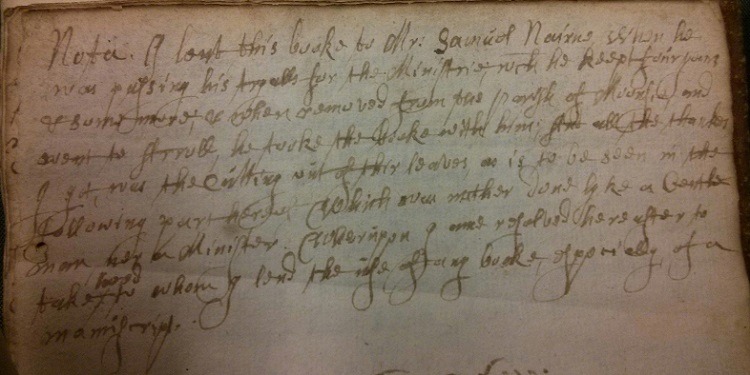
My heart was in my mouth when I opened one such volume (ref. MSS NOT) and found that in several places pages had been cut out. As I went through the notebook in search of the name of the person who had carefully copied down sermons by Laurence Charteris and James Good, Latin tracts and proclamations, my heart resumed its usual position when, quite unusually, I found an explanation for the missing pages:

“Nota: I lent this book to Mr Samuel Nairne when he was passing his tryalls for the Ministrie which he keept four years & some more; & when removed from the parish of Moonzie and went to Arroll, he tooke the booke with him; And all the thankes I got was the cutting out of thir leaves as is to be seen in the following part hereof Which was neither done lyke a Gentleman nor a Minister. Whereupon I ame resolved here after to take heed to whom I lend the use of my booke, especially of a manuscript.”

Author's explanation for missing notebook pages.

Author’s explanation for missing notebook pages.

While the notebook’s author is as yet unknown, the reference to Samuel Nairne dates it to around 1690 and one can assume that the author was living in the parish of Moonzie or nearby.

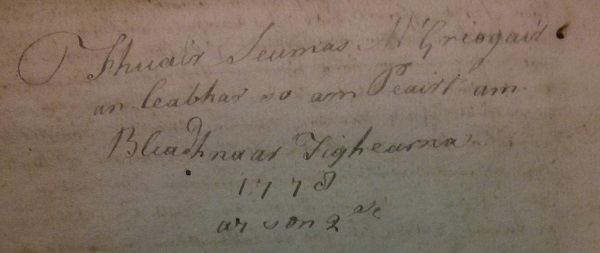
The inside cover of the notebook tells us that it was later owned by a James MacGregor. However, at another point in the notebook, where Samuel Nairne had been busy with a blade, James wrote the following:

 “Fhuair Seumas McGriogair an leabhar so am Peairt am Bliadhna ar Tighearna 1778 ar son 2sc[illin]”
Translation: “James MacGregor bought this book in Perth in the Year of our Lord 1778 for 2 pence.”

Not only does this give us more about the provenance of the book but also shows that James MacGregor was literate in Gaelic.

James MacGregor notes when and where he bought the notebook (ref. MSS NOT)

James MacGregor notes when and where he bought the notebook (ref. MSS NOT)

Missing pages can be frustrating and sometimes even heartbreaking but for our unknown Fife scribe their absence was clearly just plain annoying: annoying enough to write about it.

Kirsty M Stewart, New College Collection Curator

Information on Samuel Nairn from Fasti Ecclesiae Scoticanae , vol 5, p 169: SAMUEL NAIRNE, M.A. ; ord. before 22nd July 1690 ; trans, to Errol 12th Jan. 1692.


Look, there’s a libretto in the library!

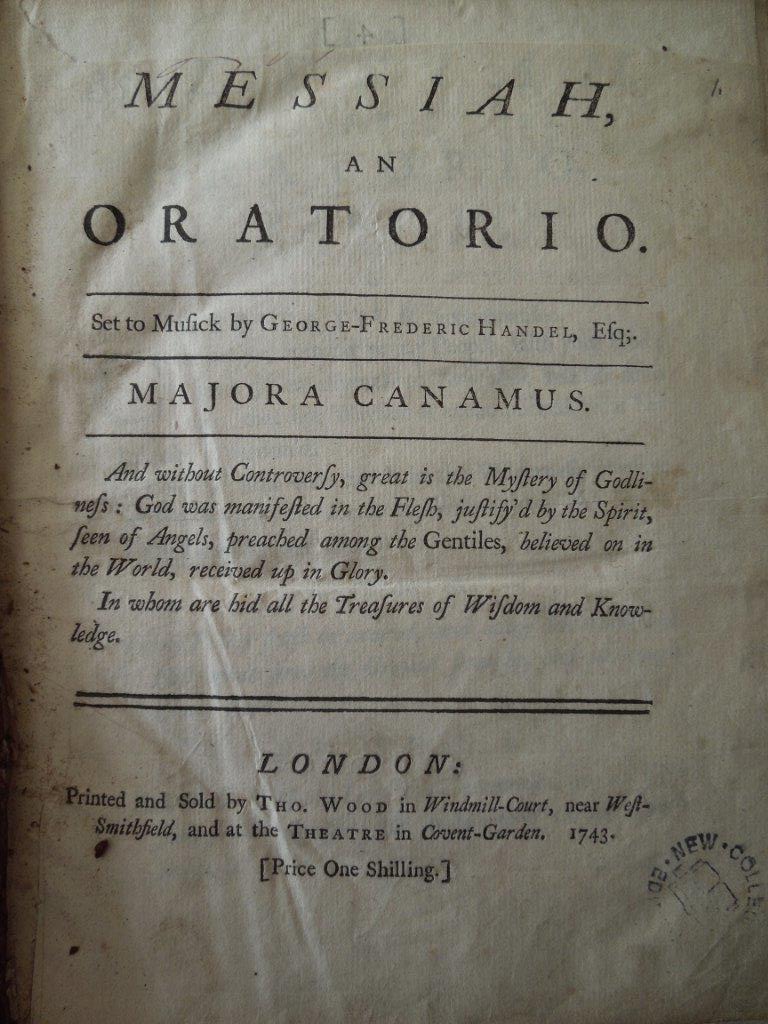
Handel, George. Messiah : an Oratorio. New College Library O.b.

Handel, George. Messiah : an Oratorio.
New College Library O.b.2/1

It’s not every day that you find a rare edition of Handel’s Messiah in your library but I’m delighted to say that we have one at New College Library! This recently catalogued pamphlet from our Special Collections appears to be the first printing in England, and second edition overall of the libretto of Handel’s Messiah (The first edition was in Dublin.) It is also the first edition printed in England by six years. According to Elizabeth Lawrence, EUL Assistant Rare Books Librarian,  “The oratorio was first performed in Dublin in 1742, and then again in London in March 1743.  The publication we have, the libretto, known as the ‘word book’, was published to sell at the theatre, so the audience had half an idea what was going on.  There are no copies of this edition currently on ESTC.”

Continue reading

Keeping it in the family

At New College Library we often receive enquiries from individuals interested in researching their family bibles, who have identified that we hold the same or similar edition at New College Library. Inside these family bibles births, marriages and deaths may have been recorded, making each one a unique resource for family history research. Continue reading

Divinity Approaches to Research – Resources for Jewish Studies

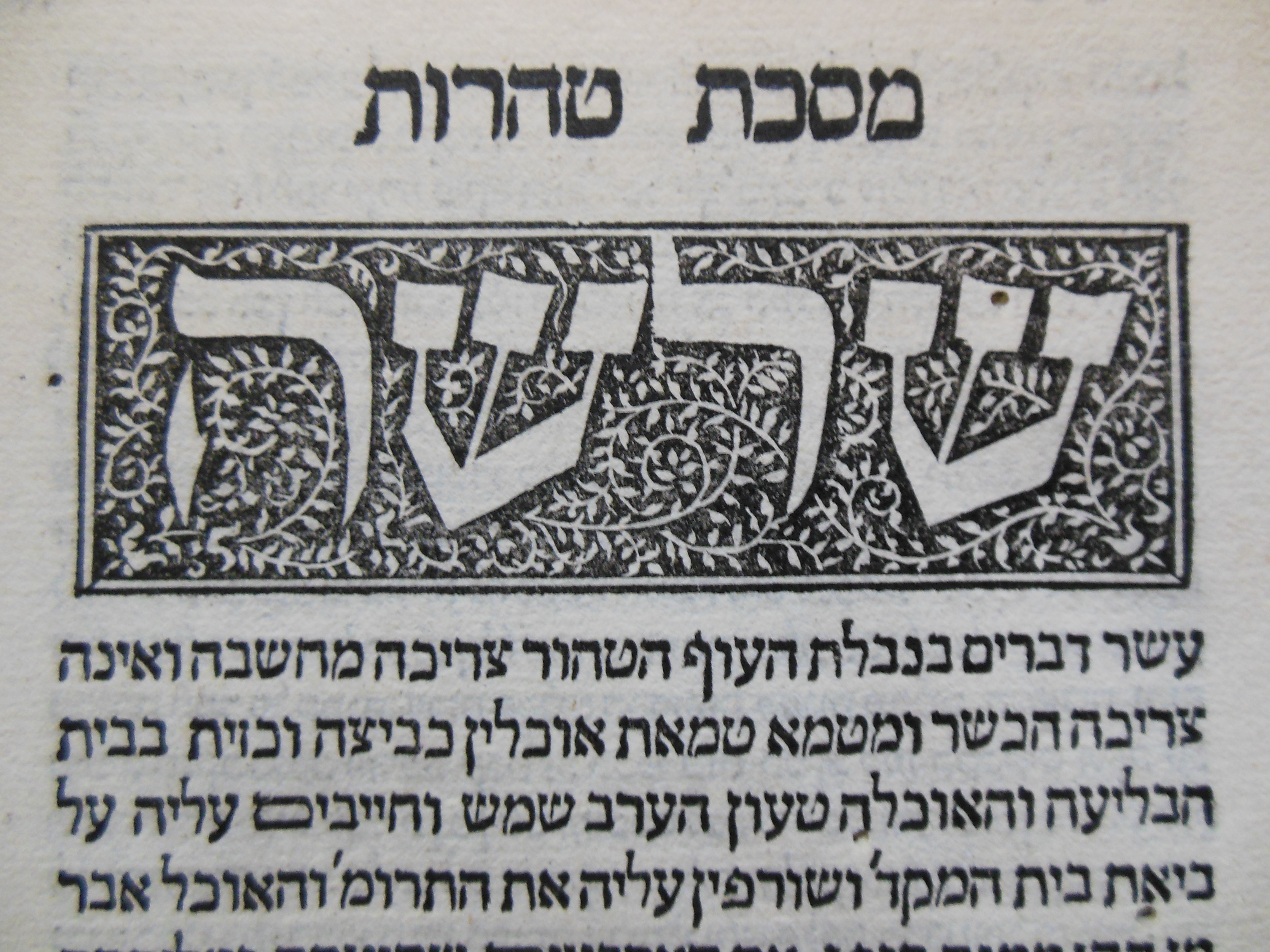
Image from Seder Ṭohorot Mishnayot mi-Seder Kodashim im perush - Commentary by Maimonides. New College Library Dal-Chr 58a

Image from Seder Ṭohorot Mishnayot mi-Seder Kodashim im perush – Commentary by Maimonides. New College Library Dal-Chr 58a

Jewish sacred texts, biblical scholarship and devotional works in Hebrew can be discovered throughout New College Library’s Special Collections. Continue reading

Divinity Approaches to Research – Top tips for finding Bibles


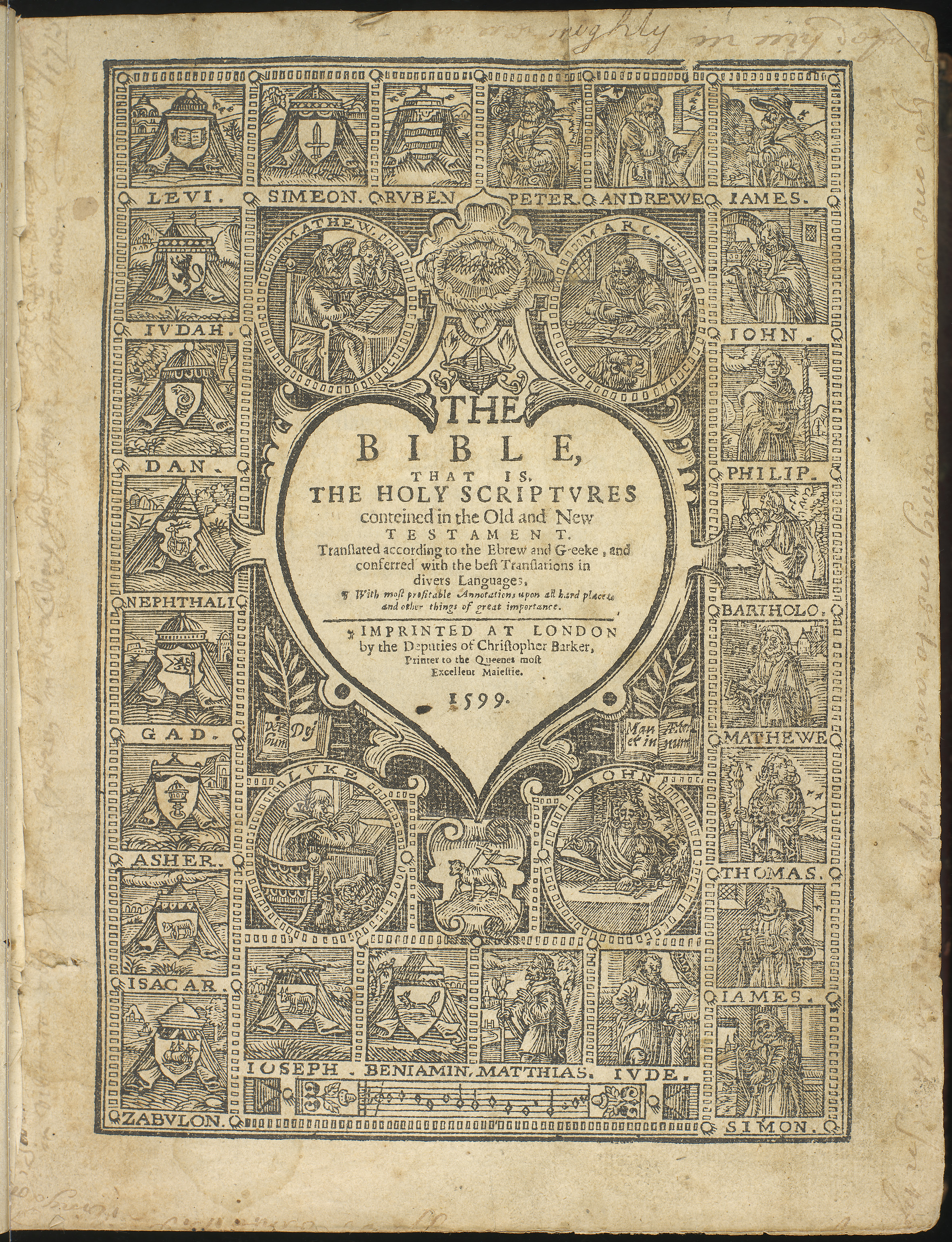
Geneva Bible, 1599. New College Library B.r.417

Geneva Bible, 1599. New College Library B.r.417

The University of Edinburgh Library holds extensive and rich collections of Bibles. At New College Library, you will find of early Bibles from the Scottish Reformation, Bibles in languages from all over the world and current editions of study Bibles used for course teaching. However the sheer number of items we have in the collection can make finding details of the specific Bible you want on DiscoverEd seem challenging. Here’s 3 tips to help you:

  1. If you have the full details of the version and edition you want (e.g. New Oxford Annotated Bible (2010)) use the Advanced Search on DiscoverEd to narrow down your search using as many details as possible.
  2. A search for ‘Holy Bible’ will bring up many results from our digital collections of pre-1800 early books. To exclude these digital versions, refine your search down by ‘Books’ or ‘Physical item’
  3. You can also refine down a large result set by library location (New College Library), date and language.

Today’s question for postgraduate students on the Divinity Approaches to Research course is :

“At what shelfmark would you find the principal collections of Greek New Testaments at New College Library? Use DiscoverEd to help you find the answer, or come into New College Library to explore.”

[Example : BJ is the shelfmark for Ethics]

Tweet me your answer at NewCollegeLibrarian@cloverodgers or email me on Christine.Love-Rodgers@ed.ac.uk

A winner will be drawn on Friday 2 Oct from all correct answers received and they will receive a mystery prize!

Christine Love-Rodgers – Academic Support Librarian, Divinity