
A large proportion of the earliest thesis we have digitised from the turn of the century are medical thesis. However, they little resemble the modern medical thesis being produced today. They are full of the personality of the students who wrote them and the people they studied. Sometimes it feels like we are hearing voices that no one has listened to for a very long time.
For example, one student named Donald Sutherland Murray undertook a study of an outbreak of alopecia he witnessed in the small town of 9000 people where he was practicing medicine. His study presents a cross section of the town, his patients ranged in age from 8 to 65, and were students, joiners, bakers, apprentice engineers and domestic servants. His thesis also includes beautiful portraits, such as the one below of a joiner, ages 35 with a ‘scanty moustache’. This thesis may no longer be relevant for the treatment of alopecia, but it provides information about people’s lives that would not have survived had they not suffered from alopecia.
 It is also important to remember that the people who produced the hundreds of volumes that pass through our hands and scanners every week were human beings who probably wept and had many sleepless nights in behalf of the work we are digitising. Sometimes it is rewarding to try to find out more about these individuals. A few months ago I came across a medical thesis from 1906 written by a woman called Sheila M. Ross. It is entitled Acute hallucinatory insanity – a type of the confusional insanities, with clinical notes. As female authors from this period are relatively unusual, I sought to find out a little more about Dr. Ross. I haven’t manages to find masses of information, but I did discover that she was awarded a medal from the School of Medicine in 1899 for Systemic Anatomy. The medal, along with a few others from the same time period, were sold for £170 by the auction house Dix Noonan Web. I have also found a record of her graduation in the July 1904 edition of the British Medical Journal. Of a graduating class of about 130, 7 were women, Sheila M. Ross, Aimee E. Mills, Margaret H. Robinson, Isabelle Logie, Amy M Mackintosh, Eslpeth M. McMillan, Margaret CW Young and Mildred ML Cather.

Much of the early thesis collection are MD’s, however, their value lies not just within the realm of medicine. Murray’s thesis contains a snapshot of life in a small town at the turn of the century, and is unique in that it is the only thesis on alopecia we have come across thus far. Ross’s thesis contains information about the prevalence of mental illness in Scotland and elsewhere, but it can also be used to learn more about the history of women’s participation in the University, and the School of Medicine in particular.
D.S. Murray’s thesis is being processed in the current block and should be available on Edinburgh Research Archive in the next few weeks. Once it has been uploaded a link will be added to this post.





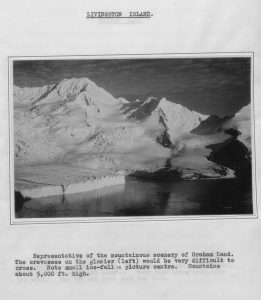 sentences like the following; ‘The word “Antarctic” has always been associated with cold, death marches, crushed ships, crevasses and so on’. This demurely bound 1959 thesis by HW Simpson is a fascinating gem. It is part medical thesis, part travel journal,
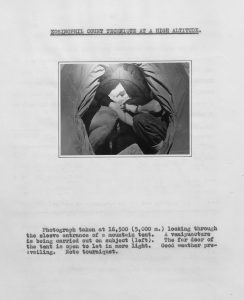 notes certain events that caused a peak in stress, including how one man was lost in a blizzard for eight hours and another drifted out to sea when his boat ran out of petrol, only to be saved by a ship’s helicopter 25 miles off shore. Simpson also studies stress caused by more mundane activities. The men took turns cooking and he describes how ‘It will be readily understood that to be cook for 8-10 men and do one’s main job can be a conside
 rable strain. Not only must the cook bake bread but he must also help with the washing up and at the end of his week scrub out the kitchen’. This observation is accompanied by a graph entitled ‘The stress of cooking’, which surprisingly seems to rival the stress of the prospect of a cold and icy death in the midst of a blizzard.