Some thoughts on the impact of Sci-Hub

Sci-Hub has been getting a lot of attention recently – for those of you not up to date there are some really good pieces written here:

What should we think about Sci-Hub?

Next moves in the Sci-Hub game

Signal not solution

The last article raised some interesting points that prompted a reply from the Sci-Hub founder, who I think mistook critical thinking for criticism. If you would indulge me I’d like to spend 5 minutes thinking about the impact of Sci-Hub and what the longer term implications for scholarly communications are. I’m not particularly saying anything new, just crystallising a few thoughts that have been floating around.

What is the short term impact of Sci-Hub?

The impact is massive for anyone stuck outside of a subscription paywall. Immediate free access to articles that you would have had to pay ~$30 each. For these people it is a game changer. I don’t need to eulogise how important this is for enabling access.

For publishers, at a first glance it looks terrible. Their pirated content is being distributed for free. Shock! Horror! Quick unleash the legal dogs of war!

But take a closer look and the disruption enabled by Sci-Hub is not quite like the disruption that has occurred in other digital media (think Napster etc). This is because the customers who pay for content are mainly institutions and not individual customers, and they have very different behaviours. I would estimate that the long term financial impact of pirated material for academic journal publishers would be negligible at best, and at worst just a small dent in their 30%-40% profit margins.

Longer term effects.

If you step away from the warm rosy glow of immediate access, you’ll find that the change in scholarly communication is not as drastic as you first thought. On the whole, institutions will not drop all of their journal subscriptions because a website is offering free downloads of articles. Organisations, who in this case have the purse strings, do not think and behave like individuals.

Any reputable institution would not be able to tell their researchers that they have cancelled subs to the journals they read and that they have to find and use pirated content instead. Like them or not, we can trust publishers to make their content available 24/7 (well, most of the time) because we have service level agreements and other legally binding contracts. What is the longevity of Sci-Hub? I don’t know, but the Sci-Hub founder freely admits that the site runs on donations and it costs several thousand dollars per month to keep running. Unlike other scholarly communication nodes – for example arXiv* – there is no funding mechanism that organisations can use to pay Sci-Hub to keep running because it’s activities are illegal and that status is not going to change any time soon. As such, institutions cannot rely on Sci-Hub to provide access to it’s services 24/7 and will always stick with the publishers.

Sci-hub is a sticking plaster

It is worth repeating that the bottom line is that organisations will most definitely not stop paying subscriptions to journal publishers because of Sci-Hub. More knowledgeable people than me have pointed out that Sci-Hub is a symptom of the problem, or that it is palliative care which alleviates the immediate problem. Unfortunately, I don’t think Sci-Hub will be the main catalyst for wider change in scholarly communication that people want, or need, it to be. Subscriptions will still be paid, researchers will still publish in those pay-walled journals, we will still have restrictive licences, text-mining will still be difficult. Plus ça change. The problem is that authors and readers need better than this.  


[*Other scholarly communication nodes have sustainable business models – for example arXiv raises ~$350,000 per year through membership fees generated by approximately 186 institutions.]


Copyright waffle and the illusion of choice.

https://www.flickr.com/photos/stuart_spivack/3934968493/

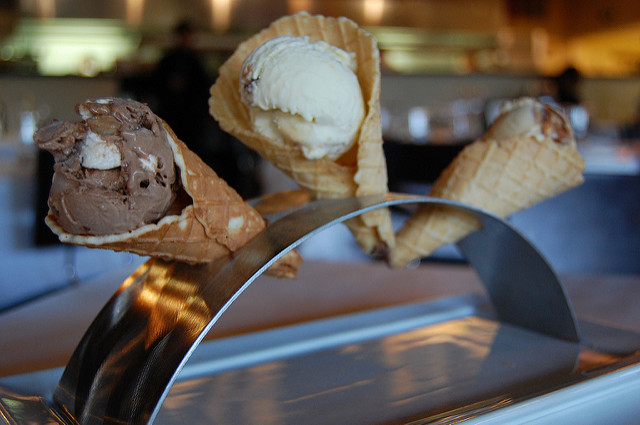
ice cream cone trio by stu_spivack : http://edin.ac/1Rm0wEi

An academic colleague of mine recently had an article accepted for publication in a journal. As usual they were emailed by the publisher who asked them to sign an Author Publishing Agreement which would transfer copyright to them. However, the author noticed that the publisher also allowed authors to retain their own copyright by instead signing a Licence to Publish.

Keep your copyright!

The researcher wasn’t sure whether to assign copyright to the publisher, or if it would be preferable for them to retain copyright. On the face of it, it seems like a no-brainer – keep your copyright rather than signing it away. This is the mantra that open access advocates have been saying for years.

BUT more importantly.

Always read the small print – or get someone else to do it for you – and understand what you are getting yourself into.

The illusion of choice

In this particular case, if you read both the standard Publishing Agreement (to transfer copyright) and the Licence Agreement (to keep copyright) with a fine-tooth comb you will find that they pretty much contain the same language verbatim. There is no practical difference between them both in the end results. Both the author and the publisher will end up with exactly the same rights for exactly the same duration. There is the illusion of choice but it literally doesn’t matter which piece of paper is signed. This is an example of Copyright Waffle and it sidetracks from the important things.

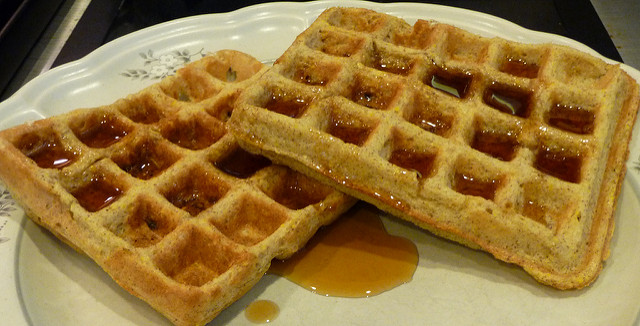
Waffles by Brenda Wiley: http://edin.ac/1Rm13Gq

Waffles by Brenda Wiley: http://edin.ac/1Rm13Gq

Important things:

  1. By hook, or by crook, make your work open access.
  2. If you don’t know how, then ask someone who does; generally speaking Librarians will always be able to help you.
  3. If you have the option, publish your work with a Creative Commons licence; CC-BY is our favourite flavour.


Institutionally Authored Books

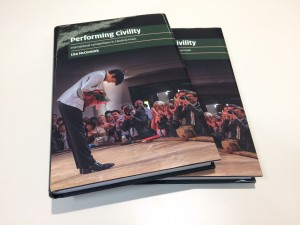
performingcivilityThe Scholarly Communications Team estimates that staff at the University of Edinburgh write, edit or contribute to over 500 books annually and the Library aspires to hold two copies of each of these books (one for general loan, one for preservation).  In light of this aspiration, Edinburgh University Library has developed a policy relating to the acquisition of institutionally authored books, which encourages staff to donate two copies to the library, wherever this is possible.

Today we received our first donations under this policy, Performing Civility by Dr Lisa McCormick.  Lisa generously sent two copies to the Scholarly Communications Team, which has checked that there is a record of the research output on PURE.  The print copies have now been sent for cataloguing and should be available very shortly.

Congratulations to Lisa, firstly on her publication and secondly for being the first to donate copies of books under this new policy!

Dominic Tate, Scholarly Communications Manager. 

10,000th open access item added to the Edinburgh Research Archive

PhDs

Thanks to a major digitisation project being undertaken by Library & University Collections we are proud to announce our 10,000th open access item has recently been deposited in the Edinburgh Research Archive (ERA).

ERA is a digital repository of original research produced at The University of Edinburgh. The archive contains documents written by academic authors, based or affiliated with Edinburgh that have sufficient quality to be collected and preserved by the Library, but which are not controlled by any other organisations (for example commercial publishers). Holdings include full-text digital doctoral theses [6150], masters dissertations [950], project reports, briefing papers and out-of-print materials. Current research produced by the University is available from the research portal, which has 101,860 records, of which 28,220 have open access documents attached.

Since 2005 the majority of PhD theses issued by the University have been submitted in a digital format, and around 20 recently completed PhD theses are added each week. Our digitisation activities seek to make accessible older unique content which is only available onsite in the Special Collections reading rooms. The oldest University of Edinburgh thesis archived in ERA was originally published in 1819.

Hybrid open access revenue

fifty-pound-notesPhoto courtesy of Images_of_Money

Over the last few weeks I’ve been preparing and reviewing various compliance and financial reports for funding agencies on their annual open access block grants awarded to our institution. One of the benefits of having sets of large data in front of you is that you start seeing trends and think of mildly* interesting things to do with it.

(* I say mildly because “The best thing to do with your data will be thought of by someone else“, which is one of the many reasons it is important to make your data open.)

Sequentially issued invoices

One of the things I’ve noticed is that one of the larger publishers (Elsevier) issues sequential invoices of the form W1234567 and 12345CV0. If we had enough invoices spread over a reasonable period of time we could estimate what their hybrid open access revenue is during that time period, and potentially extrapolate further. Just to be clear I’ve only picked Elsevier because they are the publisher that we have gathered the most information about open access expenditure due to their large market share.

Invoices issued from the European office

I looked through our admin records and noted invoice # W1274177 was issued on 30 April 2015 whilst invoice # W1300445 was issued on 22 October 2015. During this 175 day period there appears to be 26,268 invoices issued by the publishers European Corporate Office, which works out at about 150 APCs per day for their portfolio of hybrid journals.

Our average APC in 2014/15 (n=65) for this publisher is £2066.81 so their revenue for this period was in the region of £54,290,965, or an APC daily revenue of £310,234.

Invoices issued from the North American office

The publishers also issues invoices of the form 12345CV0 from their North American Corporate Office. Noting that invoice 11795CV1 was issued on 19th May 2015 and invoice 12306CV0 was issued on 15th October 2015 this suggests that 511 APCs were charged over the 149 day period, or around 3 APCs per day.

Using the same average APC (£2066.81) as before this gives us an estimate revenue of £1,056,140 during the time period, or £7,088 per day.

Note that the invoices issued from the regional offices do not reflect the revenue generated in that geographical area.

Global APC revenue

The combined daily APC revenue from the European and North American offices is in the region of £317,322. If we upscale this to a full year we can infer an annual APC revenue in the region of £115,822,530. This sounds like a hell of a lot of money, but put into perspective against the company’s total 2014 revenue of £5,773M (figure from the RELX Group annual report) this represents only 2% of their business income.

Assumptions

These are rough and ready calculations and should be taken with a pinch of salt because I make a number of assumptions including:

  1. The invoices really are sequentially issued
  2. No other types of transactions (e.g. journal subscriptions) are included in the invoicing sequence
  3. We have large enough data set to infer an annual revenue
  4. Daily APC rate is a good enough estimate

UPDATE

Stuart Lawson pointed out on Twitter that this estimate is likely to be on the high side:

Screenshot - 30_10_2015 , 14_38_17

OAI9

Last week I attended the CERN Workshop on Innovations in Scholarly Communication (OAI9) in Geneva, a workshop looking at developments in scholarly communication, it was a diverse programme and attracted people from all sectors of scholarly communication,  here are some of my highlights from each day;

Day One – Beginning the first day were a choice of tutorials,  I elected  the institution as publisher: getting started presented by UCL who are the first fully Open Access University Press in the UK. This offers a real alternative to commercial publishers, at the moment the majority of UCL Press authors are internal, external authors are liable to pay an APC.

The Keynote by Michael Nielsen, Beyond Open Access, looked at how open access policies should be crafted so they don’t inhibit innovation by constraining experimentation, new media forms and different types of publication. Following this was the session Looking at Barriers and Impact, Erin McKiernan, who is an early career researcher talked about her own experience and barriers she has faced in accessing research, she has made a pledge to be open, her opinion was early career researchers are in a position to be game changers in terms of making their research open. Finally Joseph McArthur, talked about the Open Access button  helping readers find open access versions of research outputs, this is a tool created by young people who frequently faced barriers to accessing research.

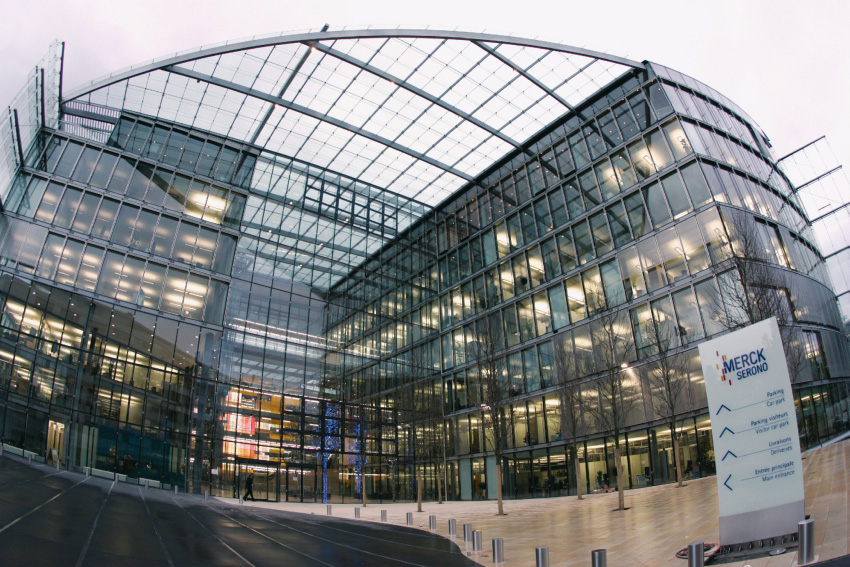
Day Two – The second day of the workshop was held at the Campus Biotech

01337LOW_HQ_MERCK_SERONO

The first session looked at Open Science Workflows, CHORUS and SHARE, Jeroen Bosman and Bianca Kramer from Utrecht gave a really interesting presentation on the changing workflow of research – they had three goals for science and scholarship – Open, Efficient, Good. We should be supporting open science instead of just open access leading to diminishing traditional journals. This was highlighted using a diagram they created – 101 innovations in scholarly communication, highlighting the patterns and processes of innovation in this field.  This is an ongoing survey of scholarly communication tool usage – part of an ongoing effort to chart the changing landscape of scholarly communication.

Following this session was Quality Assurance, focusing on researchers and reforming the peer review process. Janne-Tuomas Seppanen from Peerage of Science  stated that some peer reviews are excellent – some are not, Peerage of Science tries to address this by the scoring of peer reviews, the idea being that peer reviewers are themselves peer reviewed increasing and quantifying the quality of peer review. This service is free for academics and publishers pay. Andrew Preston from Publons is looking at speeding up science by making peer review faster, more efficient, and more effective. The incentive for reviewers? Making peer review a measurable research output.

I also attended the break out session on Copyright in Data and Text Mining which gave an overview of the legal framework and an introduction to The Hague Declaration on Knowledge Discovery in the Digital Age launched in May this year which ‘aims to foster agreement about how to best enable access to facts, data and ideas for knowledge discovery in the Digital Age. By removing barriers to accessing and analysing the wealth of data produced by society, we can find answers to great challenges such as climate change, depleting natural resources and globalisation.’

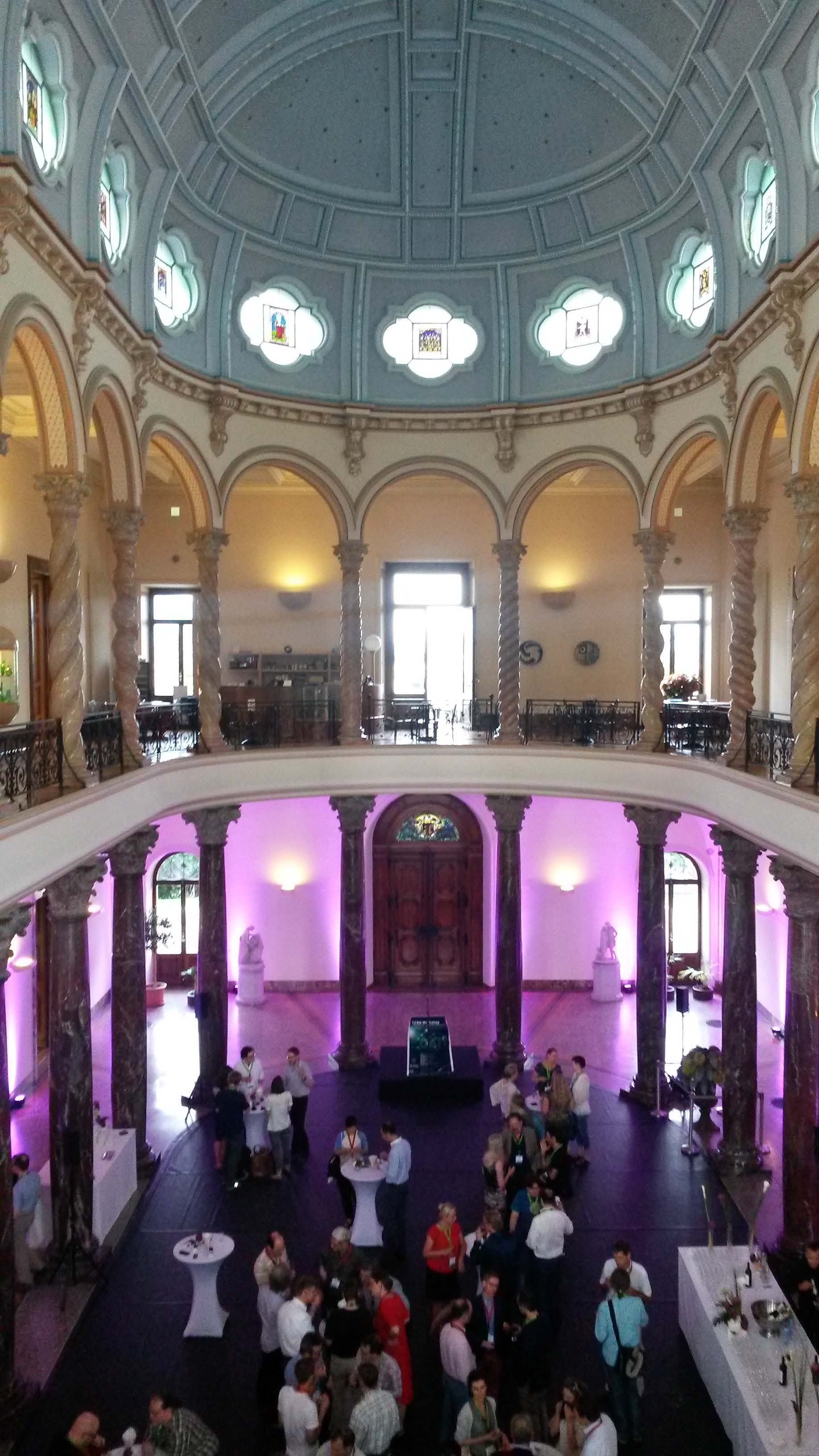
The second day of the workshop ended in style at the Ariana,  the Swiss museum of glass and ceramics which opened its doors especially for attendees of OAI9.

20150618_193931 (00000002)

Day Three – The focus of the first session was the Institution as Publisher, a new theme for OAI. Catriona Maccallum from PLOS focused on the need for transparency, publishing is a cycle, not just about content provision. The services an institution can offer include; Open Access, Open Access Presses, transparency, assessment, rewards and incentives, she went on to say the institution should be driving changes. Rupert Gatti, Open Book Publisher talked about bringing publishing to a research centre level, open access allows direct dissemination to a different audience and would allow authors to disseminate not just books and articles but other types of scholarly output.The Final speaker in this session, Victoria Tsoukala from National Documentation Centre, National Hellenic Research Foundation talked specifically about open access publishing in the Humanities and gave an overview of University led publishing within her institution looking at the various challenges (funding, outputs being perceived as poorer quality) and the opportunities (ability to regain control, innovation, transparency and fairness and assuming new roles for libraries).

If you’re interested in finding out more, all the presentations are available online by clicking through the programme.

Oldest thesis record in the British Library’s e-thesis online service (EThOS)

Over the last few weeks and months we’ve been adding a lot of digitised material from our historical collections to the Edinburgh Research Archive. One of the collections that has been scanned is a series of M.D theses written in Latin and published in the period from late 1700s to early 1800s. We now can claim to have the oldest thesis record in the British Library’s e-thesis online service (EThOS) – a dissertation written by Thomas Charles Hope and published in 1787. The challenge is on for other institutions to beat this.

Thomas_Charles_Hope

Thomas Charles Hope was one of the University of Edinburgh’s more interesting alumnus who discovered the chemical element Strontium, and also taught a young Charles Darwin who viewed his chemistry lectures as highlights in his otherwise largely dull education at Edinburgh University (we’ve come along way since!).

Thomas Charles Hope’s M.D thesis can be accessed online for free in the Edinburgh Research Archive.


Edinburgh Research Archive : a new look

We are pleased to announce a new look and feel to the Edinburgh Research Archive (ERA). Over the past few weeks our Library Digital Development team have been busy upgrading ERA to a newer version of DSpace.

The main differences you might notice are:

  • a responsive user interface design
  • an improved discovery search/browse option which allows new filtering options
  • several improvements to help Google Scholar better index the content
  • lots of under the bonnet improvements and bug fixes

Screenshot - 13_03_2015 , 16_05_22

Full screen v smartphone view

Screenshot - 13_03_2015 , 16_05_40

The responsive user interface design helps to make ERA look good on screens of all sizes from widescreen monitors to smartphones. Instead of squeezing everything from the large screen onto smaller screen size displays some information is dropped. Can you spot all the differences?

The text is dropped from the dark blue banner, the breadcrumb links in the light blue bar under the banner are condensed, the left hand side navigation panel is collapsed by default but can be toggled by the list icon, and the item abstract is re-positioned underneath the download and main metadata display.

For those that are interested ERA is now running DSpace version 4.2 (with some local mods including security updates), whilst running the Mirage 2 theme.


Open Access in Scottish Universities Video

The JISC-funded Enhancing Repository Infrastructure in Scotland (ERIS) was left with some money underspent. University of Edinburgh’s proposal on how use the remaining money to the best possible effect for Scottish HEIs was the Open Access Toolkit for Scotland (OATS). The main objective was to produce a video which included interviews with well-regarded, pro-open access academics from a range of universities in Scotland.

Over several weeks in February, March and April – myself, the filmmaker Marie Liden and her cameraman Nick – met and interviewed Open Access enthusiast academics from Strathclyde University, St Andrews University, Stirling University and the Scottish Agricultural College. In total we interviewed 11 academics and librarians and recorded over 240 minutes of footage out of which, after editing and post-production, only 17 were used for the final video (which is still a wee bit too long). The film was presented at the Repository Fringe Conference (30 & 31 July @ Informatics Forum) and the feedback was very encouraging.

“Producing” a (short) film for the first time was quite a steep learning curve and I started to enjoy it only towards the end. Undoubtedly, we had our fair share of ‘strange’ moments like when we were interviewing one researcher in this beautiful, old meeting room, but where it was impossible to move at all since even shifting your body weight from one leg to the other would make the floor squeak and ruin the shoot!

See the video at Open Access in Scottish Universities


Eugen Stoica – Scholarly Communications Team

Open Access in the College of Medicine & Veterinary Medicine

My name is Anna Krzak, and I am an Open Access Research Publications Administrator for the College of Medicine and Veterinary Medicine at the University of Edinburgh. I have been in this role since March this year. Previously, I worked as an Open Access Publications Assistant (also for MVM) so I am not entirely new to the University and its Open Access (OA) project. I have been assisting academics within the College of Medicine and Veterinary Medicine with the RCUK OA policy implementation since April last year but, since I used to work mostly from home, I should introduce myself properly now.

The main purpose of my new role is to gather Open Access full text versions of research papers and the accepted peer-reviewed manuscripts and to upload the files to the Institutional Repository. As part of that, I ensure that the licensing terms and conditions are adhered to, including any embargo periods, and that any licenses or set phrases are acknowledged in PURE. In addition, I often advise academic staff on research funders’ Open Access policies and relevant Open Access options. If necessary, I consult the publishers in regard to their often unclear self-archiving policies (this is probably my least favourite bit..). As such, my role combines both theoretical and practical aspects of the OA implementation project that’s currently being undertaken throughout the University.

As the RCUK OA policy has been in force since April 2013, I thought it would be a good idea to evaluate the progress of its implementation in my College:

Please note that the collected evidence refers only to peer-reviewed research articles (including review articles) and conference proceedings that were submitted for publication after 1 April 2013 and that acknowledge the RCUK funding (as per the RCUK OA policy).

RCUK Compliance for the reporting period 1/04/13 – 4/06/14:

Approximately 224 research outputs have been identified, of which 192 have open access documents available to the general public. This means an 85% open access compliance rate (as of 4th June 2014).

All outputs All Open Access Gold/Gratis OA Green OA
         223      191      164            27

However, a more detailed analysis of the RCUK requirements for OA has revealed few secondary problems:

  • Licensing: Although the majority of all OA articles have been published under the CC-BY and CC-BY-NC licence (as required by the RCUK), in approximately 18 cases the articles were published under the CC-BY-NC-SA or CC-BY-NC-ND licences
  • Length of embargo periods: In 18 out of 27 cases the embargo periods were 12 months and longer
  • Self-archiving issues: In several cases journals didn’t offer any green options

If we take these points into consideration, the compliance rate for the specified period stands at approximately 67%, as compared to the required 45%. Overall, it’s quite a good result for MVM.

I’m afraid that my introduction has come across all too serious. However, in a face-to-face conversation you may find out that I am not really that bad 😉

-Anna Krzak, Open Access Research Publications Administrator, MVM