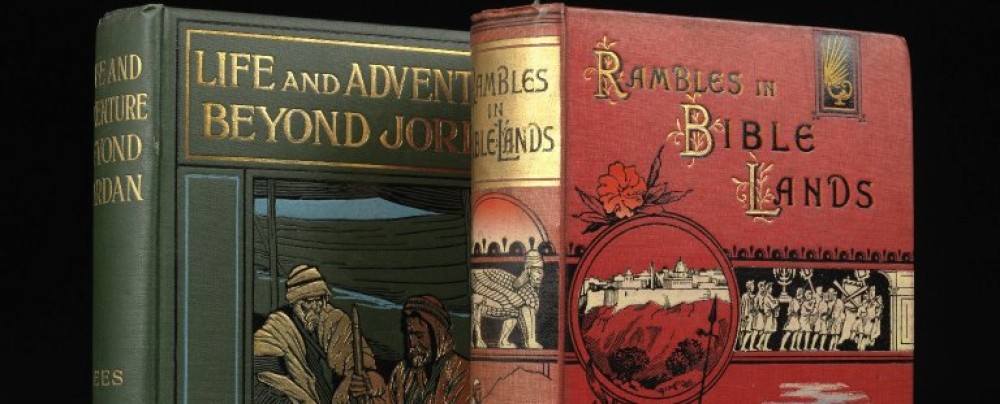
by Elin Crotty, Archive & Library Assistant, New College
Over the past few months, the two New College Archive and Library Assistants (ALAs) have been liaising with the Cultural Heritage Digitisation Service (CHDS) about digitising our cuneiform tablets. The New College Library cuneiforms are 4 fragments of carved text, which range in date from the Neo-Babylonian Empire, (circa 626 – 539 BCE) to the Neo-Sumerian Empire (circa 2046 – 2038 BCE). The Neo-Sumerian tablet (NCL/Object/2025/3), which has split into two pieces, is thought to be one of the oldest examples of writing in the University’s collections at circa 4070 years old.
CHDS have recently been using Reflectance Transformation Imaging (RTI) to experiment with creating 3D representations of surface texture. You can read a much more thorough description of how the process works on their blog post here, but essentially the objects are placed upon a flat surface under a dome, with a camera positioned directly above them. Lights are fixed inside the dome at all angles and they flash in sequence as 72 photos are taken. This changes the light angle and resultant shadows for the camera, throwing details upon the surface of the object into high relief. The photos with the varying shadows are stitched together using specialist software, creating a 3D model of the surface of the object. A few months ago, the ALAs worked with CHDS to bring the New College cuneiforms to the uCreate MakerSpace, to use the RTI dome there.
The actual photography was very quick, but it was a careful process ensuring that the cuneiforms were supported and kept as flat as possible. After assessment by our conservation team, we built the fragments some temporary supports and handled them using nitrile gloves – no Hollywood white cotton gloves in our library! To get the cuneiforms in and out of the dome, CHDS had come up with a simple but very effective solution; a tea tray, lined with plastazote foam.
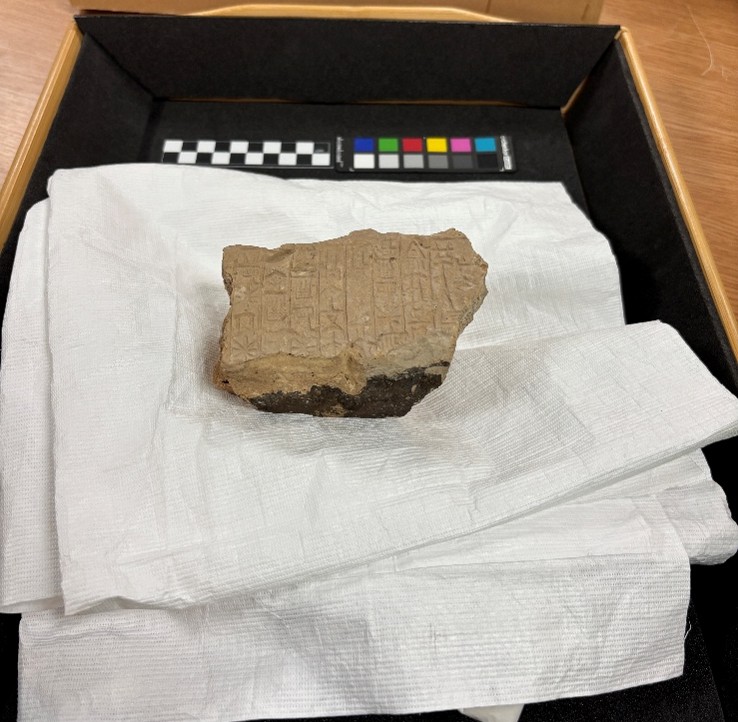
Figure 1 NCL/Object/2025/3, cuneiform tablet from Neo-Sumerian Empire (c.2046-2038 BCE).
Three of the four fragments were digitised within the span of one morning. The final one (NCL/Object/2025/2) has been recommended for a different kind of photography, as the conical structure will make it difficult to focus the camera in the RTI dome. CHDS will get better image results from taking high quality photography of the cone in several sections, and stitching the images together so that the whole object is in focus. We were very excited that the digitisation turned out really well for the limestone tablet from the Neo-Assyrian Empire (NCL/Object/2025/4) as this has been housed in a glass frame and we did not want to remove it and risk causing any damage. We were worried that the reflection of the glass would distort the images, but they came out clearly and it is much easier to see the definition in the carvings without the shine of the glass interfering.
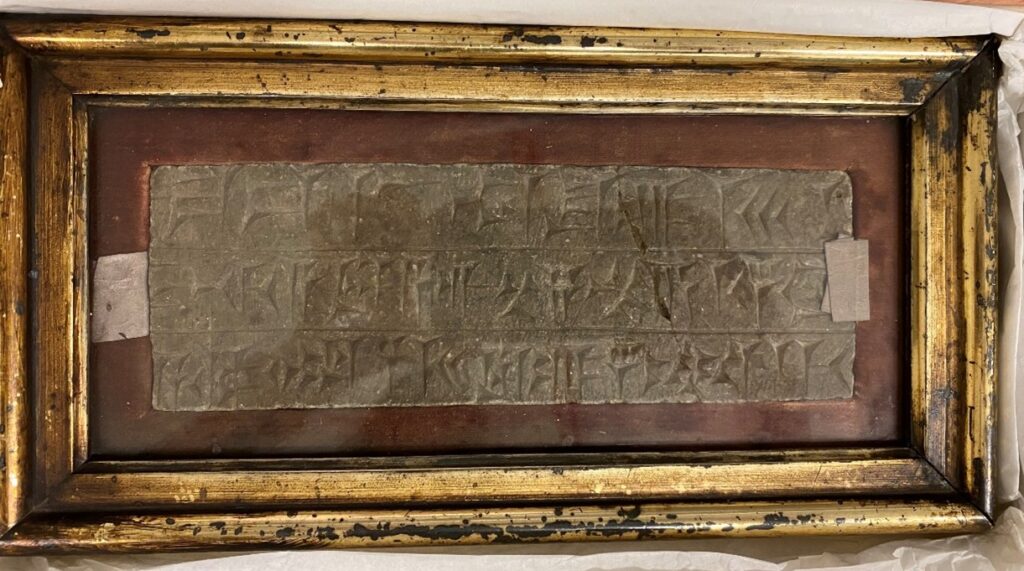
Figure 2 NCL/Object/2025/4, cuneiform tablet from the Neo-Assyrian Empire (883 – 859 BCE).
Currently the output files of the RTI are not compatible with the University’s image repository, and require specialist software to view. To make the images more accessible in the meantime, the photography team are processing them and will create short videos showing RTIs capabilities. The software allows users to change the light and colour variables, as well as where the light is positioned within the dome. This changeable light allows you to heighten the contrast of the surface texture, using shadows and highlights to show details of the tablets that are not clearly visible to the naked eye. Image processing and high quality photography are still ongoing.
We have also been working with our World Cultures Curator (Arabic and Persian), Saqib Baburi, to find out a bit more about our cuneiforms. Saqib has already been able to improve the previous catalogue metadata for the cuneiform collection, narrowing down the dates to more specific ranges. We have some translations of the texts available, but we welcome further research. We would be thrilled to share the images with anyone who is interested when CHDS have finished processing them, and collections can also be viewed in person through the Heritage Collections reading rooms. If you would like to get in touch about the cuneiforms, or any other items within the New College Library Special Collections, please email heritagecollections@ed.ac.uk
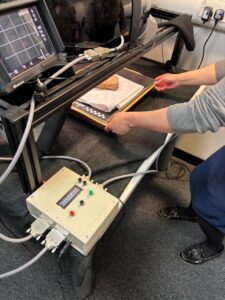
A Library staff member positions a piece of cuneiform tablet for digital photography